Leaderboard
-
swansont
Moderators8292Points56681Posts -

iNow
Senior Members6201Points28644Posts -
Phi for All
Moderators6129Points24053Posts -
Strange
Moderators4268Points25528Posts




Popular Content
Showing content with the highest reputation since 03/28/04 in Posts
-
12 pointsDear All, I am going to take a hiatus from the forum from today. As some of you might know, the natural sciences are not my only area of interest; in particular, I am committed to a form of spiritual practice as well, and have been living in a Buddhist monastery as a lay person for the past few years. I have made the decision to deepen this practice further by ordaining as a monk in the Theravadin Thai Forest tradition, and for various logistical and monastic-political reasons this should ideally happen at a traditional training monastery in Thailand. So tomorrow I will be departing for Thailand to seek ordination there. I think it doesn’t need pointing out that forest monks generally don’t spend a lot of time on Internet forums, so chances are that I will only get to check in here very occasionally, if at all. That being said, there are a lot of question marks and uncertainties, particular in terms of immigration formalities, so it is possible that I need to come back here to Europe in a few weeks once my initial entry permit runs out, and make alternative arrangements from here (meaning I’ll have to find another place to ordain). I will only know once I get to the monastery and start dealing with the local immigration authorities (I see frustration and nightmares on the horizon!), but I’m willing to take that risk. I have been debating whether it is useful to present my reasons for going this path - you have seen me here being on about physics and equations all the time, so this might appear strange to some of you. But I’ve decided not to, because when it comes down to it, I can’t really present a convincing rational argument - this decision simply didn’t come about as the result of reason. I will say only that I’ve seen and understood enough in the spiritual practice that I have already done in the last few years, to know that this is the right path for me. The argument is a phenomenological one, not the result of rationality, so it cannot be easily conveyed in a written post. Spirituality ultimately expresses itself in the kind of person you become by engaging in it, and that’s not something you can fake or wear as a mask. You also cannot reason yourself into the monastic life - that is far too weak a basis for anyone to be at peace with that form of life, never even mind to be able to derive any benefit from it. It needs to be a true conviction that arises somewhere deep within, and that cannot be verbally communicated to others. I will add here that for me there has never been any contradiction between scientific endeavours, spiritual practice, and philosophical enquiry. Not only is there no contradiction, for me these are just aspects of the same underlying motivation to better understand the human condition; hence, if engaged with in the right way, they are complementary and inform each other. I have always felt strongly that it is necessary to achieve some kind of synthesis of these three things for us as a species to make any kind of real long-term progress, since each one in isolation can be misused for harmful and even destructive purposes, as history has sadly shown us all too often. So anyway, thank you everyone for sharing in these discussions, and I hope I have been able to make some kind of contribution - no matter how small - to this forum. In case I’m not back here for a while, I wish all of you the very best, and hopefully we’ll cross paths again. Keep my account open, just in case12 points
-
8 pointsI was reading through Mordred's long standing thread on space and I came across some posts from Mike in the early part. Members may wish to know that Mike passed away earlier this month after a long standing degenerative illness (not covid). Mike was an interesting character, an artist with a degree in Physics and the founder of a successful manufacturing business before retirement to Cornwall. His artistic (dreamy) side gave him an unusual and sometimes frustrating perspective on Physics, especially later in life when we knew him. But he was a genuine character and sometimes offered suprising insights as well.8 points
-
7 pointsI suspect distaste for homosexuality is inborn in many of us. Given that we have a drive to be attracted to the opposite sex, we find the idea of sex with someone of the same sex a big turn-off. Consequently we may find the idea of a sexual approach from somebody of our own sex rather disturbing. If that is homophobia, then I am a homophobe. It seems to me that the blanket term "homophobia" is thrown around too easily. One needs to draw a distinction between personal sexual taste and the attempts by some to condemn different (minority) tastes in others. It is the latter that society should refrain from.7 points
-
7 pointsYou can label it Political Correctness, or whatever you wish. The fact is that our Western societies are now almost at a point where the individual right nt to be offended, trumps society's right to free speech. And where your own personal, subjective reality can be forced, under threat of law, on the rest of society. If it was someone in authority doing this to society, you would all label him a despot, or dictator, or fascist. When it is anyone with a gripe against the rest of society, or a pretentious, virtue signalling university student, who has no clue what being underpriviliged really is, you guys all stand and cheer, while disparaging those who stand up against the nonsense, claiming they are out of their area of expertise, or just in it for popularity and money. You guys need to give your collective heads a shake !7 points
-
7 points7 pointsWell, since Markus has expressed his desire to join a Monastery, I think that definitely answers the OP question. But, some words to Markus... ( no offence meant, just trying to lighten the mood ) A young monk arrives at the monastery. He is assigned to helping the other monks in copying the old laws of the church by hand. He notices, however, that all of the monks are copying from copies, not from the original manuscript. So, the new monk goes to the head monk to question this, pointing out that if someone made even a small error in the first copy, it would never be picked up! In fact, that error would be continued in all of the subsequent copies. The head monk, says, “You make a good point, my son.” He goes down into the dark caves underneath the monastery where the original manuscripts are held in a locked vault. Hours go by and nobody sees the head monk. The young monk gets worried and goes down to look for him. He sees him banging his head against the wall and wailing. “We missed the R! We missed the R! We missed the R!” “Father!” cries the young monk. “What’s wrong?” The head monk with tears in his eyes replies, “The word is CELEBRATE!"7 points7 points7 points6 pointsIn light of the wave of novel ideas we’re getting, most likely fueled by AI, I think I/we have to jump in more quickly to demand specific predictions/falsifiability and math where appropriate. We’re getting walls o’ text that are pretty much all blather and responses are more of the same.6 pointsNo, that is what is called the 'naturalistic fallacy', also known as 'one cannot derive an 'ought' from an 'is''. But your title is another question: "Does science provide a path to a meaningful life?". In a very basic sense, every person striving for something, whatever, leads a meaningful life. It could be even unethical. But leaving that aside, people derive their meaningful life from many things: successfully raising kids, getting rich or powerful, help other people, making beautiful woodworking (how do I get at this example? I wonder...), trying to improve on their moral stance, trying to understand the universe... Which is science. Personally I think science can lead in another way to meaningful life, not just because one finds it 'interesting' or for the usage of its results in technology. Understanding the universe and our place in it can be a spiritual experience. I even once heard something like that from a theology student: he found the essence of religion the realisation that we are just a dust corn in the universe. Of course I like the factual way, as science goes, much better than a theological 'understanding', based on fantasies or old mythologies. And last but not least (being very subjective now), I would plead for studying philosophy. Not freewheeling philosophy (that is fantasy not necessarily with gods or magic), but philosophy grounded as well in science as in our daily experience. The nice thing of philosophy is that it brings all together: it contains also the reflections on what facts, values, and a meaningful life are. So philosophy in this sense is the highest endeavor a human can do . So, I think this was my most subjective posting in this forum.6 points6 points6 pointsPutin dies and goes to hell, but after a while, he is given a day off for good behavior. So he goes to Moscow, enters a bar, orders a drink, and asks the bartender: -Is Crimea ours? -Yes, it is. -And the Donbas? -Also ours. -And Kyiv? -We got that too. Satisfied, Putin drinks, and asks: -Thanks, how much do I owe you? -5 euros.6 pointsDespite a month of promises, on Thursday the 24th at night, conviniently while the Putin shitstorm started he reinstalled a prosecutor in the disciplinairy chamber who tormented a pregnant woman resulting in her death becuase of religious BS. The disiplinairy chamber is an illegal entity and a private tool of Kaczyński and Ziobro (minister of justice and prosecutor general in one person) and is the main reason which prevents us from receiving the 150 bln euro form the EU post Covid fund and results in us paying around 1mln euro in fines. Daily. The president is not autonomous, he's a tool and a clown, unfortunately. Just came back home from a day of trips, dropping people off at shelters and getting food and supplies.6 points6 pointsThere are several parallel issues here. One is that wealth acquired by the ultra wealthy tends to get put into tax shelters and nebulous investments so it grows (but remains outside the system), whereas that same money in the hands of the less fortunate goes IMMEDIATELY into the community around them. They spend it on groceries and vehicle repairs and school clothes for kids and paying the electricity bill so it’s not dark in their apartment anymore at night and their kids can read. The providers of those goods and services in that community where this money is being spent ALSO spend the money once received for THEIR groceries and THEIR service needs and on THEIR kids. Dollar for dollar / unit for unit… the money in the hands of the less fortunate does more net good than money in the hands of the already fortunate. Yes, spending from the wealthy also creates jobs and injects money back into the system, but very little relative to money used in “trickle up” stimulation packages. Also, a bit of extra money in the hands of someone who already has a bunch of it doesn’t tend to change their behavior or encourage extra spending. Getting $1,000 tax break when you’re sitting on $50M isn’t going to suddenly result in them finally making a call to a plumber or the purchasing a new dishwasher… but for the person living paycheck to paycheck that money literally changes lives, gets spent and injected back into the system quickly, and results in lasting reductions in poverty and suffering. When you’re living at the margins, every dollar counts. It also costs a lot to be poor. When the washing machine breaks, you can’t afford a new one but you can afford to pump quarters into the machine at the laundromat… but that ends up being more expensive on net. When the car breaks down, you don’t get to work on time and you get fired. The rich, however, have tax protected ways of growing their wealth and can afford tax attorneys to hide it. Paying more tax has more impact on their ego than on their lived experience. The anger at the rich is out of hand, though. We need better policies and enforcement mechanisms, not more hate and vitriol directed at those doing better than us. Sadly, the anger is probably in large part intentionally being amplified by the very people on the receiving end. If they can keep everyone mad and focused on the wrong things, then the status quo remains stable and no progress or change gets made. Like most issues in economics, we make a huge mistake by treating it as a moral failure when at its core it’s a policy failure. Fixing the policy is just super hard because the people with the power to change the laws tend to be the same ones benefiting the most from them… and also because focusing on wonky policy details is hard for a public who’s often just trying to survive through to tomorrow and who’d much prefer throwing stones and being distracted with us/them tribalism. Perhaps this thread could try focusing on wonky policy details instead of distractions like yachts and steel boats… or not.6 pointsThroughout the COVID-19 pandemic there have been key findings that have altered our understanding or required responses to this disease. For example, the realization that pre- or asymptomatic persons might be infectious has required a different approach to masking and social distancing. While we have several threads discussing the pandemic, I feel that recent developments justify a new topic, especially as it could be used to clarify potential misunderstandings. With the delta variant (B.1.617.2) gaining dominance we are seeing yet another change that requires us to re-think the trajectory of the pandemic. First of all, the transmission rate of this variant is much higher than estimates for the original strain. The CDC has compared it to chicken pox, which has a basic reproduction number (R0) of >10. What does it mean? First of all, this might indicate that vaccine-based herd immunity is entirely out of the picture. With a R0 of 10 you would need to have a total protection of >92% of the population. Since the effectiveness of the best vaccines against the delta variant are a bit lower than 90%, it means that even with no vaccine hesitation and even if we could vaccinate children with it, we won't hit the required target for herd immunity. This has been assumed to happen for a while now, and might be the least surprising bit of news. However, there are a few recent findings that have prompted changes in messaging, for example with regard to masking. The key issue here are the finding that folks with breakthrough infections have similar viral loads as unvaccinated folks. What does it mean? Fundamentally there some vaccinated folks that get infected with SARS-CoV-2. That in itself is not surprising. Historically, breakthrough infections happen for most vaccinations at low frequencies. Most of the time the focus is on illness, i.e. symptomatic manifestations of infections. However, as mentioned, the possibility of asymptomatic spread has changed that. The fact that vaccinated folks still have high titers means that folks with breakthrough infections could infect others and especially unvaccinated folks are at risk of becoming seriously ill. Vaccinated folks, for the most part do not seem to develop serious symptoms anymore, but it means that vaccinated folks could unwittingly infect and endanger un-or undervaccinated folks. This has prompted a reversal in the masking recommendation. Moreover, it has made many infectious disease experts nervous as in many countries mask mandates are being lifted. Unknowns: There are still many open questions. For example, in the US, the delta variant is causing more illness in younger folks, including children. It is not clear whether this is really a property of the virus, or just because younger folks tend not to be vaccinated. It is not certain whether the vaccine effectively protect from long-haul COVID symptoms. The rate of breakthrough infections is unclear, we know the lower end of the estimate based on detected cases, but since folks without symptoms typically do not get tested, we do not know exact numbers. Even in a highly vaccinated community it is possible that there is a large enough reservoir to allow new variants to develop. https://www.cdc.gov/mmwr/volumes/70/wr/mm7031e2.htm?s_cid=mm7031e2_w https://www.medrxiv.org/content/10.1101/2021.07.31.21261387v1 Discussion points: As a whole it means that we are heading into new territory during fall and winter. The big question is whether the current vaccination rates are good enough to prevent mass hospitalization or will easing of restrictions make folks forget that the disease is still there and cause a new surge. Vaccine hesitancy will add fuel to this potential fire. The communication in many countries/states/provinces have been confusing to say the least and quite a few folks I have talked to seem under the impression that there is little danger left, despite the fact that even in highly vaccinated countries, especially younger folks are barely hitting 50% of full vaccinations. Moreover, most folks in the world are still unvaccinated, meaning that we will need to prepare for more variants. Everyone is being sick and tired of the situation, yet undoubtedly the world has changed yet again (and will continue to do so). A big decision at some point is to establish how many deaths we are comfortable with. With regard to flue, for example, the number is surprisingly high across countries and by any estimate, COVID-19 is going to eclipse it, unless very high vaccination rates are maintained, which is notoriously difficult. Edit Aug, 19, 2021: A new preprint has come out indicating that with the Delta variant Pfizer might only be 42% effective at preventing infections (not disease!) and Moderna was about 76%. https://www.medrxiv.org/content/10.1101/2021.08.06.21261707v1 This seem to highlight that behavioral prevention is still going to be important.6 points5 points5 pointsHey guys! This is Hal1776! I've recently decided to abandon social media in favor of forums and email, and would like to formally introduce myself. I'm 30 years old from Tennessee, and a huge science nerd. I love astronomy, paleontology, evolutionary biology, and astrophysics. I also like 90s and 2000s shows, with Daria, DBZ, and Avatar the last airbender being among my favorite shows. I like playing Halo, call of duty, zelda and mario. It's nice to meet everyone here!5 pointsThe Calvin and Hobbes take on DEI - one of the most succinct
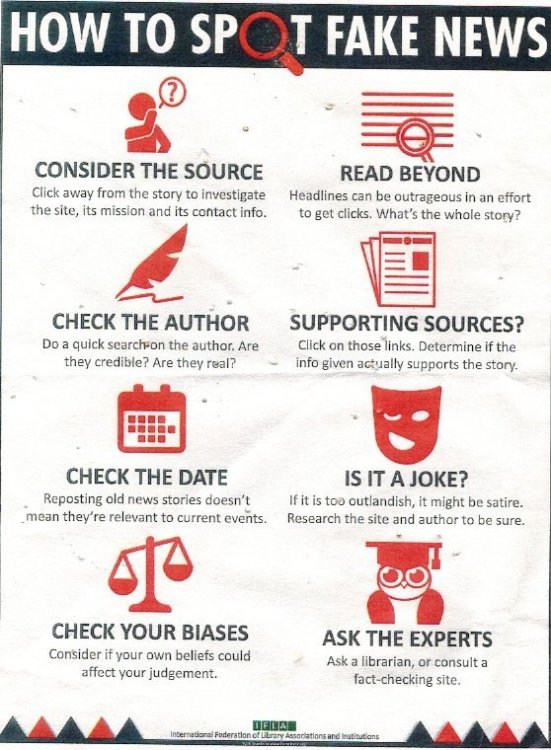
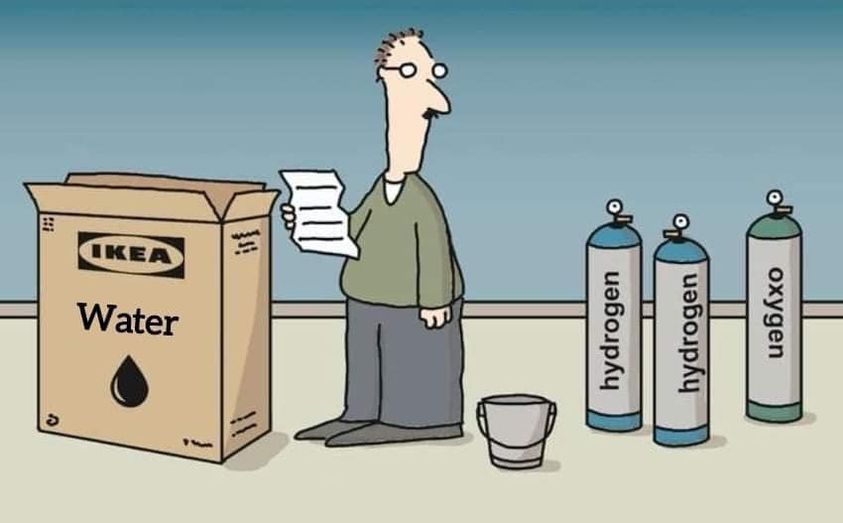
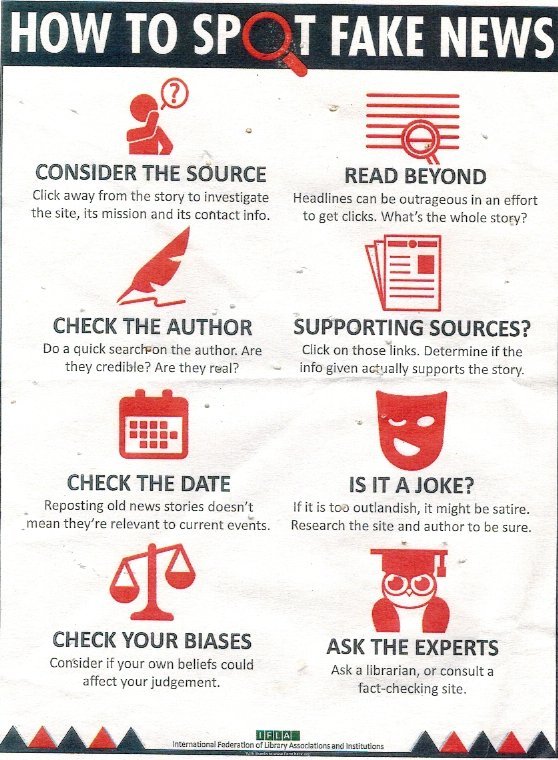
 5 points5 pointsHe’s Nazi. The salute, numerous anti-semitic remarks, promoting nazi apologists, appearing at an AfD campaignevent.5 points5 points5 pointsDegeneracy pressure is not a 'force', but the result of two quantum mechanical principles. The Pauli Exclusion Principle, which says each Fermion is allowed only one quantum state, and must obey Fermi-Dirac statistics, as Genady mentions above. They cannot be 'stacked-up' in the same state as bosons, which obey Bose-Einstein statistics. The other is the Heisenberg Uncertainty Principle. If you put a box around an electron, and keep shrinking the box, its position is determined more and more accurately. Eventually you reach a point where its position is determined so accurately that its momentum could be so great as to exceed c ; a physical impossibility. Nature gets around this problem by forcing electrons to merge with protons, to form neutrons. As the neutron is 2000 more massive than an electron, it is capable of exceeding the electrons momentum by 2000 times before running into the velocity being equal to c problem. This is evidwnt in type 1A supernova where a white dwarf star takes enough material from a companion star, that electron degeneracy can no longer support it against gravity, and it collapses to a neutron star, which is supported by the much greater neutron degeneracy pressure. This is the analysiss Subraihmanyan Chandrasekhar performed in 1930, during his boat trip to England, to study under Sir A Eddington ( who ridiculed his work ), and which today we call the Chandrasekhar Limit for electron degeneracy of white dwarf stars ) about 1.4 solar masses ).5 pointsWeird. Ever since the forced dispossession of 700,000+ Palestinians in 1947-8, aka the Naqba, the native peoples of that region have offered a real simple suggestion. Stop stealing people's land and kicking them out of their homes and razing their olive and fruit groves and systematically brutalizing them while forcing them into small enclaves of poverty. Stop the endless cycles of reprisal and repression. Allow a two state solution. Stop calling people who want their homes back terrorists and vermin. Stop carpet bombing and killing innocent civilians in vengeful and vicious ratios up to 40:1 to your own losses and then shrugging it off as collateral damage while you blame the victims. Really not a big secret. I am delighted to hear that you support the Palestinians in their ongoing struggle to gain those rights!5 pointsI agree. The political right and maga-class has been getting beyond ridiculous in ostracizing people who refuse to tow the party line and repeat the lies, casting out anyone deemed to be "others." It demands a level of purity nobody can ever maintain, and it's pretty sad that their views can't hold up to even remedial scrutiny.5 pointsI asked our benevolent overlord Dave about the ad settings, and apparently Google AdSense enabled "vignette" ads without asking us. He's turned them off now. Hopefully that's the end of the issue and they don't find another more irritating thing to turn on.5 points5 pointsFrom a different perspective, it appeared you were badgering a newbie, @Benjamin Karl, who was not making a claim but rather requesting opinions on the claims made in a video. Whose points he courteously summarized when asked to. While he could be encouraged to dig deeper for other sources, I am not sure that your tone was that of a friendly guide in that quest.5 pointsHave you ever actually worked in the area of addiction recovery or homelessness? Yes, that’s my vocation. I am simply attempting to point out that your understanding of this issue is inadequate, because you cannot simply equate addiction with physical dependency. It’s a far more complex issue, and continuing to ignore this basic fact will not be helpful in developing effective policies - which is ultimately what we all want. I disagree. We have been criminalising drug use and waging a “war on drugs” for at least the past 40+ years, to no avail whatsoever. If anything, the problem is now far worse than it ever was, despite the heavy-handed approach of authorities in the US and elsewhere. To give another example, I have just spend 1+ year in Thailand, and they have mandatory death sentences if you are caught with more than a certain amount of drugs on your person. It’s also common practice there to force addicts into “reeducation camps”. The result? The place remains awash with drugs of all kinds - if you think the problem is bad in the US, it’s far far worse in Thailand, by orders of magnitude. Clearly, you won’t dissuade people from using by threatening them with punitive measures, or putting them forcibly through detox programs. There is not a single data point (that I am aware of) that supports the efficacy of such an approach, but plenty of data to suggest it doesn’t work. This has been the standard in many jurisdictions around Europe for quite some time. Again, it did not solve the problem - the drug problem in many places in Europe is still bad. No one here said anything about not punishing people who have committed crimes. Of course, if someone commits a crime they need to be held accountable, irrespective of whether they are addicts or homeless or whatever else. What you are suggesting though is something quite different - you want to forcibly commit people into camps purely on suspicion that they might at some point in the future commit a crime, solely based on their status as being homeless and/or addicts. Preventative incarceration, is what I’d term this - please don’t try to window-dress this as “helping the addicts”, because that is deeply disingenuous. I’m sorry, but this is simply not ok. Luckily I have enough trust in our democratic institutions to be reasonably sure that such a thing will not happen anytime soon - even if there was data available to show that this would actually solve the problem, which of course there isn’t. Personally though I must say I am quite horrified that anyone would even suggest such a thing in all earnestness. I am German by birth, and at one time not too long ago a government of my country sent people into camps based on their ethnicity, race, sexual orientation, political conviction, and even mental/physical health status. We all know how that turned out. Do we as human beings really forget so quickly? If I was to suggest a policy it would be roughly along the lines of: 1. Take drug consumption off the streets by providing safe, supervised and hygienic injection and usage facilities - harm reduction as a first step! 2. Address the problem of homelessness through policies that directly tackle the issue of poverty, income inequality, and lack of social mobility. So long as you facilitate an economic system where large numbers of people work full time jobs and yet remain near or under the poverty line, your drug problem isn’t going to go away, like ever. 3. Make substances available to those addicts who need them in a controlled and safe fashion, as part of a public health program - this stops the flow of money to drug cartels, cutting off much of the large-scale organised criminality that flourishes around addiction. Once addicts are within a public health network, it will be easier to help them with further therapeutic measures 4. Provide proper education around drugs to our kids - “just don’t take them” evidently doesn’t cut it! 5. Completely decriminalise possession of small quantities for personal use This is neither exhaustive nor complete, just a rough outline. All in all, I’d advocate a radical shift away from a punitive towards a public health approach - simply because the punitive approach has already proven itself to simply not work. Only a fool would continue to do the same thing over and over, and expect different results somehow. So I stand by what I said earlier - a complete paradigm shift is needed, because the current paradigm has failed us, and quite badly so.5 pointsWhat you suggest seems like an obvious solution, but unfortunately it does not and cannot work. Addiction is much more complex than just being a physical dependency on something. Yes, you could (ethical concerns aside for now) round them all up, put them in a camp, and forcibly put them through physical detox - the trouble with this is that it doesn’t actually address the underlying issue at all, because the dependency is in large part of a psychological, social and systemic nature. No one wakes up one morning and decides “I’m going to become a homeless addict…seems like a cool career choice!”. That’s not how it works. Most long-term addicts are in this situation because of multiple factors connected to their social environment, upbringing, past trauma, etc etc, many of which they have little or no control over. These are all complex issues that are not easily nor quickly fixed. It’s a common mistake to think that people remain addicts purely because of their physical dependency, and if we kick the physical dependency they cease to be addicts - that’s quite simply not true at all. So as for your proposal - you take them to your camp, forcibly put them through detox, and at some point will have to let them out again to re-join their families and social environments. What do you think happens then? I can pretty much guarantee you that within days or weeks almost all of them will be right back on their drug of choice, with perhaps the odd exception. Why? Because the underlying reasons for why they have begun to use substances in the first place have not been addressed. Addiction is a symptom of an underlying disease, not really the cause itself - just putting people through detox is like giving painkillers to a cancer patient; it alleviates the symptoms for a little while, but it doesn’t cure the disease. People don’t start off using because they are physically dependent, but for other reasons. It’s those initial reasons that need to be addressed. You cannot help an addict who doesn’t want to be helped - the impulse must always come from him/herself. People have to be ready to change, before therapy has any chance of success, and even then the relapse rates are still high. Forcing people into a treatment they are not ready for does not work. I don’t know if there are actual studies to show this (there probably are), but everyone who has ever actually worked with addicts knows that this is a basic fact. BTW, rounding up addicts and forcing them into rehab camps is what the Taliban in Afghanistan tried to do. Needless to say, it didn’t work. But it makes for an interesting case study if you want to research into it. So as for your proposal - it certainly has political appeal to those who don’t know much about drug addiction, but ultimately it does not and cannot work. It would just create a revolving-door kind of situation with people going in and out of camps, and the ones who ultimately profit will be the dealers and cartels, as always. Until we begin to treat homelessness and addiction as the social and health issue which it is, and stop criminalising something that the victims have little or no control over, no progress can be made on this problem. Criminalising the addicts and waging a “war on drugs” has never once worked, does not work now, and never will work. A complete re-think is needed.5 pointsWhy don't you fuck off to Russia and enjoy the delights of their state media. Stop dragging this topic into irrelevance. If you've got an axe to grind, make your own thread. We don't need your bile making a difficult subject more difficult to navigate. You are making this thread stink of red herrings.5 pointsJust want to alert you to someone hacking your account and posting analogies so awful a five year old could see through them. Hope you can fix this breach soon! Good luck!5 points5 pointsI think we can all agree that for the purpose of reproduction of the species ( human, that is ), only two sexes are needed. One is not enough, and three ( or more ) are superfluous. That doesn't mean that there are not people who don't fully fit into the male, or female, grouping; but for the criteria of reproduction, there is no third ( or 4th, or 5th ) category to place them in. One has to ask, then, what is the purpose ( or agenda, if you will ) for having more than the male and female sex classifications. Please explain. Thank God he's not Mexican, or you'd imply he was lazy. Or Oriental and a bad driver. Or Italian and a mobster. Can you see what is wrong with that line of thinking, Stringy ? I had hoped this thread had died, because I really don't like having people I consider friends call each other 'dicks', or make thinly veiled implications of transphobia, homophobia or racism, so this will be my only post on this thread. But I would like an answer ( I will still read ) as to WHY a third sex is needed, and what is the PURPOSE of the differentiation. Is more 'separation' really desirable to more 'inclusion' ? Is this just another social engineering exercise ? Is it to make some people, who feel 'different', feel better about themselves ? What am I not seeing ?5 points5 pointsThe attachement from the international libraries association is self explanatory. Although not specifically for scientific matters I thought it was particularly well presented and a good candidate as a sticky on this site.
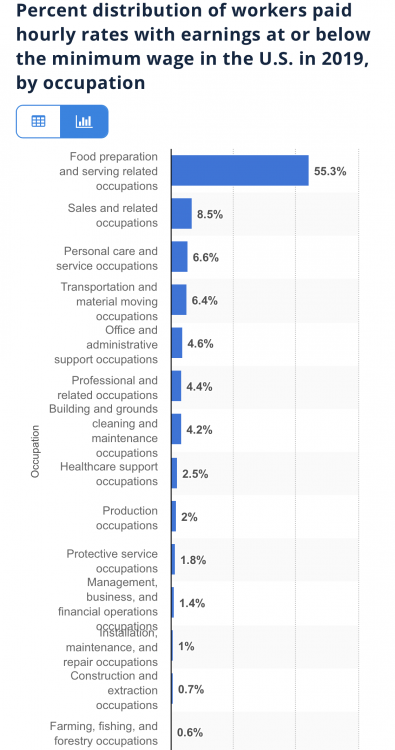
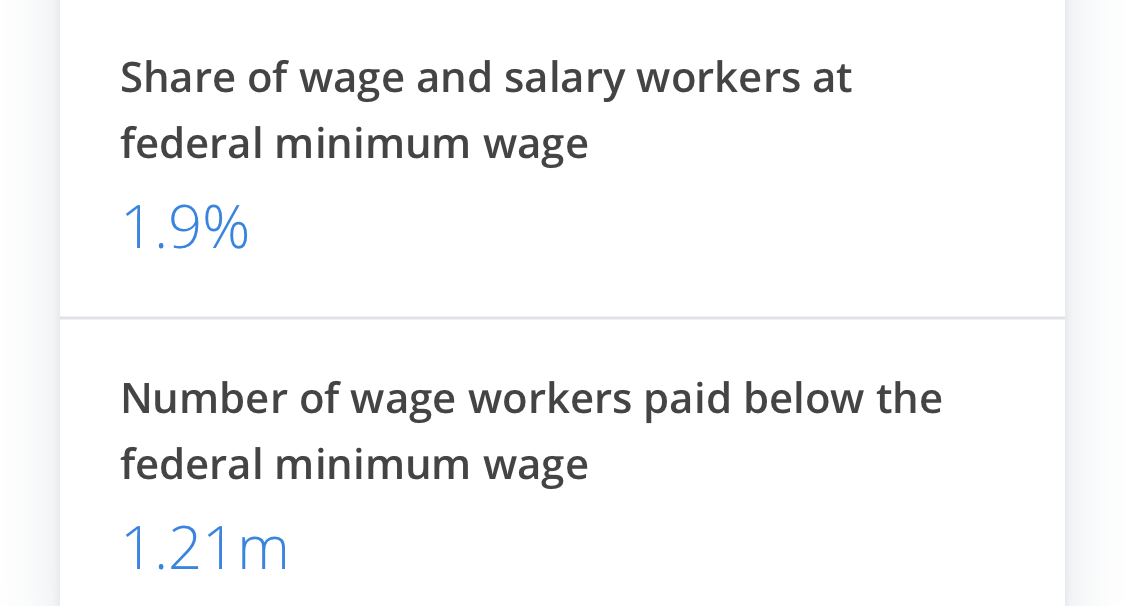
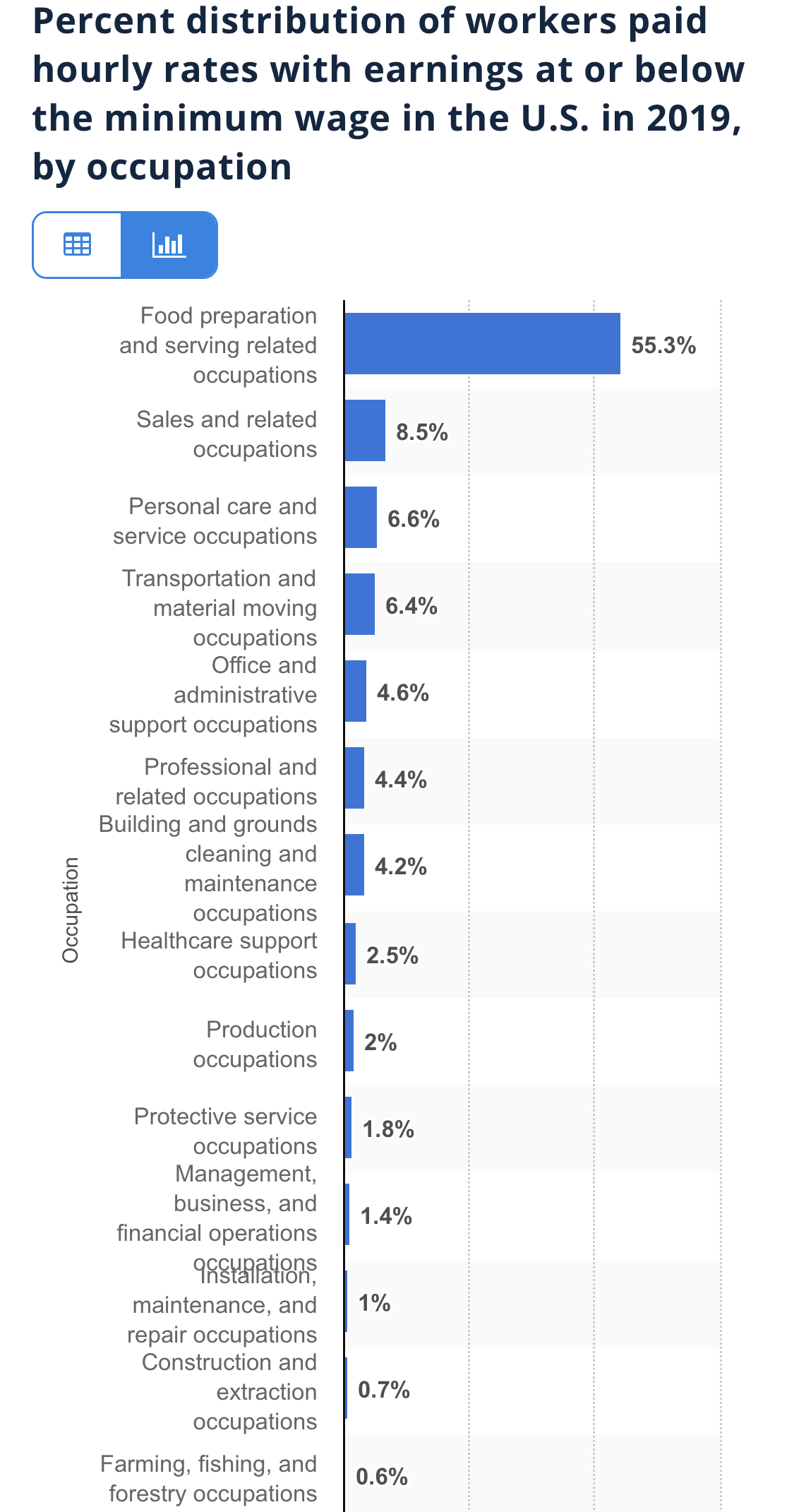
 5 points5 pointsIt is a bit annoying that you just put up a link without seemingly having read it (or scrutinized it). Let me do your work for you. First of all these are not three comedians, the first and third link both refer to the same case in which a comedian (Mike Ward) was fined for making fun in his piece of a disfigured singer (Jeremy Gabriel). I am not sure why you think this is about insulting the LGBTQ community and ultimately the comedian did not have to pay on the grounds of freedom of speech. So that leaves one example in which a comic used slurs against a lesbian couple. I will add that this happened in 2007, so quite a bit before C-16. Now, while this may be a good starting point to discuss limits and issues of freedom of expression as well as the issues of anti-discrimination laws- none of these two cases has anything to do with pronouns or misgendering. As such it seems like a poor attempt to find something resulting in lazily posting a quora answer of all things that does not even address the main part of your claim. Darn, that was annoyingly similar to grading assignments.5 points5 pointsIf 0/0= a then 0 X a= 0 is also "well defined". a/0, for non-zero a, is "undefined" because if we set a/0= b then a= bX0= 0 which is not true. 0/0 is not defined because if we set 0/0= b then 0= bX0 for any b. Many people say 0/0 is "undetermined" rather than "undefined". But there is no good reason to set it equal to 0.5 points5 pointsIf we go back to the topic of C-16, it seems to me - and correct me if I'm wrong, his objection is that by disallowing discrimination of people based on gender identity or expression, that would prevent him from refusing to use a person's preferred pronoun, thus limiting his free speech. 1) There is a non-trivial proportion of humans who are actually born biologically intersexed, or conditions such as androgen insensitivity that will cause an individual's genitals to change from female to male during puberty. Not to mention the significant body of research demonstrating the neurological basis of transsexuality. He is basically asking that his delusional denial of biological reality be protected, which to me, seems pretty fragile and snowflakey. 2) Based on 1), how would he know an individual's sex at birth, or current physiological state? If someone says they are he/her/they, how is he to know the phenotypic or neurological reality of that? Even if it changes mid semester? If you tell me you're a Christian, and I deliberately call you a Muslim and presume you follow the tenets of Islam - that would currently be discrimination and he doesn't seem to have a problem with that. It would appear that applying it to gender identity is cherry picking. 3) No one is forcing him to believe in gender dysphoria, or accept the biological fact that gender is not fixed at birth. They are compelling him not to discriminate against those who do. As such, his right to question the validity of gender fluidity remains protected. The only thing being taken away is his "right" to discriminate against specific individuals based on their identity. Which brings the argument down to "You are denying my "right" to treat people differently based on their gender identity" which, yes - is the intent of the law. Watch me play this tiny violin.5 points5 pointsYes @joigus, I lurk in the shadows and follow proceedings here whenever I get the opportunity At present I live in the jungles of Thailand, having recently been ordained as a monk, and do not have access to anything other than an old mobile phone with spotty and slow internet access, so I’m not really in a position to participate in discussions. It’s just too slow and painful to type this way. I will return once I get access to better infrastructure - perhaps some time next year. Satellites in orbit are in free fall - place an accelerometer into them, and it will show exactly zero at all times. No proper acceleration -> no force acting on them. And yet they don’t fly off into space, but remain gravitationally bound into their elliptical orbits. Clocks in them are also dilated wrt to far-away reference clocks, which is also a gravitational effect. Thus, no force, but still gravity. Newtonian forces are simply bookkeeping devices, and as such they often work well - but only in the right context. Their nature is descriptive, but not ontological. They are not very physical either, given that they are assumed to act instantaneously across arbitrary distances. The strong, weak, and EM interactions aren’t ‘forces’ in that sense at all, since they work in very different ways. They are only sometimes called ‘forces’ by convention, for historical reasons. They ultimately arise through the breaking of symmetries, with the particles involved being irreducible representations of symmetry groups. Finally, it should be noted that physics makes models, that’s what it sets out to do - and as such it is always descriptive rather than ontologically irreducible. So, asking whether gravity “really is” A or B, or whether A or B are “true” is fairly meaningless, since both A and B are descriptions of reality, but not reality itself. Like maps of a territory. The correct question is thus whether models A and/or B are useful in describing gravity, and in what ways and under what circumstances they are useful. So - Newtonian gravity is sometimes useful, but GR is more generally useful, as it gives more accurate predictions for a larger domain. So for now the best answer to “what is gravity” that we have is a purely descriptive one: it’s geodesic deviation, and thus a geometric property of space time. To put it flippantly, it’s the failure of events to be causally related in a trivial manner. Future advancements may upend this picture in the high-energy domain, perhaps radically. We’ll see. I’m sorry I can’t contribute much at the moment, but I’ll leave you with the above thoughts. I could have written much more, but it’s too much of a pain on a small mobile phone screen.5 pointsTechnically, I already have. Thanks, though5 points5 pointsNobody here gives a shit what you believe, Jay Tony. This is a topic where facts both exist and matter. https://www.statista.com/topics/5920/minimum-wage-in-the-united-states/ https://www.washingtonpost.com/business/2021/03/03/15-minimum-wage-black-hispanic-women/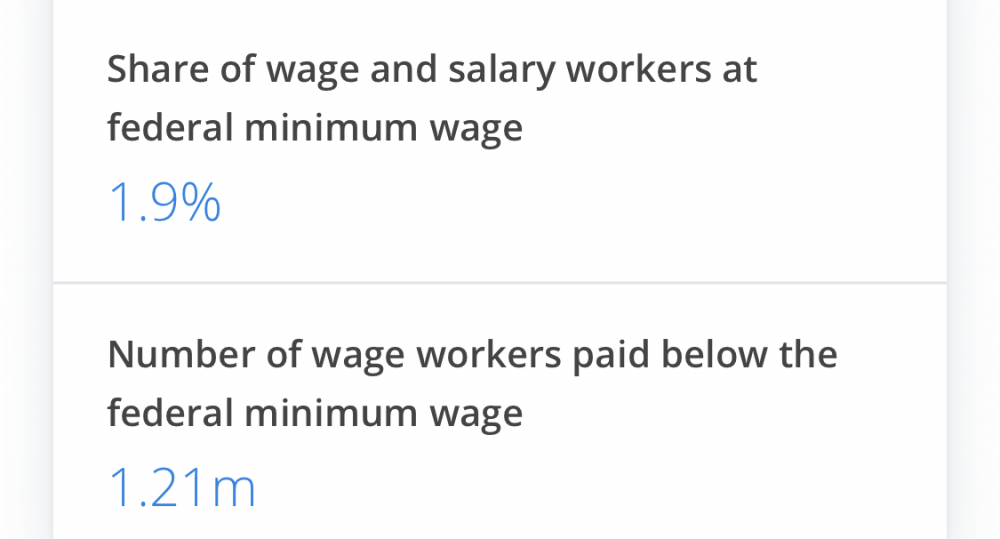
 5 points5 pointsWe can all agree that violence on either side is wrong and should be avoided. What we seemingly cannot agree upon is why so many feel the need to engage in whataboutism and mention a protest in favor of following our laws done in Portland with an insurrection on our democracy itself trying to dismantle our laws in Washington DC. Whether intentionally or not, this suggests an equivalence between the events which is false and which only distracts us from dealing with each separately, appropriately, and in accordance with our laws. Person A: Climate change is a major problem. Person B: What about covid?! That’s a problem, too. Me: Both are. They’re not equivalent. They’re not mutually exclusive. We must deal with both at once. Walk and chew bubble gum. Simply replace climate and covid with DC and Portland. This isn’t exactly rocket science.5 points5 points5 pointsThree of those images imply too much power in the wrong place. The other is a horse.5 pointsVolcanic lightning is hard to beat. https://en.m.wikipedia.org/wiki/Volcanic_lightning Calbuco, The Awakening.” ... Calbuco Volcano is located in the lakes region south of Santiago, Chile’s capital city and is one of the 10 most dangerous volcanoes in the country. After more than 40 years of inactivity, the day April 23 the volcano erupts, spewing more than 200 million tons of ash https://www.dailytelegraph.com.au/news/photos/national-geographic-photo-contest-2015/image-gallery/a2afa2087ecd4f4d62475d231b129e31
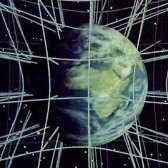
 5 pointsInterestingly, this too is mistaken. Decades of evidence shows rather consistently that the riots get more out of control and the property damage gets worse the more police are present. From 50 years ago: https://belonging.berkeley.edu/system/tdf/kerner_commission_full_report.pdf?file=1&force=1 From 5 years ago: https://www.washingtonpost.com/posteverything/wp/2015/05/01/when-police-ratchet-up-the-force-riots-get-worse-not-better/ And from 5 months ago: https://www.themarshallproject.org/2020/06/01/why-so-many-police-are-handling-the-protests-wrong5 points5 pointsI'll clarify for him. For the reaction mass to produce an upward force on the rocket, it has to be accelerated downward relative to the rocket. In order to return that mass to the top of the rocket, any downward velocity the mass has relative to the rocket has to be stopped and reversed. This is an acceleration just as much as the one producing the upwards force on the rocket (acceleration is either change in speed, direction or both). This action will exert a force on the rocket opposite to that caused by accelerating the fuel downward. The end result of this force will be counter any upward movement by the rocket. This ends up with the net movement of the rocket as being zero. There is no way around this. There is no "clever" way to "fool" the rocket into having net movement by recirculating the fuel/reaction mass.5 points5 pointsthethinkertank has been placed in the queue for spamming the forum with an impressive amount of nonsense.5 points5 pointsIn previous threads, staff have mentioned that we have on occasion curtailed or removed the ability for people to use the reputation system. In previous versions of the forum software we were able to limit positive or negative reputation limits separately. This meant that the impact of people who wished to use the reputation system to target specific members was always low, and staff could easily reverse it. This no longer being the case means that the system is more open to being abused by people wishing to use it as a form of personal attack. Thankfully, we have had very few cases where staff have had to intervene. For those cases where we have had to do something, admin have created two new member groups with reputation point limits set to either 0 or 2, which limits the use of both positive and negative rep points.5 points5 pointsYou have identified the major problem with the "Does God Exist ?" debates -- there are at least as many unstated concepts of God as there are debaters. I strongly doubt that any consensus on a definition could be reached. Ergo, the debate is pointless. When you address the question on a personal level you are free to formulate your own definition of God. It is on that definition that the outcome of your personal decision process hinges. If you define God as some sort of entity that not only can but with some regularity does intercede in natural physical processes, then there is a great deal of objective evidence that no such God exists. In fact, the existence of anything that regularly upsets what we have come to expect as the orderly processes of nature is antithetical to science, which seeks to uncover and explain that natural order in terms of predictive models. Without that order there can be no science. Science seems to work rather well. So any concept of God or any religious tenets that directly contradict science as buttressed by experimental evidence is clearly indistinguishable from superstition. Superstition is, essentially by definition, wrong. If you define God as some sort of entity that exists outside of the natural universe and does not regularly disrupt the operation of that universe according to the principles discovered by science, then science and religion are disconnected, and neither has anything to say about the other. In this situation neither science nor logic can be brought to bear on the question of the existence of God. The order of the universe could be mere happenstance or it could be the result of God. The question is logically undecidable. You are free to reach your own conclusion, or forego a final conclusion. But do not deceive yourself that whatever conclusion you reach is based on rigorous logic, unless you formulate a sufficiently narrow definition of God to be able to apply empirical data. In any case you should recognize that, despite the marvelous progress of science, there is a lot that we don't know. If we knew everything the satisfaction and outright fun of scientific discovery would be lost.5 points



















Important Information
We have placed cookies on your device to help make this website better. You can adjust your cookie settings, otherwise we'll assume you're okay to continue.
Account
Navigation
Search
Configure browser push notifications
Chrome (Android)
- Tap the lock icon next to the address bar.
- Tap Permissions → Notifications.
- Adjust your preference.
Chrome (Desktop)
- Click the padlock icon in the address bar.
- Select Site settings.
- Find Notifications and adjust your preference.
Safari (iOS 16.4+)
- Ensure the site is installed via Add to Home Screen.
- Open Settings App → Notifications.
- Find your app name and adjust your preference.
Safari (macOS)
- Go to Safari → Preferences.
- Click the Websites tab.
- Select Notifications in the sidebar.
- Find this website and adjust your preference.
Edge (Android)
- Tap the lock icon next to the address bar.
- Tap Permissions.
- Find Notifications and adjust your preference.
Edge (Desktop)
- Click the padlock icon in the address bar.
- Click Permissions for this site.
- Find Notifications and adjust your preference.
Firefox (Android)
- Go to Settings → Site permissions.
- Tap Notifications.
- Find this site in the list and adjust your preference.
Firefox (Desktop)
- Open Firefox Settings.
- Search for Notifications.
- Find this site in the list and adjust your preference.