Leaderboard





Popular Content
Showing content with the highest reputation since 02/27/25 in Posts
-
6 pointsIn light of the wave of novel ideas we’re getting, most likely fueled by AI, I think I/we have to jump in more quickly to demand specific predictions/falsifiability and math where appropriate. We’re getting walls o’ text that are pretty much all blather and responses are more of the same.6 points
-
5 points5 pointsHey guys! This is Hal1776! I've recently decided to abandon social media in favor of forums and email, and would like to formally introduce myself. I'm 30 years old from Tennessee, and a huge science nerd. I love astronomy, paleontology, evolutionary biology, and astrophysics. I also like 90s and 2000s shows, with Daria, DBZ, and Avatar the last airbender being among my favorite shows. I like playing Halo, call of duty, zelda and mario. It's nice to meet everyone here!5 pointsThe Calvin and Hobbes take on DEI - one of the most succinct
 5 pointsIf you want to learn, you need to forget AI and work the problem out yourself. It sounds to me as if you have not done that. If you had, you would not be asking this question. Look up Raoult’s Law - then calculate for yourself the first part of the problem and show me how you did that. Then we can talk about the second part.4 pointsOn Monday morning we were notified that Invision, who make the software and also provided the hosting, were kicking us off their hosting. Apparently SFN was attracting a denial-of-service attack that was costing them money to deal with, and instead of trying to filter it out, they just cancelled our service. Dave and I thus spent some time switching to a new (cheaper!) hosting service and getting everything hooked up again. We're back, though a few things will probably still be broken from the move. I suspect notification emails won't be working right now, and I disabled registration for the time being so we can fix the email system. If you notice anything else weird, let us know. (oh, and we already filtered out the denial-of-service attack, which involved several megabits per second of requests to the All Activity page)4 points4 pointsAs some of you may already know, the SFN server hardware is currently located in the UK. I will quote from what was announced to the staff: “This year the UK government passed a bill called the Online Safety Act. A brief description of the Act is set out here, but the tl;dr of it is that there are now a set of laws in place in the UK that put a duty of care on operators of social media sites in order to make them accountable for the things that are posted on those sites, which could be harmful to children and other users. The focus in the media has mostly been around the larger sites like Facebook, but actually, the act is extremely broad” The upshot of this is that a modest operation like ours can’t be hosted in the UK on servers run by SFN; the requirements are too onerous and no individuals should be asked to take on the liability should someone find that weren’t compliant in some detail. It’s not enough to think we’re taking the right steps, and we don’t have lawyers on retainer to make sure of things. (Small UK bulletin board sites might be shuttering by the end of this week if their owners are aware of what’s going on) Shifting to a hosting option that avoids this is moving forward. This might end up being completely transparent to our members and visitors, but Murphy always seems to pop up and invoke their law, so there might be disruptions. We will keep you apprised as more information becomes available.4 points4 pointsToday I saw a meme that said: "Live your life in such a way that if the escalator stops, you don't assume it's because people hate you."4 pointsThis cocky, aggressive tone of yours is something of a red flag. Serious scientists don't speak like that when their ideas are subjected to scrutiny. Trying to push a scientific theory like a foot-in-the-door vacuum cleaner salesman doesn't work. Neither the principle of Ockham's Razor, nor standard modern physics, are due to me personally. So let's cut out this crap about you cleaning up my mess. If your theory is not just an uncashable cheque, let's see the cash, i.e. what predictions does it make that distinguish it from standard physics? So far, all I see is a lot of angry noise - and nothing.4 points4 pointsIt appears that Ash trees are evolving resistance to the dieback that has swept Europe. BBC NewsShoots of hope for Britain's cherished ash treesScientific evidence suggests ash trees are ‘fighting back’ against a deadly disease.4 points4 pointsA woman walked into a pet shop and was instantly drawn to a large, colorful parrot perched in a cage with a sign that read: “Parrot – £50.” Surprised by the low price, she asked the store owner, “Why is this beautiful parrot so cheap?” The owner hesitated, then said, “Well… I should be upfront. This parrot used to live in a brothel. He’s perfectly healthy and intelligent—but his language can be… let’s just say, colorful.” The woman paused, then shrugged. “I’ve heard worse. I’ll take him.” She brought the parrot home and placed the cage in her living room. Curious, she waited to see what it would say. The bird looked around its new surroundings, nodded, and said, “New house, new madam.” The woman blinked, caught off guard—but chuckled. “Okay… not too bad.” A few hours later, her two teenage daughters came home from school. The parrot perked up and said, “New house, new madam, new girls.” The daughters looked at their mom, wide-eyed. The woman gave an awkward smile… then all three burst out laughing. Just then, the husband walked through the front door, setting down his briefcase. The parrot glanced at him and chirped, “Hi Keith.”4 points4 pointsIt's not well regarded. Most research rather suggests that because social ineptitude is not tolerated in girls and girls are made to focus on developing nurturing and empathising skills from a very young age that female autists simply learn to mask much earlier and better than male autists. As someone who was only diagnosed at 37, I can offer my own anecdotal opinion that this is very much the case. I was made to play with dolls and kitchen sets and babysit even when I had no interest. It was made clear to me that not doing so made me a bad daughter and bad sister and bad girl. Even as adults we are assigned caretaking responsibilities by default even when we have no inclination to the role, and declining is met with confusion at best and spite at worst. Not being able to read social cues and respond appropriately among girls and women very quickly leads to ostracisation and often even bullying. In other words, women are underdiagnosed for autism because the diagnostic criteria was developed by studying men and we are great at masking our symptoms because it is very much more socially unacceptable for us to display such traits as compared to men. https://www.asdhelpinghands.org.uk/women-and-girls-with-autism-why-diagnosis-is-often-missed/ https://www.psychologytoday.com/us/blog/understanding-the-diversity-in-neurodiversity/202202/why-autism-has-been-underdiagnosed-in https://www.uclahealth.org/news/article/understanding-undiagnosed-autism-adult-females4 points4 points4 points4 points4 points4 points4 pointsJester's license in Germany: Zölle = Trade Tariffs Klima ... = climate change(?) Massendeportationen (?) = Mass deportations And no, Annex-Ionen are no ions of annex, but annexations It is said jesters say the truth... And yes, I am very angry and very worried. WW2 is forgotten...


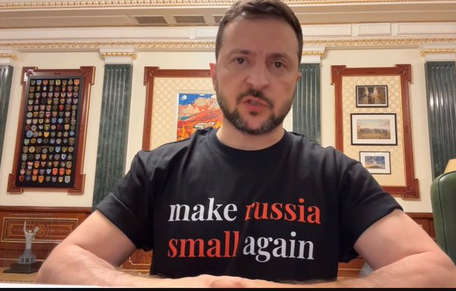
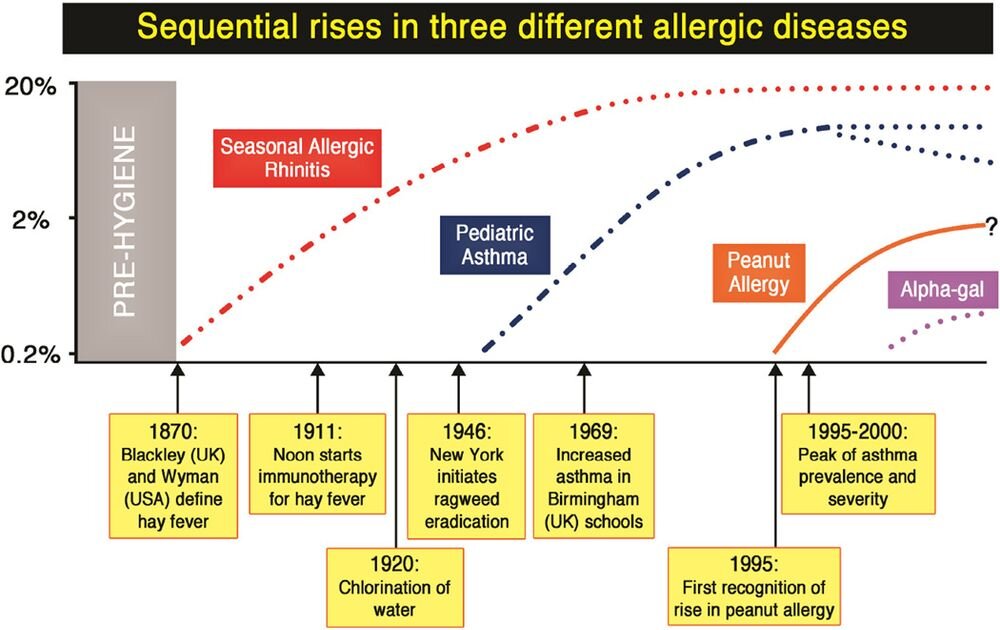
 4 points4 points4 pointsIf Zelensky has no, or few, cards to play that is solely because Trump has chosen to betray him and side with the aggressor in this war. So it is pretty rich for Trump to tell Zelensky he has no cards, when it is Trump who has taken them away! I actually think this dust-up in the Oval Orifice was a manufactured publicity stunt by Vance and Trump to try to weaken Zelensky personally, in the hope he will stand aside and allow a more Russia-friendly leader to replace him. That has always been Putin's desire. Putin wants Ukraine to hold an election (preposterously, in the middle of a war with parts of the country under enemy occupation) which he can interfere with and cast doubt on. This can provide a pretext for a further invasion later on if the new leader is insufficiently subservient to Russia. The row was televised and no doubt carefully selected clips will now be circulated to depict Zelensky as ungrateful and unreasonable, when he has been fighting for the life of his country for the last three years, against a massively powerful foe. Trump has furthermore overturned the entire military posture of the USA since WW2 in the European theatre. He has wrecked the deterrent value of NATO, which has been the centrepiece of military strategy ever since WW2. This leaves Europe exposed to military conquest by Putin's revanchist Russia. It is absolutely plain now that Trump and Vance are Russian stooges, wanting to carve the world up into spheres of influence without regard to borders or law. It is also plain that they hate the EU deeply and want it to fail. What better way of achieving that than to neuter NATO and thereby encourage Russia to nibble off bits its eastern frontier, sapping its energy and resources? Meanwhile Vance and Musk try to destabilise it on the political front by encouraging far-right authoritarian movements. The USA is now, suddenly, the adversary of Europe, not its ally. "The West" is now dead. What we have now is the free democracies vs. the rest. Those comprise the EU, the UK, Canada, Australia, New Zealand, Japan and a few others. The USA is not a member of this group.4 points4 pointsI don’t think so for a minute. He’s just had a lifetime of entitlement and is now trying to minimise as much as possible the opprobrium that has finally caught up him. Nor do I think Zuckerberg is on the spectrum. He’s just talking his own book, as these guys always do.3 pointsThe intrinsic properties of a manifold depend entirely on the manifold itself without any reference to a higher-dimensional embedding manifold (a coordinate transformation is an embedding of a manifold into a manifold of the same dimension). The distance between two points of a manifold depends on the path between the two points. That is, for the expression: (ds)2 = guv dxu dxv ds is not an exact differential (there does not exist a function s(..., xu, ...) for which ds is the differential). This btw is why there is no absolute time in relativity. If ds were an exact differential, then: [math]ds = \dfrac{\partial s}{\partial x^u} dx^u[/math] and therefore: [math](ds)^2 = \dfrac{\partial s}{\partial x^u} \dfrac{\partial s}{\partial x^v} dx^u dx^v[/math] [math]g_{uv} = \dfrac{\partial s}{\partial x^u} \dfrac{\partial s}{\partial x^v}[/math] But the RHS of this expression, as a matrix, has zero determinant, contrary to the requirement that the metric tensor is invertible. [If the above LaTeX doesn't render, please refresh browser.]3 pointsIn AD 98 the Roman Historian Tacitus wrote Agricola, an account of the military conquest of Britain (some twenty years earlier) by his father-in-law General Agricola. In chapter 30 he puts this memorable saying into the mouth of Calgacus, a Caledonian tribal chief, on the eve of the battle of Mons Graupius against the Romans in 83 AD. This phrase has rung in my mind ever since yesterday’s announcement that Hamas and the Israelis have finally agreed a ceasefire. You only need to look at press photos of the urban landscape to which the people of Gaza are now returning to understand why. https://www.bbc.co.uk/news/live/cx2nzlj2j4kt The one piece of good news today is that the Nobel Committee have announced the award of the 2025 Nobel Peace Prize to María Cochina Machado, the political opposition leader of Mexico who was barred from running in last year's presidential elections won by President Nicolás Maduro. https://www.bbc.co.uk/news/live/c1l80g1qe4gt Better luck next time Donnie :-P3 points3 points3 points3 pointsRan across this on bluesky. Prevalence of allergies is a fairly recent phenomenon, following the pathogen load reduction of improved hygiene and modern medicine. It’s a discussion of how to mitigate the situation. “Evidence suggests a combination of strategies, including natural childbirth, breast feeding, increased social exposure through sport, other outdoor activities, less time spent indoors, diet and appropriate antibiotic use, may help restore the microbiome and perhaps reduce risks of allergic disease. Preventive efforts must focus on early life. The term ‘hygiene hypothesis’ must be abandoned.” https://pmc.ncbi.nlm.nih.gov/articles/PMC4966430/
 3 points3 pointsBC will take in refugees, but only hipsters. Alberta will try to join the red states, First Nations in Alberta will let them join but keep the land beneath them. Saskatchewan will try to announce that they will join, but get too drunk to remember which side, but to be fair, no one remembers Saskatchewan. Or Manitoba. Ontario will write a stern letter to both sides, asking them to cut it out, and Doug will post a mean meme. But they are too busy fighting their own war against bicycles, speed cameras, and Toronto. Quebec will use that as an excuse to cut themselves from English-speaking Canada. According to a study New Brunswick is too busy hating itself. PEI will get ready for war, all three of them. But they have to go fishing on the weekend. Newfoundland and Labrador: they made an oral commitment. But since no one can understand them it is unclear what it was. The territories send the most ferocious moose and bear-mounted force but they will not arrive before the end of the war. But realistically, Canada would likely close the borders and hunker down, like everyone else. Either that, or just burn down the White House again. Trump has already started.3 points3 points"Verifying that you are human.This may take a few seconds" Scienceforums.net3 points3 points3 points3 pointsI was going to leave a pair of shoes at the end of my driveway to make it look like I was taken to the passers-by, but it was raining and I didn’t want them to get wet. Trump wanted to get raptured but the holy escalator at The UN knew better and stopped working.3 points3 points3 points3 points3 points3 points3 points3 points3 pointsLet's be crystal clear about this. We don't attack people here, we attack ideas to see if they're strong enough. I gave no opinion about you or your ego. When I said, "It makes you feel pretty special", I was not only paraphrasing what you've already said, I was speaking from experience. I joined this site more than 20 years ago chasing an idea I had about String Theory, after reading some Michio Kaku. I was not a STEM student in school, so it was a pleasant surprise when I thought I could decipher cutting edge physics without having studied its foundation. Almost immediately some early members came to my rescue, and instead of rejecting their advice, I studied their explanations. I read the threads they started. I asked questions and got great answers, which helped me with reasoning skills and researching the next steps. I still wish I'd had a better background in science, or had the time in life to go back to school. I found that learning what others have rigorously tested is more beneficial to me and less intellectually dishonest than criticizing what I imagine to be wrong with something I've only studied as an amateur. Does that make sense? I'm so sorry if all this seems harsh. I want to encourage your interest in science, and science is all about the methodology you use to reach your conclusions. They have to be good enough to base future predictions on, otherwise it's all sand castles.3 pointsNo, I read it. They did not say they wished to debate the beliefs (with or without scare quotes). They did say they had debated “religionists” (somewhere else, obviously) but did not say it was on any kind of science forum. They also said they disagreed with “the supernatural stuff” but not that they wanted to debate it. What they asked to discuss was pretty clearly spelled out in the post and thread title. The introduction, which gave the backdrop for the question, was presumably there for context. I wonder how much disagreement online is from failure of reading comprehension and how much is from deliberate misinterpretation used to try and justify indignation. (one way to tell the difference is when it’s pointed out that the scenario that was objected to is a straw man, are they relieved or do they just get more indignant)3 points3 points3 pointsThis actually made me burst out laughing. How can you tell there is any difference if you don't compare them?3 pointsAnyone who has worked in IT will understand what I mean when I say that LLMs do not reason but rather just generate outputs by building predictable word patterns (in a limited sense of predicting the next token) from an input query and running that through its training datasets. It is like a rudimentary kind of perception (word frequencies and proximities) divorced from a mind that would reason on those perceptions. If you are far into the weeds on this stuff...LLMs work by embedding tokens (numerical values of text) into vectors, where each dimension represents a different aspect of potential meaning. One dimension might be city heat. Kuwait City gets a nine, Amarillo gets a six, Anchorage gets one. LLMs convert text into vectors using a process called embedding. This allows the model to quantify the relationships between different pieces of text. It is crunching numbers which, if Amarillo is really hotter than Anchorage, will be able to output something that represents that relationship. It didn't reason anything, it just executed a mathematical operation that makes a sort of rudimentary perception of two places, in terms of temperature. That's all it does.3 pointsAnd you still ignore Swansont's suggestion. Another misunderstanding ?? Its getting to the point that whenever ( much more often lately ) someone presents a groundbreaking fundamental new 'theory', and they refer to it as a 'framework', I immediately think it was a crackpot idea, developed with considerable ( but incorrect help ) from an AI, and I refuse to read it, much less follow any provided links. Maybe I'm getting jaded, but I can't get excited or interested in the many new fundamental ideas presented in the last several months.3 pointsAgain: Learn mechanics, electricity, thermodynamics, gravity, optics, quantum mechanics. Understand why all this gives rise to chemistry, biology, and the almost unending variety of the world. Keep going up the ladder to the great unifying principles: Symmetries, the principle of least action, entropy, etc. As you do this you will lose focus of many details, but you will gain the ability to synthesize. Learn your maths: Calculus, complex numbers and functions, complex calculus (really a revelation!), geometry, algebra. You don't have to be a mathematical genius, just understand it and know how to use it. The hard way is the only way. Mathematics is essential in all this business. Let me give you an example of how it's rather salient technicalities of the old ideas that lead you to new ideas rather than the other way around: When people say there are virtual particles, they're not telling you the whole truth. "Virtual particle" is a term designed to picture a piece of really sophisticated maths. Namely: The integrals that represent intermediate procesess in relativistic quantum mechanics (quantum field theory, the so-called propagator) force you to include infinitely many processes, most of which do not consistently satisfy conservation of momentum. In QFT lingo they're called "off-shell" (they violate Einstein's condition that m2c4 = E2-p2c2). It's most certainly not the case that someone thought "oh, there must be virtual particles out there" and then invented the mathematics to represent that. It might have been something like that in times of the Greeks, or the birth of modern science, etc. It's definitely not the way it works today. People invented the "grasping tool" of virtual particles in order to represent these weird (from a physical POV) intermediate integrals in scattering theory. I really hope that helps.3 pointsThis is too stupid to argue with.3 pointsJust a suggestion ... If you don't understand Evolution and how its processes work, ask questions; don't make absurd proclamations and put your ignorance of the subject on display for everyone to see. ( looking at you Wigberto and m_m )3 points3 pointsAnytime I see consciousness mentioned in a thread about QM, I stop reading, and post a sarcastic comment, as obviously the OP doesn't even understand the 'interpretations', never mind the mathematical theory.3 points3 pointsGypsum is a form of hydrated calcium sulphate, which is not a carbonate. Heat treatment to drive off some of the water gives you plaster of Paris, which mixed with water sets hard. Gypsum also has other used, detailed on the internet. Clay minerals are not carbonates either, but aluminosilicates, variously hydrated and with other cations present. Many uses. Hydrated lime , or slaked lime is not a carbonate but calcium hydroxide, which can be derived from calcium carbonate by driving off CO2 to produce calcium oxide or quicklime, and then adding water. Sodium carbonate is washing soda, an alkali. Chalk is a relatively soft form of calcium carbonate compared to limestone. The multifarious uses of all these minerals are too long to list but are readily available on the internet.3 pointsStop it, please.3 points3 pointsThey are also used in face recognition. See: https://en.wikipedia.org/wiki/Eigenface3 points3 pointsI'm not sure what changed, but you should see that quote boxes are working again. The JavaScript file that wasn't loading now loads correctly, despite nothing obvious changing. For LaTeX, we're using a very old version of MathJax. At some point I'll experiment with switching to the latest version and then see why it might sometimes not work. I wonder if it works when content is loaded fresh, but when it's loaded dynamically (like when you go to the next page of a thread) it's not re-run to convert all the math code. Also, there was a problem with our email sending setup that Invision has now fixed for us. You should receive email notifications and password resets correctly now.3 points3 points
Important Information
We have placed cookies on your device to help make this website better. You can adjust your cookie settings, otherwise we'll assume you're okay to continue.
Account
Navigation
Search
Configure browser push notifications
Chrome (Android)
- Tap the lock icon next to the address bar.
- Tap Permissions → Notifications.
- Adjust your preference.
Chrome (Desktop)
- Click the padlock icon in the address bar.
- Select Site settings.
- Find Notifications and adjust your preference.
Safari (iOS 16.4+)
- Ensure the site is installed via Add to Home Screen.
- Open Settings App → Notifications.
- Find your app name and adjust your preference.
Safari (macOS)
- Go to Safari → Preferences.
- Click the Websites tab.
- Select Notifications in the sidebar.
- Find this website and adjust your preference.
Edge (Android)
- Tap the lock icon next to the address bar.
- Tap Permissions.
- Find Notifications and adjust your preference.
Edge (Desktop)
- Click the padlock icon in the address bar.
- Click Permissions for this site.
- Find Notifications and adjust your preference.
Firefox (Android)
- Go to Settings → Site permissions.
- Tap Notifications.
- Find this site in the list and adjust your preference.
Firefox (Desktop)
- Open Firefox Settings.
- Search for Notifications.
- Find this site in the list and adjust your preference.