

CharonY
Moderators
-
Joined
-
Last visited
Everything posted by CharonY
-
Well, to me that looks a typical distraction. Instead of negotiating for higher wages, just limit immigration? Hey here is a bad situation, let's not address it, but instead blame something else. Meanwhile, the effects of immigration on the UK labor market have been relatively small and mostly affect the segment of wages that are occupied by immigrants in the first place. https://migrationobservatory.ox.ac.uk/resources/briefings/the-labour-market-effects-of-immigration/ In 2021 about 240k work visa were approved (which seems a bit of a far cry from the claim of unrestricted immigration, especially compared to, say, Canada). Even assuming that all of those are unskilled workers the impact on salaries would be miniscule. And this is under the most favourable assumption. Also, I thought the discussion is about essential workers. Also based on the OP, are you assuming that essential work is only (or mostly) done by unskilled and predominant immigrant workers? Because other groups appear to benefit salary-wise from immigration.
-
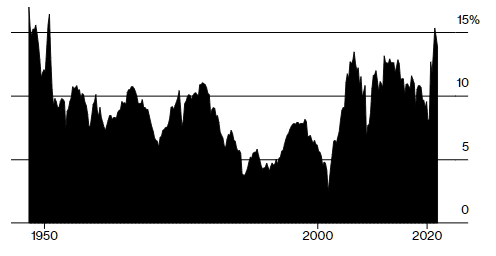
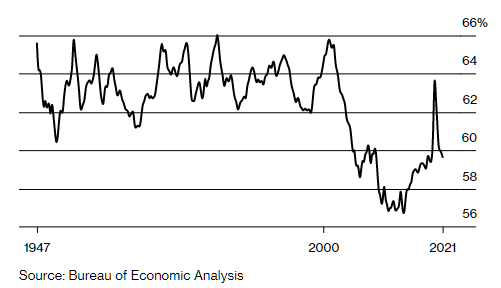
There is a good point in there as wage increases can increase inflation. That being said, some companies have made record profits for their shareholders and that is not in line with keeping wages flat. https://www.bloomberg.com/news/articles/2022-03-30/2021-was-best-year-for-u-s-corporation-profits-since-1950 Here you can see the profit margin of companies and compare that to the wage development. Since around 2000 there has been quite a separation of these values and after a pandemic bump employee compensation is dropping again. On the microlevel wage increases might not be ideal for certain businesses, but on the macrolevel it makes sense to push for wage increases when shareholders are having record profits. Otherwise we are just redistributing money upward.
-
! Moderator Note Trashed.
-
I think if they do it, it is more likely to see whether there has been unauthorized access.
-
Statues reminding us of the atrocities? Sure. Statues celebrating those responsible for it? No. A Hitler Statues is not a good way to remember the holocaust.
-
I do not think that is accurate, there are big differences in ideology and approach, and especially the religious right had always used wedge issues (evolution, race etc.) to exclude critical thinking approaches. But in parallel there has been a systemic change, in which increasingly high-schools cater to grades and both, parents and students are increasingly invested in optimizing that part at the cost of more complex intellectual development. If you cannot quantify it via a simple test it is of no interest to any party (except the teacher, perhaps). Increasingly, even good students seek out accomodations in college so that they can a score boost over their peers. Highschool teachers have started to provide model answers so that the student can memorize them and so on. Academic standards are falling, grade inflation is real, and administration is more than happy with that, as long a it puts bums on a seat. Try to make them think critically and ask open questions? Student evaluations will skewer you and there will be discussions with the dean. Better hope you are tenured. Add that together with increasing anxiety and the comfort of just knowing simple facts and you have a recipe to kneecap critical thinking skills without actually actively trying to do so. Perhaps it is not as bleak as I make it sound, but the trend over the last 10 years or so is going into that direction. In part it is because much of the critical thinking development had been moved from school to college in the past, but now, especially across North America (but also elsewhere) college is seen as an investment to build a career based on degrees. Academic skills per se are taking a bit of a back seat. And to be fair, I do see their point to some degree. If you paid tens of thousands of dollars and fail to get a degree, it can financially ruin you or put you on a very bad trajectory.
-
I think the race issue is so deeply coded that folks reacting to that are not even quite sure anymore that it is related to race at all. To many, this is about losing identity and norms. But of course, these norms were heavily associated with being white whereas the rest is just a deviation or fringe. Having the "fringe" now entering the main spaces is what makes many feel threatened. Not as such. Individual bets might be closer to polls, but they are also vulnerable to manipulations (https://www.forbes.com/sites/jimrossi/2020/10/29/election-odds-is-political-betting-more-accurate-than-polling/) It is also important to note that many parents are not in favour of their kids learning (or being forced to learn) critical thinking. In many cases it turns out that their kids will struggle with the concept for a while at least and some are inevitably going to fail. As parents and kids associate high academic grades with (financial) success, it becomes a risk to take challenging courses or being forced to go through them. We see a continuation of this line of thinking also increasingly in colleges. I think there are lot of knock-on effects going on.
-
The voters really came out against traditional conservatism and really marched into, well whatever this is.
-
Do you have data to that shows that it is true (aside from gut feeling, that is)? The primaries in which traditional conservatives (such as Cheney) are losing their seats to crazy pro-Trumpists suggest otherwise.
-
And the crazy bit is that her opponent then claimed that she never conceded, so she had to release an audio recording. https://www.politico.com/news/2022/08/17/cheney-releases-concession-call-audio-to-refute-primary-opponents-claims-00052593 I am not sure if related, but there are a lot of cases (I see it mostly from the pandemic perspective) where folks are utterly divorced from reality and are not even internally consistent. As such, it is not just US-specific but for some reasons folks do not seem to be able to deal with information anymore and at one point or another seem to just make things up and treat it as reality. And it is no longer limited to political spin or opinions.
-
In case you are curious, here is the warrant https://int.nyt.com/data/documenttools/mar-a-lago-search-warrant-and-inventory/6478c5980764438f/full.pdf
-
The title refers to Chinese women because the study involved a cohort of Chinese women.
-
The reason is pretty obvious, isn't it? It has been a repeated talking point of anti-feminist sentiments for quite a while. It is pretty much the only example that folks could think of, by cherry picking data in a very myopic way. Meanwhile, the very same voices ignore the large literature demonstrating medical sexism against women (for an historic perspective see e.g. https://time.com/6074224/gender-medicine-history/ , but there is a lot of peer-reviewer lit out there, too).
-
It would be great if you didn't just make things up. The differences in lethality between breast and prostate cancer is well documented across various metrics. Take 5-year and 10-year survival rates for example. These are common measures to identify how long patients survive after diagnosis, which includes treatments. It is important to note that the survival rate does not necessarily mean that the patients actually died from the particular cancer. That being said, in the US using SEER data (you can find them on the NIH website) the 5 year relative survival rate for prostate cancer is 97% (or 3% die) whereas in breast cancer the 5-year survival rate is about 90% (10% die). So from there we can already see that that the death for breast cancer is about 3x higher for a 5 year period (funding is roughly 2x higher, so as @swansont pointed out, prostate cancer is actually overfunded relative to breast cancer, and both relative to other, deadlier cancer forms) . Looking at longer survival it is even worse. 10-yr prostate cancer survival rate is basically the same as 5 -yr (97%). As I mentioned before, more folks die with rather than of prostate cancer. In comparison, the 10-yr survival rate of breast cancer drops to 84%. So if we look at longer-term survival, the difference increases to ~5-fold. An interesting aspect is to look at untreated effects. While the data is a bit spotty, there some data for breast cancer suggesting a 5-yr survival rate of 19.8% and 10-yr survival of 3.7%. There were some interventions when symptoms presented, so not all patients were left entirely untreated, but it shows that breast cancer left untreated can have significant impact. (https://doi.org/10.1002/(sici)1096-9098(200004)73:4<273::aid-jso15>3.0.co;2-h) In contrast, the 10-yr survival rate with untreated prostate cancer was 86%, showing that interventions in breast cancer are more important than for prostate cancer. Also just as an anecdote, way back we proposed to develop a simple urine-based diagnosis for prostate cancer and while there was some interest, ultimately it was canned as the attitudes were changing regarding prostate cancer. Physicians started to doubt that early diagnosis of most forms of prostate cancers would be beneficial to patients. The reasons is that most interventions would be more harmful than just let it be, unless they develop into some of the more rare aggressive cases. I.e. unless an assay is able to distinguish these forms, it can add to mental stress to the patients, whereas in breast cancer early diagnosis is more likely to save lives.
-
I think the confusion comes from a difference how literature uses the term "status threat" and your interpretation of the term. Status threat in the lit (see also e.g. https://direct.mit.edu/daed/article/150/2/56/98322/Status-Threat-Moving-the-Right-Further-to-the) refers to a perceived threat to personal or group status. It does not matter as such whether hierarchies are changing or not or whether an actual threat exists. The key here is that status threat can be enhanced by a number of factors. One of them is the observation of upward mobility of folks which, in a particular mindset, should not be moving up, which is then seen as evidence of a challenge to ones own status. Conversely, upward mobility of the in-group is much less likely seen as a status threat. Both effects are independent of the actual impact in a given hierarchy. Or to put in a concrete example, a black woman moving in a white men dominated area is more likely to be seen as evidence for status threat than a white woman or a visible minority man (details can be very group-specific), whereas a white man would be seen as "normal" (i.e. no threat). Again, regardless on whether any of those hires would have a real impact on existing hierarchies or not. A well studies aspect is for example a subset/variation called racial threat, in which the perceived threat (again, regardless of actual impact) by any given racial group can be increased by factors simply as being a bigger group or more prominent in everyday life. While the foundations are still valid, the overall attitude has changed a bit in some societies if you compare the studies from the 70s with more recent one for example. Or to make it short: what I am referring is the perceived threat to status, not any actual economic or social impact.
-
I read your comment with an emphasis of the first part, that everyone is affected by status threat. The difference here is context, status threat is experienced due to a mismatch of how hierarchies should be in ones imagination and differences encountered by it. Not all perceived hierarchies are the same. Especially among younger folks the idea of diversity is getting more accepted, and while minority and women are more comfortable with a shift which puts them further ahead, which was not always the case, also white men are increasingly comfortable with a re-arrangement of hierarchies in certain areas. So here the status threat would not apply as the mismatch does not occur. You are correct that structural changes, on average, do evoke status threat, or even by the perception of structural changes. However, it is not something that necessarily affects everyone.
-
So the data on that is a bit unclear, but the there has been at least one larger study that suggests that although rare some men had persistent erectile dysfunction and the risk increased with length of treatment. A few more things, though. Finasteride has been associated with increased suicide ideation, so especially if one is prone to depression or similar episodes one should not take it. There is also mixed evidence regarding prostate cancer, with some showing lower rates of low-grade cancer compared to placebo groups, but an increase in high-grade cancer. AFAIK it is not clear why that is the case.
-
That is not necessarily true. Status threat in this context does not refer to a general fear of loss of status, but rather due to specific perceived threats (with emphasis on perceived). There is a bit more on racial status threat (related to immigration) than on gender-based status threat, I believe. For example, studies in Europe and US indicate that white folks (men and women) perceive visible minority immigrants as a higher threat to their status for a range of reasons. These include the assumption that immigration would harm the economy by being a drain, that they outcompete and are given unfair advantages over native workers. I cannot clearly recall the papers, so I might be a bit off, but I think that a similar effect was also seen in male-dominated spaces (management but also e.g. engineering and IT) where women were not seen as a competition unless they rise up the ranks, at which point a similar attitudes were seen (e.g. unfair advantages, disruptiveness etc.) though I don't think it was framed as status threat per se (but looks fairly similar). Edit: I should add that in either case status threat arises from a mismatch in imagined hierarchies (e.g. white men on top) with the actual situation (e.g. successful women). It should also be emphasized that these perceptions are not limited to white men, as we all are exposed to stereotypes (and colonial histories) which form our worldview.
-
I think that might be a bit of a stereotype in itself. While there are some studies showing that certain female groups might be more egalitarian, I do not think that it does not seem to be an universal trait and in many cases it may just happened because folks expect it to be as well as because women often were not in a situation to set up power structure (i.e. they were egalitarian because they had to). I think both genders are affected by status threat. It is more that women generally are associated with lower status and the discrepancy of what folks perceive what their status should be to where they are can exacerbate the status threat. E.g. a black woman in power is seen as a bigger threat than a white woman and this applies to both genders. I would have to look but I *think* that the perceived threat was a bit lower in women compared to men, but I am not sure how consistent it was. There is, however, a strong association between gender stereotypes (especially those supporting the strong man stereotype) and perceived status threat by minorities. This applies to both, men and women. I.e. there is considerable overlap and in my mind we are clearly looked at learned traits.
-
There are also competing hypotheses regarding exposure. There are studies (e.g. the LEAP-On study) which showed that exposure to certain allergens can reduce allergic reactions. It has been embedded in the toxin hypothesis to some degree. I.e. the allergic pathways are necessary to deal with harmful substances and indeed, many allergenic proteins in peanuts have defensive properties which work against certain bacteria and fungi. Based on bee venom studies it was found that these allergic pathways are also the same that are involved in developing resistance against toxic substances in general. While it is not clear under which conditions this detoxification pathways overreact (i.e. result in a harmful response) the fact that low-dose exposure seems in many (but not all) cases reduce the response might be just a built-in flaw in the way our immune system works. Similarly this is why with certain pathogens we only get mild symptoms while it tries to eliminate them, whereas certain pathogens in certain individuals can cause severe immune reactions (e.g. cytokine storms). It is an imperfect system to begin with and a lot of factors, environmental and genetic, influence the overall outcome. As I tried to allude to above, the distinction between those are not necessarily clear. Non-cytotoxic substances can cause inflammation, sometimes even severe ones. Sometimes it makes sense, non-toxic bacterial proteins or other components could be used as recognition for foreign substances that need to be addressed, for example. In others it is simply not clear. But then, a system that is capable of identifying and dealing with new substances is almost by default less categorical. That is, the system has to learn how to react. As such there is always the risk that the response is not ideal relative to the risk of the exposure in the first place.
-
I don't know whether there are larger studies with immunocompromised patient cohorts, but small-scale studies show that the vaccines were well tolerated, but immunogenicity varied quite a bit. While some of the patients might have selective IgA deficiency, I don't know whether there are studies focusing on this conditions specifically. Generally speaking though, they would expected to have similar or better outcomes than compared to other immunocompromised patients. See e.g. Ponsford, M.J., Evans, K., Carne, E.M. et al. COVID-19 Vaccine Uptake and Efficacy in a National Immunodeficiency Cohort. J Clin Immunol 42, 728–731 (2022). https://doi.org/10.1007/s10875-022-01223-7 Some other studies seem to show some level of protection, but it looks a bit different than in non-immunocompromised individuals and breakthrough infections (pre-Omicron) were a bit more common.
-
This sounds like a variant of the Dunning-Kruger effect. It works best in conjunction with an erosion in trust of actual experts (or oversaturation in media of folks who claim to be "experts").
-
Well, but that is not all of it. The way our immune system works simply has the room for error. It is inbuilt and unlikely to be weeded out by selection. The hygiene hypothesis is just one hypothesis, others include change in diet. In both cases the assumption is that being exposed to something different to what our immune system evolved to tackle with might cause allergies. However, there are others including the toxin hypothesis, which proposes that allergic response are triggered by our immune system dealing with potentially poisonous substances and that it doesn't always get the balance right. Yet other folks have proposed that having mild allergic reactions is an avoidance cue, telling us get away from a certain area. The big issue is that none of them have ironclad support, owing to the complexity of our immune system.
-
A bit way back there were a couple of panels on this issue, and generally speaking it appears that if we look at gender specific cancers, some of the more deadly ones that are being underfunded tend to be those in the female reproductive system (especially uterine cancer). There were several things being discussed, but the range of reasons were broad, including difficulty of detecting them in the first place, to lack of good model systems, but in part apparently also biases among researchers. Especially with regard to prostate cancer a common saying is that most men will die with, rather than of prostate cancer. Breast cancer has decent survival rates, but IIRC in contrast to prostate cancer, it actually requires more intervention to reduce lethality. In contrast, improved prostate diagnostics had little impact on health outcomes. Oh, you know, white is the default, including variations is just a woke conspiracy.
-
Uh, there is a push from some conservative provincial governments that actually go into that direction.