
studiot
Senior Members
-
Joined
-
Last visited
Everything posted by studiot
-
My thoughts go out to the recent cold weather in continental North America. Especially since we in the UK have benefitted with unseasonally warm weather from the outer circulation of this weather system. So it is sad to see climate science deniers or just the anti green energy lobby hard at work. https://www.bbc.co.uk/news/world-56085733
-
Thank you for responding, but this is not an answer to my question. I asked for your view, not a general statement attributed to everyone. This is the trouble with your statements - you appear to tar everyone in the world with the same brush and you have done this in other threads - I see another example in another medically directed thread. To extend my question, on the same basis Are you therefore implying the everyone want to murder other folks, just because there are some people in this world that want to do this?
-
Excuse me but this sounds rather condescending towards your audience. I am still trying to determine if there is a language barrier involved here, or if some sort of hoax is being perpetrated. There is definitely a Prof Reza Sanaye listed in Paris. 'Pointy' could be a reference to point set topology poorly translated from Farsi or French. The rest of the oddly structured English could also be a reference to something I have been playing with and recently mentioned here, which I see as missing from basic set theory and is currently called 'overlap' in the English speaking world. I look forward to a resolution of this quandrary.
-
I'd call it a helpful connection between the two equations. 🙂 If x is the quantity in a lake at time t then the change of x, dx/dt = rate of input - rate of output - both expressed as functions of the quantity x with time. So the output of lake 1 (as the given expression) is the input to lake 2. As Joigus says the ouput from lake 2 is formed in the same way. Putting these two expressions into my little equation above gives you teh differential equation you seek. You may need an integrating factor for this one , have you done these ?
-
Does this mean you support slavery ? Slavery as practiced by say the Nazis, but also many other groups in history, leads to cheaper labour and products. "as cheap as possible" is always a cringe making excuse for something bad.
-
Suppose we had an all out nuclear war. That might last 5 to 24 hours. What fraction of the Earth's history is that and what difference would it make ? Alternatively what about Krakatoa ? This was not the largest volcanic eruption in history yet it certainly changed the climate in a day. Or even quicker What about the Chicxulub meteorite ? How long did that impact last ? It was enough to destroy the dinosaurs.
-
The amount of polutant entering the first lake per second is constant. So the concentration of the pollutant gradually rises in the lake. So the amount of pollutant leaving the first lake lake gradually rises with time. So the amount of pollutant entering the second lake also rises with time. So the equations of concentration are not the same for both lakes.
-
Thanks for the quote. +1 This story of Walmart/ASDA demonstrates further distorted values of the free market. +1 https://www.bbc.co.uk/news/business-56085128
-
If intelligence was truly inheritable in the manner you assert, what % of geniuses would have children of greater mental stature than themselves ? Can you substantiate that with measured incidence compared with statistical parameters? Please give proper mathematical evidence in deriving your answer. I may be still running to get into biology 101, but the applied maths (statistics) I can handle, since that is my field.
-
Welcome Lukasz and thank you for the information. +1 I look forward to more excellent contributions from you. I have been playing with set theory involving non indpendent members (overlap) lately and there seems to be little available. Do you know anything about this ? Please don't make Kennedy's Berlin mistake. 🙂
-
+1 Not quite Sheep lamb. Mares foal. Seals pup Biches whelp I'm sure there are plenty more but that will do.

-
Welcome nuDAN and welcome to your first plus point. Nice question.
-
I understand the issue of thermal transmission. Your heat transference from the inside to the ouside (or cold from the outside in if you want to look at it this way) depends on the continuous path through the metal from the cold outside to the (hopefully) warmer inside. If you can introduce a barrier between the source of heat and/or cold you will slow this transference down considerably. So you can also surface insulate the outside of the frame with a layer that lets the cold through much more slowly. I don't know if this would be visually acceptable but is almost as effective as internal insulation. Secondly you can buy mositure absorbance trays devices to place in windowcills. I will try to search out some for you.
-
Thank you (and others who replied with more information) for this simple explanation. I had no idea there was a difference so I was quite correct to say that I am not qualified to answer the question as I would probably have given an inappropriate one. Really ? Again I am not an expert in lingusitic matters, but I have always understood that both languages are 'romance languages' in that they derive principally from Latin.
-
It is not unique. As a californian, don't you have the verb to foal for horses ?
-
I see no evidence and prescious little research in your argument, but a great deal of Spanish - I would start by reminding you that the language of ScienceForums is English. I am not an expert on these subjects, but it does seem to me that these ideas have received excessive public exposure in recent years, heavily promoted by the gutter press. As an example I offer you an anecdote. "Nearly two weeks ago when I received my Covid vaccination, the doctor had a list of questions to ask before administering the jab. Guess what his first question was ? Now I answered, as I always do to this question that seems to top official forms these days, I can't answer as I am not qualified to answer (which I am not). Then the doctor went on to sensible questions like Have you any allergies etc? which of course I answered happily. So that's 'race' dealt with. As to brain size. I am not a biologist, but I have read that they will tell you that humans do not have the largest brains on the planet, yet I see no other species anywhere near dominant. And IQ ? well It is well known that those that 'study' for the IQ test achieve better results than those that don't, especially if you allow a wide definition of study to admit cultural learning. Since this applies at all levels, it simply shows that most folks at all levels will achieve better results if they study, not only that they can learn, but that they do. But then the fact that they can read (in order to take the test) shows they can learn, since babies can't read.
-
Here is bang up to date lecture presenting and interpreting all the known data by someone who really knows his stuff, Peter Oppenshaw. The 45 minute lecture addresses sympotons, ethnic and age group distributions in the UK and other countries, infection and death rates, vaccines and vaccinations, the bichemistry, microbiology and immunology of the virus and its interaction with humans and more.
-
Wish things were this easy. Yes, steel is approx 3.3 times as dense an concrete but its specific heat is about half that of concrete. All this means is that to store a given amount of heat the mass of steel requires is about 2/3 the mass of concrete per degree storage temperature. Or that you have to heat the concrete to a higher temperature for equal masses of steel and concrete to store the same amount of heat. However there is another factor in play. The heat transfer coefficients (both internal and external) are much higher for steel so you would loose heat more quickly from the steel, perhaps more quickly than you want to in a poorly designed heat store.
-
On the first point, I've added a small addition to the script to reload MathJax once content changes in-browser, so edits and quick replies should now show you the rendered math once they are submitted. Here goes, fingers and toes crossed. [math]\frac{{dy}}{{dx}}\frac{{\Delta y}}{{\Delta x}}\frac{{\delta y}}{{\delta x}}\frac{{{\partial ^2}\Omega }}{{\partial {u^2}}}\frac{{{\partial ^2}\Omega }}{{\partial {v^2}}}\frac{{{\partial ^2}\Omega }}{{\partial u\partial v}}\mathop {\lim }\limits_{\delta x \to 0} [/math] Edit using my newly found edit function. BINGO. Thanks, a Sunday treat.
-
But I said, and you even quoted, the panel voltage is low. Sure you can string together many panels in series, but then the maximum current you can supply is the current available from a single panel. And if you want to charge batteries then it is current you want, not voltage (the hint is in the word charge). Furthermore a series connection means that you are at risk of loosing your supply (by sod's law at the most inconvenient moment) - just likwe old fashioned christmas tree lights. Yes, ground source have advantages over air source, but they also have disadvantages. Firstly how many people in blocks of flats, especially high rise could employ them ? Bear in mind that by far the greatest % of folks live in cities - even in Australia - and I understand the trend is increasing not decreasing. Ground source installations require quite a lot more capital investment, usually twice as much on average. Thirdly, by their very buried nature, pipework will be much more expensive to repair or replace. So there you have it. There is no perfect system.
-
Yes I already did. +1 to i(supersleuth)now for finding that out.
-
I'm glad you liked my references. Note there was more than one book listed. The attachments were scans from a few pages of that oft quoted standard by Wilder. I doubt that anyone agrees with everything that was said and you should not in any case jusdge just by a few pages, they were meant to be no more than a taster. Some more for you. First you mentioend several times the Solvay conference. That was a long time ago. A more modern conference (Cambridge 2006) on presaged this 21st cent book of interactions And slightly earlier came this collection Finally you started with a proposition that notation can cause communication difficulties. Here is a good example from the early days of vector analysis Keep us informed of your progress. 🙂

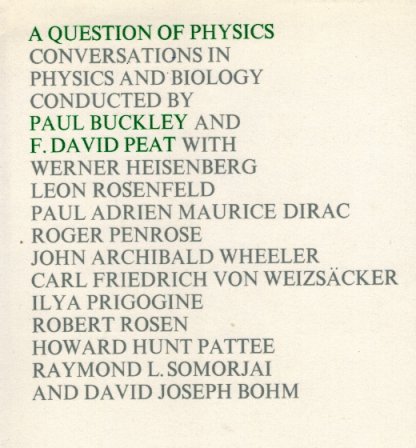
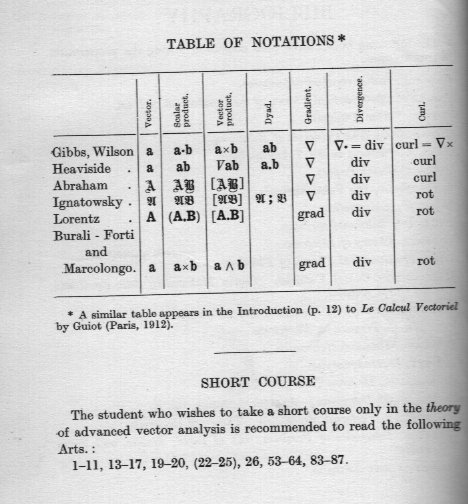
-
Actually they might so arise. Have so not heard of the Brouwer scool of intuitionist maths ? It is one of the principal schools of modern maths. https://en.wikipedia.org/wiki/Intuitionism I too am 'eagerly' awaiting your demonstration of a paradox, though eagerness is beginning to wear a bit thin.
-
This is a discussion site. Not a teaching site per se, although some teaching does take place as knowledgeable members are often happy to offer some measure of instruction. The great advantage of reading the rules is that you would know that the 5 posts limits only applies to the first 24 hours of membership. Nothing is stopping you stating your point or points for discussion.
-
and ?