studiot
Senior Members
-
Joined
-
Last visited
Everything posted by studiot
-
+1 Have you ever read 'Chocky' by John Wyndham ? A most imaginative book (only 150 pages) and well ahead of its time.
-
+1 But remember it is not the whole ocean that supports these organisms, only the very top layer and only over parts of the ocean surface.
-
It is only Bayesian if a priori probabilities can be assigned. This cannot be done with Pearsonian probabilities. One other piece of information not supplied to the chooser of random A, B, C or D is that the assigned probabilities must add up to 1. Pearson has no such requirement as all he is assigning is the probability that A, B, C, or D is 'correct' without any knowledge of the 'right answer', or even if any one of them is 'correct'. A better way to analyse this is to consider the probability of being wrong, not right
-
OK so you are still with the program. 😀 Remember that structural mechanics is mostly about statics, so don't get to bogged down in frameworks, which an older book will probably be mostly about. Some stress related comments I have been holding back might be helpful in your reading. It is tempting to say that Stresses are internal forces due to applied loads and that it is impossible to apply external stress. Furthemorer strains are the results of the stresses and thus indirectly the results of the external loading. This is how the subject is often taught. Unfortunately Nature refuses to fit in to the human preconception and desire to categorise everything into neat little boxes. So although this is a good rough guide Nature provides for a mechanism to apply an external stress , and a way to have internal stress without strain (particularly applicable to geology) and strain without stress. A good way to think of stress is as I started with the bouyancy diagram, remember I said there is a lot more to this simple example than old Archie got out of it. So, for the moment, think of stress as a distributed force (where its action is distributed along a line or over an area or through a volume) rahter than having a single point of action. But just be ready for nature to bite us in the arse again when we come to consider forces at right angles to the normal force.
-
Snouts. These are not bilateral and not every creature has one or if they do uses it for digging. In fact you have pointed out one particular similarity, but said nothing about the many many difference between creatures. Why do some have fur, some have skin, some have olfactory senses in the nose , other elsewhere, some have eyes, some are blind, some have very hollw bones because they fly (talking about bilateralism, bilaterism is good for flying things and most swimming things, although I understand from D Attenborough that there are some fish that lie one one side only on the bottom and are not bilateral. There was a recent popsci book that explains all this, I will post a reference when I can remember it.
-
This is a version of the Monty Hall or Newcomb problem. If you choose A, B, C or D at random, There are no a priori probabilities. These can only be assigned if the chooser has no knowledge of any values assigned to A, B , C or D. You can't conbine Bayes probabilities and Pearson probalities.
-
It's good that you are talking the time to think about what has been said. I look forward to your thoughts when they arrive. +1 Another point to add into your cogitation. Simultaneity, what do we mean by it ? If we mean that the temporal distance between two points in space or spacetime is exactly zero then there is a problem to overcome. Never mind foliations, branes and other exotic maths. The issue is simply that of the metric, since the question implies a coordinate system The first and most fundamental axiom of any distance function (metric) is that If D(a, b) is a function defining the distance between two points in a coordinate system then D(a,b) = 0 if and only if a = b
-
Hopefully you are actually going to answer my question. You need to understand the difference between 'c' which is both a constant and an invariant, which happens to have the dimensions M0LT-1, regardless of the number of spatial and temporal dimensions you employ. This would also include time independant solutions to motion equations, such as standing waves (light can exhibit standing waves). The'speed of light' is a different animal entirely which has different dimensions in different models. Unfortunately too many pass glibly over this distinction and I don't think any popsci authors have any inkling of it altogether.
-
This is why the Mosquito was such an innovative aircraft, it did not require anywhere near so much highly developed skill or specialist machinery to make. Indeed many furniture makers were redirected to manufacture large parts of the airframe.
-
I am sorry that goes no way at all to answering my question. You specified speed in space and in spacetime. Are you aware that these represent different physics quantities in space and spacetime, as the time rate of change of a 3 vector in space and a 4vector in spacetime ?
-
What do you mean by this ? Please define (mathematically) the speed of light in spacetime ?
-
Interestingly this a a little extra I did just learn from Wikipedia. I had thought the industrial problems of both Austin and Morris did start untill the 1960s but apparantly it went back a lot further and even affected the war effor when morris were attempting to build spitfires. https://en.wikipedia.org/wiki/Supermarine_Spitfire
-
I had two Morris Minors in the early 1970s. My brother had an A40 Farina. A traveller and then a saloon, both ancient 2nd, 3rd, 4th.... hand by the time I got them, but they were so easy to work on. I bought the works manual from BMC and was tickled by the chapter on Africa. (The motors were designed for british southern and east Africa). There was a whole chapter on how to find a blacksmith if you broke down in the Veld, and how to make a boy scout tripod to lift an engine out. In the 1973 fuel crisis I managed to keep the last one going by fitting a modified Ray Martston electronic ignition, I originally built for a ban-the-bomb Cortina, and mixing some diesel with the petrol. The engine didn't like it and the car ran slowly, but it did get me to work and back evey day at Heathrow.
-
Octane rating was only one aspect of it. Magnetos were used before the coil and distributor came along. ( and still are on aero engines for redundancy purposes ) Correct combustion depends upon temperature, mixture, timing compression ratios and as I already mentioned engine load. Here is a better discussion than I can quickly construct. full but easy to read explanation of effects of ignition...Nice piece to read when you have time Timing explained in the easy way!
-
One purpose of the advance retard mechanism was to prevent engine knock or pinking. This was to do with fuel quality and load rather than engine speed per se. (Particularly) Pre-war vehicles had fewer automatic adjustments for example manual choke. Lorries and buses etc obviously had larger loads in the first place so were in greater need of manual adjustments. This included advance-retard controls.
-
-
Both Phi's questions seemed pretty clear to me and probably to others as well.
-
There is very little firmly established in Geoscience and I have been careful to signpost the difference between an hypothesis and more solid (pun intended) data. For anyone interested there is a pretty new (post 2023) programme on PBS America about plate tectonics. today. It is due to be repeated twice more today and can then be found on catchup. The planet of the plates.
-
And in my opinion. +1 Never seen an oven door with springs, except microwave ovens and they tend to have a sturdy mechanism. But if you like a spring reasembly challenge try reassembling a sprag clutch.
-
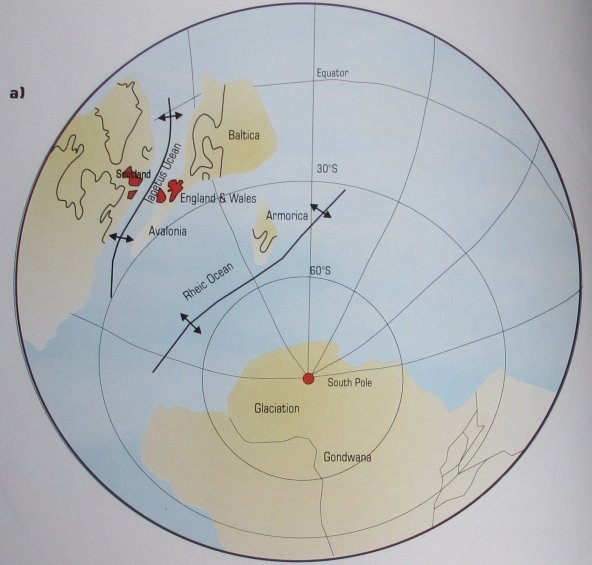
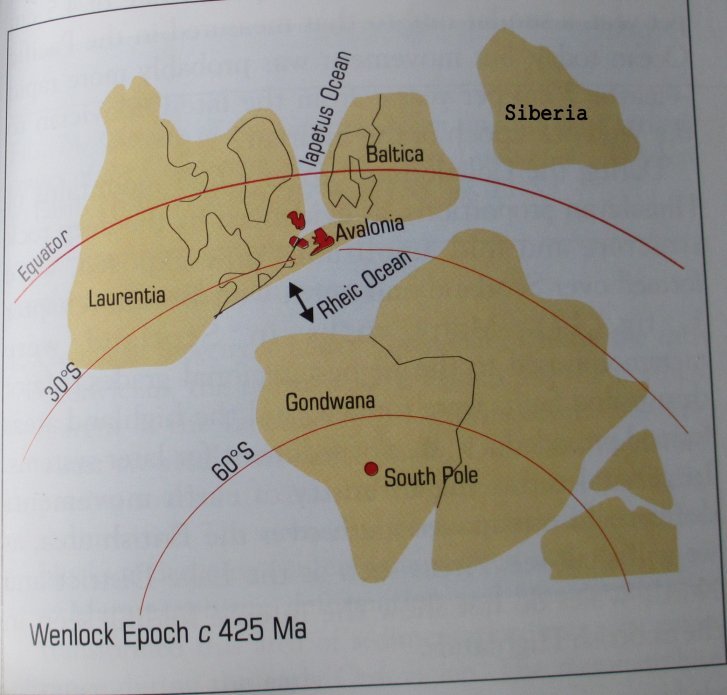
Nowhere have I said that I consider Dorset geology to be something special. But I was asked to compare and contrast with that of Devon and Somerset, whose geology is definitely different. There are multiple questions to be asked, some being quite complex, such as the source of the constituent materials for the rocks we see, for instance the proportion of garnets in the sandstones. Nor do I consider what I am saying strange. What would be strange would be claiming that Dogger Bank is part of Britain, today. Yes it once was so people walked across the land connection and lived there. But today Dogger is part of the North Sea floor. My presentation has not yet come to placement mechanisms such as folding, thrusting, faulting, uplift etc. Nor have I yet added in the effect of sea level changes. There is a real question as to why the rocks of the SW peninsula (Cornwall, Devon and Somerset) are not similar to those of Wales and the Midlands, but are very different, despite all being called Old Red Sandstone. There is currently no model that answers this except the very recent one that requires a 400km displacement along the Bray fault, transferring the whole peninsula from former Avalonia to former Armorica.
-
Sadly this is not serious Science. Since it says "Engineering Made Easy", I wonder why you have posted it in Physics ? I recommend you look at some reputable sites rather than trawling the web for wishful thinking and nonsense.
-
Did you also read this bit in Wiki ? So it is entierly consistent with the story I am developing for Paul. Avalonia is shown in my diagrams. But note the comment "beyond the reach of most boreholes" I could make the same comments aboutthe mantle. Whatever rocks underly the sea and lake floors were obviously there at the time I referred to as Dorset did not exist, and continued to be there subsequently when the sediments that make up modern Dorset were being laid down, with some subsequently metamorphosed. The the Dorset oilfield is jurassic/cretaceous not carboniferous. The rocks I am referring to are obviously what the BGS call Solid geology on their maps. There are also Drift maps. But there is much still unknown about the SW peninsular and there are some suprises to come so keep the discussion going.
-
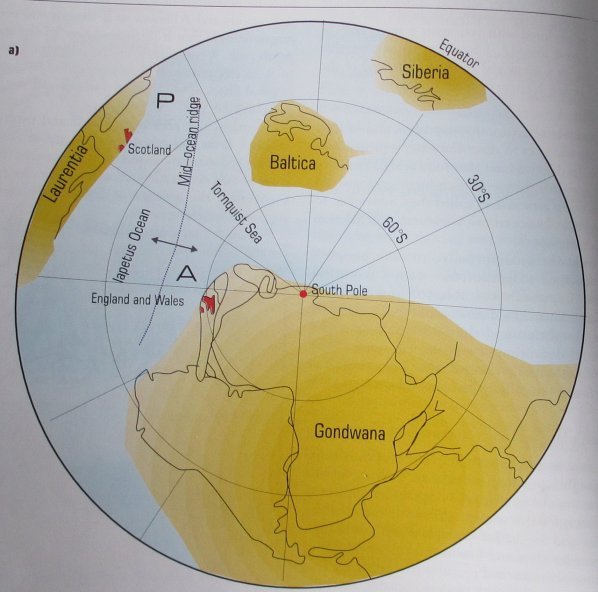
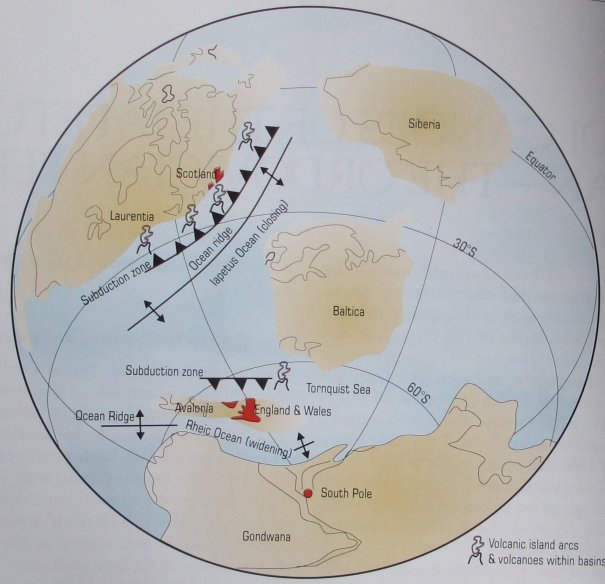
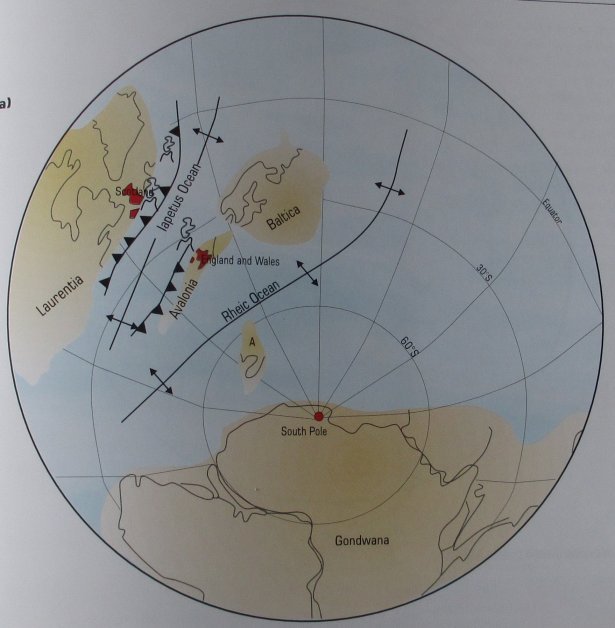
To continue We need to go back to the beginning to understand how, when and where the different types of rocks and chemicals arise. So 4.6 billion years ago the Earth was a ball of molten (i.e. very hot) material. Gravity caused some differentiation of the constituents. As the ball cooled the outside reached solidification temperatures before the inside, so forming thin solid crust. As this crust continued to cool it shrank and cracked into a pattern of crazing, as does drying mud or concrete or resin. As a result hotter liquid material pushed up from below through the cracks and spilled onto the surface of the already solid material building it up further. Also some of the patches completely separated from each other forming tectonic plates. The important point for Dorset geology is that. This material is, by definition, all igneous material. There were no other types of rock on the planet at that stage. Igneous rock is formed directly from cooling molten rock, called magma. There is no igneous material in Dorset. All this early buildup went to form the 'shield areas' in say Australia, Canada, South Africa, Siberia etc... After half a billion years or so it rained for about a billion years. The combination of erosive forces generated a source of sediment material along with an ocean to distribute it in. Thus commenced the erosion - transportation - deposition cycles that would eventually form the sedimentary and metamorphic series of rocks in Dorset. Life also started on Earth about this time, towards the end of the ‘rainy season’. This is important for Dorset since nearly all chalk requires life to form. The Jurassic series has both biological and non biological origins. Fast forward another 2.5 billion years with more igneous production, erosion - transportation and deposition cycles and two new forms of rock type appeared as well. These cycles led to sedimentary rocks being laid down. The other new type being metamorphic rock. Rock that has been altered by either heat and/or the pressure of the load above it. The process of Metamorphosis take place in both igneous and sedimentary rocks. Dorset has both unaltered sedimentary rocks, such as the chalk and clay, and altered sedimentary rocks such as Lias and shale. We arrive at a time between 500 MYA and 600 MYA. for a further look at the world. There was a large continental mass centred on the South Pole called Gondwana and a series of smaller lands , Laurentia, Baltica etc. Laurentia being basically North America and Baltica being Scsndinavia, North Western Europe and North Western Russia. The rest was ocean. We are now in the Cambrian period and the beginnings of the British Isles can be seen on the map. Northern Scotland and Northern Ireland are shown as small red blobs on the coast of Laurentia, Southern parts are shown on the other side of a former ocean as part of Gondwana. It should not be thought that either looked anything like modern Britain, as many parts had yet to be formed. As already noted plate tectonics was moving things about, so the next stage shows a convergence of lands, but Gondwana beginning to break up. In particular a new fragment called Avalonia, carrying the future England and Wales, detached. This takes us into the early Ordovician period. 500 to 460 MYA. This process continued throughout the Ordovician and Silurian periods, with further detachments from Gondwana and continued closing of the old ocean called the Iapetus ocean. A new ocean was opening between Gondwana and the other plates. England/Wales and Scotland were now very close together. We are now at about 435 MYA and the Ordovician is coming to an end. At 425 MYA we are into the Silurian period and Lautrentia and Baltica are now joined to Baltica by a land bridge formed from Avalonia. This new large land mass is now separated from a much reduced Gondwana by the opening Rheic ocean. It should be noticed that that this new land mass is bang on the equator. The Silurian is note for hot dry conditions. At around 400 MYA the Iapetus ocean finally closed with a bang. The bang being the formation of a great mountain range, known as the Caledonian Mountains. This was the Caledonian Orogeny (orogeny = mountain building) And this ushered in the Devonian period when Britain came together in what is known as the Iapetus Suture, During the next hundred million years there was more activity during which a new ocean (the Atlantic) opened, separating Britain (as was) and the rest of Europe from North America. Devon and (West) Somerset were formed by the sedimentary and pressure metamorphic process as previously noted and the Carboniferous period followed the Devonian. But the granite intrusion of Devon and Cornwall had not occurred at this stage both were still sedimentary/ pressure metamorphic. But none of this really affected Dorset, which had yet to be formed. So the third part of the Dorset story will come in the next instalment. Questions ?
-
But it was a p**s pump after all. 😄
-
The half life of U235 to Pb 207 is 710 million years The half life of U238 to Pb 206 is 4470 million years Both are used, preferably in zircon crystals as a cross check for each other. https://www.amnh.org/learn-teach/curriculum-collections/earth-inside-and-out/zircon-chronology-dating-the-oldest-material-on-earth