studiot
Senior Members
-
Joined
-
Last visited
Everything posted by studiot
-
Hopefully you are actually going to answer my question. You need to understand the difference between 'c' which is both a constant and an invariant, which happens to have the dimensions M0LT-1, regardless of the number of spatial and temporal dimensions you employ. This would also include time independant solutions to motion equations, such as standing waves (light can exhibit standing waves). The'speed of light' is a different animal entirely which has different dimensions in different models. Unfortunately too many pass glibly over this distinction and I don't think any popsci authors have any inkling of it altogether.
-
This is why the Mosquito was such an innovative aircraft, it did not require anywhere near so much highly developed skill or specialist machinery to make. Indeed many furniture makers were redirected to manufacture large parts of the airframe.
-
I am sorry that goes no way at all to answering my question. You specified speed in space and in spacetime. Are you aware that these represent different physics quantities in space and spacetime, as the time rate of change of a 3 vector in space and a 4vector in spacetime ?
-
What do you mean by this ? Please define (mathematically) the speed of light in spacetime ?
-
Interestingly this a a little extra I did just learn from Wikipedia. I had thought the industrial problems of both Austin and Morris did start untill the 1960s but apparantly it went back a lot further and even affected the war effor when morris were attempting to build spitfires. https://en.wikipedia.org/wiki/Supermarine_Spitfire
-
I had two Morris Minors in the early 1970s. My brother had an A40 Farina. A traveller and then a saloon, both ancient 2nd, 3rd, 4th.... hand by the time I got them, but they were so easy to work on. I bought the works manual from BMC and was tickled by the chapter on Africa. (The motors were designed for british southern and east Africa). There was a whole chapter on how to find a blacksmith if you broke down in the Veld, and how to make a boy scout tripod to lift an engine out. In the 1973 fuel crisis I managed to keep the last one going by fitting a modified Ray Martston electronic ignition, I originally built for a ban-the-bomb Cortina, and mixing some diesel with the petrol. The engine didn't like it and the car ran slowly, but it did get me to work and back evey day at Heathrow.
-
Octane rating was only one aspect of it. Magnetos were used before the coil and distributor came along. ( and still are on aero engines for redundancy purposes ) Correct combustion depends upon temperature, mixture, timing compression ratios and as I already mentioned engine load. Here is a better discussion than I can quickly construct. full but easy to read explanation of effects of ignition...Nice piece to read when you have time Timing explained in the easy way!
-
One purpose of the advance retard mechanism was to prevent engine knock or pinking. This was to do with fuel quality and load rather than engine speed per se. (Particularly) Pre-war vehicles had fewer automatic adjustments for example manual choke. Lorries and buses etc obviously had larger loads in the first place so were in greater need of manual adjustments. This included advance-retard controls.
-
-
Both Phi's questions seemed pretty clear to me and probably to others as well.
-
There is very little firmly established in Geoscience and I have been careful to signpost the difference between an hypothesis and more solid (pun intended) data. For anyone interested there is a pretty new (post 2023) programme on PBS America about plate tectonics. today. It is due to be repeated twice more today and can then be found on catchup. The planet of the plates.
-
And in my opinion. +1 Never seen an oven door with springs, except microwave ovens and they tend to have a sturdy mechanism. But if you like a spring reasembly challenge try reassembling a sprag clutch.
-
Nowhere have I said that I consider Dorset geology to be something special. But I was asked to compare and contrast with that of Devon and Somerset, whose geology is definitely different. There are multiple questions to be asked, some being quite complex, such as the source of the constituent materials for the rocks we see, for instance the proportion of garnets in the sandstones. Nor do I consider what I am saying strange. What would be strange would be claiming that Dogger Bank is part of Britain, today. Yes it once was so people walked across the land connection and lived there. But today Dogger is part of the North Sea floor. My presentation has not yet come to placement mechanisms such as folding, thrusting, faulting, uplift etc. Nor have I yet added in the effect of sea level changes. There is a real question as to why the rocks of the SW peninsula (Cornwall, Devon and Somerset) are not similar to those of Wales and the Midlands, but are very different, despite all being called Old Red Sandstone. There is currently no model that answers this except the very recent one that requires a 400km displacement along the Bray fault, transferring the whole peninsula from former Avalonia to former Armorica.
-
Sadly this is not serious Science. Since it says "Engineering Made Easy", I wonder why you have posted it in Physics ? I recommend you look at some reputable sites rather than trawling the web for wishful thinking and nonsense.
-
Did you also read this bit in Wiki ? So it is entierly consistent with the story I am developing for Paul. Avalonia is shown in my diagrams. But note the comment "beyond the reach of most boreholes" I could make the same comments aboutthe mantle. Whatever rocks underly the sea and lake floors were obviously there at the time I referred to as Dorset did not exist, and continued to be there subsequently when the sediments that make up modern Dorset were being laid down, with some subsequently metamorphosed. The the Dorset oilfield is jurassic/cretaceous not carboniferous. The rocks I am referring to are obviously what the BGS call Solid geology on their maps. There are also Drift maps. But there is much still unknown about the SW peninsular and there are some suprises to come so keep the discussion going.
-
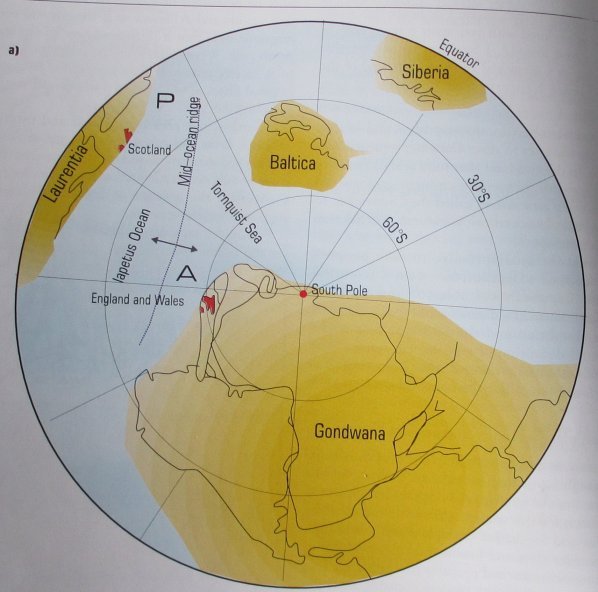
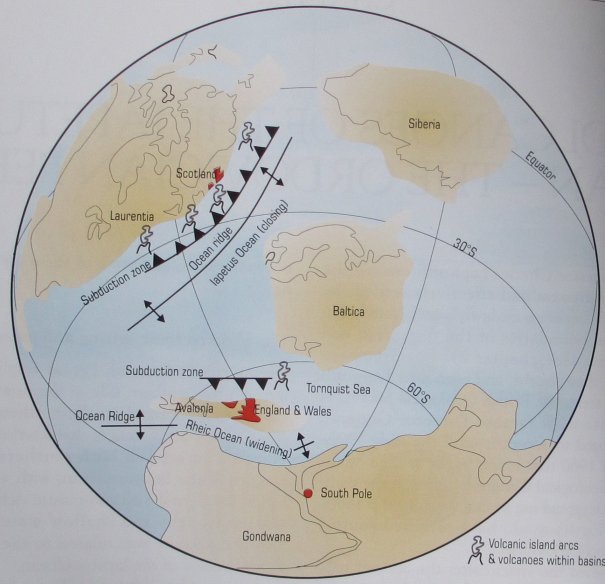
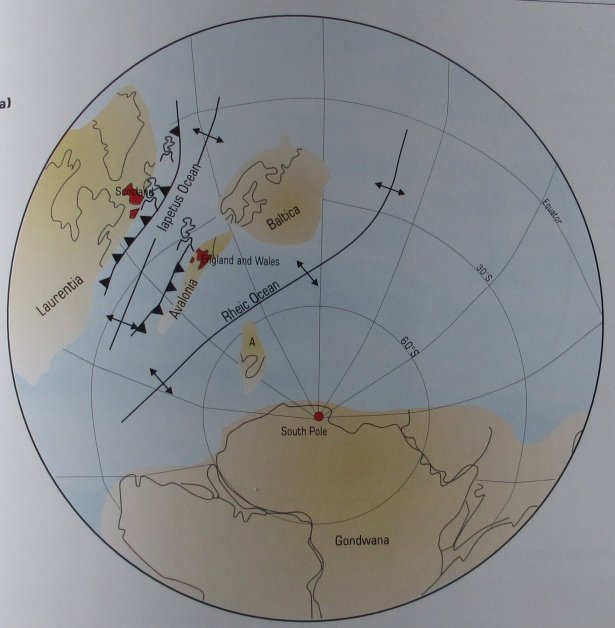
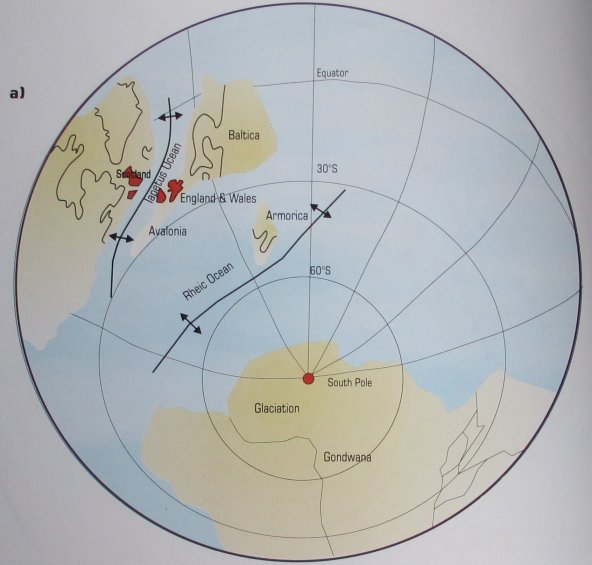
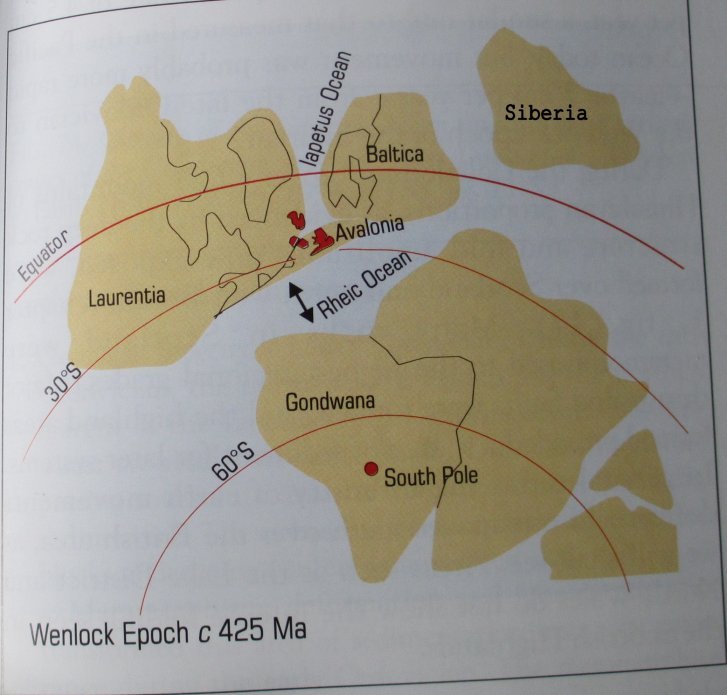
To continue We need to go back to the beginning to understand how, when and where the different types of rocks and chemicals arise. So 4.6 billion years ago the Earth was a ball of molten (i.e. very hot) material. Gravity caused some differentiation of the constituents. As the ball cooled the outside reached solidification temperatures before the inside, so forming thin solid crust. As this crust continued to cool it shrank and cracked into a pattern of crazing, as does drying mud or concrete or resin. As a result hotter liquid material pushed up from below through the cracks and spilled onto the surface of the already solid material building it up further. Also some of the patches completely separated from each other forming tectonic plates. The important point for Dorset geology is that. This material is, by definition, all igneous material. There were no other types of rock on the planet at that stage. Igneous rock is formed directly from cooling molten rock, called magma. There is no igneous material in Dorset. All this early buildup went to form the 'shield areas' in say Australia, Canada, South Africa, Siberia etc... After half a billion years or so it rained for about a billion years. The combination of erosive forces generated a source of sediment material along with an ocean to distribute it in. Thus commenced the erosion - transportation - deposition cycles that would eventually form the sedimentary and metamorphic series of rocks in Dorset. Life also started on Earth about this time, towards the end of the ‘rainy season’. This is important for Dorset since nearly all chalk requires life to form. The Jurassic series has both biological and non biological origins. Fast forward another 2.5 billion years with more igneous production, erosion - transportation and deposition cycles and two new forms of rock type appeared as well. These cycles led to sedimentary rocks being laid down. The other new type being metamorphic rock. Rock that has been altered by either heat and/or the pressure of the load above it. The process of Metamorphosis take place in both igneous and sedimentary rocks. Dorset has both unaltered sedimentary rocks, such as the chalk and clay, and altered sedimentary rocks such as Lias and shale. We arrive at a time between 500 MYA and 600 MYA. for a further look at the world. There was a large continental mass centred on the South Pole called Gondwana and a series of smaller lands , Laurentia, Baltica etc. Laurentia being basically North America and Baltica being Scsndinavia, North Western Europe and North Western Russia. The rest was ocean. We are now in the Cambrian period and the beginnings of the British Isles can be seen on the map. Northern Scotland and Northern Ireland are shown as small red blobs on the coast of Laurentia, Southern parts are shown on the other side of a former ocean as part of Gondwana. It should not be thought that either looked anything like modern Britain, as many parts had yet to be formed. As already noted plate tectonics was moving things about, so the next stage shows a convergence of lands, but Gondwana beginning to break up. In particular a new fragment called Avalonia, carrying the future England and Wales, detached. This takes us into the early Ordovician period. 500 to 460 MYA. This process continued throughout the Ordovician and Silurian periods, with further detachments from Gondwana and continued closing of the old ocean called the Iapetus ocean. A new ocean was opening between Gondwana and the other plates. England/Wales and Scotland were now very close together. We are now at about 435 MYA and the Ordovician is coming to an end. At 425 MYA we are into the Silurian period and Lautrentia and Baltica are now joined to Baltica by a land bridge formed from Avalonia. This new large land mass is now separated from a much reduced Gondwana by the opening Rheic ocean. It should be noticed that that this new land mass is bang on the equator. The Silurian is note for hot dry conditions. At around 400 MYA the Iapetus ocean finally closed with a bang. The bang being the formation of a great mountain range, known as the Caledonian Mountains. This was the Caledonian Orogeny (orogeny = mountain building) And this ushered in the Devonian period when Britain came together in what is known as the Iapetus Suture, During the next hundred million years there was more activity during which a new ocean (the Atlantic) opened, separating Britain (as was) and the rest of Europe from North America. Devon and (West) Somerset were formed by the sedimentary and pressure metamorphic process as previously noted and the Carboniferous period followed the Devonian. But the granite intrusion of Devon and Cornwall had not occurred at this stage both were still sedimentary/ pressure metamorphic. But none of this really affected Dorset, which had yet to be formed. So the third part of the Dorset story will come in the next instalment. Questions ?
-
But it was a p**s pump after all. 😄
-
The half life of U235 to Pb 207 is 710 million years The half life of U238 to Pb 206 is 4470 million years Both are used, preferably in zircon crystals as a cross check for each other. https://www.amnh.org/learn-teach/curriculum-collections/earth-inside-and-out/zircon-chronology-dating-the-oldest-material-on-earth
-
Thank you Markus but I don't have a smartphone. However a second issue has arisen. As I can often only access the site intermittently I often used to compose longer posts a bit at a time (but not actually post them until I was ready) and use the memory function in the input editor to restore what I had already done. This has worked well for years, even into the new host era. But suddenly over the last few days I find that when I log on again it is all gone. As has happened with a particularly complicated post I am trying to do in the liquid fracture thread. Part of the trouble is that the system is logging me out in the middle of typing into the box. If I am logged in and typing why is the system able to log me out ? Since I first started the mechanics of the system here has become steadily more and more user unfriendly, whilst the people have remained constantly friendly.
-
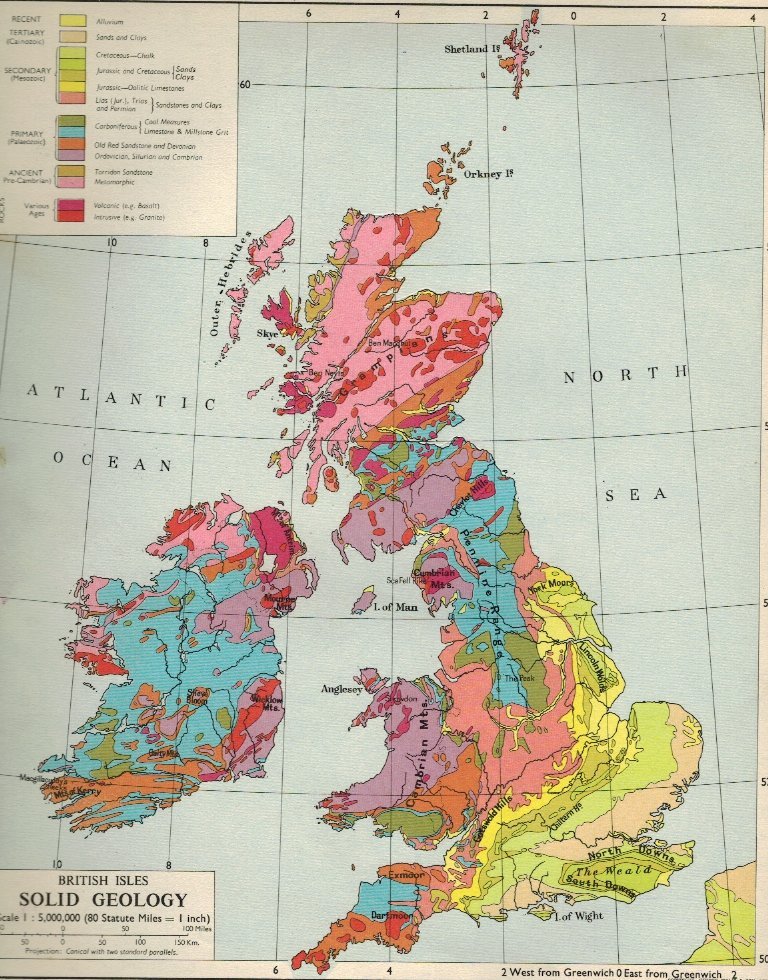
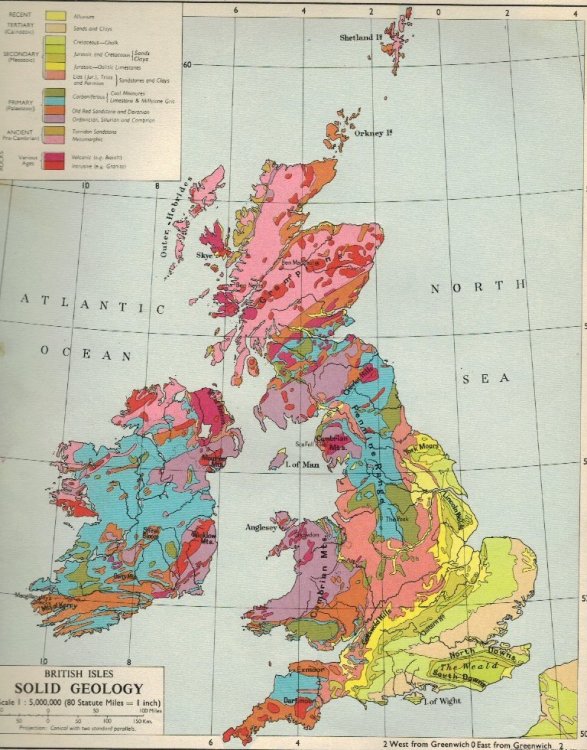
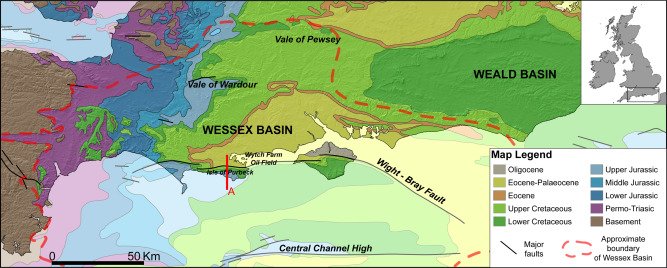
Questions / Comments like these are great since they halp me see what you made of my previous ramblings.. OK so compare and contrast the geology of Dorset with that of Somerse/Devon. The first and most startling thing is perhaps that when Devon / Somerset was being formed Dorset did not exist ! Here is a map of UK Geology today. The first thing to notice is the the colours representing diffent rock eras or periods run in diagonal stripes (of variable width) from South West to North East. What is important is that these stripes are getting younger (more recent as you go at right angles to the first direction ie from North - West to South East. The bright yellow stripe (this represents Jurassic rocks) runs from the Somerset and Devon border with Dorset diagonally up through the Midlands, across the Humber and runs out into the North Sea via the North York Moors. This includes the limestones of the famous 'Jurassic Coast' and the Lias of Somerset. The Khaki stripe represents the transition from the the Jurassic into the younger Cretaceous and the proper green the full on Cretaceous ~ Chalk. The next map shows that Dorset lies firmly in the Western end of the so called Wessex basin. It is worth noting at this stage that the Wessex Basin extends well into the English Channel so the larger part of it is under water. To understand how all this came about it is necessary to go back to the formation of the earth 4600 million yars ago (MYA). But then move very quickly forward as the British Isles themselves did not exist until a couple of hundred million years ago and that all the areas South East of the the yellow triassic band have been created since 280 million yeas ago. That is the chalk and clays of the Home counties and East Anglia. I will explain this next time in more detail, but I am also aware that I haven't finished my explanation of loads, forces and stresses. I will do that after. So keep the questions and comments coming as feedback.
-
Surface tension is part of a select set of pairs of quantities, one intensive, one extensive, whose product has the dimesnions of energy. Others include Magnetic Field H and magnetic momentM Electromotive Force F and Charge Q Pressure P and Volume V Tension T and distance L Temperature Theta and Emtropy S. It is this last one I like to use to explain entropy simply.
-
I'm glad you mentioned this because, it brings in the difference between the FLT system of dimensions, and the MLT system. Many say that FLT is more convenient and fundamental as energy is independent of time in the FLT system as it has dimensions FL.
-
I suppose that must depend on what you mean by 'number theory' ? The calculus of observations Whittaker and Robinson ? Approximation Theory and methods Powell ?
-
Thank you for looking into it. This is the thread My reply is particularly memorable since this was the first time ever that the new host/software allowed me to select a short passage to quote. ie the select quote function actually worked. I spent somnething like half an hour composing the text, then was called away. Needless to say I was logged out when I returned, but my text was recoverable in the usual fashion after logging back in. I added a few more words, uploaded the sketches and pasted them into the reply text, where I watched them appear. I watched the reply appear in the thread upon submission. When I returned a few hours later there was no evidence of my post, so I tried to recover it again in the input box, but it did not reappear there either.
-
I posted a response to Imagine This' thread between 1330 AND 1400 GMT today but it has disappeared .