studiot
Senior Members
-
Joined
-
Last visited
Everything posted by studiot
-
+1 Thanks for the info and link. I noted the article said the Finns wanted 'simple'
-
I think you need to state clearly what you mean by a pattern, and also why numerology is a search for patterns.
-
Well it seems to say that the sand is heated by heating air and passing that through large bore ducts within the sand. It also says that the designers wish to keep it simple which is perhaps why did not use water/steam as MigL suggests since corrosion is a very real problem with steam at those temperatures and special materials ( probab;ly expensive) are required. Also in the event of a breakdown the pipes will not be damaged by frozen water.
-
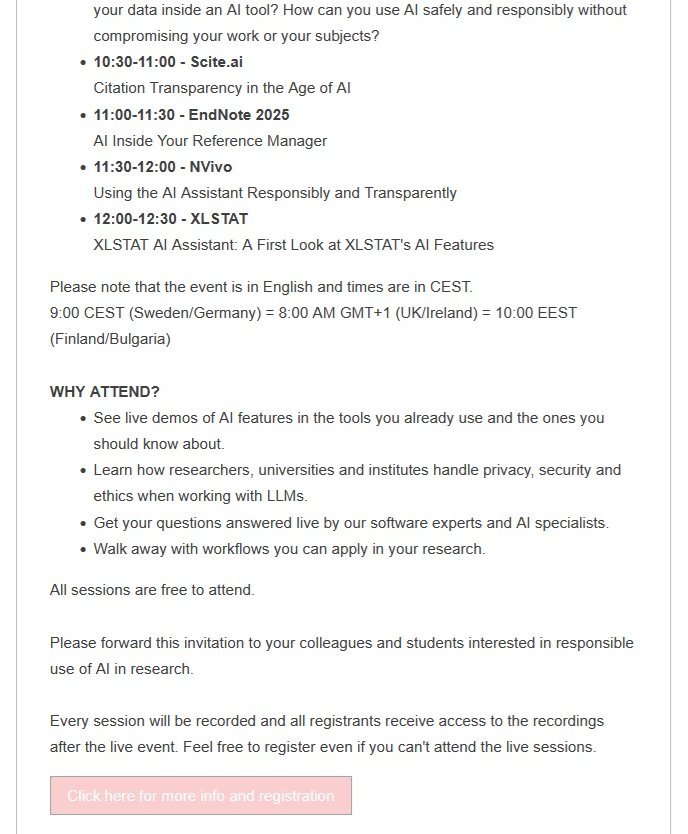
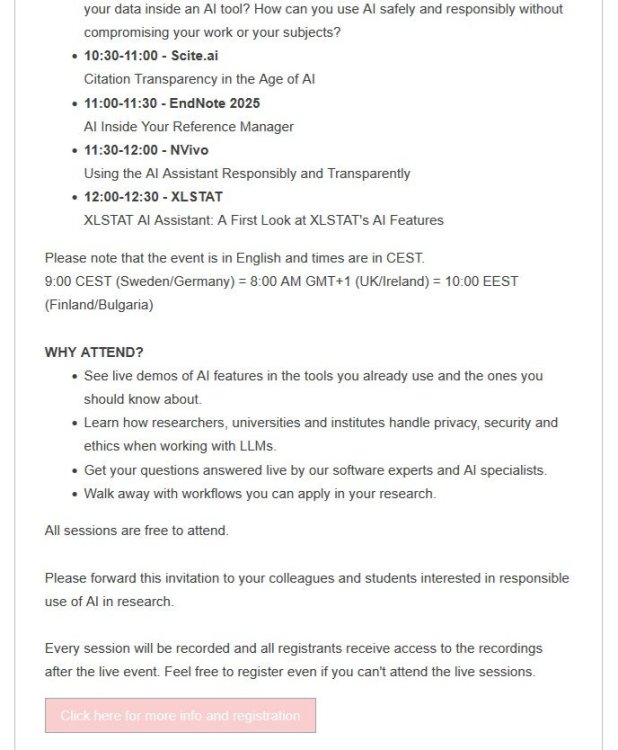
I have received the following notification of an online conference, that is free to attend, about the ethical use of AI Should any member be interested there is more information here https://alfasoft.com/ai-in-research/ And contact details here https://alfasoft.com/about-us/#contact-us I have found alphasoft to be a reputable company in the past.

-
Which is why I said However there is a difference between being very UK centered and very UK biased. UK centered means the subject matter was largely about what happened to the UK. Not what happened to say China or South America etc at the same time, unless there was an interaction. So it was not biased, just accepting the fact that unless one studied History exclusively one could not cover every where and every time. And yes, despite your protestations, the teachers tried to be objective so the 'British' did not have a 'glorious victory' ove the Dutch under Van Tromp. We spent a lesson learning that the said Admiral fixed a broomstick to his mast and declared he was going to 'sweep the British from the seas', and he nearly succeeded, sailing up the Thames and destroying the poor British fleet. I call that objective acceptance of reality. I said some was objective and your reply is a flat negative. That can only be true if none of it was objective, so how can it become less objective ? I do however agree the qualifying statement about closer to our times and that too was in my post. I really don't see why you should think our lessons in stone age man would not be the best available information at the time (ie objective). What possible motive could modern man have for deliberately falsly presenting the local version of the stone, bronze or iron ages? I really don't understand these figures, or what history might be taught to a 7 or 8 year old in this many minutes.
-
Social History is one of the big sub categories of history I mentioned. I don't know where you went to school, what sort of school it was, but here are some facts about schools in England, those in Scotland, Wales and Ireland are all different. History was a compulsory subject in primary school, though the subject matter was very limited and piecemeal, such as "who discovered America, Australia etc ?", " Who built the first steam engine?" and many such important social and economic points in History. When I went to the grammar school, History was also compulsory in the first few years, after which it became optional and I had to choose History or Chemistry at some point. Before I chose Chemistry, the syllabus started with stone age Man - we had school trips to Stonehenge and Avebury and the British Museum. The syllabus then worked it's way through the bronse and iron ages and into Saxon, Norman and medieval times. I got as far as the Renaissance before I had to abandon History. As for being objective, or written by Winners. Some of it was objective but very UK centered. So let us objectively examine my 'study' of the history of the Saxons. The Saxons lost the war to the Normans in a very big way. Yet the Normans wrote almost nothing at all about the Saxons or the history before them of the Romans, or the Celts before them. The history of the Normans I learned in school was restricted to the Norman Conquest of England. They did not conquer Wales, Scotland or Ireland. But I have recently watched an american series of programmes (PBS America) about the Normans (nothing to do with them at all, they were neither winners nor loosers in relation to the Normans) and I greatly expanded my knowledge of the Normans and I found out that they created an empire in Europe as far as Sicily. I also learned the reasons they did not conquer the other parts of the UK. Wales and Ireland came by later dynasties, Scotland was left for agreed economic reasons. What is probably but not necessarily true, yet a good 'rule of thumb' would be that the more remote the historian is in time and perhaps also in distance from the subject time the more objective (s)he is likely to be. Certainly they cannot be winners or loosers in a history they have had no part in.
-
Rather than the knee jerk reaction it would have been better if you had actually considered what I said. I consider your reasoning powers far better than that. I said nothing about a statement. AIs cannot deduce. I have no quarrel with your rephrasing but there are only three terms and I only agree with the term 'write'. Winners imply that History is only about winners and loosers. There is far more to History than that. History, as a subject, is not immutable but develops over time and has many parts/ sub categories. Only some of these categories are about winning and loosing. Edit I see I xposted with exchemist.
-
That would be a fallacious deduction, stemming from false premises. The extent of the fallacy would depend upon the exact meaning of the terms employed in the phrase "winners write history".
-
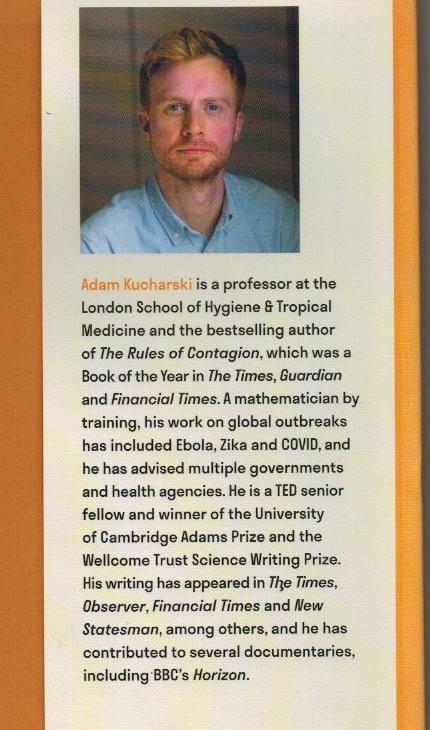
If it's substantiation you seek try the 2025 book 'Proof' by this guy. There's pages and pages of documented cases, studies and reports in the back.
-
Thank you for taking an interest in my thread. I fully understand both your points of view about statistics, but would respectfully remind you that statistics has little or nothing to do with the topic of this thread which is about legal matters. Before leaving the matter I would like to point out that you are both considering entirely different statistical circumstances. Gees haas a sample size of 1, but swansont is considering very large sample sizes. The topic asks about the legal responsibility of some form of computer system (AI) driving vehicles. Apparantly nobody in some cases. This issue of significance has recently come to light in California, resulting in a change in their laws. BBC NewsCalifornia to begin ticketing driverless cars that violat...Under the new rules, police will be able to issue tickets directly to the car's manufacturer when an autonomous vehicle breaks a traffic law. BBC NewsWaymo cars become trapped in Atlanta suburb after glitchThe company said the vehicles, which use AI to drive, had encountered "a routing problem" that kept taking them to the same cul-de-sac.
-
I like the statement "The result of a die roll is random in the sense of lacking predictability, not lacking cause."
-
If that were true then why do we bother cleaning asbestos or lead paint out of old buildings, or why does the US bother with the DEA (even trumpy knows drugs are wrong) or.....? In other words once we know something is wrong should we not put it right ?
-
It is disappointing that more don't see through the 'numerology' promoted by the shamans of the subject. This stuff is no more or less than the showmanship offered and used by religeous and political leaders throughout history. I'm pretty sure the OP specifically said he did not mean that stuff, but was asking a serious question. Meanwhile ordinary folks in all sorts of walks of life user numbers all the time for all sorts of purposes , from musicians to visual artists to engineers, technologists, scientists geographers and many many more. Noe of this is numerology. BUT Thousands of years ago some thinkers noticed that 1 + 2 =/ 1 x 2 and 1 + 2 + 3 + 4 =/ 1 x 2 x 3 x 4 yet 1 + 2 + 3 = 1 x 2 x 3 This sort of accidental coincidence led to the only practical use of numerology in early cryptology. All the rest is promotional sham.
-
There seems to have always been a class of entrepreneur who promote products, regardless of what damage /harm these products do to humans / the environment. This harm can be either to the product generating workforce or the buyers or the public at large. Not only are these harmful products promoted, their harm is often covered up. You only have to look back in history to find many exmaples from 'coffin ships' to unfettered mining to asbestos to tobacco to chemicals in rubber products to thalidomide......... I note @TheVat thread announcing something in Utah but how about this BBC NewsSmart glasses are 'an invasion of privacy' - Meta's are s...The biggest tech firms are set to sell millions of smart glasses despite growing privacy concerns.
-
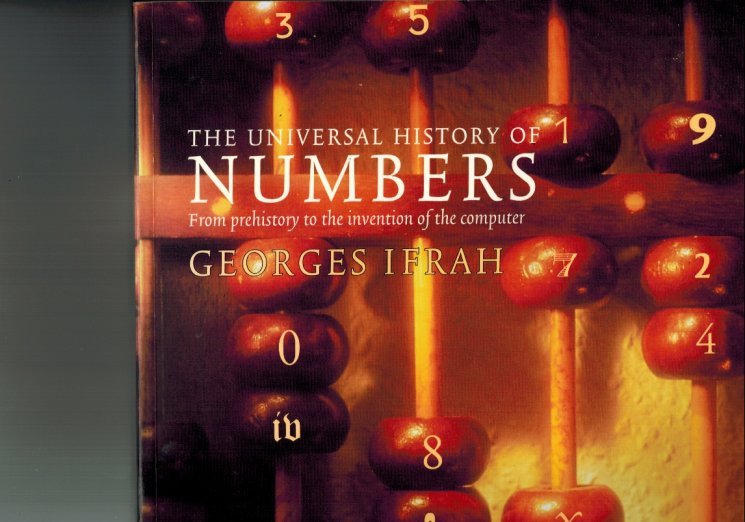
The roots of numerology come from ancient history, rather than victorian party tricks. If you want to look up serious scientific investigation you need to look in a history book, not a mathematics one. Try this one, originally in French, but translated into English by Princeton professors. You will find the roots in ancient history of Sumeria, India, South America, Greece amongst others. I stress it is neither a mathematics book nor a numerology books, just records what is known or hypothesised historically, including secret codes hidden in ancient religous texts. But Ifrah was a maths teacher. Let me know if you want more detail.
-
Don't know much about these wars, but it ould seem they were egged on and supplied by various European nations, all of whom were established agricultural nations.
-
The basis of his argument (sorry I've forgotten his name) was to do with population density. Agriculture, both in the growing and storing of crops, and animal domestication and husbandry permits pop densities of 10x, 100x or even 1000x, as compared to roaming hunter gatherers. The contrasting settled lifestyle permits crafts to develop and promotes more social interaction. This is not to say that hunter gatherers did not produce many new inventions. Just that they did not have the resources to follow them through or for instance sustain a war.
-
It is not a question of precedence.
-
Yes you are correct the factorial is more appropriate than the product. Thank you for noticing that. However your basis is still incorrect and if you look back you will notice that each time you have estimated probabilities you have changed the basis . In particular ignoring the unplaced scenario (I have lumped various possibilities such as rider falls off, horse does not actually start from the starting point, horse falls etc into a single category but all of these have actually happened) I hope you will agree that 1/6 > 1/7, so even if the unplaced scenario did not occur, it is always a possibility for each and every horse which needs must have an associated probability. So 1/6 is too large as adding in these probabilities would take 6 times 1/6 plus whatever to greater than 1 . This is quite different from the situation with the die since no comparable outcome is possible. That is why statisticians like using coins or dice as examples.
-
Interestingly a programme on PBS America I watched recently about the stone age (the Age of Stonehenge or something similar) was presented by a Scotsman (an anthropologist I think) rexkoned that the greatets ever Human invention was agriculture, in that it directly ledfrom the sparse hunter-gatherer society to the denser society capable of supporting specialisation, developed language, war, and everything that followed to the present day.
-
I disagreed with you 1/6 then and I disagree with it now. A horse may come in first, second, third, fourth, fifth, sixth or be unplaced. I make that 7 possible outcomes for any given horse, making the race sample space 6 x 7 = 42 outcomes. An event is not the same as an outcome, since it is a subset of the set that forms the sample space. The problem arises that the 7 possibilities are not equally likely, even in theory, so you cannot simply divide by 42.
-
Does the thread title not suggest to you that I agree with this ? Indeed it should further offer the opportunity to explore ways of achieving this. But AI is unlike a hammer in the way we go about achieving this objective. Further let us consider some of the predecessors of AI, for instance shop tills. We expect close to 100% accuracy as well as being relieved of the drudgery of adding the bill up. Should the AI a not at least achieve this level of competence? A further question; considering the AI's only source of information and the fact that AI prescribing is being proposed (and I think even mentioned in this thread), If an AI prescriber had been available at the time of Thalidomide, would that disaster have been avoided ? I think not.
-
If I remember previous threads correctly thry are a bit junior for vector analysis
-
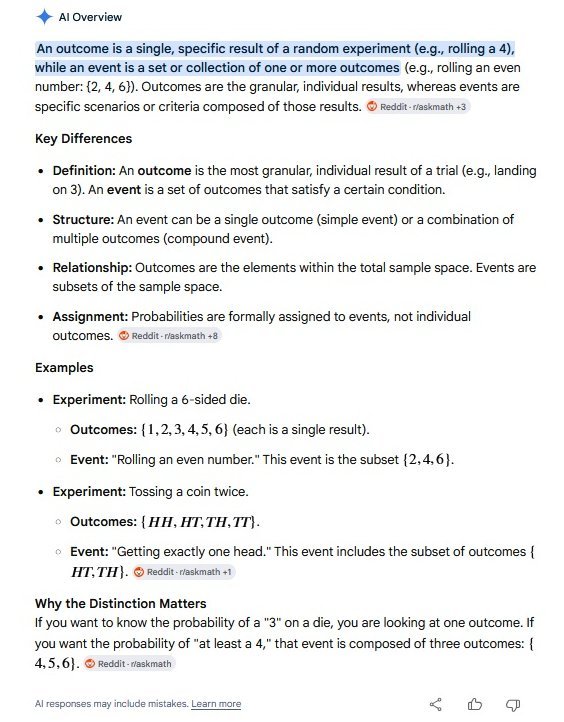
Here is a screen shot of a google AI answer to the question What is the different between an event and an outcome in statistics. Note how the AI contradicts itself. If you look a many Statistics/Probability textbooks you will see that even respected authors mix these two up sometimes, although the bravest admit that this is done. I even found a teaching website where the reverse definitions were applied. This is a pity because, without this error, the AI summary would actually be a good one. I asked this because in another thread here I was wondering how to explain the difference.
-
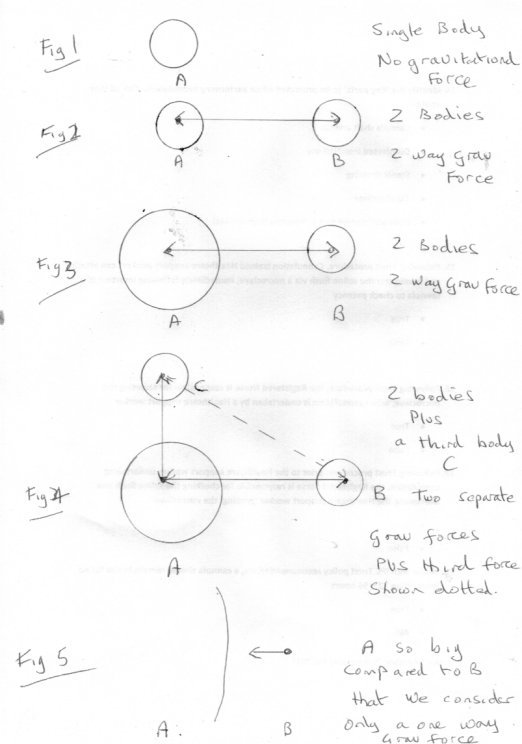
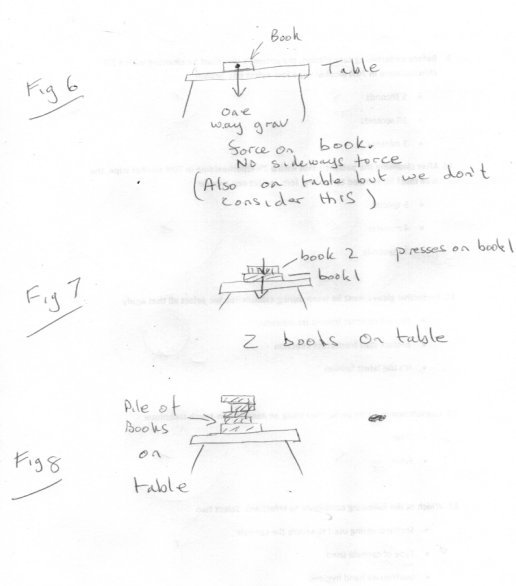
As promised here is further development towards interpreting and correcting your thinking. As noted gravity is an interaction between two bodies and acts along a line connecting their centres. (Sorry for the hasty sketches, especially the centres.) So if you have two bodies of similar size (mass if you understand that), say A and B then A pulls B towards itself and B pulls A towards itself as in Fig2. Again 2 bodies so if you only have one boy no force is acting ( if we ignore the action of A's own gravity on itself. This is shown in Fig1. ((Once we have done the books on the table we will come back to the action of a bodies own gravity on itself.) Fig 3 shows what happens if one body is larger than the other, pretty much the same as Fig2. Note in all these diagrams there are no sideways forces. In Fig 4 we ask what happens if we introduce a third body C. Well a second two way force is introduced between A and C as shown. This is quite independent of the gravitational two way force between A and B. That is gravity is not reduced/changed because we have added C. There is, however another two way force, between B and C, shown dotted because they both are smaller than A This brings us to a second vital observation. It is impossible to 'shield' a body from the gravitational attraction of another body. So even if C was placed between A and B it would still make no difference to the forces between A and B. As shown in Fig 4 the A C force is sideways to the AB force. Moving on to Fig 5 A is now shown a so much bigger than B we can only see tiny portion of A and B looks like a dot. This is the case with (ordinary) objects on Earth. In thse circumstances we ignore the pull of B on A and only consider the pull of A on B so gravity is now considered as a one way force or single force. Because of this the next figures will be turned the 'right way up' so that gravity is only one downward force. So Fig6 shows a book sitting on a table. The one way downward force of gravity acts on the book. So the book presses down on what is underneath it that is the table. We call this force the weight of the book. The table does not stop this as already stated. Gravity also acts on the table but we are only interested in the book. If, as in Fig7 we place a second book on top of the first book this presses down on the first book with its weight. Added together both books now press down on the table with their combined weight. Note that only vertical forces are involved, in line with out original statement of acting along a line. So I am now going to ask you to think about a stack of several books on the table as in fig 8. I ask because it is beginning to look a bit like some of you figures, but without the sideways forces. I suspect you have seen something about the pressure at the bottom of the ocean or atmouspheric pressure, where there are sideways forces. So next time we will develop the stack of books model towars this.