Everything posted by studiot
-
The point is This is not a blog site. And this is not your blog. Ask a specific question or state a proposal for discussion. This is what everyone has been telling you.
-
-
Why when it's off topic ? Though I have to admit that after four posts I have been unable to divine (pun intended) what the topic is.
-
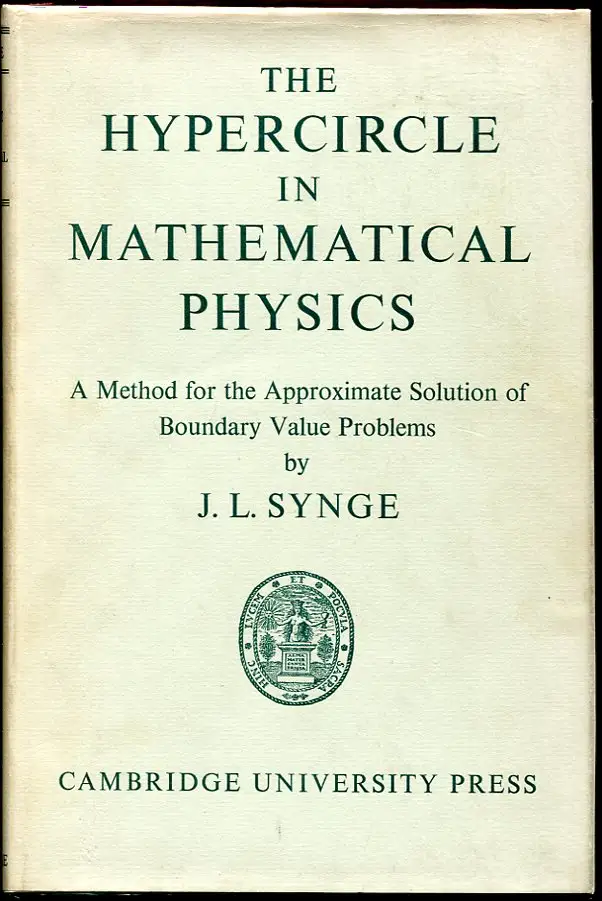
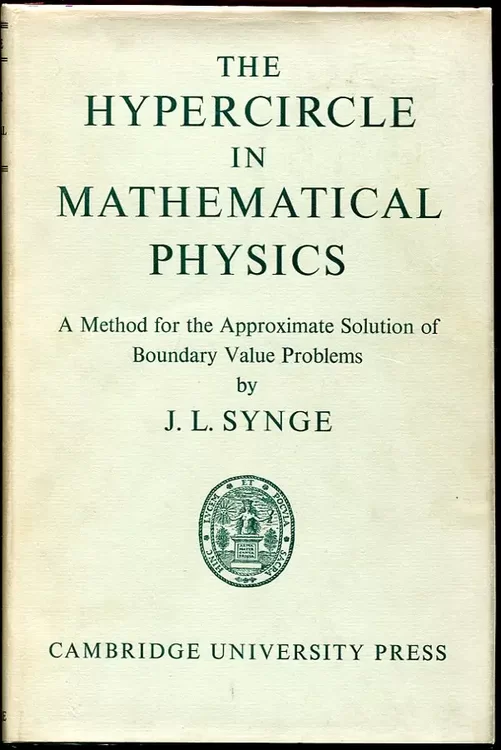
Thank you for all that. But I see no answer to this So the E p and m in the first equation have different units from the E, p and m in the second. Instead the last post appears to contain more instances of the same symbol used to represent diferent actual variables. As a mattter of interest since projective geometry has no distance function it cannot support a metric or function variables based on distance. I have been rather busy with some domestic emergencies today so have not had time to progress further study of your circle, but realise that if you are referring to spacetime it must be a hypercircle. That sais J L Synge introduced a further analysis method for GR in 1957 in his book Other interesting approaches are to be found in Needham Visual Differential Geometry and Forms Deans The Radon Transformation and some of its Applications.
-
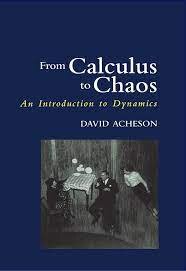
There is a really interesting derivation of how this leads to chaotic motion in this book (which is fascinating in itself) Oxford University Press 1997
-
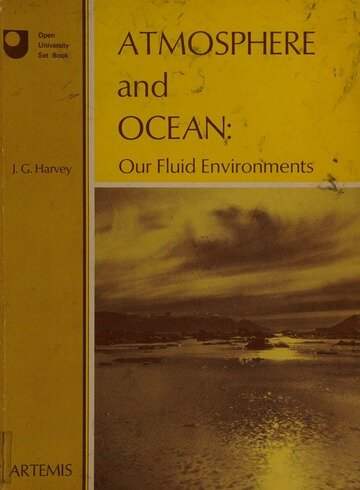
Don't be silly, of course they alone don't explain it. If you are fully aware you would know both that they don't and also know what other factors are involved. Let us start with a definite example of a regional inconsistency or a wind anomaly and try to look for an explanation. If you are genuinely interested this book is a very good start. Can we return to actually discussing the subject now please ?
-
Spindizzy ? James Blish SF stories
-
😄
-
So the E p and m in the first equation have different units from the E, p and m in the second. Yes please I am always open to other routes to a common answer. I am still studying on your circle idea and the (geometric) effect that must occur on the circle when expressed in 'natural units' I do not know if you are aware of the different other routes eg Hilberts variational method or the Ludyk's matrix only method ? Posting this is often posted as a postulate to start off GR, both the above methods lead to a derivation of it instead. I prefer matrix methods to tensors because tensors hide things. Whenever you actually want to put numbers in order to get numbers out you have to expand them because they are a compact form of many simultaneous equations, especially via a computer.
-
Thank you. So what version of your equation should I substitute these into into since they make the one you quoted dimensionally incorrect. ?
-
So what are the units of c, m, E, p and v in your system ?
-
To whom is this addressed ?
-
Please post your sources for claiming this.
-
Also I wonder how much has been going wrong recently as a result of the Amazon Web Services debacle ?
-
Whilst I am sorry your earlier thread was closed as I has some further pertinent points to make in it, I do not expect to see such a blatant attempt to re introduce it. In particular whilst you have made some interesting points, you are not listening to or perhaps just not acknowledging worthwhile or forum protocol points made by others. For instance you have your history in the above quote quite the wrong way round. Einstein's 1905 paper was the result of experimental 'confirmation' which predated it by some years.
-
Try clearing your browser's cache. I've had sundry problems with the way the forum has been behaving (not the members) lately. Clearing my cache helped a lot.
-
I'll admit to being totally mystified by this 'hint'.
-
This was a quick (and perfectly valid) to be a simple as I could make it. So your peremptory response is disappointing. I think it made the important point that sometimes you can find new relationships from complicated inter-relationships by drawing suitable graphs with the edges representing the relationships and the nodes representing the objects being related. I wished to stress the sometimes becasue, due to the nature of the relationships, sometimes you can't. I think it would be helpful if you, the author, would table your symbols so that it is perfectly clear what you mean by E, p and m
-
I have done some editing today on my W10 desktop in Firefox without noticing a problem, but I haven't tried to report anything.
-
So which came first. The chicken or the egg ?
-
Good catch +1 I think this issue stems from the same misunderstanding as this quote as does the tensorial equation also quoted inappropriately. Yes the correct equation is a derived relationship, but not derived as you have said. Setting aside the headline quote that we are supposedly avoiding tensors, The equation does not say that energy is the same as spacetime or even that they are some sort of alternate views of the same object or system. This suggests to me a fundamental misunderstanding of equations. I might just as well claim that Force is the same (or just a different aspect) as mass sicne they are related by the equation F = ma or that Distance is the same as time since they are related by an equation distance = speed x time. Spacetime is not even a real space it is a mathematically derived coordinate space. like phase space or evolution space or sample space (there are uncountably many such conceivable spaces) For the record As I understand relational geometry it is a graphical way of displaying the idea that If A is related to B and B is related to C (perhaps in a different way) then it may be possible to derive a meaningful direct relation between A and C , from the relations between A and B and B and C respectively. But that may also not be possible it depends upon the nature of the relations. For instance if A is a jar of sugar and B is a jar of honey and C is a bottle of malt vinegar Then A is related to B as both are sweet and B is related to C as both are brown But no relationship can be deduced from this data.
-
For your information there are some very good exmaples of this process happening to lead to great and important discoveries. The discoveries of both Roengten and fleming happened like this. I myself discovered a very tiny, mathematical routine, not by noticing something but by wanting something. In the days when we programmed computers in Fortran I wanted a instruction to calculate eastings and northings from angular measurement, without involving a branching decision loop. I did find such a routine, that I have never seen before or since, though it was published in the Survey Review. So yes thinking and exploring but no noticing in that case. Many engineering innovations come that way.
-
So you were wrong to say always. No it didn't. Many textbooks are 'Treatises' A treatise attempts to systematically work through all possible presentations and/or applications of a topic. There is no 'notice, think, explore' involved' either by the author or the student. Any Engineer will tell you how much they value this kind of textboook as it provides example to follow, replacing the above. That is not to say there is no room for 'notice, think, explore' - of course there is - but it need not and is not always involved. How many more times ? Their perception was wrong. There was no motion of the Sun. That is why they did not understand what the saw and why their perception was wrong.
-
First class advice. +1
-
But the perception was just plain wrong. The Sun does not move across the sky. So the perception did not lead to any understanding. Once again NO. Some things we have neither perception nor understanding of, until we are taught. That is why we have teachers (have you ever met one ?) As a for instance I had abosolutely zero knowledge, perception or anything else about the integral, until my teacher presented it to me.