
joigus
Senior Members
-
Joined
Everything posted by joigus
-
As suggested by other members, gods were invented (not created, I would say) by humans. God is a place holder for everything we don't understand. Patterns can be found in the way different communities of humans fashion their deities. It is no coincidence that monotheisms have been developed by desert peoples. Forest peoples are more prone to animism. The first gods have been identified with powerful animals, ancestors, most basic needs (fertility, good luck,...) Sun and stars. All things that were important to those societies. I think it's a natural byproduct of the activity of a brain that desperately needs to plan ahead. Mind your infinite regressions, BTW: Who created the one who created god? And so on.
-
-
I don't understand what you're getting at. Take, eg., the sentence, ¿i being used as a spanner in the works? What does that mean? The imaginary unit i does not come from a choice, as the vector (0,1) does, for example. Complex numbers are much more constrained than vectors, and obey different definitions. There is no such thing as rotational invariance for complex numbers, for example. Quaternions are very different from complex numbers also. E.g., they're non-commutative. Serious maths are not about "this looks like that" and such. So, while I don't understand what you mean, I see many problems with some of the things you say. Too loose connections in what I can understand from what you say. Harmonic functions are the real and imaginary parts of differentiable functions of a complex variable when expressed in terms of x and y. They're used to represent 2-dimensional problems having to do with the Laplace equation (electrostatics, laminar fluids in absence of eddies, etc.) I don't know what that has to do with the Riemann hypothesis.
-
Is this homework?
-
You are conflating several things here that are actually different. Surface of last scattering: The surface in the night sky beyond which we cannot see because at times older than that the universe was opaque to radiation. The distance to us of this layer of the universe changes with time, and is being pushed by expansion towards the kinematical horizon --see below. Kinematical horizon: In a De Sitter universe, every observer has a limit to how far away he can see the galaxies. The distance to us of this layer of the universe is fixed in a universe with a constant rate of expansion, and so doesn't change with time. It doesn't depend on technology either, as it is given by a natural limit. Namely, receding velocities greater than the speed of light don't allow you to see anything there due to redshift. Why the surface of last scattering is "about to disappear" (give or take a couple of billion years) from view in this time of the history of the universe, and whether that is a coincidence, is not known. But it appears to be so.
-
I bet we haven't heard the end of it.
-
That's why we have idioms as 'blessing in disguise.'
-
Define good (vs. bad) use of science. Define making things better. Define what is good. It's clear to me that just good is better than just better. A little better is certainly not as satisfying a lot better. I have clear ideas about "better than nothing". Agreed, but... Are all possible directions equally good?
-
You're right. There's no conflict. Google search term: God of the gaps.
-
STUNNED! SENT, TENETS, TENT, STUNT, TUB, BUS, SUB,... 'Cede' is a good one. I see you detected a B boson. Nice one. It opens up many possibilities.
-
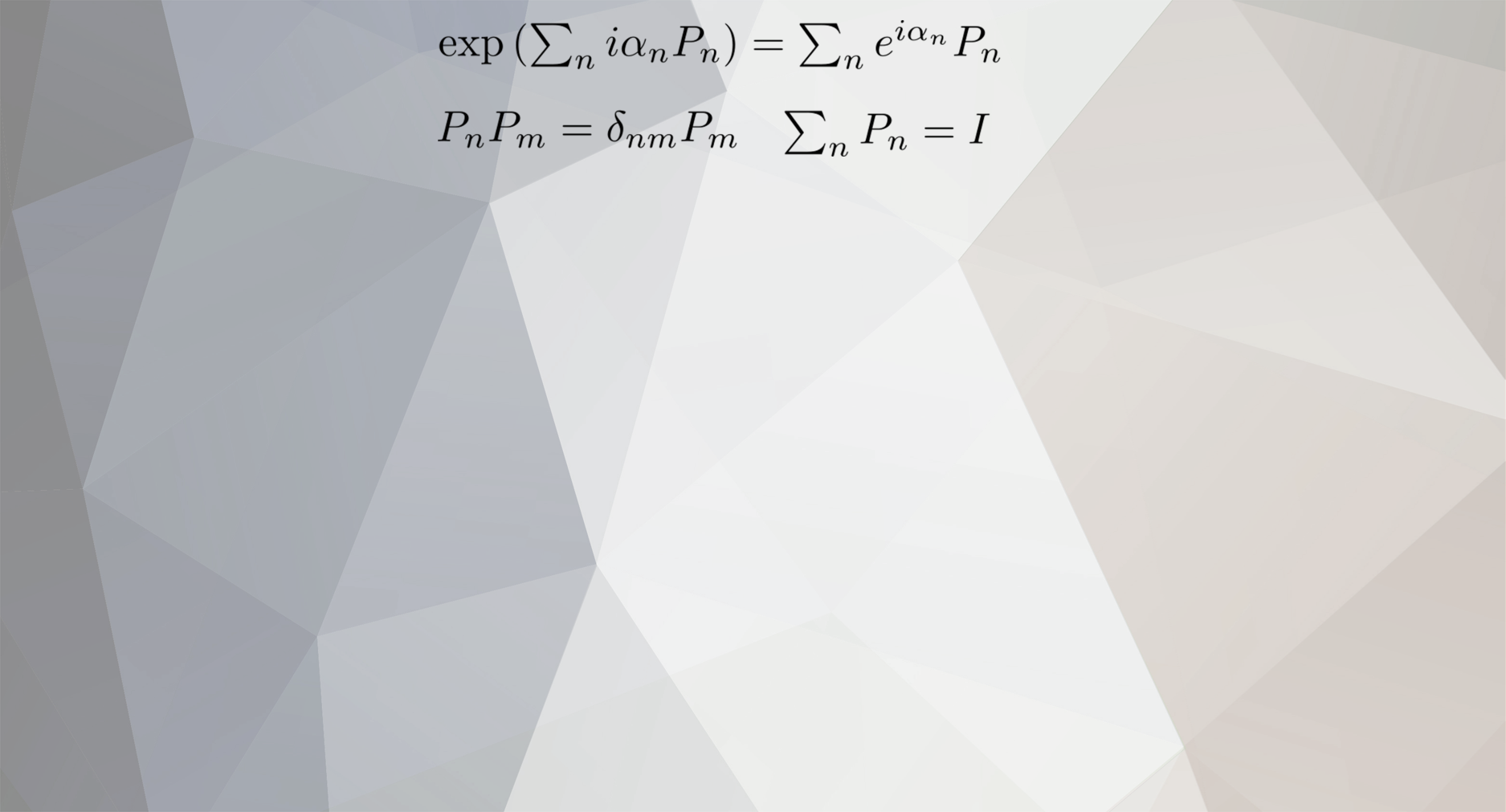
Kronecker delta results, as Swansont said, because of basis being orthogonal. I see you're studying quantum mechanics. The underlying physics of this is: States with different values of an observable must be orthogonal for reasons relating to probability interpretation of quantum mechanics, as products <i|j> are essentially transition amplitudes. Vectors must be normalised, so <i|i>=1 for same i. Orthonormal bases are central to the formalism of quantum mechanics.
-
You forgot TEST and SET, and also TUT (as term of affection for TutanKhamun). But that's nice. LOL. This is what I do when the lights go out. Warning: I've left some resources untapped. This is a combined exercise in combinatorics as much as in the particle universe.
-
Only the quarks named as u, d, s, c, t, b are allowed for now. The mandatory language is English Eventually, we will allow the use of bound states of quarks, like p (proton), n (neutron) and any other particles that can be named with a Latin letter, like the electron (e). Here's mine, STUD The next one is pretty obvious. You're allowed to use Shakespearian English, Yorkshire English, Alabama English. Only, please document.
-
Here's the problem (my emphasis): Now you say (my emphasis): In order to keep an electron on Earth for as long as it takes to send the other one all the way down to M87, you must make it orbit under a field. That's a lot of change in the quantum mechanical phase of the electron. And, further (my emphasis again), This conflicts with previous point that the electron measures up. If they measure anything (any one of them), they're no longer entangled, and their common state is described by a density matrix representing a strict mixed state. But the question whether the gravitational field affects the quantum description and how is outstanding, and I don't know the answer to it, but I'm thinking about a possible gedanken to make an equivalent question without the problems I see. It's questions like this that make me keep coming back to these forums, to the detriment of my activity in other 'more expert-driven' forums. I just would like to emphasize Swansont's particular point that, which I think is essential in all this business.
-
Mentioned as "base-2" on: https://www.scienceforums.net/search/?q=base-2&quick=1&type=forums_topic As a topic: https://www.scienceforums.net/search/?q=base-2&quick=1&type=forums_topic Mentioned as "binary system" or the like gives similar results. Not exactly. Not all numbers are powers of two, are they? It means all numbers are expanded as combinations of powers of two with multipliers (digits that are only integers less than two). That covers all numbers.
-
Thanks
-
Carbon. It takes a hundred suns to die before your magic web extends. But once it does, a world of possibilities is revealed. Your opening act is: "Let there be life". Not quite satisfied with this, you make things that make things that bring about: The hardest substance (diamond) The best lubricant (graphite). The best thermal conductor (graphene). Is there an end to this magic? If the Ancient Greeks had only suspected your capital importance, they would have named a god in your honour. Sorry, I got carried away with carbon love. Here's the news: https://phys.org/news/2022-05-long-hypothesized-material.html?fbclid=IwAR2lCoyyVSC4bkt0XDRGCG9FRV7Y16dM78pO8n4Hq03hv-4QbzeMqIPcFf0
-
OK. But with that what you're doing is inventing a fancy complex mass m=Re(m)+iIm(m) (a quite esoteric quantity) which is only there to give rise to the 'actual mass', which is its modulus (norm.) You're quite right. You can always declare any positive real quantity as the norm of some other inconsequential complex variable. But Ockam's razor will cut it off.
-
You would have a violation of unitarity, which isn't a good thing. All relativistic state vectors for massive particles have a factor that in natural units looks like, \[ e^{-imt} \] Assuming, \[ m=\textrm{Re}\left(m\right)+i\textrm{Im}\left(m\right) \] You would get, \[ e^{-imt}=e^{-i\textrm{Re}\left(m\right)t}e^{\textrm{Im}\left(m\right)t} \] Now, suppose you have \( \textrm{Im}\left(m\right)>0 \) => runaway solution everywhere for growing t. But if \( \textrm{Im}\left(m\right)<0 \) you have a vanishing solution everywhere for growing t. Both violate unitarity, so you have a much bigger problem than with a negative mass. Negative masses are no good because of decay. Particles would spontaneously decay to lower levels, 'more negative'-mass states. But non-unitarity is a non-starter. I'm sure there are more other arguments but, to me, that would be enough.
-
No way. I wanted to make a contribution here. I was thinking about mentioning 'residual QCD forces' to complete the picture (similar to mesonic states flying to and fro), and @MigL beats me to the punch.
-
OK. Thanks for your answer, but you're wearing your political glasses. I didn't mean 'evolving' as 'going towards something good.' I meant it as 'going towards something different.' Believe me, I pain for the loss too. Interesting. Why?
-
Simple enough: Are we? It seems inevitable that we are. Then languages like Quechua or Walpiri will be reduced to the roles that now play Hittite or Assyrian. Or will we evolve into a multi-dialectal pansociety? Local versions of the same, say, English; but with people being able to understand each other all over the Earth. Will we evolve towards a bi-polar, tripolar, etc. model? What do you think? And why?
-
The progressive element is essential in any society that pursues betterment of the human condition. Progressivism, as a tenet, is a good theoretical starting point. Problem is: Self-declared progressive parties vie for power and control of the budget, like everybody else. If under pressure, they will act in ways that contradict their 'theoretical principles,' provided working politicians really have some of those. Whatever their tenets are, and out of this pressure to out-elbow everybody else, they will not hesitate to re-define their concepts. As MigL said,
-
You set your standards very high, @beecee. Finding a fossil is hard enough on Earth! Just a molecule that couldn't conceivably have been produced by geology wouldn't be enough?
-
I find it impossible to disagree with that. It is true, though, that your average scientist has been concerned about philosophy at least at some point rather more often than your average accountant, for example. But @TheVat's point is well taken which is, I think, in a similar direction. Funny that not many non-experts would commit an opinion in, say, computer science; while most of us have an opinion on philosophical questions no matter what our level of familiarity with the subject may be. The questions that philosophy more intensely deals with are at the core of what every human being wants to know. It seems that Einstein ruffled more philosophical feathers than those of Bergson, because I remember another episode with Rudolf Carnap about the nature of time. My --totally partial view of what happened is: Einstein said he was deeply concerned about the nature of time. Aaah, but definitions are crucial. It is a common misconception that definitions are arbitrary. Good definitions cut, and melt, and grind, and have power. They synthesise hours and hours of previous observation and intuition. Good point! My hands are down.