studiot
Senior Members
-
Joined
-
Last visited
Everything posted by studiot
-
Thank you all for your replies so far. Clearly a 'many thoughts interpretation' of my OP. I was unsure where to place this question, Philosophy, Biology, Psychology, Medicine, but finally ended up in human anatomy for no special reason as they all have a claim, so please don't feel limited by any classification. I particularly liked iNow pointing out that whatever the eye sees is drawn from more than just the received light. +1
-
Most of us have two eyes, or do we ? When we 'see' we have two organs that receive light and construct an electrochemical model on each of two retinas. However this facility is of little use until that model is transferred up the optical nerve to the brain when a new model is constructed from the incoming information, and also may include information from other sense organs and our memory. If we close our eyes we can still construct models in our brain. In fact some close their eyes to 'concentrate' or 'think hard'. So the subject for discussion is, "Does the mind's eye exist and if so in what sense ?"
-
At the risk of stating the obvious, you cannot fully test a battery with electrical tests alone. A simple check, not yet mentioned is to check that the liquid in the battery properly covers the plates. A more complicated one, though still not difficult, is to check the strength of the battery acid by measuring its specific gravity. Garages have a special hydrometer for this.
-
I think your analysi is too simplistic. The permanent magent will already posses and exert a magnetic field which will encompass the dormant electromagent, but not affect it since copper coils are not magnetic of themselves. As soon as the current starts changing (rising) in the electromagnet, the electromagnet will experience a force due to its immersion in the field of the permanent magnet. This is before the electromagnet's own field has built up or reached the permanent magnet.
-
Degrades would be a better term than killed. Somewhere backalong in the probably thousands of posts we have had on the pandemic, was one of mine where I posted the UK government explanation that the covid virus has a middle portion that is 'fatty'. Soap, or any detergent, attacks that fatty portion causing the virus complex to braeak up. This is not necessarily true of all viruses or bacteria). One thing I remember during my one year of microbiology (not my best subject) was the 'rate of extinction (killing) 'curve'. Actually it was a % rather than a rate, but it shows that the % extinction increases with time of exposure, partly due to the protection effect afforded by outer layers of a colony or individual.
-
Before you go accusing either the battery or alternator you should check 1) The drive (fan) belt tightness. 2) The condition and tightness of all electrical connections (both the terminals and the cobles) between the battery, vehicle and alternator. This should include the earth strap. You say you have an older model so it may be OK to disconnect the battery to clean and tighten the terminals. More modern vehicles can be a pain as you then have to reset all sorts of electrical gubbins. Garages often keep a spare battery to temporarily connect whilst disconnecting the car abtter for test and maintenance against this problem.
-
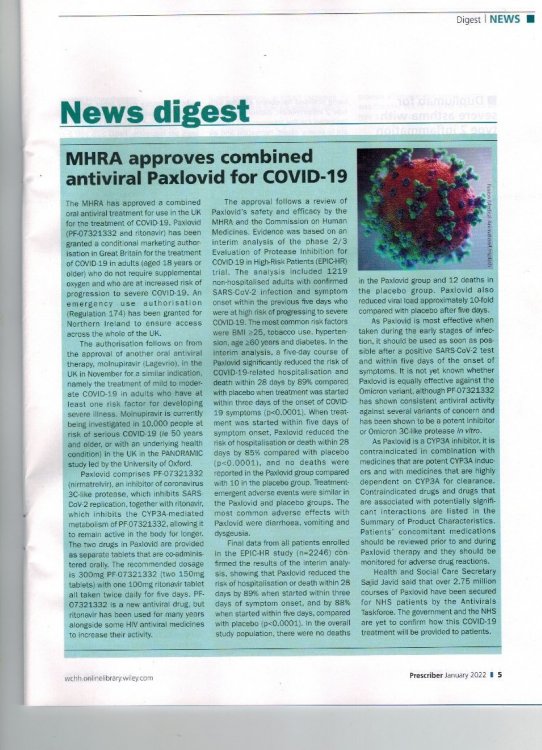
Thanks. However there is more encouraging news in 'the Prescriber' Magazine (UK).
-
As I understand the technological requirements, there is a trade off between temperature, time and fuel quantity/density. The lower the temperature the longer you have to wait for fusion to start / and the larger the require sized of your fuel quantity. The longer you have to wait means the longer you have to 'contain' the nascent reactants, whilst maintaining their (high) temperature. And the temperatures achieved by these lasers are lower than some other methods. But lasers are getting better and better so perhaps they will be able to laze a target for long enough to activate the fusion at lower temperatures. This is not the first time it has been tried, but certainly the best I have heard of so far.
-
Yes, your meticulousness does you credit. +1
-
Dhamnekar Win's fraction with the quadratic is correct for (c) I have not checked the arithmetic of his solution.
-
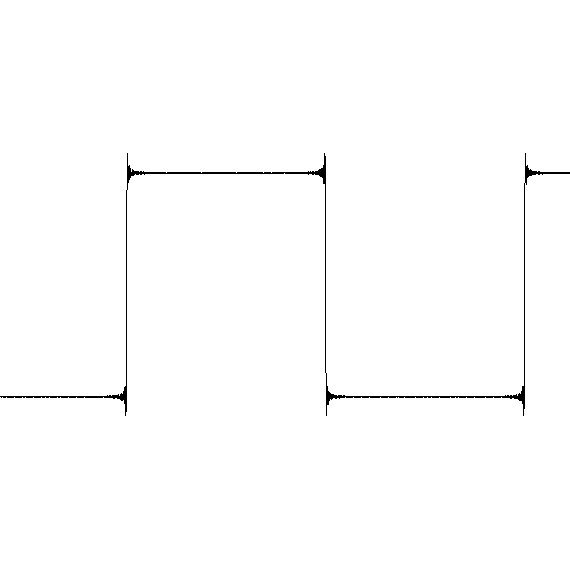
I don't see a problem here. The mathematics of the Ancient Greeks couldn't handle this question, and they developed many paradoxes involving their inadequate methods of analysis. Modern maths answers this as follows: Yes the spike exists, but it has zero duration in time. Incidentally you have a slight error in your maths. When you turn up the volume, you multiply by a positive number. But when you turn it down you multiply by a negative one. So the result is not x2 but x1 then by -1 = 1x(-1) = -1. OK so you have a spike of zero width. Or a pulse of zero width with a positive-going edge, followed by a negative-going edge. The point is that you only have one of these and 1 is a finite number. The Ancient Greeks' paradoxes all depend upon having an infinite count of these and they couldn't understand that an infinite count of these could add up to a finite total. We now call the pulse in question a 'Dirac Delta Pulse', which has some interesting and very important properties in modern Physics as well as pure Mathematics. Another example, that can be observed on an oscilloscope, is the fourier summing of sine waves to make a square waves. You can see what are known as 'Gibbs phenomenon' on the scope. As we approach more and more nearly vertical sides to the square wave, the leading and trailing edges extend further and further beyond the horizontal parts, culminating in spikes. The important point is that
-
You and you teacher may have associated squaring with shapes but I will lay a bet that before your teacher mention s2, she said something like James has 5 apples. If Sally makes this up to five times as many, how many apples does James now have? You said as much yourself So how many square apples does James have ? Or is the 'unit' not square apples or (apples)2 ? Were you going to reply to my previous post ?
-
Definitely not. Seconds squared although some may have got the idea from acceleration which is metres per second squared or (metres per second) per second. There is more in the Philosophy of Mathematics about this because we have to think of 'repeated operations' and also whether the output domain of the repeated operation is suitable for the next repeat. I am rather busy at the moment but will post more detail in due course.
-
Welcome, I hope the various responses spread over a decade and a half helped but if you want to discuss this further please amplify and try to explain your exact difficulty as I for one couldn't catch it from your post. [aside] 'responses per decade' how's that for a unit ? [/aside] Please note two points about forum etiquette for this forum. We like members to make their point here, not tell others to go to the middle of somewhere else. Posting links is a great way to support something you have said here though. Also note the anti spam rule limit new members to 5 posts in their first 24 hours.
-
Windows has voice recognition built in. Various programs use this, others use their own for arithmetic. https://www.dinf.ne.jp/doc/english/Us_Eu/conf/csun_99/session0224.html https://www.google.co.uk/search?hl=en-GB&gbv=2&q=windows+voice+recognition+do+arithmetic&oq=windows+voice+recognition+do+arithmetic&aqs=heirloom-srp..
-
+1 for the example to discuss. Not sure I see time in this, but this thought experiment on an ideal system introduces two interesting facts. Firstly in terms of classical Thermodynamics, the general equation for the entropy chance of such an expansion can be shown to be [math]\Delta S = {C_v}\ln \left( {\frac{{{T_2}}}{{{T_1}}}} \right) + nR\ln \left( {\frac{{{V_2}}}{{{V_1}}}} \right) = {C_v}\ln \left( {\frac{{{T_2}}}{{{T_1}}}} \right) + nR\ln \left( {\frac{{{P_1}}}{{{P_2}}}} \right)[/math] In this case since q = w = 0 no work is done and no heat is exchanged with the surroundings Therefore [math]\Delta U = 0[/math], and thus for an ideal gas T2 = T1 Yet there is a non zero entropy change, due to the volume change alone since the integral of q/T must be zero. Thius there is more to entropy itself than just the integral of q/T . Comparing this to a digital computer system let us say we have such an ideal computer and the analog of volume would be memory capacity. If we suddenly doubled the memory capacity, would there be a corresponding Shannon Entropy increase, since we have added nothing to the contents of that memory by the expansion ? And how does information fit into both these scenarios ?
-
also @joigus I have been looking round the net for information about Arieh Ben-naim and he seems to be a bit aside from the mainstream. I downloaded this pdf of one of his aticles where he seems to spend a lot of effort attacking the works of others, rather than developing his own stuff, especially when it contains some rather suspect statements. https://www.mdpi.com/1099-4300/21/12/1170 I would consider the book disappointing if that was all or the bulk of it's contents. Back to the subject of entropy. Ask yourself which group of people are most concerned with entropy ? Answer those who have compiled very extensive tables of values and use them in their every day work. Chemical Engineers, Mechanical Engineers and other Engineers directly concerned with Themodynamic processes. The forerunners of these people were those who originally introduced and defined entropy for very practical purposes, a hundred years before Shannon. One thing those steam engineers invented was called an indicator, which was a device to 'indicate' steam pressure. This led to the birth of the 'indicator diagram which is a plot showing the energies involved in a particular process. Originally these were P - V diagrams, the area under which indicates work. It was desired to introduce a variable that coupled with temperature to indicate energy and that is why entropy was conceived and introduced and what you will find on modern day's entropy tables. In modern times we have found quite a few pairs of variables that yield the dimensions of work or energy when multiplied together and also that it is useful to prepare 'indicator diagrams' for each of these.
-
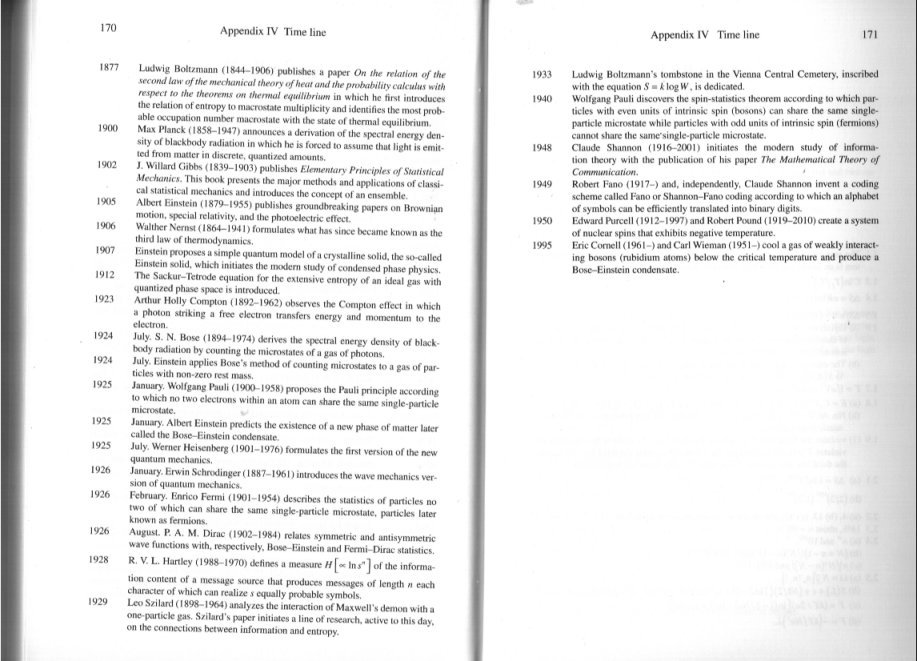
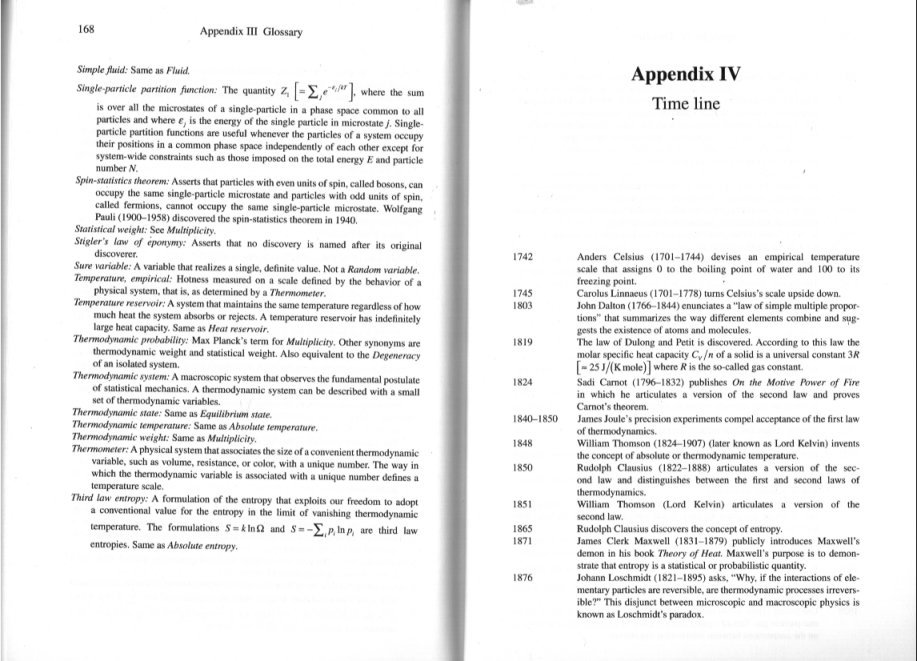
Now that's a really good response. Thank you +1. It seems serious stuff from the contents list, quite at variance with the overdramatised brash headlines from Amazon. I find myself with much more interest in reading this book. Do you have any idea of the difference between this one and his others on the same subject ? Meanwhile have you heard of this book ? It has a similar theme and ambit. Here is a very interesting timeline found in Appendix IV Finally I don't know if you were here when I last stated the simple original reason for introducing the entropy function, which makes it so easy to explain. Have you heard of indicator diagrams ?

-
Any chance of a glimpse of the contents page at least and a review would be nice. I can't find these anywhere and I am unwilling to risk £20 to find out. The author seems to have written several books about entropy, but I can only find a couple of sentences quoted. These do seem to make sense to me however.
-
tato has posted this on several mathematics forums, but has yet to receive a definitive answer, despite efforts by plenty of respected mathematicians. There is a geometric solution to a similar problem posted but although the diagram is the same different linking sides were involved as equal.
-
A pretty fair summary.+1
-
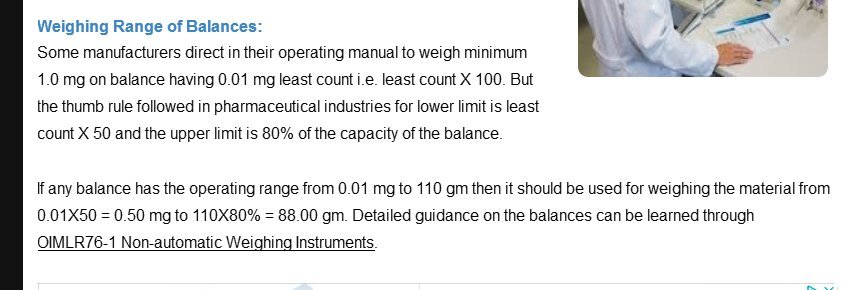
Whilst your recipe list is (a bit) interesting you haven't said how much solution you require or what the form of your ingredients are. Considering you are not requiring analytical chemistry accuracy I think you could just scrape into the pharmaceutical balance category. Most of your ingredients require millimoles per litre which would cause no difficulty. The heavy metal sulphates have a MW of around 160 so you would be requiring about 0.1 - 0.2 millig/litre So if you could accept making up a large solution of these and pipetting or buretting some you could maybe get away with that. https://www.pharmaguideline.com/2014/09/calculation-for-weighing-range-of-balances.html If you don't know how to use a balance, you need technician assistance. Here is a standards pdf on preparing mixed solutions. https://www.training.nih.gov/assets/Lab_Math_II_Transcript_-_508.pdf
-
@Ghideon and @joigus Thank you both for a useful continuing scientific conversation. +1 apiece. There doesn't seem much else scientific going on here at the moment. I think Shannon entropy is specified and calculated on the basis of 'ideal' computers devoid of earthly defects, including the need for power sources. This is nothing new and continues the Ancient Greek tradition of abstracting perfect circles, squares etc as 'ideals'. We have carried this tradition on thoughout history in both Philosophy, Engineering and more recently Physics. In particular physical (ie thermodynamic) entropy and other thermodynamic properties are calculated on the basis of 'perfect' or ideal processes. Ghideon's comment about time applies if he doesn't already know this as the equations are almost all derived on the basis of infinitely slow (ideal) processes called reversible ones. thermodynamics doesn't care how long it takes to get there. One difference is that the thermodynamic statement "Ideal entropy cannot decrease" is defined for a cyclic process. It does not forbid entropic decrease within a cycle and this actually happens in some practical situations. Computing processes are not, in general 'reversible' in the same way.
-
In fact this work seems to be a development of the work of Berner (reference 45 in the paper) and Canfield (reference 1 and the paper)
-
What would be really useful would be a summary of what the course is actually about since 'computation' means different things to different sections of the maths community. That would be useful to others (like me) who might actually be thinking of looking at it. Thanks.