studiot
Senior Members
-
Joined
-
Last visited
Everything posted by studiot
-
It's called the area-moment method for the bending of cantilevers (which is what your type of torque wrench is) https://www.engineersedge.com/material_science/areamoment_method_13659.htm +1
-
Gravitational potential is not 'energy' The PE results from a potential difference A potential is not the same as a potential difference, although they will have the same units. Take an isolated single body, possessing mass. There exists a gravitational potential around it. But there is no energy, potential or otherwise involved. Now introduce a second massive body. Potential energy now arises from the configurational interaction of the two bodies and perhaps also kinetic energy. This is the same for electric and magnetic fields. It is also worth noting that the potential energy is conventionally set to negative infinity at the source, reducing to zero at infinite distance. I repeat it is easiest to try these questions out in one dimension first.
-
The concept of elasticity has meaning in fluids.
-
Hello Vashta, This question of yours is about upper highschool / first year college level. Your presentation shows you are thinking hard about the subject +1 for that. However you seem you be having some trouble matching the classical Physics (where you have placed the question) with the Maths. This is not suprising as you will likely not yet have gone far enough in integration theory. First let me state quite plainly that gravity works well in one, two, three or more dimensions. It is probably easier to explain in one dimension what you need. The definition of the gravitational potential is an integral yes. But it is a definite integral. Using the definite integral avoids two problems. The constant of integration 'cancels out', so enabling the fact that you can choose any position as your bas point (as others have mentioned). It allows the use of the limiting process in evaluating an integral if one of the limits of integration (don't get these two different uses of the maths term 'limits' mixed up) is infinity. I assume you are aware of the difference between a definite and an indefinite integral ? But you may not have come across what comes next. If we integrate the work done F.dx from -∞ to ∞ or 0 to ∞ we have a problem. The curve is infinite, but we want the area under it to be finite as it represents the energy in the gravitational field. This type of integral is known as an improper intergral. Techniques for dealing with these are usually left until first year maths in college. OK in order to integrat this we need an expression for F in terms of x This is where Newton's Law comes in. At this point it is worth comparing Newtons Law for gravity, Coulombs Law for Electric charge and Michells Law for Magnetic Monoploles, which all have the same format. However there are also some not so suble differences. Gravity is the simplest because no other information is required Gravity has one direction (attraction) or sign (positive) only, in addition to magnitude. Electric fields have both direction or sign ( positive or negative) and magnitude. Magnetic fields have direction, magnitude and rotation or vorticity or vector curl. This last is most important because the vector curl represents a pointer or way into an extra dimension to the ones in use. So for a 2D surface carrying the mag field the curl points into the 3rd dimension and so on. There are no corresponding pointer vectors in the cases of charge or mass. Other differences are that it is possible to 'shield' agains an electric or magnetic field or introduce a physical device to set that field to zero. This is not possible in the case of gravitational fields.
-
Hello Cookie, perhaps if you rephrased the text of your question, so that you explained exactly what you are asking, you might get some more help. Did the electric field (strength) not come it to it somewhere ? When you reply you should also indicate your thought as to what might happen. (better to be wrong here than in your actual homework answer)
-
There has been a move in the UK NHS to invoke the technique of 'social priming' to improve workplace communications during these stressful times. The work of Yale Professor John Bargh has been put forward to support this. https://www.nature.com/articles/d41586-019-03755-2 However there has been more recent work to suggest this is less effect than JB found https://digest.bps.org.uk/2019/01/02/now-john-barghs-famous-hot-coffee-study-has-failed-to-replicate/ So my question for discussion here is In the light of some recent rather bitchy threads, could we learn anything at SF to improve our own communication skills ? I will apologise in advance for discounting my usual typolexis.
-
Why would you want to do this ? Lennard-Jones is one of a large number of empirical energy potential functions, obtained by fitting power law equations to observations, where the independant variable is distance. But all these have at least two parts a repulsive part and an attractive part. So the result is an interplay between the repulsive and attractive forcesand their variations ove the distance. On the other hand Gravity has ony an attractive part and additionally operates over a very different distance range. https://en.wikipedia.org/wiki/Interatomic_potential
-
Is that you excuse for not answering the technical questions I have asked you ?
-
Did you have something to say ? I'm sorry, could you speak up a bit please, the adverts on your post seem to be drowning out whatever it is you want to say.
-
Hello and welcome. I expect your 'prof' was talking about the Cantor set or Cantor dust. This reference may be a bit advanced but has some good diagrams https://en.wikipedia.org/wiki/Cantor_set Ask if you want something simpler.
-
Today I learned about the Titius-Bode Law and how a lady 'blagged' it. https://en.wikipedia.org/wiki/Titius–Bode_law
-
Some years ago my brother and I bought identical cars. My brother has not used his, but has kept it in his garage ever since and, if anything, it now looks better than new. I have been rather busier and my car has nearly 150,000 miles on its clock. The saleman for both out cars was called Albert and he promised that the more and faster I drove, the younger my car would look, relative to the one of my brother. So why, oh why does mine look like a train wreck that has already happened ?
-
You seem to have fallen into the same trap as your sparring partner. If you are genuinely immune, there is no time limit. You surely mean natural resistance, which is different thing. Genuine immunity may be thought of as a kind of limit as the natural resistance tends to infinity. Both concepts are required to properly and fully discuss the subject.
-
The 'and' links 2 separate claims here. Your evidence for these figures are ?? I ask this because both of these claims are wildly different from the reviews at my UK district general hospital, which I get to see on a regular basis. Once again this conflicts with the evidence I review. Of course natural immunity is better. But if you are immune you are not (cannot be) infected, by definition. But such individuals are very few and far between. Exposure to the virus does not confer any guaranteed resistance to future exposure. Nor are vaccines claimed to confer immunity, even by those (inept) politicians who don't know any better (some are actually practising doctors). The claim and experience is simply that the clinical severity and acuteness of any infection or reinfection will be greatly reduced in most cases. This again is borne out not only in local experience but also in the national figures published on most days. Finally are you the ill informed member who believed the proposed compulsion covered the entire UK as too many journalists seem to have done?
-
Looking for a grant in Earth Sciences ? There are lots. For instance https://www.geolsoc.org.uk/Education-and-Careers/Grants
-
Au contraire it you who has missed the point. For instance it is on record that between March 20th 2021 and March 21 2021 nearly a million does were administered (844,285) in the UK. Please refer me to any study that takes account of that recorded population difference in one 24 hour period. It should be noted that that was the third record fifigure in a row so the population had made similar vast changes in the preceding days. Nothing has changed by February 2022, except that other countries have been catching up and the bigger ones overtaking that figure.
-
Any study on covid vaccination will be out of date before it is even drafted, let alone published. This is because the rate of vaccination is and has been so high and also been age and other group selective, that the sample space completely changes on a daily basis. We should let our best minds do the best they can with any data available at the time they have to act and not criticise them with 2020 hindisght.
-
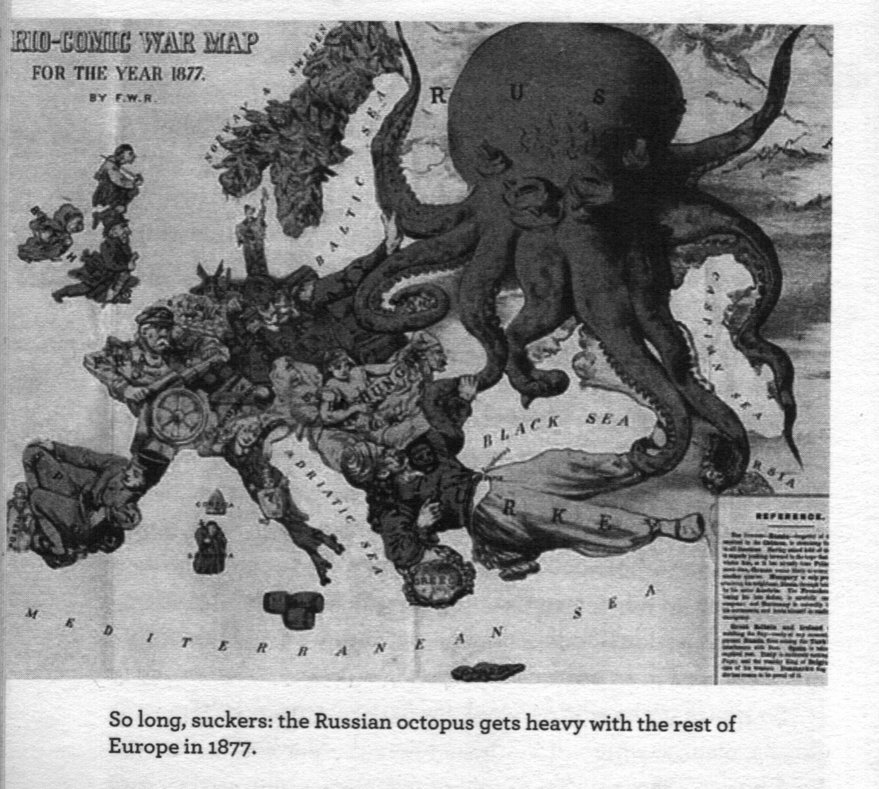
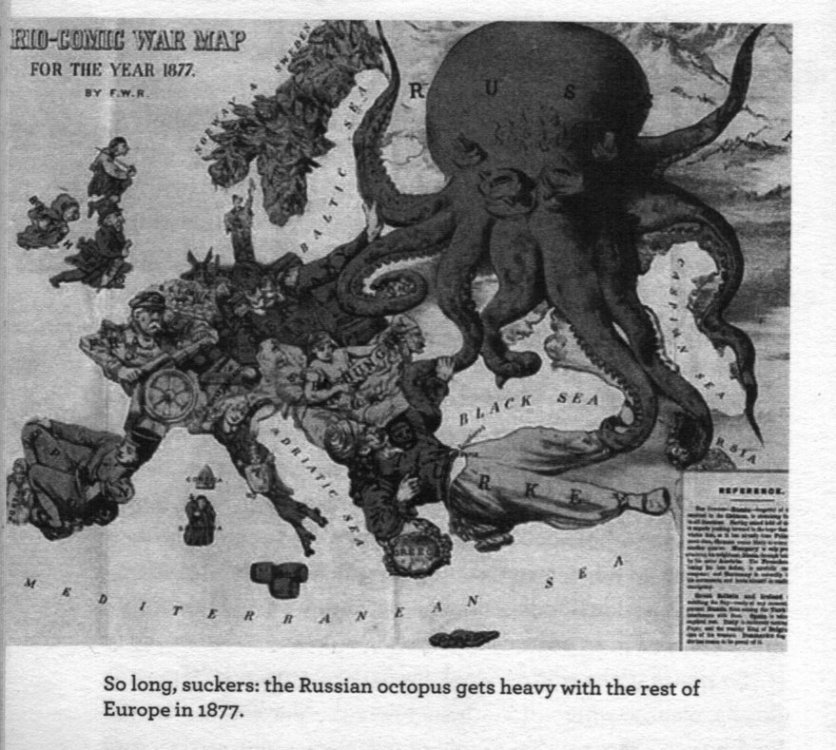
I haven't taken an interest in this thread, but I thought some might appreciate this 1877 map.
-
Don't give up now that you have started to do so well. +1 for encouragement. I'm sorry if you feel confused, but remember that Rome wasn't built in a day. And yes, it's complicated. But your last post, in particular, shows that you are now understanding my comments. See below about the application of black bodies.* It's also true that if you want numbers then some mathematics is unavoidable. But a great deal can still be achieved by discussing the principles and their application. It is also worth noting that obtaining something from discussion is two way. I certainly am grateful for the personal clarification I often gain when trying to explain something to others. *I did promise to reply separately to the other point about temperature and I have come to the conclusion that that particular point is so important that it deserves a thread all of its own so watch for further developments. The S_B law is quite precise when it is applied to small bodies which have surfaces at essentially the same temperature. But the Earth is (in this context) a large body with substantial variation of temperature over its surface and in time. In such cases one possibility is to introduce the idea of an 'equivalent black body'. An equivalent black body is a BB with the same heat radiation flux as the Earth's actual flux. This is definable and manageable with the formulae so calculations can be performed using the temperature this equivalent black body must have. This equivalent BB temperature might be (probably will be) different from any of the different ways of averaging measurements over the Earth's surface. What temperature to use and how to arrive at that temperature is therefore of vital importance to climate science and is the proposed subject of my new thread to be. I hope this encouragement helps.
-
Would the uninformed troll who just went back over this thread sprinkling red marks around and in particular to this post own up and justify what they think was incorrect about this post. Covid vaccination has never has been mandatory in the NHS in the UK, nor was it ever proposed to be. I await their apology when they have fully checked their 'facts'.
-
-
The BBC also has an article on this. https://www.bbc.co.uk/news/science-environment-60308650
-
This article may interest you.
-
It should be noted that many crystalline substances incorporate 'water of crystallisation' in their crystal structure. It is debatable whether this water can be counted as part of a 'reservoir' of available water.
-
I see we have a clear example of miscommunication in action.