
studiot
Senior Members
-
Joined
-
Last visited
Everything posted by studiot
-
I posted this reference in another thread, to recent information about the New Horizons results.
-
Who is this we ? I see lots of evidence everywhere I look, as I believe do most folks. In fact I find it difficult (though not impossible) to find evidence of phenomena that don't require time. You yourself, have offered plenty of evidence in this thread and then dismissed it as 'an illusion'. Perhaps you are just an illusion, after all I have never seen you.
-
A couple more points have occurred to me on further reading. 3. You can embed an object of lower dimensionality in a space of N dimensions. So you can have line in 2, 3 or more dimensions and it is still a line. But you cannot do it the other way round. A 3D object will not fit into a space of only 2 dimensions. Now I see what you are saying about a 4D object 'passing through' however that appears to me to contain a logical inconsistency. In order to have a 4D object and for it to move so that different 3D sections appear in the 3D space you must also have 4 dimensions. 4. You appear to have 'fitted' you equations to observation with no foundational justification. It is a fact that I coulod take any bunch of (random) points on a graph and fit an infinite count of different curves passing through those points. You need the foundational justification as to why Nature selects your particular equation set over any other.
-
I have not yet had the time to study the detail of your proposal but a couple of points which I would like clarified stand out. Did I just mention time ? You appear to be introducing a fourth spatial dimension. What does that do to using 'ct' in modern treatments of SR ? I note your statement that Montanus studied the effect of different combinations and numbers of both spatial and temporat dimensions. A good development of the mathematics of what happens and why we choose the option we have appears in Eddington's book on the subject. I suppose it depends upon your meaning of the word 'classical' but I cannot agree that: You will find a full treatment in for instance Sommerville's "An Introduction to The geometry of N dimensions". There is lots more particularly if you move to what is known as 'algebraic geometry' By all means propose that the physical world does not conform to our abstract mathematics - There are. after all, well known differences. But then you cannot (directly) apply the theorems and results of this mathematics to your proposals, you will need to develop your own.
-
Actually I think it is worse than just plain old meaningless. It is triply redundant meaningless. 😉
-
You know, this is a really interesting game of Who can make the most irrelevent post to the topic ? Last night I was struck by an interesting observation in number theory. What is the next number after 25 ? Suprisingly the answer I came up with was 24 ! Any ideas how that can be ?
-
Tell me, Do you know of anyone who has won any lottery by contradicting the organisers when they publish the winning numbers and say to that someone. "We're sorry to tell you that your speculated numbers did not match our list." ?
-
The trouble with repeatedly contradicting instead of listening is that others eventually give up trying to be helpful. This applies most especially when you contradict things I did not say, in a 'reply' to something I did say. Go well with your thoughts, I will try to remember not to bother replying to your next 'speculation'.
-
I meant to add the following to my last post. You will clear up that problem for yourself when you stop thinking about the electron - nucleus system having a magnetic field and start thinking about the system in an external magnetic field. It is the interaction of the charge with the external magnetic field that is important. Oh and did I mention that the magnetic field is external ?
-
The main problem you are having with "spin" is related to the fact that you are reading the word spin and trying to use the properties of mechanical spin which is an entirely different property from quantum spin. You are also persisting with mixing up macroscopic and microscopic properties of matter. I believe you have already rejected my (friendly) warning about this. Not a warning that this will get you into trouble with the moderators, but a warning that your guesswork will founder on these misconceptions. There is no simple theory to develop quantum spin form more fundamental principles. Using angular momentum for a point charge or small charge, rotating about its centre, leads to a quantity called The Bohr magneton This development is in agreement with observation. However attempts to use a similar development for a small (-ve)charge rotating about another equal or greater charge will not agree with observation, by a factor of 2.00023. You should look up gyromagnetic ratio or Lande g factor . This g factor is one of the best examples of where experimental observation overrules theory. Already in this thread in this thread, I have offered a few very important terms for you to look up. Did you look them up ?
-
This is an old topic, did you have any questions about the subject to make it worth resurrecting ?
-
I see you orders are going down well with the troops, General. 🤣
-
Can I start with a small correction ? Neither of the compounds you mention are acids! Ammonium persulphate is a moderately strong oxidising agent Sodium hydroxide is moderately strong alkali. Not that I am concerned for your etching processes but it could make a significant difference to your thickener. I'm not sure about gelatin, so I would suggest thegood old fashioned method of try a small amount and see. But I would also suggest perhaps some alternatives, Gloy that old fashioned gloopy paper glue/paste. Perhaps a starch based thickener (mashed potato, cornflour etc ) rather than a protein based one (proteins are pH sensitive)
-
Yes thank you that works a whole heap better. 🙂 This appears to me to be a strange point to make since your whole thread presupposes that time does 'exist'. Time is certainly a very slippery concept to grapple with and mostly does involve change of something. But time and change are not the same thing and sometimes (pun noted) a lack of change over time is important and sometimes there is a change, but the timescale is indeterminate or independent of time. Most of our knowledge and deductions about what is 'real' and what it means to 'exist' stem from comparisons of observations. We also make extensive use of observations to validate our knowledge and deductions and to make further predictions or evaluations. As far as I know there is no such thing as a de-aging capsule. Whilst I like to think I have an adequate IQ, I have no interest in comparing or contesting such. If you wish to have more detailed discussion of your predictions, you need to offer a more detailed description to work from. Surely that is the purpose of this thread - or am I mistaken ?
-
Thank you for your reply. Please don't mix up your responses along with something quoted from another. I really thought you had simply posted a quote but not responded to it. This is due to the way the ace modern programmers have written the latest updates to the site. I only found out by accidnet that in order to actually see your reply I have to click on the expand button. I must say screwed up quote functions are even worse on some other scientific websites that really should do better. I would like to say that I consider 'time travel' not only impossible but actually a meaningless concept. Consider your really simple example of grandpatricide. As I see it the physical phenomenon we call time has certain properties more akin to a fully bound book than to a ring binder of notes. This property preserves causality by the use of the mathematical order relation. I say mathematical order because this is different from 'order' as in the opposite of disorderly from drunk and disorderly in common usage. In a bound book, the order of the pages is preserved by the binding. In a ring binder you can take out the pages and shuffle them like a pack of cards into any order. The ring binder situation is what people commonly mean when they say 'time travel'. Taking out a page and replacing it in a different order or even somewhere else. Now take your life. That forms an interval in time with a partial ordering pertaining to just that interval. Like say a complete chapter in a bound book. What you are suggesting is equivalent to say moving page 53 to after page 108, leavinga gap in chapter 3 and inserting a non sequential page in chapter 8. I will leave you to ponder this and observe this more strict mathematical approach also applies to probability. For probabilities that are neither zero nor one there is another form of probability theory called bayesian probability which is attracting greater interest and success these days. We can look further into that if you wish.
-
Perhaps you should read some of their books? That might help you avoid some of the more obvious misstatements about maths and/or physics you have made in this thread, for instance about potential.
-
I can assure you that there are plenty of electrical engineers with an exceedingly good grasp of maths and/or physics about. Professor Hammond, of Southampton University, Professor Krauss of Ohio State and the Professor from the Colorado School of MInes I used to deal with but whose name escapes me.
-
Psst, wanna buy an industrial unit for making negative ion beams guv ? Here ya go. https://www.pelletron.com/products/mc-snics/ A steady stream of material with a negative charge. nuff said.
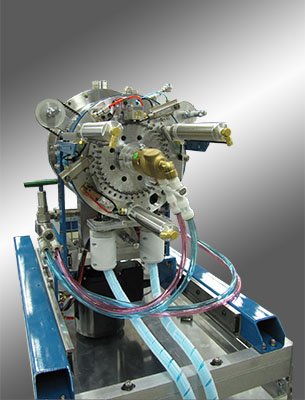
-
I seriously recommend more listening and less guessing. Of course it is possible for an atom to have extra electrons, that is how transistors work. exchemist mentioned metallic bonds, listen to what he has to say about them. Never? How do you explain positive ions then? Yes never. I have already told you that once an atom looses one or more electrons and remains an individual entity, it is called an ion. Sometimes atoms band together to form metallic masses via metallic bonds. In these circumstances, atoms loose their individuality forming a very very large 'molecule' that is basically the size of the lump of material. Each former atom contributes a standard number of electrons to a common pool of electrons in a so called 'band'. Impurities, either accidental or deliberate, can add an extra electron into the band. Arsenic or Phosphorus are added to the silicon of trnaistors to doe xactly this forming what is known as N-type material.
-
Unluckily that was not the only misconception in your sentence. For all the electrons under discussion: Electrons do not 'orbit around'. Atoms do not become 'positively charged'. Electrons are never 'not in the quantum levels of the atoms. The situation is much more complicated than this:-
-
Well we all make mistakes and I made a comical one here. I should have course said I didn't say anything about an electron atom with more electrons than protons, you did. I think that although your ideas are now moving in the right direction some serious misunderstandings still remain in your last post and need further work. I will however say +1 for admitting the mistake. But electrons are not expelled from the nucleus and the nucleus is always positive.
-
That's a really good idea. One suggestion. Try to avoid switching back and fore between a macroscopic (bulk) view and a microscopic (atomic) view. I didn't say anything about an electron with more electrons than protons, you did. Ions can be positive or negative and they can be formed from atoms (they are not then atoms and do not possss all the properties of the atoms they came from) or they may be combinations of atoms. The combinations may of course include atoms of sevaral different elements eg (CO3)2- ; (CN)- The situation can be even more complicated when a central positive ion is surrounded by negative ions called ligands for example six singly charged (CN)- cyanide ions can surround a doubly positive ferrous ion to form the quadruply negatively charged ligand complex (Fe(CN)6)4- https://chemed.chem.purdue.edu/genchem/topicreview/bp/ch12/complex.php Even more complicated are non stoichiometric complex ions which appear to violate valency rules. Pauli is not actually broken but you need to bring in aditional otherwise non active orbitals to explain them. Titanium and Chromium ions are favourites for this https://core.ac.uk/download/pdf/9025.pdf
-
If you start from incorrect or overgeneral or poorly worded ideas you cannot hope to reach sensible conclusions. I have not offered ridicule (or red marks) in this thread, but have tried to help you tighten up your premises to the point where they might form a useful starting point and not require constant revision. For instance your definition of ions is false. There is no other word for it. You can buy a negative ion generator on Ebay or at a high street shop.
-
So 'atoms' includes 'molecules'. That certainly is a novel concept that yoy did not stat at the outset. And you did not reply to my comment about ions. I suggest you take a long hard look at your foundations and get your working definitions sorted out so people do not misunderstand what you mean to say.
-
Thank you. Unfortunately you have now introduced another technical term ie 'substance'. You have also implied there are substances not made of atoms. What about the other objects I referred to. I take it that by your definition of material substances other objects made of ions are not material ? Personally I regard electrons as material. I can weigh them, I can use them to knock down targets, I can weld with them, I can heat things up with them, I can ionise things with them I can stand things in their shadow and much more besides. Finally what about molecules? Most substances are actually made of molecules.