
studiot
Senior Members
-
Joined
-
Last visited
Everything posted by studiot
-
I wasn't the one quoting allegedly learned papers. I was originally responding to and commenting on such papers.
-
My point is that in the scientific section of a scientific website we should be scientifically accurate and correct (unlike the UK Prime Minister) common usage is not good enough for a basic scientific term with a very specific meaning. If the probabilities are not equal then it does not mean the process does not have a stochastic model. It means that something else is going on, ie that some additional factor is involved. That something else could be deliberation by outside intelligent agency or internal intelligent agency, but not necessarily. For instance calouses will develop on the hands and finger tips of archers and musicians. Or suppose you tested a die that was 'born with' two fives, but no six due to a manufacturing error. Your test, measuring the probabilities, would soon reveal both the extra 5 and the missing 6. I know these are not genetic modifications, but they clearly indicate the fact that other, non intelligent, agencies could influence the process.
-
Agreed. Yes, but it may not be the OP who is confused about the meaning of random. The notion of random is based on the proposition of equal probabilities for every possible outcome. This is mathematically equivalent to your null hypothesis comment. My definition of a random is therefore " A process is random when all possible outcomes have equal probabilities" The question then becomes How do we assess the process when the probabilities are not equal, perhaps for the reasons you have already mentioned or perhaps for other reasons ? For instance the outcome of a horse race is not random, even though every runner has a chance of winning, because the chances (probabilities) will not be equal.
-
This is (supposed to be) a scientific discussion. And in scientific discussions we are supposed to state explicitly, not imply. That is why I am searching for an unambiguous term. Random has already been shown to be inappropriate. It is also inappropriate because when used in a scientific manner it has an exact meaning that does not apply here without mathematical demonstration. Perhaps you might like to choose another word or phrase ? And no I did not mean accidental as the opposite of deliberate. I meant 'by chance'. Nor am I ruling out the possibility of deliberate mutation, but I do dispute that it follows that if the results of chance are not random then they must be deliberate.
-
I would like to thank both Arete and CharonY for several excellent posts apiece, extending my knowledge of the subject. It is really good to hear someone who knows their subject. My comment on the study. Random might not be the best adjective for the mutation process. Accidental might be better ?
-
Am I really in danger of poisoning from the NHS website as well as the Russian embassy ? More seriously, sorry to be a sourpuss, especially when my comment is sweet. One thing I discovered when island hopping in the Greek Isles some years ago. That was how much better cold rice pudding keeps than ice cream in warm weather or cold. A note to the OP, If you ever read manufacturer's instructions you will have noted that you are not supposed to put hot or even warm food straight into a fridge or (perish the thought) the freezer. So it is clearly OK to cool it off somewhere else. Of course the food concerned should be covered. The old fashioned practice of serving food in containers with lids and keeping them lidded after serving, bear witness to this. I find a good place to allow things to coolis in the oven they were cooked in. This will be a sterile cooling environment.
-
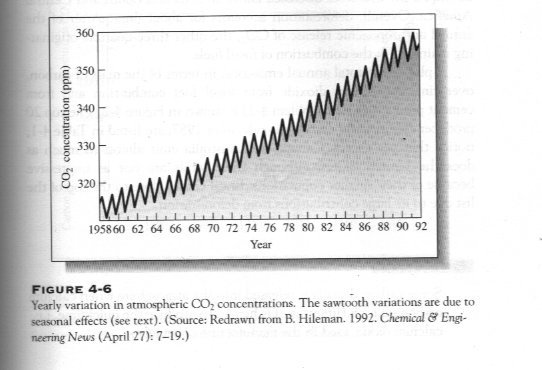
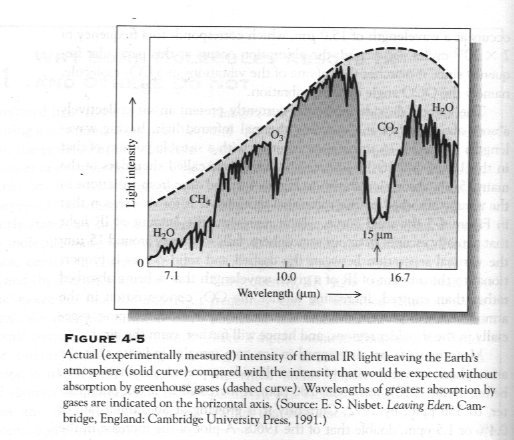
The use of the Beer-Lambert law is still modelling, albeit simpler than the billion tax dollar computer models currently promoted. I don't see how this would not still result in a model. Surely from a climate science point of view, only actual measurements on the actual atmousphere count ? Here are a couple of graphs of slightly older data, including references that might provide a starting point for you.
-
I should have added two things. The UK is one of the most camera monitored countries on Earth. We do not have so many traffic signals (lights) as they use in Europe. Most junctions are 'controlled'' by passive markings on the roads and signs mounted on posts, And of course the rules of conduct embodied in the Highway Code. There is even a section where these take over from lights,and tell the motorist what to do if the lights fail.
-
Patterns ? For m members and n selections it is a double product series of terms, one ascending, one descending In this case we have 1*6 + 2*5 + 3*4 + 4*3 + 5*2 + 6*1 6 + 10 + 12 + 12 + 10 + 6
-
Traffic offences are not taken off the police plate. What happens is that the police employ 'civilians' and computers to issue 'fixed penalty' notices, under their authority. Civilians are cheaper than actual policemen and computer can be cheaper still (though they have hidden costs). Yes many junctions where too many drivers try to 'catch the lights' before they change have cameras dedicated to this rather than speeding. Does this help ?
-
Posted in error. Is this meant to be a puzzle ? I think one way is to place all the members in order thus A B C D E F G H Then form committees from the first member plus two others. Since there are 8 members you need (8-1 -1 = 6 ) ways to do this for the first, second and one other member. Also for the first, third and one other member there are 5 ways. For the first, fourth and one are there are 4 ways. For the first, fifth and one other there are 3 ways. For the first, sixth and one other there are 2 ways. For the first, seventh and pone other there is 1 way. A total of 6+5+4+3+2+1 distinct ways Then discard the first member and start again with a committe from 7 members which will have 5+4+3+2+1 ways distinct from the first set and so on forming the following table of ways [math]\begin{array}{*{20}{c}} 6 \hfill & 5 \hfill & 4 \hfill & 3 \hfill & 2 \hfill & 1 \hfill \\ {} \hfill & 5 \hfill & 4 \hfill & 3 \hfill & 2 \hfill & 1 \hfill \\ {} \hfill & {} \hfill & 4 \hfill & 3 \hfill & 2 \hfill & 1 \hfill \\ {} \hfill & {} \hfill & {} \hfill & 3 \hfill & 2 \hfill & 1 \hfill \\ {} \hfill & {} \hfill & {} \hfill & {} \hfill & 2 \hfill & 1 \hfill \\ {} \hfill & {} \hfill & {} \hfill & {} \hfill & {} \hfill & 1 \hfill \\ \end{array}[/math] Add them all up to obtain the answer.
-
If you wish. But we are not concerned with orbital motion around the Sun, except as a reference plane. The impotant message is the spread of the axial tilt angles all measured relative to a common direction, which the ecliptic provides. Since all the planets' orbits lie close to/within a single thin disk, there is also an average plane, which is close to the ecliptic, and called the invariable plane. https://en.wikipedia.org/wiki/Axial_tilt https://en.wikipedia.org/wiki/Orbital_inclination
-
Here is a table of tilt angles in degrees for the Solar System. Source NASA via Wikipedia. Do you think your collision hypothesis as to the origin of the tilt applies to all the tilted bodies, including the Sun ? [math]\begin{array}{*{20}{c}} {Sun} \hfill & 7 \hfill \\ {Mercury} \hfill & 0 \hfill \\ {Venus} \hfill & 3 \hfill \\ {Earth} \hfill & {23} \hfill \\ {Moon} \hfill & 7 \hfill \\ {Mars} \hfill & {25} \hfill \\ {Jupiter} \hfill & 3 \hfill \\ {Saturn} \hfill & {26} \hfill \\ {Uranus} \hfill & {82} \hfill \\ {Neptune} \hfill & {28} \hfill \\ {Pluto} \hfill & {57} \hfill \\ \end{array}[/math] If this impact object collided 4.5 billion years ago then it clearly can't have been the proposed second impactor at 350+ million years ago. Please confirm you mean both these impacts. As to the first impact, what do you mean by the size of Mars, (volume or radius) or mass ? Can you describe how you think this works ?
-
Really ? 70 in 2.7 million is [math]\frac{{70}}{{2.7}}\;in\;\frac{{2.7}}{{2.7}}\;million[/math] or 25.9 in 1 million Which I think is close enough to 30 not to argue about.
-
Rather than being quite so beligreant, why not do your own maths ? I also recommend working in parts per million, not parts per hundred. In that case the surface toughness of a billiard ball works out (quite coincidentally) as about the same as the variation in the CMB measurement. 70μK parts in 2,700,000μK is approximately 30 parts per million.
-
I very much doubt there is one cause, though changes to policing practice seems a likely contributory candidate. And for 40+ years we had the benefit of the Road Research Laboratory (establish 1933, privatised 1996) So political dogma is another cause.
-
Thank you for your reply but the quoted piece are not my wording, which is why they are in a quote box. There was much more to look at in both the links. I'm sorry to note that you are guilty of at least one of the two pieces of sloppyness I am trying to highlight here. Firstly the quote says quantum information, not just information. Secondly I am trying to say that pieces of different notions are being pieced together/mixed up when they should not be, in this case the characteristics of entanglement and superposition along with the issue of quantum and not quantum matters. Also the issue of coherence (and decoherence) are being ignored, except in swansont's pointed questions.
-
There seems to be some confusion concerning the difference between superposition and entanglement. Members should also note that neither entanglement nor superposition are considered to be a simple state. A bit of googling might help them understand the notion of product states, if and when they occur.
-
Interactions of highway users with both each other and the highway itself is extremely complicated in the UK, and far from entirely covered in the Highway Code (any edition) Ownership and funding of both highway construction and maintenance is also compllcated but surely off topic in this thread ? I would just like to thank Endy for posting that link. +1 It is ironic that Uk citizens (myself included) couldn't find it. It is even more ironic that the link to the official announcement states that the new rules take effect from 29 January, but that the new document will not be available until at least April, to buy in the shops. This is the sort of shambolic government we are now suffering from in so many areas.
-
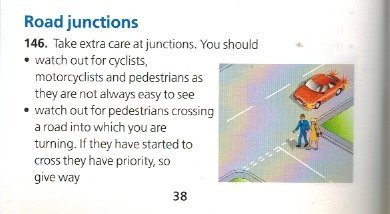
The rules of conduct for highway users varies from country to country and I think this new edition was cooking before Brexit to more closely align the UK with European practice. However it has really introduced little or nothing that is fundamentally new, despite what has suddenly caught media attention here. In particular the 'rights of way' have always been in favour of pedestrians in most circumstances, since the first edition. It has largely been a tidying up exercise. I remember watching a qizz TV series in the 1960s about knowledge of driving rules. They often caught people out back then with the question about pedestrians at road junctions. Failure to observe this is one of thos 'absolute' offences for which there is no legal defence. I don't have an older Highway code now, but here is the directive from the 1999 edition
-
-
No sure why you would want medium grid voltages but your state (Uttarakhand at the foothills of the Himalaya already has many hydroelectricity projects, both large and small. I found this report online https://www.adb.org/sites/default/files/project-documents/51308/51308-008-cp-en.pdf But there are plenty of other references. UK suage is as follows https://www.ukfrs.com/promos/17142
-
And all this unverified ytube nonsense is mainstream Physics ? But, I forgot you have already made it quite clear, the site rules don't apply to you. Since no one else seems to care and the OP hasn't been back since posting, I will leave you to your musings.
-
Of course not. Superposition means "in exactly the same place" Later mathematicians generalised this to mean "in exactly the same mathematical space", which is the meaning adopted in QM. I have no idea what you mean by a 'shared identity' or 'part of a whole or indeed the rest of your statement. Please explain in (preferably mathematical) detail. This is nonsense. Particles never instantaneously appear at remote locations or anywhere else.
-
How can electrons be in superposition ? The wavefunctions of the electrons may be in superposition, but not the electrons themselves.