Sensei
Senior Members
-
Joined
-
Last visited
Everything posted by Sensei
-
Tool depends on task at hand which you must do. There is no such thing as "the best tool for everything". If you want to make website you just need web browser (which is built-in every modern system) and start your journey from reading and following tutorials on https://www.w3schools.com It is for IT beginners really. It is also good to have XAMPP https://www.apachefriends.org/ If you want to make Windows OS application, you will need Visual Studio Community or Express. https://visualstudio.microsoft.com/ C/C++ language reference https://en.cppreference.com/w/cpp/language If you want to make smartphone application for Android you will need Android Studio. https://developer.android.com/studio Java language reference https://docs.oracle.com/javase/specs/jls/se8/html/index.html All these tools are available for free to download and use. No. It is not good job. It is great job to learn. If you don't want to be "modern Neanderthal" not understanding anything around you..
-
In the computer science, "integer"/"int" is primitive data type which is stored (typically) in 32 bits, regardless of what value it contains. It can be unsigned or signed. Unsigned 32 bit integer can store values between 0 to 2^32-1 = 4 294 967 295 (~4.3 (US/UK) billions). If not all bits are used, we can pack couple values into one primitive datatype. The simplest example of it is bit field: https://en.wikipedia.org/wiki/Bit_field e.g. if you have value ("value1") in range 0...16 777 215, which fits 100% in 24 bits.. you can merge it with yet another value ("value2") in range 0...255 which fits in 8 bits. data = ( value1 << 8 ) | value2; (which is equivalent to value1 * 256 + value2) To extract value1 from data we need to do: value1 = data >> 8; (which is equivalent to data/256) and to extract value2: value2 = data & 0xFF; (which is equivalent to data%256) In the more complex cases, there are needed left/right binary shift operators together with binary and (&) operators. Binary left-shift is equivalent of multiplication by 2^x. Binary right-shift is equivalent of division by 2^x (without remainder). And binary and (&) operator is equivalent of modulo. They are much faster for CPU than equivalent arithmetic operations. Knowing it, we can pack/unpack values which don't fit perfectly inside of bit/binary boundary. e.g. on the example of time: you have variables seconds and minutes, they are in range 00...59. Hours variable is in range 00...23 packed_time = ( ( hours * 60 ) + minutes * 60 ) + seconds you end up with value in range 0 ... 86399, which is stored in 17 bits (2^17 = 131072) Previously, you would have to have 3 bytes = 24 bits used not optimally for hour, minute and second variables. Remaining bits where always 0, just taking space. No, you did not. Rediscovered just the wheel. Widely known and used even by CPU engineers to save space in the CPU registers..
-
A serious eruption from a volcano at the bottom of the ocean (or a volcano on lonely island in the middle of nowhere), can result in a tsunami on the sea's surface.. https://www.google.com/search?q=underwater+volcanic+eruption+tsunami
-
Really deep diving requires special procedures and special equipment i.e. decompression chamber otherwise diver will have decompression sickness which might even end up with death. You should read entire articles: https://en.m.wikipedia.org/wiki/Decompression_sickness https://en.m.wikipedia.org/wiki/Diving_chamber Hydrostatic pressure at sea level is 1 atm. Approximately 2 atm at depth 10m. Approximately 3 atm at depth 20m. and so on, so on, every 10m. Whether diver will survive getting out of submarine which sunk depends on depth at which he/she get out of it and availability of decompression chamber waiting for them..
-
Did you try solutions from this thread? https://www.dell.com/community/XPS/FAQ-Modern-Standby/td-p/7514448 "Workaround for Modern Standby battery consumption and heat This option may be removed by Microsoft in newer operating system versions. * Highlight on the battery icon (bottom right) * Right click and click Power Options * On the left side navigation, click "Choose what the power buttons do" * On, "When I press the power button", change On battery and Plugged in to "Shut down" * Click Save changes * Go to Windows settings and select Power & sleep. There will be an option for Network connection: "When my PC is asleep and on battery power, disconnect from the network", change it to "Always" * Open Device Manager * Open the Network Adapters section * Right click on the Wireless adapter * Go to the Advanced Tab * Go to Properties and select Wake on Magic Packet and set the value to Disabled * Go back to Properties and select Wake on Pattern and set the value to Disabled * Click the Ok button and close the open windows Disable Modern Standby. Backup/export the registry prior to making any changes This option may be removed by Microsoft in newer operating system versions. * Press Windows R * Enter regedit * Click OK * Find HKLM\System\CurrentControlSet\Control\Power * On the right, double click CsEnabled * Change it to 0 * Click OK * Close the Registry Editor To enable the Hibernate option This option may be removed by Microsoft in newer operating system versions. * Right click the Start button and type comm on the search line * Right click Command Prompt * Click on Run as administrator * Type powercfg /a (this shows all of the states) * Type powercfg /h on [press Enter] Create shut off CMD shortcut icon * Open Notepad * Copy this text: Shutdown /s /t 000 * Paste it into Notepad * Click File- Save as * Click the Save as type drop down arrow and click All Files * Enter Off.cmd in the File Name blank * In left pane click Desktop * Click Save * Close Notepad * On the Windows Desktop you should now see this" Maybe it is because 1) SSD and/or HDD does not go to sleep 2) network activity can wake machine. So, you should identify whether they are the case and eventually search net for how to disable them (read entire article above with the all links).
-
Unlikely. It is too late for it.. But question is ill formed. It should be whether they can get people back.. alive... ps. There was no Musk's team landing on the Moon yet.. Step by step.. baby steps.. "Hurry up" is ready procedure of failure in any serious endeavour..
-
What a poor introductory post.. None political wing, AFAIK, accepts pedophiles, child molesters, child abusers.... Acceptance to gays and lesbians, transsexuals, minorities, has nothing to do with acceptance of people raping, molesting or abusing people (i.e. doing things by force, or by trick, against second person free will..) (Typically) YouTube is a poor choice of source of the information about the world, unless a video is made by scientists e.g. Discovery Channel programs.
-
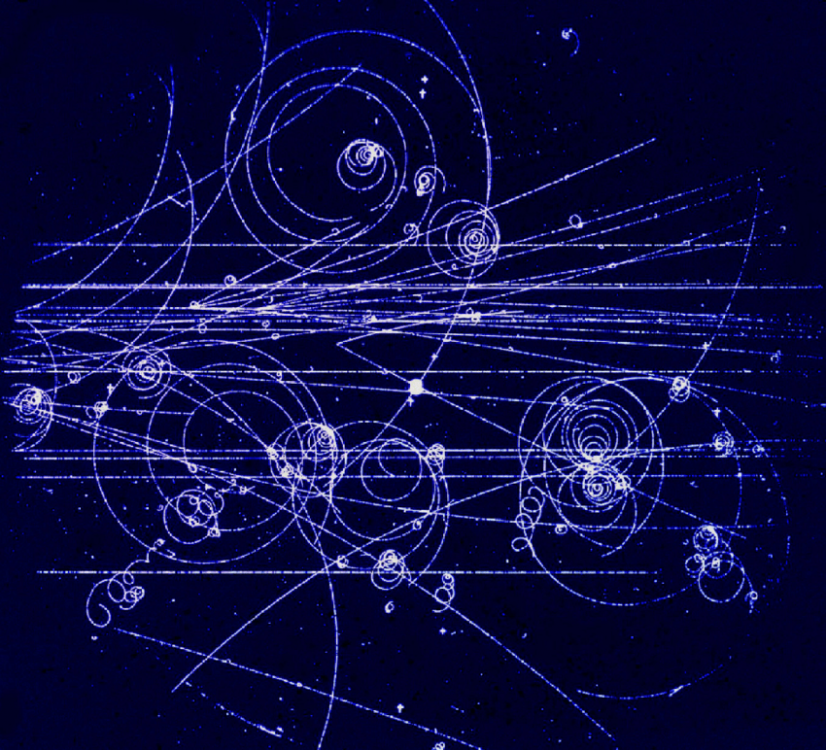
E=m0 c^2 is mass-energy equivalence! It has nothing to do with "speed of light"... https://en.wikipedia.org/wiki/Mass–energy_equivalence m0 - rest-mass (aka "invariant-mass") of object. When highly (relativistic) accelerated particle collides with other particle, there is created "shower of particles". https://en.wikipedia.org/wiki/Particle_shower Such "shower of new particles" can be seen by naked eye.. if you have Cloud Chamber, Bubble Chamber, etc. kind of early (and cheap) particle detectors.. @Prof Reza Sanaye The more (kinetic) energy has particle, the longer trace it leaves. The more kinetic energy has particle, the more energetic (and more massive) new particles it can create during collision. You don't need CERN to have highly energetic particle. They are coming from cosmic space. Passing through your apartment right now. You just don't know about them.
-
IR camera for smartphone?
-
..the next step should be perhaps digital oscilloscope? Endoscope for smartphone? ($10-$20 or so) If you found multimeter "a fun little gadget to play with", then maybe Arduino? Default introductory kit should keep you busy for a month or two. e.g. get Bluetooth transmitter *) for Arduino, get water pump (in e.g. pet shop, pump for fishes), and build device for remote (by smartphone) control irrigation of indoor plants in pots. Make simple single button on/off Android app, which will connect to BT device and control water pump on demand. *) requires 5V <-> 2.5 V power/signal converter. https://create.arduino.cc/projecthub/neetithakur/automatic-plant-watering-system-using-arduino-uno-8764ba Perhaps LCD microscope? https://www.google.com/search?q=LCD+microscope
-
They also build entire house: "Woodworking Extreme Edition #2" You can get some inspiration from their furniture designs.
-
"Woodworking Extreme Edition #1"
-
Why am I feeling that you are mixing vaccines with antibiotics.. ? Indeed unfinished, interrupted, or overused by medics and agricultural industry, antibiotics treatments, can lead to creation of antibiotics-resistant species..
-
When pathogens have hosts they mutate, evolve, spread, transfer genetic material between themselves and with other viruses and pathogens. From mixture of two or more mild pathogens there can be created a new more dangerous specie. The more vaccinated is population the less hosts for pathogens and smaller probability of creation of new pathogens. That is why true danger lies in zoonotic viruses, which are completely novel to human organism and its immune system. Horizontal transfer of genes between zoonotic virus and mild harmless human pathogen can result in creation of a real lethal disase.
-
You should be vaccinated not only to protect yourself against viruses, but mostly to protect other people against you. If you will become mildly ill, you might be unaware spreading viruses to other people. Therefor entire pandemic.. The main path of transmission are not people with strong cough and severe state. They are easily detectable. Problem (regardless of disease) are "silent spreaders" who have no idea about being infected. HIV infected person can be spreading virus for 5-10-15 years without having symptoms and without having idea about being infected. Mask on face is not to protect you from catching viruses but mostly to protect other from your viruses. Aerosols in your breath and cough will end up on your mask instead of being shoot at 5-10 meters and remaining there for dozen of minutes flying in the room. If you walk in to the cloud with aerosols from somebody who cough, viruses can get to you through eyes, scratches, dirty hands (fast food eating outside of apartment without enough care) etc.
-
https://en.wikipedia.org/wiki/Ninth_grade#Philippines "Philippines In the Philippines, Grade 9 is the third year of Junior High School. Topics mainly discussed are the following subjects like, for the major subjects are Geometry (Math in Grade 9), Chemistry, Physics, Biology and Earth Science (Science in Grade 9), Filipino subject with Noli Me Tangere, Anglo-American Literature (English) and Philippine Economical Study (Political Studies in Grade 9). Values Education, MAPEH (Music, Arts, Physical Education and Health), Computer and TLE (Technology and Livelihood Education) are some of the minor subjects. Students are usually 14–15 years old."
-
Study things that are interestig to you.. Alternatively, study your school textbooks in advance before teacher tells you chapters to read. You will get good grades, when class will go through materal that you know already, and will have more time to learn new chapters in advance, again. Study computers science and programming. The all modern quantum physicists have to know how to program computers to be able to analyse large amount of data from sensors and devices.
-
In Open Office Spreadsheet you can copy one cell to other cell. e.g. suppose so we have something in cell A1. Fill cell A2 with data "=A1". Whenever you change content of A1, A2 will be automatically updated. Excel should have something similar too. Instead of copying you can also do math operation. Sumation. etc. Open Office Spreadsheet accepts CSV file format, which is plain text but with information about spreadsheet structure. You can modify it by simple script. Columns are separated by coma or other character e.g. 0,1,2 3,4,5 Will make two rows, three columns with filled data. So you can make template in CSV with special tags e.g. %FIRST%,%SURNAME%,%DATE% Then in the script language of your choice use string replacement function to change tags to real values or values read from external file etc. e.g. in PHP it will be: $output = str_replace( "%FIRST%", "John", $input ); $output = str_replace( "%SURNAME%", "Doe", $output ); $output = str_replace( "%DATE%", "2021-04-20", $output ); What are you doing with your excel and docs? Print? Mail? Save on disk? In some cases you could use HTML (/JS/CSS/jQuery/AJAX) instead of Excel and Doc. And work entirely in Web browser window. It has many advantages like portability (PC, iMac, mobile and tablet supported since the beginning). HTML has form tags. https://www.w3schools.com/html/html_forms.asp You can use jQuery and AJAX and PHP for validation of data, sending filled e-mail and storing ready document in local database. https://www.w3schools.com/jquery/jquery_intro.asp If you want to try this route first download XAMPP. It is local HTTP Apache server with PHP and MySQL database installed and ready to use. https://www.apachefriends.org
-
Computer does not understand words that you used "ethics", "morals", "kill". It does not think. It just executes program. If program has not enough data, or incorrect data from sensors (because of unexpected by the software condition, unexpected obstacle on road, or unexpected weather condition, sensor malfunction, etc. etc.), it will execute wrong branch of code, which will eventually lead to crash and somebody will be killed. Nobody "chose person to kill".. "Choosing person to kill" requires thinking and intelligence. Statistics is what matter when there is news in media about crash, when there is discussion about "safety and feasibility of driverless vehicles ", not absolute number of crashes. For the media, good news is no news. Only bad news is news for the media. Even if 99.999999% of some cars/airplanes arrive successfully to home every day, you will hear in the media only about the one unlucky 0.000001% which had accident..
-
1) You do not know how many automatically driven cars reached their destination successfully. 2) The media will only talk about failures, not about successful arrivals. 3) Unlikely media will reveal what is percentage/per millage between crashes/not crashes of automatically driven cars, versus human-driven car crashes/not crashes. (you are not informed about the number of airplanes which not crashed today either, you're just informed by the media only about one which crashed today) My thoughts about the software: When car driver instructs car where to go, device should show map of known (already taken and stored in db) parts of road (with green color), and unknown (which will be the first time taken) (with red color). Software should lower speed of driving on roads which are taken the first time. Human must be in advance informed about it. During driving software should compare what it gets from sensors and camera, is what is already in database. When there are bad weather conditions, obstacles on road, heavy traffic, etc. etc. what is in database won't match sensors, and speed should be lowered in advance. Automatic exchange of databases between cars, and central server, would help finding when software made mistake. Exchange of data between cars will prevent crashes between cars (data "we are here #UID at location x,y,z with speed vx,vy,vz, and acceleration ax, ay, az". From #UID computer builds history and predicts future path. Repeated by the all cars on the road tells about heavy traffic in some area in advance).
-
CERN offers a few free SDKs for particle collisions simulations.. Does it count? https://www.google.com/search?q=large+hadron+collider+simulation+sdk
-
"Even a Broken Clock Is Right Twice a Day".. If you will ask ~ 8 bln people to predict something in the future with an exact date, just because of the amount of people involved, some of them will give the exact date of some event, giving you illusion of prophecy and foresight. "predict a day of a week of your death". You have 1/7 = 14% chance of giving the correct answer. Nobody will say in media "that person incorrectly predicted day of week of his/her death". You will just see information about "lucky" one which gave the correct one. Someone is winning all these lotteries. They didn't foresee it, even if in the media say so.
-
Properties in a big-city are expensive. Property tax, is an Ad valorem tax, that is paid annually on the current property value. https://en.wikipedia.org/wiki/Ad_valorem_tax https://en.wikipedia.org/wiki/Property_tax i.e. the owner of the property has to hand it over to the people who rent the property (otherwise he/she would have been losing money every year and eventually going bankrupt). Such tax is especially troublemaker for elder not wealthy people who own just one property and live in property (so can't rent it). They are eventually forced to sell property and moving somewhere else. Modern farming does not exist without artificial fertilizers (chemical industry), without fuel to agricultural vehicles, without mass transport of fuel from hole to the refinery and to gas stations. It is a network of connections which will collapse if one piece is missing. A farmer who loses access to fuel would move to the 19th century (and lack of effectiveness of production from that time) if he has sufficient knowledge of how to make a wood agricultural plow... There is very little horses and oxen now, so after collapse, he/she would be able only to feed himself/herself and family. Therefor of mine previous "pushing on" solar panels, and solar energy: after collapse agricultural vehicles could still work reliably and provide food supply even without oil & gas industry.
-
One of the most bizarre topics.. US can't even solve much more basic things like: "Will America EVER ban guns?".. If people hadn't been shooting at each other for ridiculous things, we'd have had SOME PROGRESS... Police officers in a day, knowing they are being recorder are committing crimes.. WTF?! what do they do at night, when nobody is watching.. ?!
-
No. That is an error. You want to know whether similar difference is between positron and muon+.. To have full set of information you need the all data from experiments performed on tau-/+, muon-/+ and e-/+. There is no single way muon can be created. e.g. it cound be result of decay of pion, but it can be also result of decay of tau. Scientists working on the OP experiment should verify whether muons created different paths have the same properites. If they vary, how much they vary.