Sensei
Senior Members
-
Joined
-
Last visited
Everything posted by Sensei
-
...3D printer, 3D scanner, licensed 3D applications, 2D plotter, CNC plasma cutter, CNC water-jet cutter, induction furnace, chemistry lab equipment including electron microscopes and mass spectrometer... (that's what comes to my mind the first) Typical equipment for business incubator office skyscraper for startup-companies. To be able to create prototype of device without having to buy or rent the all required tools.
-
There are already existing businesses in which somebody seeking for help is contacted with expert in the field. But it requires a lot of money to be invested at the beginning. There must be created platform, on-line website, with on-line chat, and obviously you must sign contract with scientists, paid per answer, paid per availability, paid per week or month. University students the last years in the field might be the most interested to be experts on such platform, as they need money for their studies. Without couple millions of dollars of investment, I don't see how such platform would be able to work.. Experts will generate cost at the beginning of operation for months or even years. See for instance Stack Exchange https://stackexchange.com/ People seeking help are asking questions, and experts are answering them. They required $12m funding. https://en.wikipedia.org/wiki/Stack_Exchange
-
If there is rule of addition of HCl, then there should be rules for Chlorination, Fluorination, Bromination, Iodination etc. https://en.wikipedia.org/wiki/Halogenation#Chlorination
-
For a test, I made ethane molecule in reactant(s) area, then made chloroethane in product area. Result: Then I changed ethane to ethene molecule in reactant(s) area by clicking on bonding to change to CH2=CH2 and result is: So, it's not calculating reaction on-the-fly but searching in database.. ? That' pretty basic example. C2H6+Cl2->C2H5Cl+HCl
-
Works for me: [math]\frac{\Delta y}{\Delta x} = \frac{f(x+h)- f(x)}{h}[/math] [math]y = \int{ f(x) dx }[/math] @113 After sending message with Latex you need to refresh website.. It's very annoying, because if you have error in manually typed Latex, you will have to reedit multiple times, prior there is final error-free version. Older version of forum software allowed to preview post with Latex prior sending it.
-
@Phi for All There is alternative design, vertical axis wind turbine. https://en.wikipedia.org/wiki/Vertical_axis_wind_turbine There should be made experimental offshore field of traditional wind turbines, mixed with vertical wind turbines, and performed experiment how well they will survive/behave in hurricanes/storms. If test will prove they are better in such unfriendly weather environment, they should be used instead of traditional design.
-
@Phi for All@J.C.MacSwell https://www.energy.gov/eere/articles/wind-turbines-extreme-weather-solutions-hurricane-resiliency "Recent hurricanes Irma and Maria inflicted a lot of damage on infrastructure, including energy infrastructure. Wind turbines, whether they are land-based or offshore, have built-in mechanisms to lock and feather the blades (reducing the surface area that’s pointing into the wind) when wind speeds exceed 55 miles per hour. Basically, the wind turbine is essentially in “survival mode,” waiting for the storm to subside, so it can safely go back to producing energy." https://www.energy.gov/eere/articles/how-do-wind-turbines-survive-severe-storms "Every wind turbine has an anemometer that measures wind speed and a wind vane to keep track of the wind’s direction. See if you can find them toward the end of the scene of this 360° Wind Turbine Tour video. When the anemometer registers wind speeds higher than 55 mph (cut-out speed varies by turbine), it triggers the wind turbine to automatically shut off. "
-
Existing and old abandoned mines, or natural caves, can cause damages like cracks on buildings existing on the surface, when their tunnels are collapsing.
-
Congratulation to show that you have no idea what you are talking about. You don't even know proper terminology which is widely used even by non-professional programmers. 1) procedures, routines, sub-routines, functions. If inside of OOP class, they're called methods. https://en.wikipedia.org/wiki/Subroutine 2) conditional branches, or unconditional branches. https://en.wikipedia.org/wiki/Branch_(computer_science) 3) control flow of program https://en.wikipedia.org/wiki/Control_flow 4) source code. https://en.wikipedia.org/wiki/Source_code 5) compilation and compiler, interpretation and interpreter. https://en.wikipedia.org/wiki/Compiler https://en.wikipedia.org/wiki/Interpreter_(computing)
-
You can try using up-side-down aquarium instead of your incubator, with some kind of thermostat, which will keep steady temperature inside. And fan from old computer for airflow. This way you will be able to see what is happening (and eventually recording) from outside. Yet another possibility is Arduino WiFi Camera https://www.google.com/search?q=arduino+camera+wifi Cost $3-$4. Together with Arduino module $25 or so. https://www.ebay.com/bhp/arduino-camera (but it has worser parameters than GoPro, as it's just VGA resolution, but you could write custom program controlling it) (e.g. program uploading photos to FTP server, and observe it from home on your smartphone any time you want it)
-
Make timelapse video while making it the next time..
-
Very nice project. Personally I would use electric engine connected to Arduino with some radio transmitter to send information to rotate it left/right from home using remote pilot and have full of water pailful before going outside. Think about it. At least you will have a reason to play with Arduino. You could reuse old bike parts like bicycle chain and sprocket.
-
I use comments (in 99.9% of times) only to disable some part of code.. ps. And to-do e.g. // TODO: [...what to fix in the future...] Some IDE even have special feature to automatically search for and make a list of such TODO comments.
-
I'm wondering what people have instead of brain, wasting time talking about celebrities...
-
When it's done by management/directors it's called here "operation to the detriment of the company". It can have various forms e.g. signing of unfavorable contract that will cause lost of company money and/or company property (usually it's connected to taking bribe for doing it). I believe so it's prosecuted from private complaint. One of shareholders must be feeling ripped off. So, if you're the only owner of company, it does not apply.
-
I agree, large shares holder can influence company. I even said it right above the post you quoted. But it's direct conflict of interest if you own shares of weapon manufacturer, and at the same time you're pacifist (even indirectly, through investment and retirement funds).. From point of view of investor, you are interested in as largest revenue as possible from investment and steady income with expectable dividend.. and it won't come without production of guns and/or change of profile of the company. In other words management which wouldn't try to increase their profits would be working against interest of company (which is considered illegal).
-
Imagine what would happen if the all (or majority) from Forbes 100 the richest list would declare that they don't invest or make any deals with funds which posses shares of weapon manufacturers in their pockets. Funds would have to start selling their shares ASAP to not lose the best clients.
-
Aren't we in one of many threads "how to solve problems with guns", "how to get rid of mass shootings, suicides, accidental shootings, murders made by gun" etc. etc. .. ? If fund management is making sub-fund, addressed to people who are against guns, it's just marketing trick to attract investors. They will still continue supporting weapon manufacturers by their money. Just in different sub-funds. If majority of US fund managements will give up on supporting weapon manufacturers entirely, they will cause collapse of these companies, or force them to change their profile, to production of something useful for people instead. Fund managements with large stakes of shares can introduce their managers to board of directors, or even replace CEO. Basically, it's their company. Or rather investor's company who gave fund their money. Fund managements reluctantly reveal their investors exact target of investment (or they're not interested too much, just percent they will earn on it). They should be interested whether their money are landing in weapon manufacturers pockets, if they are against weapons...
-
"The devil is in the details"... What you said shall be read "we will make special sub-fund ("product") for investors, in which we won't invest in weapon manufacturers" (just catchy phrase for advertisement!).. At the same time it means "we are investing people's money in weapon manufacturers in THE ALL OUR OTHER SUB-FUNDS!"... What I meant in previous post, is that the all retirement funds/investment funds should say "we do not invest any money in weapon manufacturers! We did it in the past, we regret it, but we sold them, because our investors/retired people don't want to support them!"..
-
..and there will be more, if nothing will be done, because weapon manufacturers have to earn money, year by year.. 1) what are the biggest gun making companies? 2) are they listed on stock markets (which one) ? are they private (which one)? are they owned by government (which one)? 3) who are their shareholders? (and in what percentage) 4) if shareholders are e.g. retirement funds, or investment funds, then which one.. ? 5) should not retired-to-be and retired people know in which companies their retirement funds are investing their money.. ? 6) should not they disallow their retirement funds to invest in company in which they don't believe is doing something good for people.. ?
-
I think the main purpose of buyback program is to take illegal weapons from streets..
-
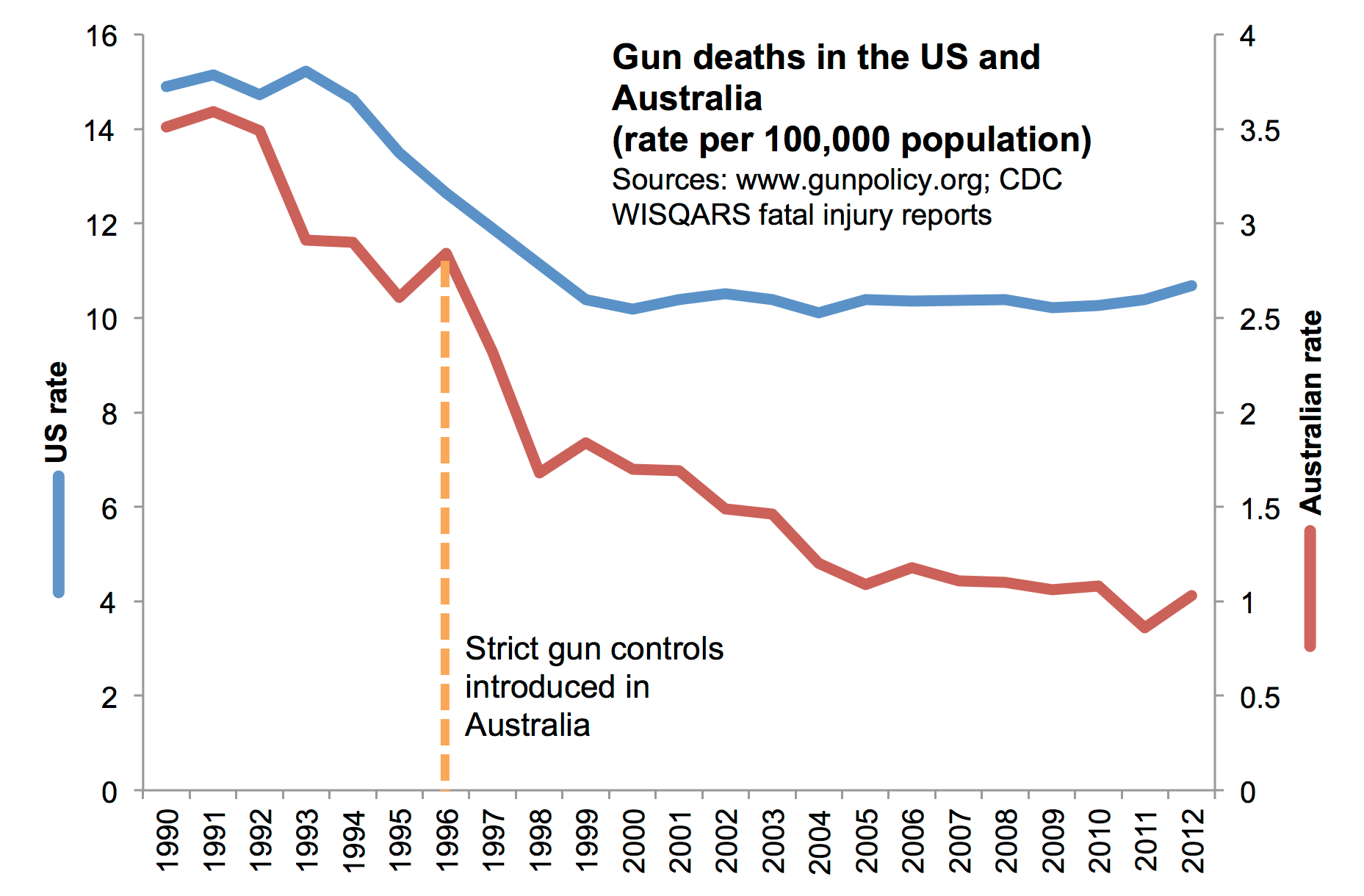
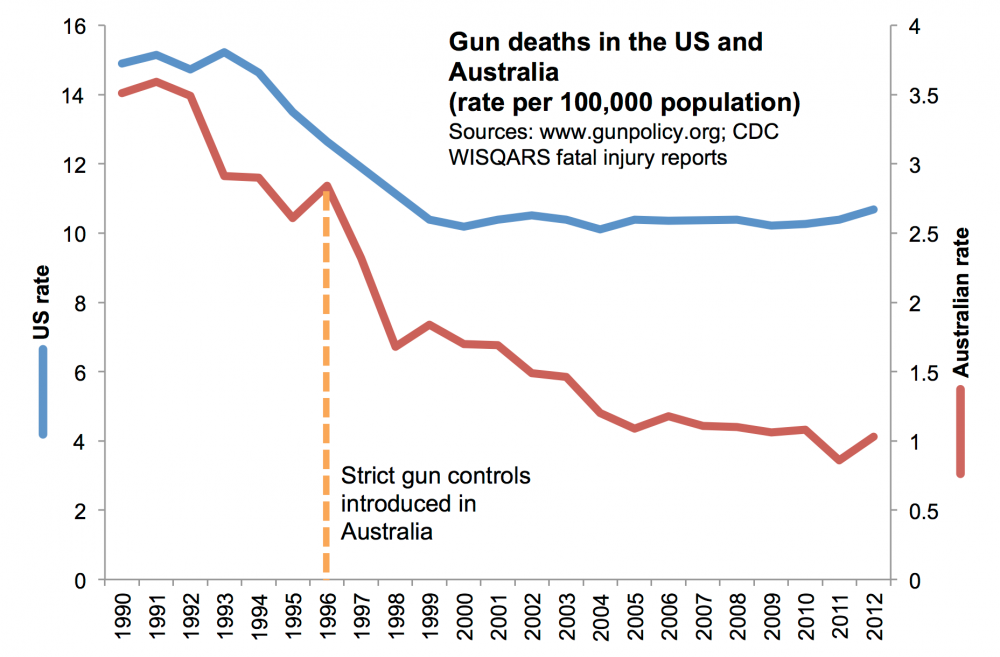
Australian's gun buyback program in 1996 took 660,959 firearms out of private hands. https://en.wikipedia.org/wiki/Gun_buyback_program
-
Regulations to control who can buy gun is not enough to limit mass shootings. There is also needed buyback of weapons available on 2nd hand market. And "do something" with existing weapon making companies. They demand steady (or growing) income year by year for their products. Buyback of their stocks, and then change of their profile, to production of something useful to people? That reminds me strategy used by U.S.Army in Iraq and Afghanistan. American soldiers offered cash for weapons given away by Iraq army after surrendering to everybody who wanted it (to destabilize country, which they actually managed to do anyway).
-
There is known just a few Argon compounds. https://en.wikipedia.org/wiki/Argon_compounds As it's Noble gas, they're in majority extremely unstable.
-
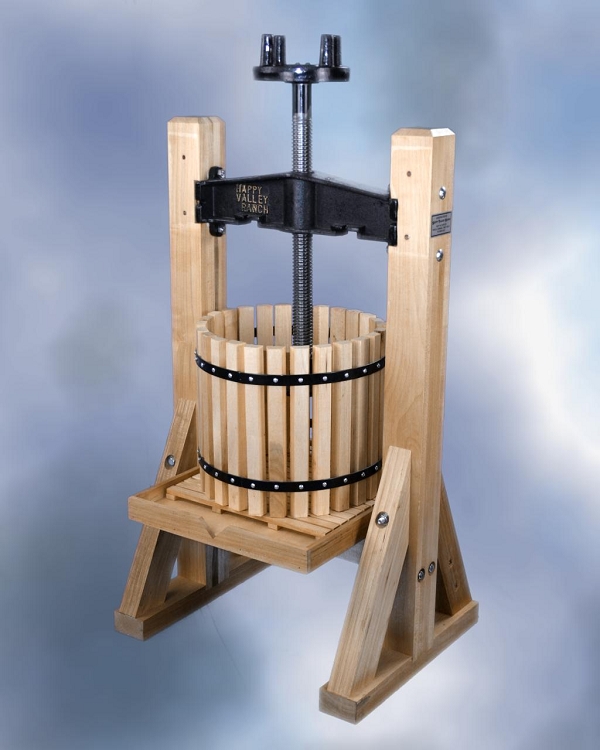
It reminded me this: https://www.youtube.com/watch?v=xj4gSMdaaxE The last time I was making woodwork, I made a wine press: Not as pretty as this one.. Very similar project to hot tub of wood, for sauna.