
studiot
Senior Members
-
Joined
-
Last visited
Everything posted by studiot
-
Meet the biggest heat pumps in the world BBC NewsThe giant heat pumps designed to warm whole districtsAcross Europe huge heat pumps are being installed that can heat tens of thousands of homes. abstract 16 December 2025, 00:06 GMT The pipe that will supply the heat pump, drawing water from the River Rhine in Germany, is so big that you could walk through it, fully upright, I'm told. "We plan to take 10,000 litres per second," says Felix Hack, project manager at MVV Environment, an energy company, as he describes the 2m diameter pipes that will suck up river water in Mannheim, and then return it once heat from the water has been harvested. In October, parent firm MVV Energie announced its plan to build what could be the most powerful heat pump modules ever. Two units, each with a capacity of 82.5 megawatts.
-
Yes complete is perhaps more basic that continuous, though both rely on limits and convergence for their definition. But I'm am not sure what led you to think I regard any of these as a ratio ?
-
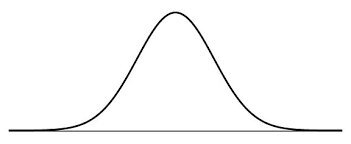
Let's look at another example. Imagine you went down to a pebble beach where you would find lots of rounded stones of similar sizes. Obviously there is no correct or standard size for such pebbles - they are what they are. So you collect a larger number of pebbles and measure their size (perhaps by the length of the maximum dimension). If you record this length as a series of short intervals say 5mm - 6mm / 6mm - 7mm / 7mm - 8mm and so on and count the number of pebbles in your smaple that fall into each length interval you will find they plot out as swansont's bell curve. This has a natural peak at the average size of the pebbles and tails off for smaller or larger sizes. On British beaches the average size is likely to be around 50mm with most pebbles in the size range 30 - 70mm. But remember that an average of 1mm and 99mm is also 50mm. This variation is called natural variation and the difference between the size of a single pebble and this average is valled the deviation. But no error has been made as this is an observation of a natural process with no design intent behind the average. Now imagine a second experiment where you go to a brickworks producing standard 9 inch bricks. If you take a load of these bricks and measure the actual length of each brick you will find exactly the same curve with (hopefully the average being 9 inches). But many of the bricks will actually a few 32seconds (of an inch) longer or shorter than this and so 'in error'. This clustering of results around an average is called 'central tendency' and much can be deduced from the way the curve actually presents itself.
-
It is important to distinguish between errors and variations. Errors imply mistakes, variations do not. For example a potter throws 20 pots for sale. They will all be different but there may be no mistakes and they may all be saleable. So no errors have been made but there have been 'natural' deviations. Note swansont used the word deviations which has yet another meaning in this context.
-
I'm afraid we are going to have to agree to differ on this matter. There are certainly quantities, investigatable by and measureble by Science that have no units at all. I was going to work my bag of marbels into some of these by noting that if some of the marbels are blue and the rest red we can calculate the % blue marbles in the bag. This leads on to many quantities of interest that have no units and or are defined by ratios/fractions/percentages. This includes one of the odlest determinations in scientific History by one Archimedes of Syracuse. That is the question of purity. Was the crown 100% gold ? The we have the quantity angle which has no units As does refractive index. Count of course is different again because the integers are not continuous, unlike say sini/sinr. I believe count is recently officially included in SI to allow for the n in such Physics as PV =nRT. We think that time is continuous not granular so needs a continuous number system to represent its flow or whatever. But otherwise yes I agree your mapping would be good. Would you like to clarify this ? Note I already pointed out that the only clocks I know of (perhaps swansont can offer some that are actuoully continuous such as ephemeris time ?) measure time in discrete 'ticks' that we believe the time interval between any sequential pair of ticks is identical to any other.
-
Similar apps and devices are also used to monitor (senile) elderly with the habit of wandering off
-
So If I put a quantity of marbles in a bag and my friend counts them it is not a measurement of how many ?
-
Isn't that why it is called absolute ?
-
Don't you have apps to monitor the whereabouts of pets (dogs) and other apps to monitor your children ?
-
This is a key statement. 'regularly repeating' How do you know it is regularly repeating ? What do you even mean by this ? An 'absolute measurement' that MigL did not mention is 'count' : There is a count of two atoms of hydrogen in a water molecule and one atom of oxygen. But I regard any 'regular repeat' as a bit like the squares or lines printed on graph paper. We use these, assuming that each square or each line is identically spaced on the paper, without thinking about it. Similarly we think of a 'regular event such as a clock tick ( all clocks have this in one way or another) as being identical whith every other tick of that clock. What is needed is something like how a toolmaker prepares a 'straight edge' or a flat surface and tests it for 'truth'. When such an object is machined, they are made in threes not twos. This way irregularities in one cannot build up with matching irregularities in another because both have to individual also test agains the third member. For timing it may be possible to extend this idea to something like the old TV line and frame scan and frame rate. I don't know, I would have to think about that, ideas are welcome.
-
Yes you are right. The law generally only provides for an after the event remedy, not a preventative measure in most situations.
-
In the UK there is famous 1868 case law about this, known as Rylands v Fletcher. Basiccally the principle is that if you have something dangerous eg a tiger (in the case cited a reservoir) on your property you are liable for any harm it causes if it get out.
-
OK, you are not a mechanics specialist. what about maths ? The quantity you are trying to discuss is not energy it is called Impulse (usual symbol J). The difference is between what steady are forces and (F) such as weight and what are called impulsive forces which change over time and usually act for only a short time, but can be quite large, such as a hammer blow or a released snap action spring. What we do in this case is to collect together the effect of all the instaneous values of this force by taling a time integral so that J = ∫Pdt Do you need further explanation or are you familiar with this concept ?
-
This is a science forum, not an cranks's AI playground.
-
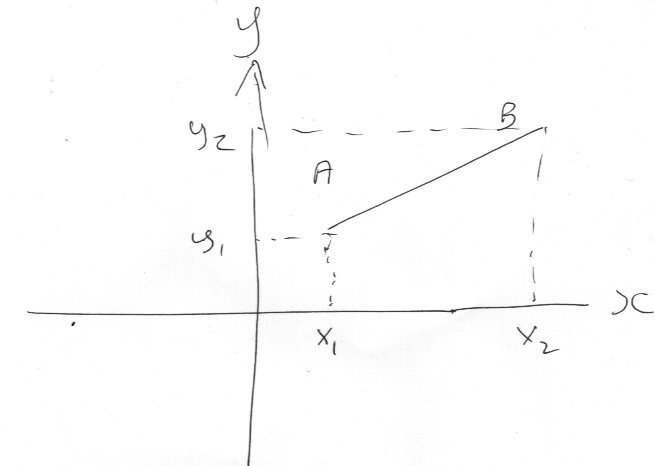
From the questions I'm guessing you are just starting co-ordinate geometry ? I will add a bit to MigL's comment to help. If you do a drawing for each of your questions, showing some angled line A B and the coordinate axes and dropping perpendiculars to both x and y axes your algebra is probably good enough (I note from your previous questions that it was very neat and tidy) to work out the derivations for yourself using Pythagoras. Post your sketch and if you need more help, we will wee what we can do. This sort of work is where the French habit of working on squared paepr rather than lined paper is very helpful. Your drawing should start something like this
-
Thank you for that correction, your Greek is better than my memory +1 Strictly ~ology refers to the name of the subject of study coming from the Greek for the substance or pith of something. Love of comes from another Greek word Philos as a prefix, so philosophy etc.
-
Maybe but it looks more like a money spinner to me. However I do agree that unless one is prepared to exclude biology from the Sciences, I don't see how one can exclude the so called 'social sciences'. After all Biology includes the study of individual, groups and communities of ants and animals and their behaviours and interactions so must include the study of groups of humans. But of course Science does not mean study it refers to knowing or knowledge and comes from the Latin verb to know and noun for knowledge. ~ology comes from the Greek 'love of' In truth I don't see how one can achieve either without study.
-
Funny that, I was just watching a programme last night describing how Cortez thought he was spreading the word of God, but was actually spreading smallpox. This led to the deaths of hundreds of thousands of people and the collapse of a civilisation.
-
Not only that but large part of the world population set aside other day(s) as holy or a day of rest or whatever.
-
Interesting chinese optical illusion
-
SF has been offline for me over the last 4 days - not sure why. Anyway thanks for the reply I will look at the vid when I get time - Hopefully there are not too many adds. Meanwhile I don't know what your mechanical background is but do you know about Newton's third law and the laws of machines eg you mentioned mech advantage but do you know about velocity ratio etc? Another place where the relationship between torques and levers is vital, but maybe less apparent is in aviation. For instance the tail length of a helicopter provides a lever so the tail rotor can be much smaller than the main rotor yet supply enough force to counterbalance the torque of the main rotor. Also the torques produced but the fact that gravity, lift and thrust do not act at the same point in a winged aircraft, and the fact that they change with flight attitudes and fuel loading is rather more hidden but still vital. Perhaps @MigL might like to comment on this.
-
This thread is deliberately wider in scope than just AI drivers. However one point about them occurs to me The most common driving offence is speeding. Does any proposed AI driver always observe speed limits ? If not why not and who is responsible?
-
That list would ne very wide and very expensive I suggest trying to narrow it down a bit. You could try to get hold of The Book of Experiments The Second Book of Experiments By De Vries I particularly like the list of equipment in one experiment You will require I thunderstorm. ... More modern books with good experiments From Calculus to Chaos - Acheson The Mathematical Mechanic - Levi
-
The thing about Art is that it can and does say or depict things more staid folks cannot or do not because of their constraints.
-
Unfortunately you have yet to propose a hypothesis. So I have nothing to understand. Gravity is not caused by the interaction between electrons and protons, it is not even affected by it. In fact the mass of the proton is nearly 2000 times as great as the mass of an electron so nearly all the gravity due to atomic matter is due to the protons.