studiot
Senior Members
-
Joined
-
Last visited
Everything posted by studiot
-
You are doing exactly what I recommend. Trying to pick the bones of the matter out of several mixed up reports, +1
-
I am sure that chinese medicine has worthwhile things to teach western medicine, but I am equally surel that his works the other way round as well, ie western medicine has things to teach chinese medicine. From your posts to date you are proposing a 'one size fits all' solution whereas whereas one fact that western medicine has learned is outstanding. There are a range of responses to any treatment (including no treatment) covering the range from absolute success to abyssmal failure. What is wrong with lactulose ?
-
That’s why I put “map cleanly,” I’m acknowledging their existence in America, but it was never whole heartedly supported by the American public in the same fashion it was in Nazi germany Actually you said none of which map cleanly so I got your meaning thank you that modern America and prewar Nazi Germany are not the same. But then again I said "history books" . Modern America is not History but the rise if Nazi Germany is so you completely missed my point and addressed something else. The important points I mentioned concern that rise, which is how they are connected to history. One of which is the training and military development they Germany received, before WW II , supporting the rise of another fascist dictator in Spain.
-
Perhaps you have different histoy books in the US ? You certainly missed important elements in your summary.
-
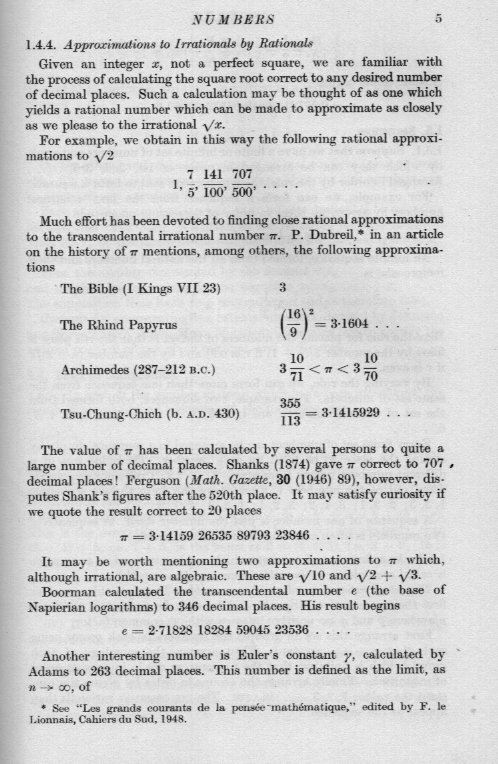
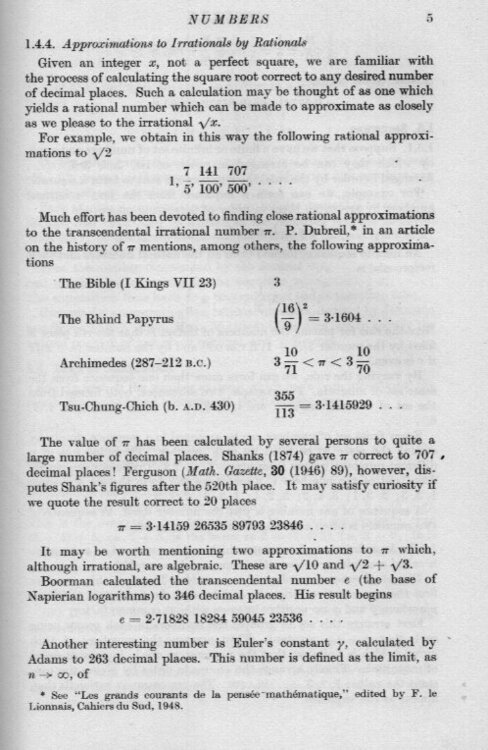
Yes why not ? But you have you use your intelligence, whether you consider it natural or god given, to asses what you find. For example I Kings VII 23 is in perfect harmony with Science, whereas Revelation 13 : 18 is just theatrical drama to create awe in the reader.
-
Thank you for answering, my questions are designed to be helpful. And although you have not quite hit the bullseye you are near the centre of the target. Good thinking +1 The simple reason is that no one, not just doctors etc had seen or known of or thought of a single cell until more than a thousand years after the bible was writtten, when microscopes were invented. So no writer could have written about them before that. Now this is important because it shows there is no conflict there between Science and the Bible. And my advice is to look for agreement and compatibility, not division and opposition. The Bible does not always agrees with itself but then again nor does Science always agree with itself either.
-
Remember what I said about reading the Bible in the light of what we now know today ? OK so here is your chance to do some critical thinking of your own. There are many references to plants and animals in the Bible and indeed in other ancient teachings. Today we know that plants and animals are made of many many many cells. We also know that there are simpler creatures that are made of only one cell. Why do you think the Bible has no references whatsoever to single cell creatures ? Please not I am not saying it is wrong. It is not wrong it just says nothing whatsoever about them.
-
Yes, but why only Mathematics ? +1 Surely this can be applied to most if not all sciences ? Also I suggest adding the words "and Philosophy of..........." as History by itself can become a boring list of facts it is the philosophy of a subject that history helps bring out.
-
Yes my bad. I cross posted with my edit when I realised.
-
I know what hot standby means, AGCR stations are the fastest fossil fuel stations for this. But battery based supply a la Shetland is even faster. The staines gravel is already pretty level. I do remember a proposal to move London airport to a more suitable site, with a proper transport link, on derelict land. Heathrow would have then been sold off and the state could have made a massive profit from the real estate value of the site, in the midst of London.
-
But there are (were) also arguments for placing the generating capacity near to coalfields, hence the Trent, Soar and Ouse (including Drax). The Wiki article also implicitly confirms my comment about fragmentation. And today we see flood warning is certain areas coupled with drought orders in others because the once unified water industry is now in the same boat fragmented and worse because we are without a national water grid.
-
I used that little word if. It is not my premise at all it was the government's excuse for the action described in the BBC article. I take your word for the 20% - 50 % spare capacity, as i said you are in a position to have better figures than I.
-
Heathrow excepted ?
-
Thanks. Indeed it also says
-
@baltoche Have you given up ? I would recommend a variation on the 4 terminal measurement technique https://en.wikipedia.org/wiki/Four-terminal_sensing The Wiki version is DC but you can replace the battery with an ac generator. A simple way to effect the measurent is to insert a non inductive high resistance (in comparison to the rail resistance you are measuring) in series with the source to cause it to be a constant current source. Measuring the voltage then give a direct readout of the resistance or impedance. In the days of vacuum tube meters this method was commonly used to achieve a linear resistance/ impedence scale.
-
No, you didn't answer my question.
-
Two comments about this. First we are supposed to have a national grid. Of course 'every region' brings with it the price of Thatcher's fragmentation. Second did I say network ? Networks can be fed from an extremity or from the middle or indeed from any or many points. For example power could have been diverted from Didcot B or Little Barford to Canterbury, distance just over 100 miles or even other closer stations. Then power from say Ratcliffe on Soar to these, again around 100 miles, but there are many more alternatives. Again only some of the alternatives would have been at full capacity.
-
Welcome and Thanks for reading my post. What do you want to discuss about it ? Please note as a new member you are limited to 5 posts in your first 24 hours. Posting is unlimited thereafter.
-
It seems the news of the union of science and christianity hasn't reached everyone yet. Can you not accept there must be some differences otherwise they would be exactly the same?
-
It is always the workers at the bottom that pay the price for poor management decisions. Conversely it is easier for management to cut costs by cutting staf and/or salaries than by doing something to upset the customer.
-
Not quite, no. There is no such neutral molecule as the ammonium molecule for instance.
-
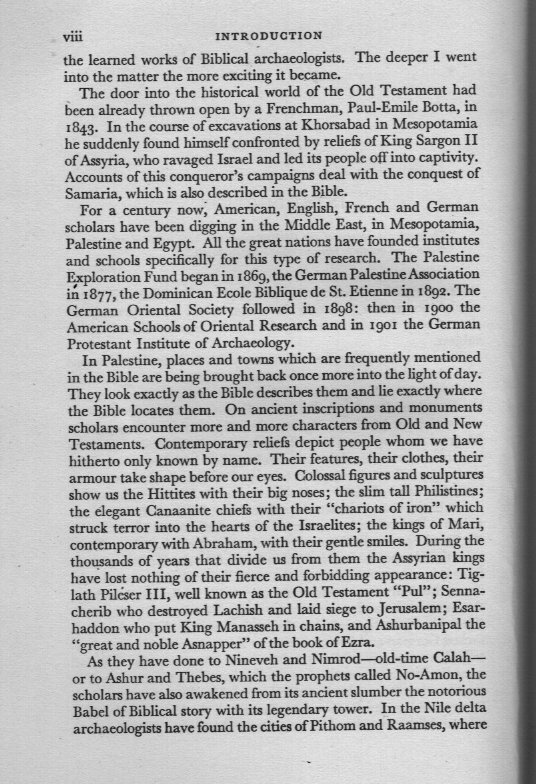
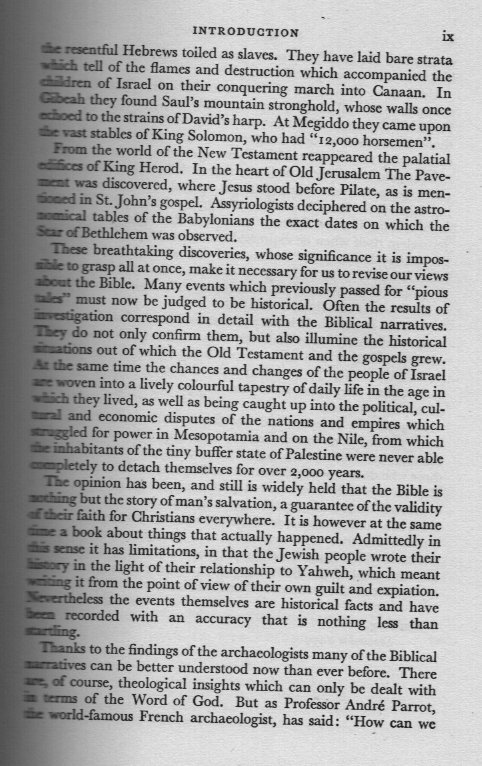
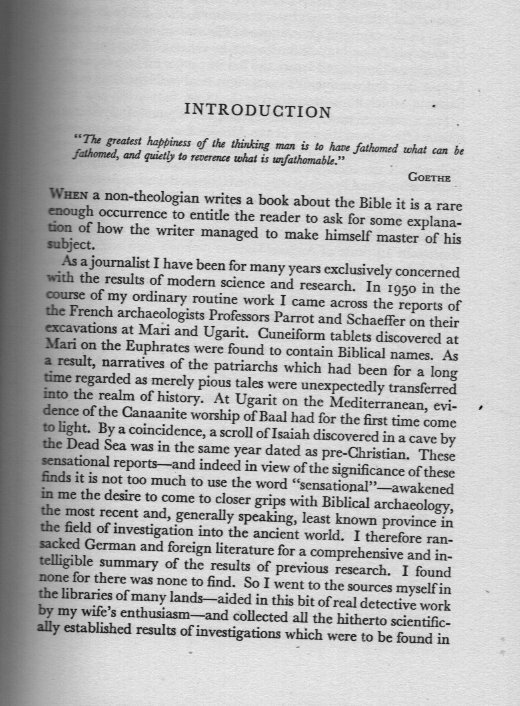
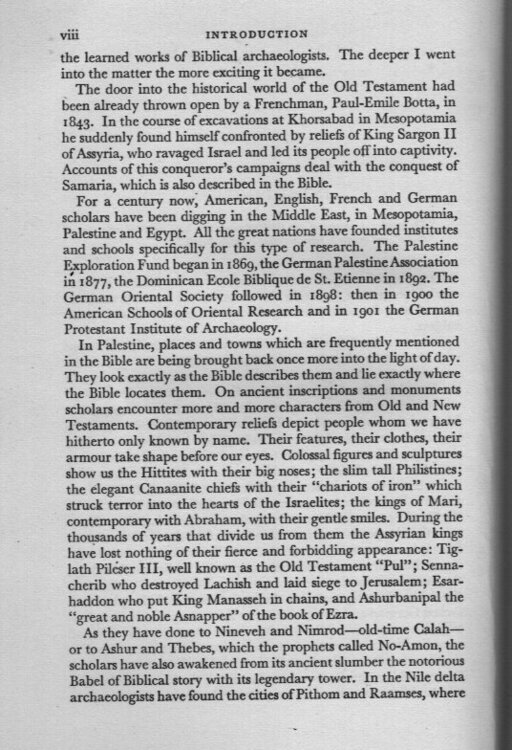
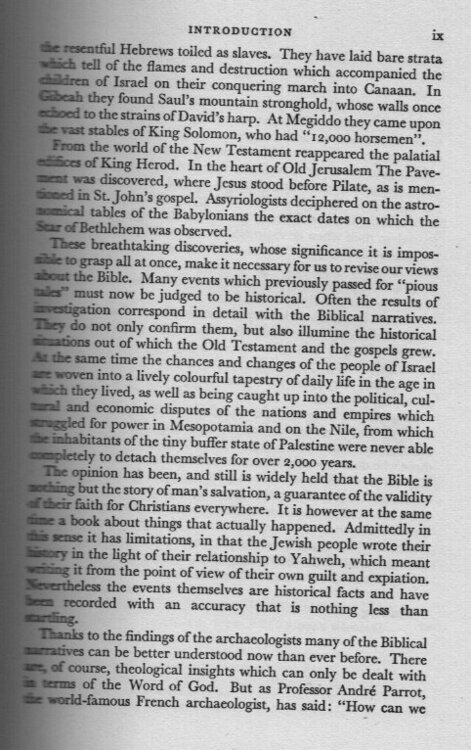
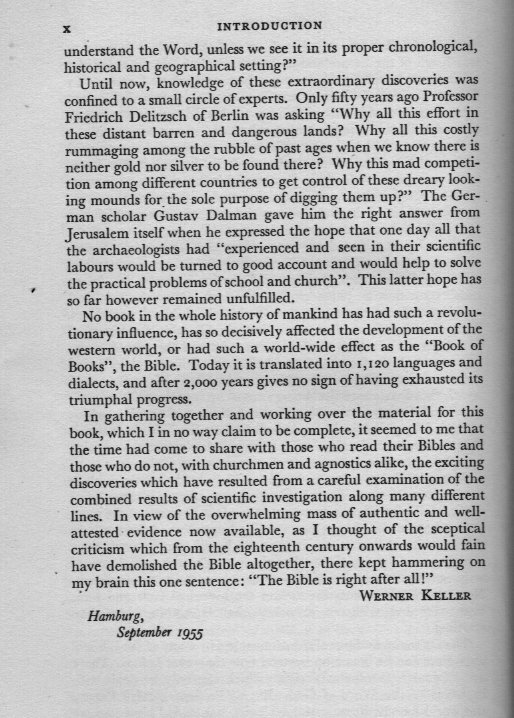
So you are open to some form of evolution. This is good because I am succeeding in getting you to think. The 'Bible' is not one book but really like a folder or filing drawer containing many books. And there are many versions not just the one. Each version leaves out some books but includes some that others do not so every one is different. The whole collection was written over the best part of a thousand years. Furthermore Two separate versions were written - one in Greek and one in Hebrew. I know this because a late school friend who was a lawyer so retired early and comfortably wanted to read the bible - but in the original. So after retirement he spent a few years learning Greek and Hebrew. He then took an Masters in The Bible as a source book - That is not religous but trying to find the meaning and history behind the writing. We had quite a few conversations about his studies and I must admit that I learned many things about the Bible that I did not know. For instance Jesus would have spoken Aramaeic. Because of the scattering of the tribes in that period of writing the old testament there were two centres of Jewish culture, one base in Alexandria where they spoke Greek and one in Jerusalem where they spoke Aramaeic and wrote in Hebrew. The two centres are 500 miles apart by sea and almost a thousand miles apart by land. So two versions of the old testament were written, in two different languages and you can imagine the difficulties correlating the histories over that distance, language barrier and the time it took for reports to reach one or the other. So you can see why it is easy to find discrepancies in those circumstances. In centuroes past, from Kepler to Galileo to Maxwell to Lyell to Hutton and many others the wise men of the day set out to proove the Bible, not to disprove it There were suprises when what they found sometimes disagreed with the established churches. Back to Parrot as you will see from the full introduction to the book by Keller The Bible as History, from which I took the quote, modern scientists in the guise of archaeologists try to see what they can what historic records the Bible has to offer compared with records from other civilisations and what they can literally dig up. But is it always to be remembered that the authors of the Bible had no concept of The Americas or the thriving very advanced Chinese civilisation; their 'world' was confined to a small area in the Middle East.
-
Can I respectfully suggest you make the effort to get swansont's name right ? I know I make a lot of typos but this would show some actual respect. Can I also recommend a course in basic mechanics as you are just sowildly adrift here. This is needed particularly before venturing into fluid mechanics where there are indeed two forms of analysis the Lagrangian formulation and the Eulerian formulation. But you should also be aware that these two formulations, aalthough they appear different are actually equivalent.
-
OK if they are the same, how did they come to be so different ? How did we come to look pretty similar to the people of the bible lands, but very differnt from say the chinese or indonesians ? I gave you Professor Parrot's thoughts because his were pretty similar to yours, what did you think ?
-
I would like to know why you think that.