
studiot
Senior Members
-
Joined
-
Last visited
Everything posted by studiot
-
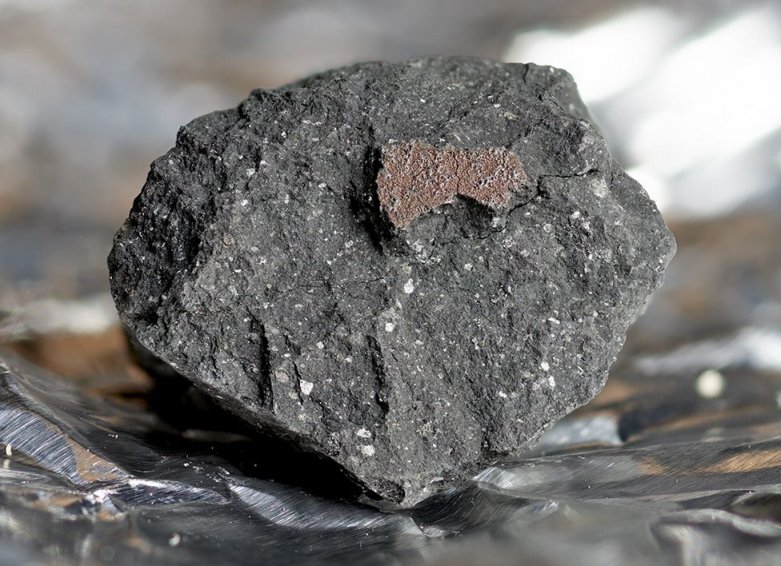
The Winchcombe meteorite from a few days ago contains chondrites and possibly simple organics https://www.bbc.co.uk/news/science-environment-56326246
-
I like that last paragraph as well, even if it is only half true. +1 phi
-
It is noted in my original reply that the 2009 experiment you linked to does not show physical monopoles. Here is a description of the experiment, note that the opposite pole does exist as I said, but that it is hidden away creating a "quasiparticle that serves as a magnetic monopole analogue." So divB = 0 is currently safe, though as MigL notes (and again is discussed in the table in the article i linked to) if a monopole is ever found it is easy to modify this equations to accomodate that.
-
1) Magnetic monopoles were not discovered in 2009. 2) Your link is not a true representation of Gauss law of magnetism. It is a modern derivation of it, which does not take into account the fact that the original law, as Gauss experimentally verified it, was only show to be true to a first order. He found that to a first order [math]F \propto \frac{{{M_1}{M_2}}}{{{d^2}}}[/math] That is the force between magnets varies as the product of their pole strengths and inversely as their distance apart. He tested this over distances between 1.1 and 4.0 metres. ref : C F Gauss Poggend An 38 p591 1833 Go and read his paper.
-
Did you actually read the article by Dr Siegel that I posted ? Experimenters have been 'discovering' monopoles for a long time. The trouble is no one has yet reproduced the findings of any of them so the claims cannot be substantiated.
-
At room temperatures the normal chemical process is the combination of iron with oxygen, rusting as you rightly say. This chemical process is called oxidation. Since the bulk of the planetary surface iron is near room temperature, it has largely been oxidised over time so the ores are largely oxides of iron (there are more than one). The reverse process is called reduction (which means the removal of oxygen). The chemical which effects the reduction is called the reducing agent. Reduction is largely accomplished by heating the iron to several hundred degrees centigrade in the presence of carbon monoxide. The heating is carried out either electrically or by burning the coal (as coke). If the coal or coke is starved of oxygen in the burning/heating process carbon monoxide is given off. The final temperature of the iron that melts and leaves the furnace is over 1200 degrees centrigrade.
-
Magnetic monopoles have never been observed. This history (the most up to date I could find - 2019) has an easy to digest explanation by a renouned expert Physicist. Note the string monopoles are simply very long thin strings with a pole at each end so the poles are really well separated. But both exist. https://www.forbes.com/sites/startswithabang/2019/02/07/the-enduring-mystery-of-detecting-the-universes-only-magnetic-monopole/ Note also that just as 'holes' in semiconductors are not real particles but the net result of the surroundings which can be considered to act as though they were real, it is possible to arrange spins so their combination acts as if it were a single pole.
-
Good advice in all threads. +1
-
So no answers to discuss then, just gobbledegook.
-
You've been watching too much Battlestar Galactica. 🙂
-
Lessons not learnt. I asked you 3 simple questions, identified by the question mark at the end of each sentence. You have not replied to any of them. That contravenes the rules.
-
I wanted to give you +1 in your last post, now in the Trash can. But I find even more to agree with in this post and would like to note that these last two posts have been so much more cogent and coherent. So +1 here. I also lost several posts but I have managed to get your developing presentation from dropbox and I am currently studying it. I note that at least one of of the links in it have been since discredited ; I refer to couder's experiment. But I think perhaps matters are begining to come clear at last. I remain concerned with you interpretation of fluxons, and also the introduction of the sine-Gordon equation, or any of the non linear Gordon type equations. Utt - Uxx = sinU It is important to understand what is meant by the variable U, just as understanding what is meant by Ψ in the wave equation. Since we are discussing magnetic fields, I think is beneficial to avoid phi as the dependent variable.
-
I gather you don't want to discuss with me but have you compared the actual values of methane release due to the US fracking with the tundra release values ? https://en.wikipedia.org/wiki/Arctic_methane_emissions The 5 posts only applies to your first 24 hours. This is done to prevent the inbox here filling up with multiple spam posts like you see on some sites and is a small inconvenience compared to deplorable state some forums are in. 🙂
-
What is the topic of the OP please ? I have already mentioned that it is rather wooly and wide ranging so difficult to have a focused discussion about. Further I don't see the available definitions (Wikipedia) of fluxons bear much relation to standard textbooks eg Kittel. This also impedes discussion.
-
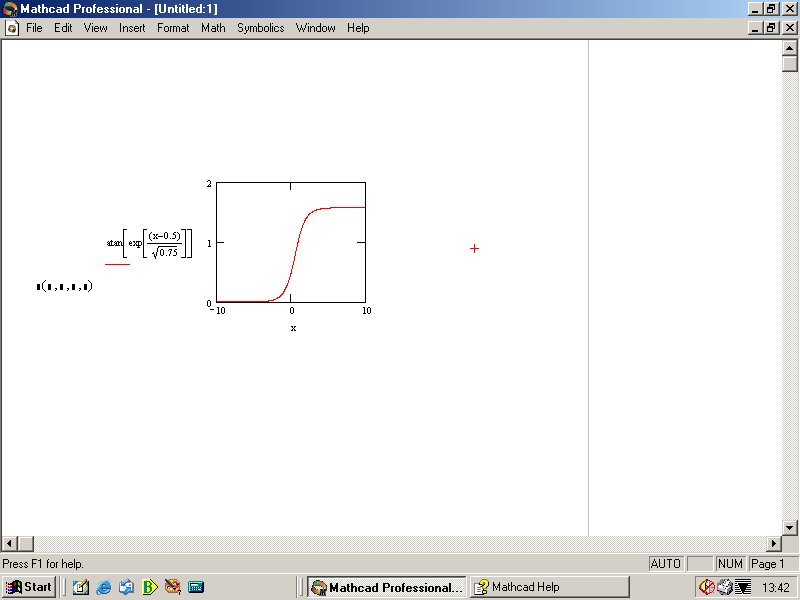
A request to whoever split this thread I have just spent quite some time setting up and plotting plotting a time independent (ie standing) solution to the sineGordon equation to post here for discussion. I also had comments to make on the understanding on the Physics of fluxons. I now don't know what to do since some of the stuff is left in this thread and some is in the split thread, in the Trash can for some reason. Please explain what is going on. Thank you. Meanwhile here is the beginning of my discussion on the sineGordon equation, if anybody actually wants to discuss it here. As can be seen this is the required step function but the question really is, What does this solution represent ?
-
If you do decide to post here please make it more coherent and cogent than the stuff in your link or your opening post here in this thread. Remember Trump has gone and we don't know what Biden will do, but neither is a scientist so decide whether you wish to discuss the olitics or science of the subject.
-
I have tried to be encouraging, rather than directly helpful with the mathematics at the moment. I don't want to confuse you with a different approach from the one offered in your chosen course. That is I want to offer consistent help if needed. So remember you can always ask here about anything you are unsure of.
-
Welcome and thank you for an interesting discussion topic. +1 I note that the paper is now more than 10 years old and contains much 'proposed' work. Do you know of any follow up information, particularly if any of the rpoposals were actually carried out ?
-
I do not quite understand this rhetoric, This is not rhetoric it is a simple straightforward question. You stated Since both dinosaurs and dodos are names for creatures that once lived on Earth, and you have denied death I asked for evidence that they are still living. Either you can provide this or you can't. They were once creatures, not 'constructs.' Are you have difficulty with the English language ?
-
First and foremost fluxions are something Newton invented to do with calculus. We are talking about fluxons..
-
So what is it then and why does it have the dimensions of energy ?
-
Seems a meaningless statement to me since, as a primary unit of energy, a fluxon can surely neither gain nor loose kinetic energy.
-
Good luck and don't try to do too much at once.
-
Thank you for your answer. So what is kinetic energy in a fluxon ? Thank you for an answers to one of my questions and this response to a comment. You did not comment on my question as to whether you agree that one neutron contains' 3 quarks ? You have yet to answer my simple question as to what you think a fluxon is ? Further I have no idea what the pretty blue arrows at the bottom of your last post in repeated several times now are meant to represent. Some pictures may indeed be worth 1000 words, but most pictures, including yours need at least some words for explanation.
-
Thank you for confirming we are talking about an overall electrically neutral neutron and proposing a structure that accomplishes this. Seems to me, however, that the jusry is still out on the structure, although we are presumably all agreed on the 3 quarks ? I still fail to understand the use of the term 'topological', and you have not address my previous question about this. Seems to me that all your information is of a geometrical nature, not a Topological one. ? For instance you talk of "increased size" which is definitly a geometrical attribute, not a topological one. Finally you still have not stated what you understand a fluxon to be. Do you regard it as a particle ? If so why does it not have the appropriate dimensions ? (using my coreected definition, sorry about that error). Please note I misquoted the units and corrected them in my subsequent post. "That should of course read is measured as approximately 2 x 10⁻⁷ gauss - cm2 (originally in CGS) or 2 x10-15 tesla - m2 (SI)" Further, I don't see what is 'dying away' in a fluxon ?