
studiot
Senior Members
-
Joined
-
Last visited
Everything posted by studiot
-
You say after introducig them in an exchange of views about probability. You then ask about heat and entropy to which I respond Nothing whatsoever to do with statistics and probability as you seem to have agreed to abandon it for the moment. But you reply which is all about statistics and probability and nothing about the offered real world of engineering. Please focus.
-
Sadly, a nice (correct) image. +1
-
What is the probability that tomorrow a meteorite will strike New York, killing every inhabitant ? Classically this event has never happened so has a P value of zero. The probability that both Bayes and Classical theory work with is the same quantity. It is the estimation of this probability that differs, neither is 'better' than the other, each have their areas of maximum suitability.
-
First and foremost swansont has already noted that Free Energy can mean different things in thermodynamics. Now in relation to available work, there is also a quantity known as the 'maximum work function' which is identified with the Helmholtz free energy. So the situation is rather complicated . In general we have processes that occur at constant temperature or at constant pressure (you can't have both at once) Gibbs free energy occurs at constant temperature Helmholtz free energy occurs at constant pressure
-
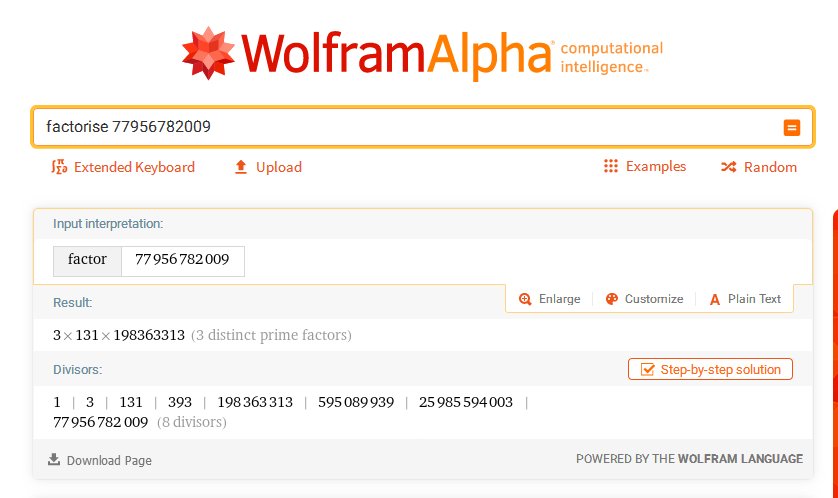
If you are going for actual examinations then practise, practise, practise. 🙂 That was a good list of test factors you posted - stick with it. As a further aid I recommend looking at the Wolfram Alpha website. https://www.wolframalpha.com/ This free and allows you to type in specific mathematics questions (calculations) and then provides the answer and working. It will enable you to check your own working when you do not have the answers. Here is a screenshot of factorising a long number. When you come to factorising alegrbraic expressions rather than numbers you can put those in too. eg factorise 10x2 + 7x -15 Which comes to (2x-3)(x+5) This ability is really useful.
-
I am sorry but my post didn't help. It was rather brief since you are taking someone else's thread off topic. You really should start a thread of your own about sunspots, asking a clearly phrased question about what you want to calculate. I note that sunspot occurrence is quite diffrent from comparing classic thermodynamics to psychological states as you seem to be trying to do in your free energy thread. So please choose one topic and start a new thread about it. No, entropy changes can be calculated for any system - at least in principle thought it may be difficult in practice. Yes this was the original reason entropy concept was introduced and lead to what I call classical thermodynamics. This is also the simplest and easiest to understand explanation. I can post it if you wish, it has nothing directly to do with order or probability and was introduced for engineering calculation purposes in the age of steam engines.
-
This is not the way thermodynamic entropy works. Considering your background information in your own thread about Free Energy, here is a suitable explanation of the link between 'order /disorder' and thermodynamic entropy. Consider a system and the possible states it can find itself in. Label the states a, b , c, d.........and so on. For each state assign a probability of finding the system in this state upon random inspection. So we have P(a) = probability of state a and so on. Inspect the system and find it in state x. Now consider a change of state. That is the system from state x to some other ste, say y. If P(x) < P(y) Then we say there is an increase in entropy of the system for such a change. ie a change from state x to state y. If P(x) > P(y) Then we say there is a decrease of entropy of the system for such a change ie a change from state x to state y. If P(x) = P(y) Then we say that the system is in equilibrium and there is no change to the entropy of the system. Depending upon the nature of the system there are implications or consequences resulting from such a change. Thermodynamics identifies entropy as connected with energy in the system. So the change is linked to the energy structure of the system and by inference any energy transferred into or out of the system by the change. This is true whether the theoretical approach is 'classical' or statistical. The states are energy states. It is about material things. But the same mathematical structure can appear in non material things like information technology Here we are talking about 'bits' of information. These could be marks on a piece of paper, the contents of a computer memory cell or the positions of beads on an abacus. Energy is not involved at all. In either system (or indeed in any other that follows the same mathematical structure) the probabilities are determined by the number of ways a state can occur. This is how we define 'order and disorder'. The fewer the number of ways a state can occur , the more ordered the system. Note this leads to an inverse relationship between entropy and order.
-
Can I just say that I think you might be making too much of this ? The number of occasions that anyone (including mathematicians) might require to find the factors of a given difficult number in ther whole lives can probably be counted on the fingers of one hand. Further, looking at your definition of a factor I am a little worried. A factor is a number that evenly divides a given number with remainder 0. What do you mean by evenly ? I would go with the words completely or fully, but evenly is reserved for even numbers. Mathematicians don't usually bother with any such qualifier and just use the word divides on it own. The all important statement is that the remainder is zero. So as to your question, I would start by noting if the given number is odd or even (ie is divisible by 2 or not) If it is divisible by 2 then that immediately cuts your work in half since you have found one factor and halved the size of the number you are working on. After 2 comes 3, which can also provide a large reduction in the work. Do you know how to test for divisibility by 3 ? The sum of the digits are themselves divisible by 3. The next prime number is 5 and again divisibility by 5 makes a big reduction Can you tell the condions on the original given number to be divisible by 5 ? Could this number also have been divisible by 2 or 3 ?
-
There is no such thing as an 'off topic' part of ScienceForums. I seriously suggest you get a full understanding of this rule before you proceed further with anything.
-
OK that's good but what you are doing is thinking about maths. Unless you do some (lots of) maths you will soon loose this and also get bogged down in pages and lists of useless information. In my opinion you should practise many examples, until you get them right more often than not, and then assemble the theoretical framework. You might find the BBC website for schools useful. It is free and has explanations, examples, videos and lots of online practice questions to attempt, with help and repeat to get them right. It is all free. Here is a worksheet on factors, but you might like to look further https://www.bbc.co.uk/bitesize/guides/ztcxwnb/test
-
Well you don't seem to have been very interested in your question since January 2020. So how about responding to those members (including myself) who answered you ?
-
You haven't posted your working, but it would seem to me that you have not taken into account the different time coordiantes in the different frames. If [math]v = \frac{{dx}}{{dt}}\left( {S'} \right)\;and\;u = \frac{{dx}}{{dt}}\left( {S''} \right)[/math] then what are u and v in terms of t' and t'' ?
-
It could simply be that no one here knows anything about the ancient history of mirrors. I definitely don't. However you don't seem to be a crank and your posts seem genuine as is the proposed subject. I suggest you email Brown University who seem to have some experts in the matter. Good luck and I at least would be interested in their answer if you were kind enough to post it or a precis here. +1 for your patience https://www.brown.edu/Departments/Joukowsky_Institute/courses/13things/7306.html
-
Perhaps you would like to think about the proposed situation. One clock is in 'freefall'. So how is it 'approaching the other clock', which is not in freefall ? You need to choose one inertial coordinate system, declare that one to be at rest and then relate the motions of everything else to that system.
-
That is the 64 billion dollar question all right.
-
What instant would that be ? Or rather one might ask whose instant ?
-
Hello, Some preliminaries will help to understand. In non quantum computing the computer can be designed to work in serial mode or parallel mode. Both have their advantages and disadvantages. This applies both to the hardware design and to the software design. These are not independent but the detail only concerns implementation, not the end result. Put simply Serial mode involves doing things step by step, one thing at a time. Parallel mode means doing several things at once. For example consider the simple calculation add these two numbers together. [math]\begin{array}{*{20}{c}} {62310721} \\ {\underline {25644387} } \\ {87955108} \\ \end{array}[/math] In parallel mode we would add each digit to its corresponding one simultaneously. Because the addition is simultaneous we would not know what the carries are at that time so we would have to ignore them. We would then perform a second step to add in the carries. So this addition is a two step process if carried out in parallel as shown. [math]\begin{array}{*{20}{c}} {62310721} \\ {\underline {25644387} } \\ \begin{array}{l} 87954008 \\ \begin{array}{*{20}{c}} {\underline {00001100} } \\ {87955108} \\ \end{array} \\ \end{array} \\ \end{array}[/math] To carry out this same operation in serial manner takes 8 steps, but includes the carries along the way. [math]\begin{array}{l} 62310721 \\ \underline {00000007} \\ 62310728 \\ \underline {00000080} \\ 62310808 \\ \underline {00000300} \\ 62311108 \\ \underline {00004000} \\ 62315108 \\ \underline {00040000} \\ 62355108 \\ \underline {00600000} \\ 62955108 \\ \underline {05000000} \\ 67955108 \\ \underline {20000000} \\ 87955108 \\ \end{array}[/math] Essentially quantum computing works in all parallel mode since quantum mechanics is all parallel
-
I seriously suggest you read the rules here, ask amoderator if you are unsure, and recast your question in accordance with SF rules. https://www.scienceforums.net/guidelines/ particularly rule 2.7
-
[math]\begin{array}{*{20}{c}} {62310721} \\ {\underline {25644387} } \\ {87955108} \\ \end{array}[/math] [math]\begin{array}{l} 62310721 \\ \underline {00000007} \\ 62310728 \\ \end{array}[/math]
-
Another member started a project to look for something similar. There is much useful material in this thread for you. I will will draft a further response and add a list of books as requested in due course.
-
You have a PM
-
Sorry I am not going to play playground politics here. Have a nice day
-
Edit to be appended to last post I seem to ahve missed the editing deadline. But no one today (though we now have many versions) would say that the periodic table is wrong or gone because there is so much right with it. The table of the standard model has a long way to go yet since it is younger. Incidentally you might like to know that the periodic table was the first really useful demonstration of the then newly discovered mathematical theory of 'mathematical groups in algebra. They didn't really realise they were doing group theory back then, however in modern times that same group theory muchmore developed has played an very important role in the moulding and remoulding the 'standard model.'
-
When I learned the particle physics I know most about, the standard model didn't yet exist. Since that time I have seen it appear in very simple form, grow and change many times as it develops towards greater concurrence with observation. Where have I heard that story before ? Well just over 150 years ago chemists and physicists of that time would have seen the 'periodic table' appear and watched it's subsequent growth, revision and concurrence with observation. There were glitches and inconsistencies along the way (there still are some minor ones) sometimes the table structure helped revise incorrect theory, sometimes observation brought about revision of incoorect table entries. But no one today (though we now have many versions) would say that the periodic table is wrong or gone becuase there is so much right with it.
-
Interesting interactions maybe, but were you selective in your replies ?