studiot
Senior Members
-
Joined
-
Last visited
Everything posted by studiot
-
Even though you haven't acknowled it, I actually answered you question. However since I also really appreciate this quip +1 , I would also like to note that reactions in general expel photons and particles often at high speed. The expulsion KE of massive particles is variable. So be careful what is meant by the energy generated.
-
I'm suprised that you would actually reach 4. +1 I always thought 3.7 was the maximum. By the way picric acid is far less dangerous and much more fun.
-
-
Since you were kind enough to respond to my last post the way you did I will add to Bufofrog's excellent link (+1) for as advertised it is easy to understand. But it is not the whole story of the energy.
-
I thought the nazis were the National Socialists.
-
Hey Ho the Democrats have won the election (just about). But in Sweden the Democrats are a right wing party. How cool is that ? https://www.bbc.co.uk/news/world-europe-62908902
-
A great post in an otherwise dull thread. +1
-
Good question +1 Pity Ned avoided answering it.
-
These are vary bare details to work with. I don't see where AI comes into it for instance. Analog computing is far from dead in the real world and there are many combined analog/digital systems in use. Often these days users demand a digital display/presentation of output, audio recording and reproduction being the stand out exception. I had a quick google for pneumatic proportional controllers which are a prime example of analog system, perhaps with a digital readout. So yes crack on with your paper, what is the setting for it? Educational, professional, a journal article ?
-
Thank you for the clarification. Kay and Layby list one important such reaction, but theya re rather hard to find.
-
I suppose it depends what he means by 'a particle'. The 'particle' must contain all the necessary sub atomic particles to balance the reaction.
-
Folks seem to pick up certain words as 'buzz words' without fully going into their meaning. In another thread we have someone misusing 'eignestates'. Be sure you are not misusing 'singularity' here. Cambridge Texts in Applied Mathematics. Singularities: Formation, Structure and Formation. Eggers and Fontelos 2015 By the way you should have an email.
-
No you are obviously not a math person. So why not leave it to those who are ? And please, you not only mentioned voltage but specified high voltage. The answer to my question what current will flow is that the only flowing current will be displacement current, until the air breaks down. This requires that the voltage source be alternating. +1 to the @TheVat
-
I asked you about the voltage and you haven't replied. I asked you why you think there will be any current to 'control' and you don't seem to know perhaps because you don't know enough to answer my voltage question. Here is a hint. The breakdown voltage of dry air is about 3000 kilovolts per metre.
-
What does that mean ? Remember it is your 'experiment'. You have yet to demonstrate that there will be any current at all.
-
One of the things about quoting Einstein is that he often wrote several versions of his papers as time went on. For instance compare the 1920s, 30 40s and 50s versions of sundry papers about Space, Time, Ether, and Geometry.
-
I think the late Victorians have already done this. However it is difficult to say since the electrical parameters have not been fully specified. I can say the no 'Faraday Electromotive Force' will be created however. Ned, can you say what electric field strength you expect between the plates and explain why you need a current controller ?
-
Well I am not convinced. From Archimedes to Romer to Cavendish to Thompson to Einstein to Buckminster Fuller, the difference between scientists who successfully introduced their ideas and hand waving theorists like Plato is that they all said words to the effect "Here is a real physical object. I have an idea that predicts that if I kick it in a certain way it will respond according to my idea" The thing is they were all also practical men who were also able to state the practical 'certain way'.
-
Click somewhere on my name/ avatar. At the top on the details about me, next to my name you will se two blue boxes. The first says follow member The second says message. click on that and send your message. Not even the mods can read it without invitation.
-
No I mean this forum's private messaging system. I have done this before. There will be too many to post on that system directly. I do not want your private e-mail, I suggest something like gmail as I know they can recieve the file sizes I generate. There will be no colour since the book is entirely B&W, with file sizes in the 250k - 500k range probalbly. Also I can split over more than one email. Just be aware that many email systems will put unknown senders straight into the spam box.
-
Not any model. Just the model with the Minkowski metric an SR, Metrics associated with GR so not result in space-time. The difference is that the coefficients in the metric for SR are constants, whereas the coefficients in the GR metrics (several ahve been proposed) are themselves functions of the coordinates. I have reversed the negative vote as you are quite pleasantly arguing your case. The 'expansion' of space is an interpretation of an emperical (observational) fact, due to Hubble. The 'underlying' - actually applied or chosen - coordinate system are not part of the object we call the universe of space and time - if you like the 'fabric'.
-
Send me a PM with an email address that can receive jpegs and I will let you have better quality copies. You probably would find it difficult getting hold of the book now in any case.
-
Of course they would, but I'm not talking about their publicity department. They certainly invented Nylon and ICI held a licence for its manufacture in the UK. But after the war the Sherman Act cause bitterness and much litigation over this licence. Wikipedia will do https://en.wikipedia.org/wiki/Polyethylene_terephthalate#cite_note-9 There is a facebookmemories group you might be interested in for the now defunct ICI fibres. https://www.facebook.com/groups/332552444829415/ Perhaps there is one for Du Pont ?
-
+1 for your usual clarity of insight.
-
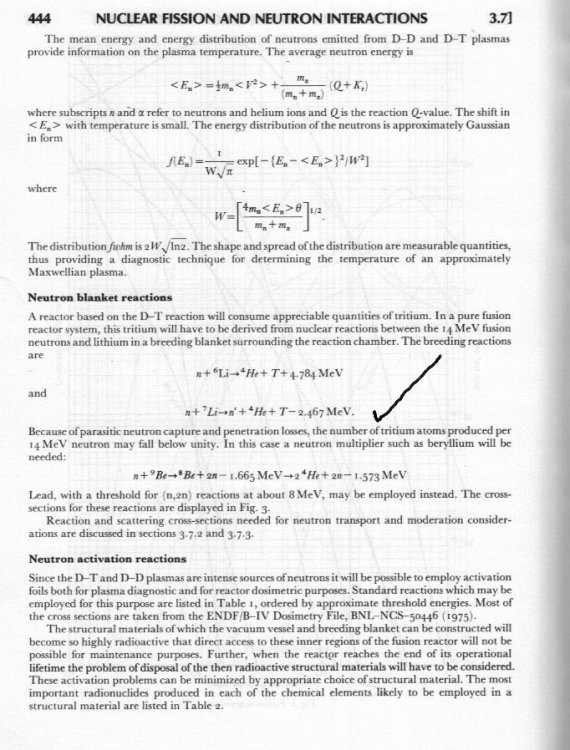
Yes and no. There are real mechanisms that work using separate rotation axes so it depends upon your frame of reference. Have you heard of Hooke joints or of gimbals for instance ? They are pages scanned as jpegs. click on them to expand to full size then just download from the site page.