
studiot
Senior Members
-
Joined
-
Last visited
Everything posted by studiot
-
This would be a good course textbook for you. The Foundations of Mathematics Paperback (2015) Stewart and Tall.
-
Glad you are thinking and weighing the issues before acting. A small switch is advisable in my opinion for the reasons, iNow and i have already mentioned. You might want to put your feet up sometimes and watch streaming media. Or you might want to watch a secuitry/bird/whatever cam if you put a plug on the end of your 100m cable and the signal is not strong enough it is pluggable s can be addd later. There are lots of 100m cables ready assembled available. My reel was for 300+ metres. Perhaps, but I did ask if you are using a genny or stable power cable from the house. Powering even your PC from a genny can lead to more difficulties than just loosing power - it can actually damage the PC, more so than other equipment because of the hard drive. For a genny I would recommend some sort of UPS (uninterruptible power supply). Finally much if not all of this kit can be had even more cheaply second hand. As regards ethernet, originally it started at 1Mbit then moved up to 10 then 100 then 1000 (gigabit). Most existing networks are of the 100 variety which is satisfactory for HD video and faster than Wifi (though not 2 Wifi channels together) So if you go the s/h route get 100Mbit kit.
-
https://www.intechopen.com/chapters/16405 Whenever EM radiation passes through a region of space containing matter there are transient (eg Van der Waals) and permanent electric fields present due to the matter. The strength and nature of these fields depends upon the type and distribution of the matter - solid, liquid, gas, solution etc. Macro observed effects are dispersion, absorbtion, scattering. The velocity depends upon the permittivity of the bulk material, and permeability in ferrofluids. Matter and the space it occupies is mostly empty, which is why some light passes through at all.
-
Yes indeed, yet you have never actively discussed that topic. Just added a few sentences here and there pouring scorn on the idea. Just as you poured scorn on my diagram. So let me ask you this. Suppose you actually had a perfect Carnot engine and and a second engine that was more efficient that the Carnot one. What would happen if you thermally connected both engines between the same pair of heat sinks with the more efficient one generating a mechanical work output from the available heat. But with the Carnot engine reversed (remember that the fundamental principle of a Carnot engine is that it is fully reversible) so that work generated by the efficient engine was used to drive the reversed Carnot engine to move heat from the cold sink to the hot sink ?
-
I think we should all be fair to Willem. Both Hungarian and German have abstract nouns in common with English. But they also have a common opacity as to whether to consider an abstract noun as 'something' or not.
-
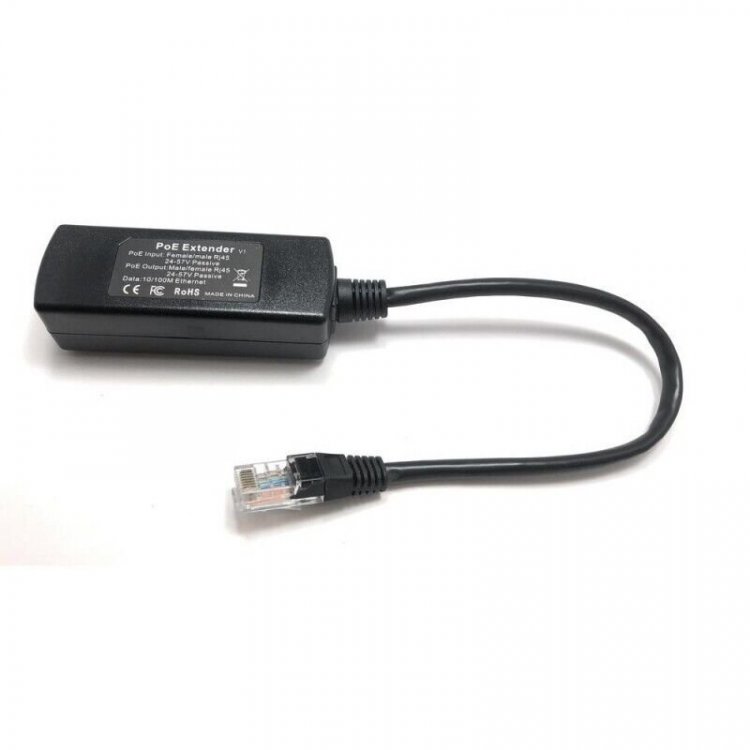
This extender will just plug straight into your existing router. https://www.ebay.co.uk/itm/173919330648?hash=item287e666158:g:6p0AAOSwrEJc8STP&amdata=enc%3AAQAHAAAAoAcaFsJHFMaFuitGRQAHOJ4U9srulyV2VDbOi%2FNHjp7CclMFWGSH5pG%2B9VmvpMzliSrs74XKUaiSpYlu3nC8CFVb%2Fb9IcHhhArl%2FV9P2ldI9NsE79psc0INwQhLtTXeIAznksBep5%2FoYv4Wq4UAmG%2B8a2BUb5Sy8tJwJnqCXDKJK0P8R0h432MNiJy1QjzrqZ9vxG%2BSLscWWrfKuFWYLNpw%3D|tkp%3ABk9SR7jBoo_GYQ
-
√ You will also find protons colliding here https://www.england.nhs.uk/commissioning/spec-services/highly-spec-services/pbt/
-
Isn't that what LHRC does ?
-
I see no mention of 'offsets' in Einstein's theory, can you reference it ? However I would ask why you would not expect them to be different? They two beams follow different trajectories through any observers spacetime. Just saying they are different (as everyone agrees) does not make it a conundrum, contradiction or paradox. You need to establish a connection between the two beams which when applied leads to a contradiction. It is your claim not mine, so it is up tp you to work it out. I asked several times for your step by step reasoning, preferably with the maths spelled out. I have checked the very small amount of maths you have done and posted where I agreed.
-
Exactly. And the Earth has a definite dimensions, volume etc. But these are so small compared to the size of the orbit that when we consider the property of position - "where is the Earth ?" - we ignore these and consider a point in space.
-
That short article is the basis of it. +1 Do you want more ?
-
I still don't see any answer to my question. What exactly do you see and the conundrum itself, given that all agree the transit times of the horizontal and diagonal beams are different ?
-
Why ? Particles are not points. Strictly when we model them as points we should use the term point particle to indicate that The property of that particle we are interested in can be considered to act at a point for our purposes. For instance in relation to its orbit around the Sun, the Earth can be considered as a point particle because its size is minute compared to the size of the orbit. If the above condition is not met then we usually call a particle a body or a free body.
-
An admirable summary of the most important points about the nature and source of heat, including the often missed point about transfer being dependent upon transfer difference. +1 I would just like to add one further often missed point, about radiation. Conduction and convection are well enough described by molecules jiggling about. But where does radiation fit in - there are no molecules carrying it ? Well where there are molecules in motion there are also electrons in motion. Electrons are charged particles in local EM fields and such charged particles in motion emit photonic radiation,
-
Firstly you don't actually need a router you need a switch most folks cant tell the difference, but switches are cheaper and better for your purposes. I assume you already have a router in your house internet ? So if you have a spare ethernet connector in the back of your incoming internet then you would connect a PoE switch to it and take the output of the switch 100m to a repeater This would then boost the signal for the next 100m and finally end up in another switch at the cabin. A second switch there is a good idea as it would allow for future expansion. The used to do 2 port switches but the main makes seem only have 5 port these days - I will keep looking There is PoE and PoE + which gives greater electrical power. Another way to reach 300+m is to use fibre. This and PoE repeaters (extenders) are discussed here https://intellinetsolutions.com/pages/poe-extenders-repeaters
-
PoE, thanks. +1 But there are wiring considerations so Dim if you are thinking of this please ask for more details. You do not wnat to try to connect PoE equipment to non PoE equipment since you are diverting some of the wires in the cable from signal to power. Wall jacks are good, (and easier to wire up than plugs), but the danger is that someone will try to conneect something with an ethernet socket to it someday eg a TV or expensive radio or just a common or garden PC. Most devices are use the non powered standard and will suffer if connect to a DC voltage.
-
Why ? A small ball bearing will do more damage to a large billiard ball than another large billiard ball if one hits the other at speed. If the striking object is large enough it may simply knock the planet to a new orbit, more than damage it. Before someone jumps in, this is not to say there will not be any damage.
-
Thanks, yes good value today as things have gone up, I expect I paid less than that but I only had a quick look around. The thing is that cable is outdoor grade as well. Cat5E is the original very fast ethernet standard. Cat6 is even better, but harder to work with. Cat = category. Can you put plugs on the cable ends yourself or get someone to do this ? Pre-terminated (plugs on) cables are available up to 350 metres, but they are expensive. Dim, You didn't answer my question about power, is your light going out ? ..which still needs an external power source i.e. a wire or powerbank, a solar powerbank, or a solar panel alone.. Not necessarily. There are spare pairs in the cable that can carry power from either or both ends. I wired up quite a few distribution networks in large buildings (hotels) like this. The term for this is cable powered router.
-
The problem with showing a moving version is that t would take different amounts of time for the straight and the slanted beams to reach the end of the car, OK you have outlined what you see as the problem viz that a horizontal beam takes a different time from a diagonal beam to reach the front of the train. What you have yet to tell us is exactly what your reasoning is to arrive at the conclusion that this amounts to a conundrum. ? So please explain with your working. Just pulling figures out of your hat is not enough. Show your working. As to your dismissive second paragraph. I will remain polite and hust point out the for the last century Astronomers have been doing exactly this to correctly place the stars in the sky. An absolutely vital exercise.
-
The snapshot is instantaneous (i.e. the diagram is correct) from the ground's perspective. Snapshots don't move. The train passes the ground observer while the light beam approaches the front of the car from behind. Earlier in you reply to Otto you offer an abstract deduction in reply to his abstract deduction. A snapshot in my view is different since it implies observing all the light reaching one point (the ground observer) at one time, as with any photograph. This of course must take into account the difference in transit tiem of the light from each end and the middle of the train. You see the same effect when drawing diagrams of spaceships outward and return journeys sending time markers every hour, day, whatever in their time, but arriving non linearly at the base observer.
-
Thank you for reminding me of that thread. Here are a couple of references from that thread (my highlighting) Do they sound familiar?
-
That is a confusing way to look at it because your 'snapshot' is far from instantaneous. The snapshot is 5m wide in the frame of the ground observer. And tkes times to pass.
-
So you managed to confuse even yourself. Diagrams themselves however are always good to have. What about addressing swansont's excellent point about direction ?
-
Noted and accepted, but I will offer comment on some of your points. No, I am not Scottish, though my Welsh grandmother was fond of claiming roots in all four UK countries. In those days there was no prebirth gender determination so few folks wasted money on inappropriate preparations, and bought white baby clothes. Baby showers were an american invention not popular in the UK. Hand-me-downs from the extended family were also more popular in those straitened times. It has also been interesting how those junior relatives have grown up and fared. They could not be more different, but I put the difference down to being different people, not different gender. One last comment about Nature and Nurture. There is an inherited heart weakness in their family, affecting at least as far back as great-grandfather, grandfather, father and my cousin but not the girls it seems. This weakness has certainly conditioned life responses and choices down the line.
-
Well this somebody is even more confused by what you are trying to say than before. What you say now seems to confirm what I thought you said in your opening paragraph in your opening post, and I agree with that. What follows in both posts is what is confusing since you now seem to have introduced new terminology which to me is even more muddled than before. Please explain again what you think is happening the problem is, using only one name or better symbol) for each variable. Where did this 'conundrum' come from ? Can you give a reference or did you think it up yourself ?
