studiot
Senior Members
-
Joined
-
Last visited
Everything posted by studiot
-
I suggest you have a large shovel of salty skepticism when you read about Pearson and his work. Both the man and his work were coloured by extremely his extremely polarised views of the sunjects he applied his mathsmetics to. He was an able mathematician and a leading developer of statistics in the abtract world, although he was rather overtaken by Fisher (who has a pseudonym - Student) But I think him less than expert in the subjects he dabbled his purist maths in. Particularly what we now call anthropology and biology. I doubt any real influence on Einstein, whose mind and social inclinations were from an entirely different stable. Interesting he was, like Eddington, a of Quaker stock, although I think not a Quaker himself. I say be careful of what you read because for instance here is some rubbish, dated 2021 from Michigan Technical University, advertising their Masters in Statistics. The "top ten statisticians of all time", in which they include Pearson. https://onlinedegrees.mtu.edu/news/top-10-famous-statisticians I ) They claim Florence Nightingale as an American ! 2) They omit Thomas Bayes completely. Some better links are to the BBC DVD about the relation between Eddington and Einstein https://en.wikipedia.org/wiki/Einstein_and_Eddington and a more accurate historical link about the relation between Pearson and other statisticians and world events. https://errorstatistics.com/2018/11/30/where-are-fisher-neyman-pearson-in-1919-opening-of-excursion-3/
-
Rejoice for thou art living in the modern age. In your last question about concentration I told you that different disciplines use different measures of concentration. It was even more confused in oder times as chemists used equivalents and normalities, - you can still come across these measures. So beware of using the term 'equivalents' or is equivalent to. How can 100 grams be equal to 100 mL ? grams are not millilitres. In fact what you mean is that 100 grams occupies 100 mL or 100mL weighs 100 grams, neither of which is true except at zero concentration. So please, for you furute sake, try to be more precise with your wording. But, I said rejoice because solutions of sodium chloride have a density that is very close to that of water. In fact you can get density tables and calculatiors on the internet these days to find the exact weight of 100mL of solution or the exact volume of 100g of a given % solution. https://www.handymath.com/cgi-bin/nacltble.cgi?submit=Entry
-
Here is a scary sketch to show why it doesn't work that way. I have shown a tree and a human in appropriate scale. Around the green treetop I have drawn a circle showing all the light reflecting off in all directions. I have also shown a really tiny sector showing just how little of that light hits the eye of the human. The rest misses completely. As Eise said it is a question of optics as to how the human can see a clear image not a blurry mixed up one, so long as he has normal eyesight. Does this help ?
-
I don't know what they paint bridge steelwork with in America, but the UK standard uses a 7 coat MIO recipe. MIO = micaceous iron oxide. The obviously thick paint contains tiny flakes of mica which diffuse the incoming lightfrom penetrating as far as the base steel. Sadly the coulour pigments used are almost exclusively battleship grey or puke green. British Rail has experimented with some brighter colours. I have experimented with some modern alternatives and every time I drive up the motorway I look to see how they are going. I can see no visible degradation 25 years on.
-
My Ebay lists 60 pages of them.
-
Well congratulations, I really hope so. +1 If I might offer a final piece of advice. Next time try to focus on what yoy need to know for one aspect of analysis at a time. I know everyhting joins up in the end but that is only when you have covered everything. Trust you helpers to help narrow this down with you instead of rambling about all over the whole subject of analysis or functions of a real variable or whatever you wish to call the subject.
-
What do you mean by a string ? What is it made of ? Where did it come from ? What are its properties particularly in connection to time ? What is its connection to positive and negative ?
-
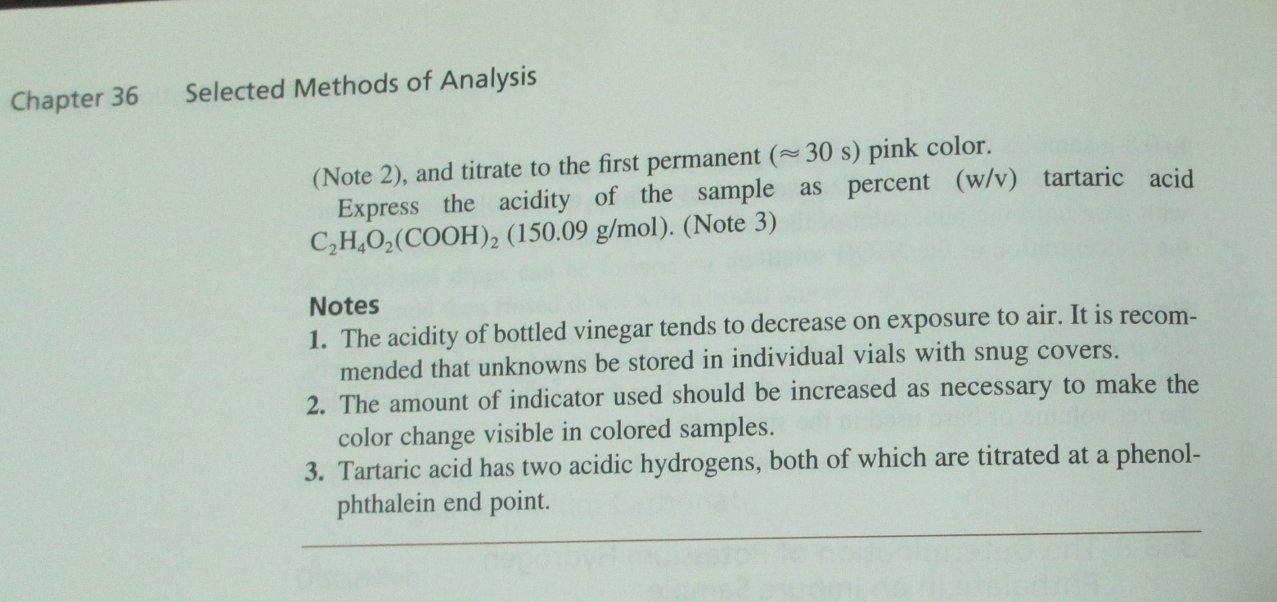
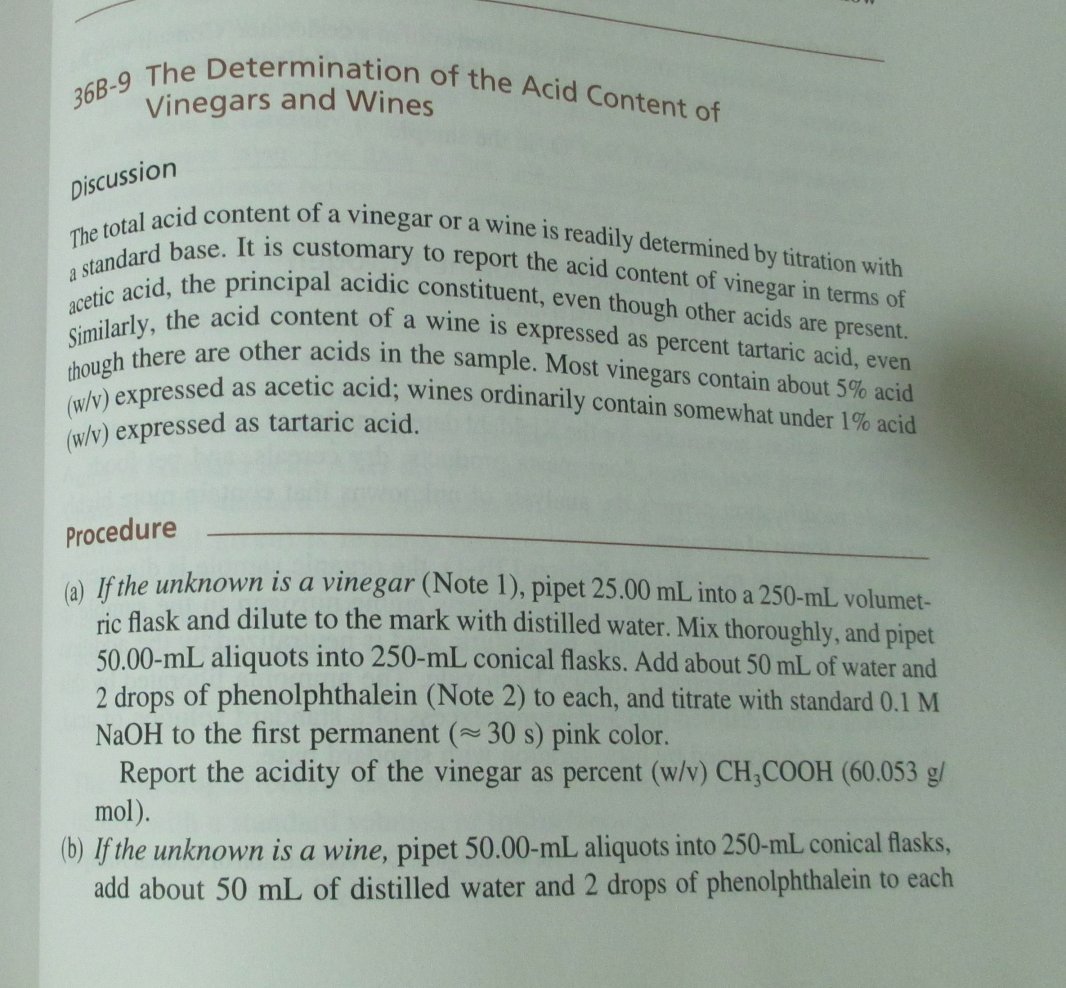
I have also found an electrochemical procedure for determining sulphite (added commercially as a preservative) in white wine, if you are interested. Note what exchemist and my attachments said about there being other acids so a pH meter will not directly compare with what appears to be an industry standard using only tartaric acid. Perhaps industry now has an ion selective electrode for tartrate.
-
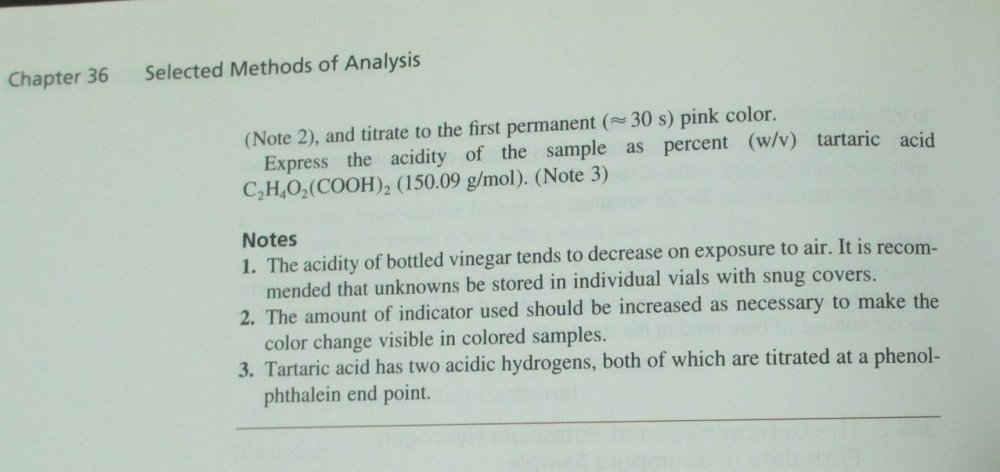
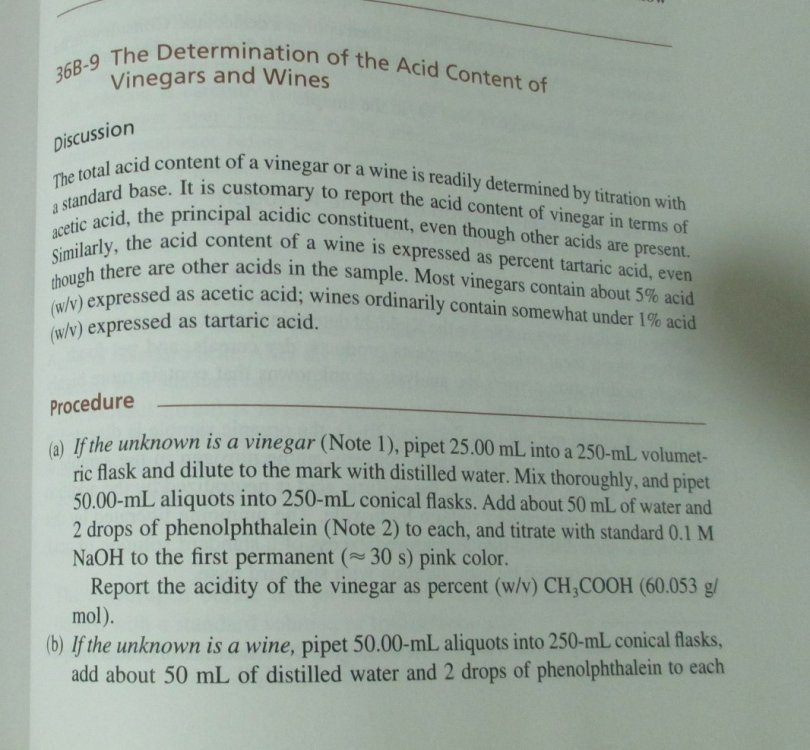
Here is a procedure for determining the acid content of a wine
-
titrating for ppt ? Can you elaborate on this ppt only means power point to me. I know little of winemaking chemistry, but understand that various measurements can be made as well as acidity. The fruit contains sugars and fruit acids to start with. These are fermented first to alcohols and then to vinegars by the action of the yeasts. So chemical monitoring is more complicated than just measuring acidity.
-
Yes, different and completely imaginary story. Not interested. I seem to have completely misunderstood you intentions. I thought this was about the use of mathematical theory in Physics, which is why it was posted in the Phyiscs section. Your last answer seems to imply that it is nothing to do with physics at all ??
-
I recommend this book edited by Shahn Majid - Cambridege University Press It is dedicated to the issue of granularity v continuity in real physical space. Please note that a mathematical space is quite a different animal.
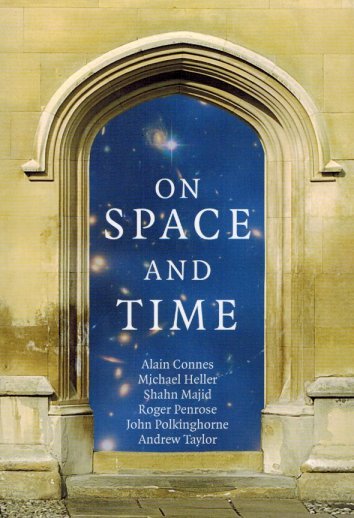
-
Well If I knew what yoy might not have fully understood, I might be able to help. The podcast was overlong and oversensationalist for my taste but they did make a clear distinction between imaginary and complex numbers. They also pointed out that 'imaginary' is a bit of a misnomer as imaginary numbers are every bit as rigorous and valid as real numbers. The thing is that the terms imaginary, virtual, borrow 1, are just examples of a technique used in both maths and science more generally. Children become comfortable with the idea of 'subtract 19 from 435' by saying 9 from 5 wont go so add (or borrow) 1 (when they really mean add 10), now 9 from 15 leaves 6 then add 1 back to the 1 from the 19 or take it off the 3 in the 435 to get the answer 416. A more advanced version of this is solution by substitution of variables, both in algebraic and differential equations. Engineers and physicists have long used virtual work, virtual displacements, as powerful tools for solving classical problems and more recently we have the virtual quantum paticle. The podcast also floated the idea that all these things are devices to help solve equations by the perhaps perhaps permanent temporary introduction of something new. Centuries after the controvery of imaginary numbers a similar difficulty arose describing angles and rotations in higher dimensions. This was eventually resolved (Hamilton) by the introduction of dyadics, quaternions and octonions. But none of these are directly involved with the op question of (my paraphrasing) "Why do we bother with the reals when the rationals are nearly as good" ?
-
Good morning. I am in two minds as to whether to bother with this thread, given your opening preconditions. My first reaction was Where is the Physics in all this ? However your actual question is more reasonable. So perhaps you might like to replace that opening leg-iron with some useful context. For instance, at what level ae you seeking this system ? Sub-atomic particle level. Or macroscopic atomic physics and above? Although there is some small ovelap, fundamental units in these realms are mostly quite different. For instance you mentioned the Ampere, which has no meaning at sub atomic level. Further when you say units, how are you relating these to the well described 'method of dimensions', used throughout science and engineering ?
-
I don't know about any podcast, but my answer to your question is a simple no it is not. By the way are you (and they) confusing imaginary numbers with complex numbers ?
-
Don't worry, meaning is not a defined mathematical term. It is really a language/ philosophical thing which requires interpretation which in turn requires context. Mathematics and logic, although different, are about 'statements' and their consistency in the case of mathematics and validity in the case of logic, although there is obviously some overlap. Would the statement "lines are green" add anything to the 5 axioms of Euclid ? I haven't time at the moment, but I will try to address your other question later.
-
Thanks. Intuition is the right word. Continuity and infinity are strange beasts. The thing is that in Physics we can shift the coordinate system any distance we like, including by a single point. This implies that in performing that shift we can overlay a rational point with an irrational one and vice versa - something we cannot do in maths.
-
The point is that in order to draw a continuous line your pen must pass through irrational points to get from one rational to the next. Equally for (physics) fields to follow the equations of physics, the field lines must pass through irrational points to get from one rational point to another and in order to make a completely closed line or shell or surface or whatever a the closure must block the flux from escaping through irrational points on that closure.
-
No. Does 4 implies 2 have any meaning? Yet 4 is related to 2 and in this case 2 is related to 4 since they are both even. Further this relation can be transferred so if 4 is related to 6 and 2 is related to 4 then 2 is related to 6. The three statements a R a is called reflexive relation a R b implies b R a is called symmetric relation If a R b and b R c then implies a R c this is called a transitive relation. Relations may satisfy none, one or two or three of these conditions If the last three are satisfied then the relation is called an equivalence relation and often given the symbol a ~ b Equality is an equivalence relation, but > is not since a > b does not imply b > a.
-
It is worth noting that there is some disparity in drawing the distinction between a relation and a function and considerable disparity in the notation employed. So it is always wise to check the definitions and notations used in any particular work. Here is simple explanation of how I like to think of relations Given a set A we often like show that a 'relation' exists between certain pairs of the elements of A. Such a relation can be expressed as a property statement that is true for some pairs of elements but false for other pairs. A good notation that does not clash with other uses (such as the ~ symbols which may be reserved for a special type of relation) is For all a, b in A a R b denotes that b is related to a c notR d denotes that d is not related to c A relation property may take many forms. For instance a is related to b if they have the same parity so all even numbers and all odd numbers are parity related. (This is a relation that is not connected to a function) Another relation that is not is function is the equation of a circle in a plane. That is because there are two values of y for every value of x and functions are defined as being single valued. This is the principle distinction between a function and a relation.
-
What do you mean by this ?
-
Hippasus already gave you one. Remember the ancient greeks were primarily geometers, not algebraicists. But not only geometers but constructive geometers. Note that most of Euclid is couched in terms like Proposition XXX To construct ........ So imagine their consternation when they discovered that they could not measure the length of that diagonal, although they could undoubtedly construct it.
-
jesus math is old. Was not aware of this fact. Thanks for this. To be fair what he showed was "There is no set of all sets" ie no Capo di Capo", no "One ring to rule them all. It is perfectly OK to posit a simpler universal set which is the complement of some set plus that set itself. I agree with the others that I saw no sense in your use of an arrow though. Nor do I understand your definition of a relation, which can be thought of as a partition of a set.
-
Of course it would. The diagonal of a unit square would be different for instance. I'm not sure if the triangle inequality or Schwartz inequality which underlie quantum theory would also be different.
-
Don't see why you need to get all fancied up; Hilbert space ? What is wrong with good old fashioned Hippasus ' square root of 2 ? Or Archimedes and his Pi ?