
studiot
Senior Members
-
Joined
-
Last visited
Everything posted by studiot
-
I agree that a protracted discussion about what consitutes the Dark Ages is a tad off topic , but I think I have successfully communicated my point since you clearly understand the period of History I was referring to. My point, of course, was to challenge the OP assertion that technology (as opposed to other aspects of History) has been steadily advancing, which to me at any rate means that this is equivalent to stating that there have been no declines to below the standard previously achieved. I note that you have not addressed my clear examples to the contrary of the OP assertion.
-
Hello, Fiona and welcome. You say you are just starting Engineering Science, but in the UK we are on school/college holidays. So are you trying to get ahead or to catch up these holidays ? Either way you have come to the right place. So your question is from the Mechanics (statics) part of Engineering Science and refers to equilibrium. You need to know the three Laws of static equilibrium 1) The sum of all vertical forces equals zero. 2) The sum of all horizontal forces equals zero. 3) The sum of all clockwise moments equals the sum of all anticlockwise moments. You will not need all of these three for these early questions, but you will need some very simple trigonometry and how to draw and understand the 'free body diagram' on the right of your top diagram. We should start with this diagram so can you say why it has been drawn as it has and what it means ? If not then we can work through this first. Edit the site system has merged my two replies. I see you came back to look so here is a small hint. The log is in horizontal equilibrium. (Law 2) That means that it is neither moving to the left or to the right. That means that the sum of the lefward forces = the sum of the righward forces or the total sum of the horizontal forces = 0 There is only one leftward force ( the horizontal part of 8.17kN) and only one rightward force (the horizontal part of 10.5 kN) Note is say the horizpontal part because each force is acting at an angle to the horizontal. The value of the horizontal part is given by the formula horizontal force = actual force times the cosine of the angle the line of the force makes with the horizontal. Please check for yourself that 8.17 * cos (50) = 10.6 * cos (60) Is any of this familiar ?
-
Yes but did you understand swansont's comment that voltage is not a measure of energy ? Anyway thanks for the picture. It looks as though you have wrpped some copper or brass foil around a silver metal (aluminium or stainless steel) bowl. This constitutes a bimetallic coupling which will automatically generate a thermally sensitive potential difference. Thus if you expose the wrapped bowl to hot sun its temperature will ris, as will the voltage. So yes you could use this to generate some current but 0.6 volts is not going to get you much power.
-
It was really pleasing to find I had messaged the rapid response team. 🙂 Thanks to you all for you comments. Yes I agree, but he seems more than just a pretty face, he offers some interesting ideas. I think the notion of an absolute measeure or standard of length (ie one without units) that he quietly drops on p15 is worth a discussion all by itself. This is quite different from a Physicist's idea of what such a measure might be, yet so simple and elegant. Finally my apologies to those members I omitted, for example @Mordred though I am sure there must be many more, in my rush to get my first post to print. Of course I present the information to all who might be interested or benefit.
-
Nevertheless it is the accepted historical term for the period when there was a definite (and measurable) knowledge and capability regression in a large part of the world. Or are you suggesting that someone somewhere had the knowledge to privide the engineering already listed or to perhaps construct a Roman aqueduct. ? This was the period when the christian church took about 300 years of collapsing churches to learn how to build one securely.
-
@Genady @joigus @Markus Hanke Update. I have been evaluating this new book by Professor Needham of California, and I have to say I like it and am impressed. Needham favours a move back from 'algebraic geometry' to 'geometric geometry' , as a resullt this book has lots of new results not (readily) available elsewhere and a comprehensive section on GR which is his favourite topic. The does not mean that he shies away from calculation, quite the reverse. He simply wants the calculations to offer real world meaning as well as algebra. PS Markus I hope all is well with you.

-
The question of 'who does the Ukraine naturally/historically belong to ?' is quite interesting and may be compared to the question 'who does Poland naturally/historically belong to ?'
-
Thanks for the thoughts, I will look into them. +1 No I was not using multiple tabs, though in the past I have used either them or mltiple instances of the browser. Nor were there multiple pages on Geordief's thread to content with, which has sometimes been a problem. Unfortunately I don't have anything to save the work to on this computer as I am unable to afford yet another copy of word etc. I tried to save it to notepad but it came out all mis-formatted. I can still save OK on the old pc but then the site won't allow me to use the input editor any more. Ironically I have just posted a reply in the thread where another member has just claimed that technology is steadily advancing.
-
Are you making this demonstrably foundless claim by ignoring History or from ignorance of it? 2 millenia ago the Romans had central heating , piped water supplies and sensible (for the their time) sanitation arrangements. Have you not heard of the Dark Ages when no one had these things ?
-
Yet again I have wasted my time and effort (and money buying windows 10) trying to reply honestly to a thread. I prepared this reply but when I submitted it it all disappeared again. I was able to recover it, but it disappeared 3 times in a row, although you can see from the screenshot that I was allegedly logged in at the time. For one of those tries, I tried relogging in but it still happened. Furthermore now I am logged in I thought adverts wer in general suppressed, not covering a significant proportion of the users screen ?


-
Did you check to see if the rules or ethos of this forum has changed since you last posted in 2011 ? At that time I note you posted some pretty decent Physics in accordance with our discussion rules. So what is your thread all about please ?
-
OK so as always the answer to you basic question can be as simple or as complicated as you wish. At the very simplest, yes there is complete demarcation between hardware and software. However that view will not get you very far. The most common model is usually called the layer model. This comes in various amounts of complexity ie more or fewer layers. The layers are usually portrayed in a vertical heirarchy. The simplest is the two layer model , with 'hardware' at the bottom and 'software' at the top. The all important idea is that there are predifined exchange parameters which are passed from one layer to the next. All communication between layers is by way of these parameters. Layers do not have direct communication with or control of other layers and can only communicate via these parameter channels with the layer immediately above/below. The reason for this is that the 'software layer' does not need to 'know' what is actually in the hardware layer. It could be switches, transistors, light bulbs, charged/discharged capacitors or it could be something non electrical at all. My flatmate in University did his final year project building a fluid logic hardware layer. One more generalisation and that will be enough for now. All this is of no use without the traditional 'black box' theory. You must have means of input and output otherwise you have a system that just sits there and contemplates its own navel. So I favour adding a horizontal direction to the model to account for input and output. If you find this worth pusuing, we can use the models, building up complexity, to look at your other questions about interactions and the nature of input and output.
-
Having dried my thermometer out I can report the following measurements Lenovo M8 tablet Battery 5000mAh reported power idle 0.5W, loaded 4W. Charger 2A usb = 10W Cover wallet constructed of leatherette covered card. Screen exposed, rest covered. Ambient temperature 23 C Tablet working temp at 40% charge 26.5 C, working on battery alone. Tablet switched off After 1 hour tablet cooled to 24.2 C Charging started 1/2 hour after commencement of charging, tablet @ 28.5 C 1 hour after commencement of charging, tablet @29.9 C 2 hours after commencement of charging, tablet @26.9 C 3 hours after commencement of charging tablet @ 28.5 C Reboot charge still connected charge 99% 3.5 hours after commencement charging tablet @ 28.5 charge 100%
-
Hawking, via Moontanman, his joke in the jokes thread is rather good too.
-
Here is the Wiki article on the subject of police doppler radar guns. https://en.wikipedia.org/wiki/Doppler_radar
-
Isn't all this talk of boilers off topic ? After all how many toilets have boilers ? I remember most work vessels in the 70s and 80s in the gulf using salt water to flush the toilets. Readers, may have come across the fictional character, modelled on Nelson, called Hornblower, treating himself to a daily sluicing in sea water (hand) pumped by the ratings on his ships, even in the Atlantic winter.
-
There are many sorts of slang. One not mentioned so far is Cockney Rhyming slang.
-
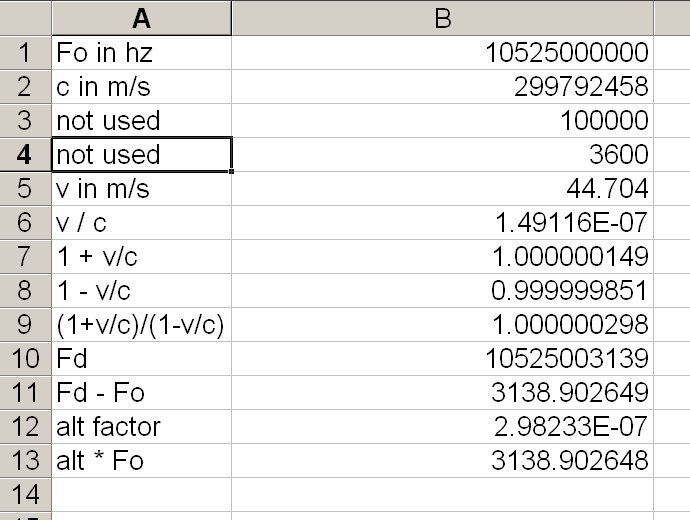
I wondered that and agree. Here is the modifed spreadsheet
-
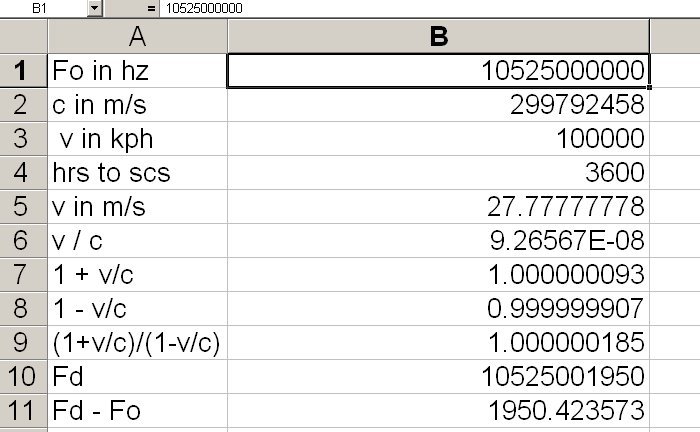
I agree that this would be the best Excel can do, and Excel is the best way I have for handling multidigit numbers. However since wee are talking about the difference between the last four digits to two eleven digit numbers, not to mention the loss involved in the quotients, there will be a lot of variation depending upon calculation method.
-
I made it 2328
-
Suggestions for using AI Combined with suitable human oversight, monitoring and controlling dangerous situations, places or activities such as prisons.
-
Surely you are looking at this all wrong because you should only allocate one axis per dimension. I'm sorry but although you quoted my previous technical comment, you made no response to it, instead taking the opportunity to promote another wall of woo. I have reported this for being placed in the wrong sub forum so I suggest you read the speculations special rules and contact a moderator if you need to.
-
What a pity you didn't simply ask how I came to my answer. If we try to substitute x = 0 into the given expression we find [math]\frac{{{2^x} - 1}}{x} \to \frac{{1 - 1}}{0} \to \frac{0}{0}[/math] Which we know we cannot do. But the situation is remedable as we can apply l'Hopital's rule thus [math]\frac{{\frac{d}{{dx}}\left( {{2^x} - 1} \right)}}{{\frac{d}{{dx}}\left( x \right)}} = \frac{{2^x}\ln 2}{1} = \ln 2 = 0.693[/math]
-
0 never 'equals '1 There are number systems without zero, it it not necessary for all number systems. From what you say you have obviously met some simplified explanation of the development of numbers and let your imagination run riot. The proper development of numbers is a very important and interesting (to some) subject in maths. We can discuss this properly if you like. I'm sorry but the rest of your post is just a kind of numerology, it is not science. Furthermore your 'stability' values fly in the face of direct observation. You should look at the 'packing fraction curve' ; Iron is the most stable element.
-
If you have your phone or tablet in a protective case, additional to the tablet itself, does anyone know or have any data on how safe it is to leave the device in the case for charging or should it always be removed ?