
toucana
Senior Members
-
Joined
-
Last visited
Everything posted by toucana
-
Update: The DOJ has now dropped all charges against Olympian David Hearn who had been arrested and charged with 'vandalism' of the Reflecting Pool in Washington DC. NBC NewsTrump administration drops Reflecting Pool case, blaming...The Justice Department said “it is difficult to attribute the widespread damage to the Reflecting Pool to vandalism, let alone to establish that fact beyond a reasonable doubt.”
-
Film cameras continue to be used in the movie industry to this very day. Christopher Nolan’s latest blockbuster The Odyssey was filmed entirely on 70mm IMAX cameras which had to be fitted with massive acoustic blimp hoods to muffle the mechanical noise of the film transport mechanism - because Nolan insists on recording all the acting dialogue on the actual live camera takes (no ADR used in post-production). Disney began using motion capture film of live dancers to assist studio animators in their hand-drawn artwork as early as 1937 when Snow White and the Seven Dwarfs was in production. Dancers like Marge Champion were filmed performing movements which animators could study and analyse with the help of rotoscope tracing to understand and replicate the dynamics of the moving human body. These types of motion capture techniques continue to be used to this day in modern digital formats to create CGI effects like Gollum in The Lord of The Rings - (One of my younger relatives is a stuntman and Parkour athlete who does this type of motion capture work professionally).
-
I wonder if lotus eating was an entirely gluten-free past-time ? Who knows ? The Lotus eaters or λωτοφάγοι, appear in book ix. of ‘The Odyssey’, but there is some dispute as to who they were and what they ate. Back in the 5th century BC , Herodotus reckoned the λωτοφάγοι, lived in coastal Libya, but Polybius said no, it was on the island of Djerba off the coast of Tunisia. Some say the lotus was the jujube fruit, but as its leaves contains saponin and ziziphin which inhibit the ability to taste sweet things, and the lotus was said to be “as sweet as honey” this seems unlikely. The Egyptian Blue Lotus which was a type of mildly narcotic water lily doesn’t quite fit the bill either. No doubt all will become clear later this year when Elon Musk deploys his trillions of dollars and Grok AI to create a "historically accurate" version of ‘The Odyssey’ spoken in perfect Homeric Greek by an all-white cast in non gender-fluid roles :-P
-
Yes he was forced to leave the RAF in 1923 after that alias was exposed by the press, but he managed to rejoin the RAF in 1925 under a new alias 'T.E Shaw' after a brief and unhappy stint in the Royal Tank Corps. Air Marshal Hugh Dowding who subsequently became the head of RAF fighter command authorised the enlistment. I should perhaps have appended T.E. Lawrence's translation of the same two passages cited from the other versions mentioned in the video:
-
πλέων ἐπὶ οἴνοπα πόντον ἐπ' ἀλλοθρόους ἀνθρώπους, - 1.183 "sailing on the wine-dark sea to men of another language", (Odyssey) I recently watched Christopher Nolan’s new film version of ‘The Odyssey’ , which is an entire topic of its own (do go and watch it in an IMAX theatre if you possibly can). But the experience sent me back to my own bookshelves, to see which translations I had available of Homer’s original poem - a work which I first read almost 60 years ago as a young schoolboy, during a summer holiday heatwave rather like the present one. By chance I stumbled across a recent YT video by EJ Borg called “Which Translation of Homer’s Odyssey Should you Read?”, and this provides a handy roundup of seven of the most popular English translations currently available. https://www.youtube.com/watch?v=YJD3PFlhFUI For illustrative purposes, the video offers the same two sample passages (Book 1: 1-9 and Book 9: 473-482) from each translation presented anonymously, and in random chronological order - and invites the viewer to grade them according to taste. The first passage contains the opening lines of the poem, and the second is the scene where Odysseus taunts the Cyclops as his men escape aboard their ships from the monster’s’ island. The oldest translation on offer is by Alexander Pope (1721) which renders Homer’s dactylic hexameters in heroic couplets - rhyming pairs of lines in iambic pentameter English verse. The newest translations include the one by Emily Wilson (2018) which is said to have inspired Christopher Nolan’s reading of the film, and the very latest one by Daniel Mendelsohn (2025) which like Emily Wilson’s translation offers a line-by line rendering of Homer’s original poem. Honourable mentions include E.V Rieu’s lucid prose version (1946) which was the very first ever ‘Penguin Classic’ - a labour of love carried out during long nights spent in air-raid shelters during WW2, and that by American poet Robert Fagles (1996) who also translated ‘The Iliad’. My own personal favourite English translation of ‘The Odyssey’ however is not mentioned in this video at all. It is one credited to T.E Shaw (1932) ‘Who he?” you may ask - well… that translator is a pseudonym for T.E. Lawrence aka ‘Lawrence of Arabia’. Back in the early 1930s after publishing ’Seven Pillars of Wisdom’ (1926) a monumental first-hand account of his military experiences fighting in the Hejaz during WW1, Lawrence sought refuge from the public spotlight by secretly re-enlisting in the RAF under a false name as Aircraftman T.E. Shaw. He then spent four years translating ‘The Odyssey’ from the original Greek during his spare time from his RAF duties. Lawrence’s translation fascinates me because of the remarkable background, he brings to the task as an archaeologist, scholar, linguist, traveller and war hero which perfectly complements a work he describes in a translator’s afterword as “the oldest book in the world worth reading for its story, and the first novel of Europe”.
-
I think this précis overlooks a couple of hidden factors. i. England had a significantly more gruelling tournament schedule than France - and that was in spite of the fact that England topped their own group stage quite easily. It was England who had to travel to Mexico and play the co-hosts at home and at high altitude in the intimidating Azteca stadium in Mexico City. It was England that had to play a knockout match in very hot and humid conditions against Norway in Miami Florida, before travelling to play a semi-final match against Argentina in Atlanta. ii. England had one day less than France did to prepare for their Bronze medal match back in Miami. France had four days of rest, while England had only three days after their semi-final knockout in Atlanta. It was always a given that England were likely to tire more quickly than France in the second half, and that they would start conceding goals as their cumulative physical and mental exhaustion took hold. That being said, I don’t think many people would have had England 4-0 up at half-time on their Bingo card, or winning the match 6-4 with the last kick of the game - An extraordinary match !
-
Geekshirt

-
Italian band Planet Funk with Finnish singer Auli Kokko on lead vocals in 2001 - (Now adopted as a victory anthem in both World Cup Soccer, and PDC World Championship Darts).
-
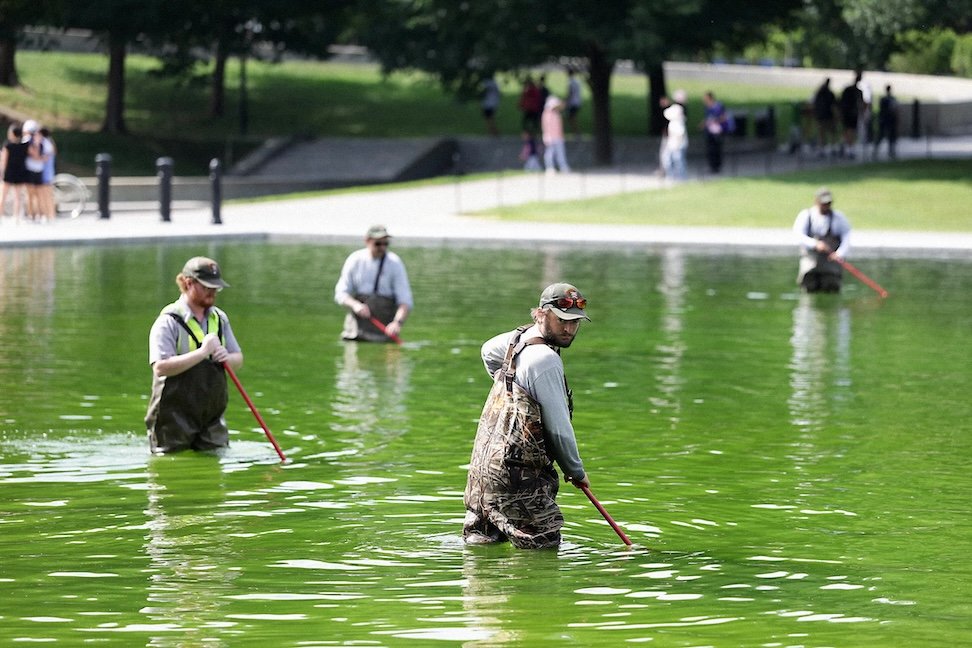
I don’t think the coating used on the Reflecting Pool was a preformed liner. Photos of the installation process show that it was sprayed onto the concrete base of the pool in multiple layers with a binder to laminate it firmly onto the concrete surface The Scientific American article indicates this was a hybrid form of polyurea coating involving a resin which cures into a solid finish. Interviews conducted by the New York Times with surfacing experts however suggest that a pure polyurea material should have been used instead to ensure flexibility. When used to re-line water pipes, these types of hybrid compounds can be deployed in a process known as CIPP (Cured in Place Pipe) which is a structural “No-Dig” repair that creates a new pipe within a damaged sewer, drain or culvert - as described here: https://fastfixdrainageandplumbing.co.uk/drain-lining-repair/ A resin impregnated liner is winched or inverted into the defective pipe, pressurised, then cured using either hot water, steam or UV light footnote: It has emerged that Greenwater who installed the Naonobubbler Ozone treatment systems at the Reflecting Pool were ordered to deinstall and remove the units from the perimeter of the pool for the duration of President Trump’s UFC event held on the South Lawn of the White House on June 14 - presumably because someone thought they were ‘unaesthetic’. https://www.nytimes.com/2026/06/26/us/politics/reflecting-pool-trump-algae.html The Nanobubbler units were only hurriedly reinstalled after the pool turned green.According to Scientific American, the lining material used on the Reflecting Pool in 2026 was called Rhino Linings Pipeliner 5000 which is an elastomeric polyurea coating. https://www.scientificamerican.com/article/why-the-paint-is-peeling-off-the-lincoln-memorial-reflecting-pool-experts-explain/ A data sheet for this coating can be found here https://www.uscoatingspec.com/wp-content/uploads/2018/11/Pipeliner_5000_11-70PW_TDS.pdf You can check out the detailed chemical and physical properties of this product in some detail - and to me it seems like you would need a pneumatic drill rather than a box-cutter to do serious damage to it.I wonder if you have ever looked into the etymology and meaning of the word ‘hobby’ ? A common dictionary definition is “an activity done regularly in one’s leisure time for pleasure” (NOAD/OED). I would commend the words ‘leisure’ and ‘pleasure’ to your attention - perhaps these are wholly unfamiliar concepts ? Many hobbies are distinctly solitary occupations with no social component whatsoever. Quite a few of them are in fact pursued precisely because of their ‘antisocial’ nature - they lack any form of involvement with other people. How would philately (stamp collection), or the study of fossils fit into your scheme? One of my own more unusual hobbies is going for solitary walks at twilight and listening through headphones to the echo-location calls of bats with an ultrasonic heterodyne detector. What sort of ‘common goals’ or social ‘objectives’ does that fulfil ? I think that the formation of friendships has a great deal more to do with reciprocal patterns of emotional need - and most often a shared sense of humour.Probably the best scientific overview of the Reflecting Pool problems I have yet come across is this 24m long YouTube video called ‘AquaDiary Podcast’ created by a young female water management scientist https://www.youtube.com/watch?v=7PrT4p8SMAU The podcast confirms that the algae problems are chronic and endemic to the nature and location of the pool, and that the cosmetic alteration of painting the bottom of it blue made matters much worse by raising the temperature of the shallow water. One scientist has compared it to placing a heater under the entire pool. The podcast flags up the issue that by hurriedly pouring countless gallons of hydrogen peroxide into the pool, the Parks Department effectively destroyed important cellular evidence as to which species of bloom was taking place. The popular assumption is that the algal bloom was of a species called Desmodesmus, but this cannot now be confirmed because hydrogen peroxide (a powerful oxidising agent) causes lysis of the cell structures of the algae rendering them unidentifiable. There is a possibility that this could have been a Cyanobacterial bloom which is potentially much more dangerous to both animals and humans, as Cyanobacteria can release potent liver toxins. The bottom line is that what the Reflecting Pool problem really requires is an ongoing scientifically based water monitoring and mangement plan, not a series of quick fixes and knee-jerk reactions. Implementing such a plan would have cost a fraction of the $14M spent so far on what was basically a politically-driven vanity project of President Trump, which was devoid of common sense or scientific input - and was implemented on a no-bid basis without due diligence or oversight.Guess that's one way of turning it blue
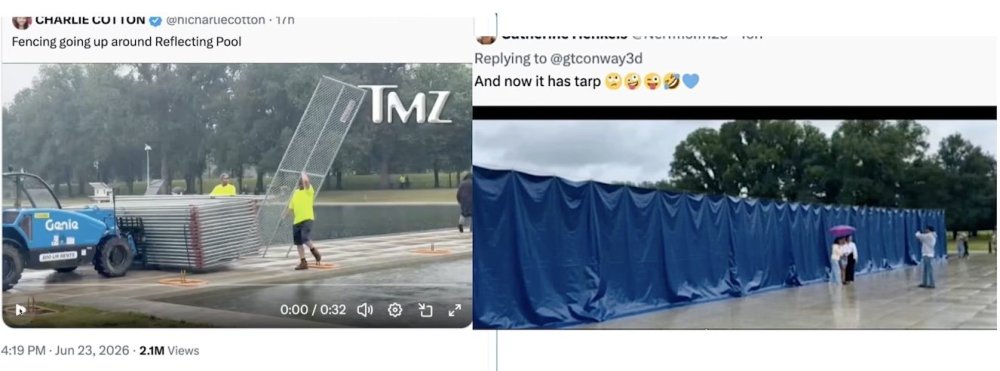 In the general spirit of outdoing ‘The Onion’, it transpires that an Ohio based firm called ‘Green Water Solutions’ was paid to rip out the existing filtration system at the Reflecting Pool and replace it with a ’Nano-bubbler’ ozone system. https://www.instagram.com/reel/DZ6cUsSNcKR/ As comedian Jimmy Kimmel notes, they certainly nailed that one - mission accomplished ! Shame Trump didn’t hire ‘Blue Water Solutions’ instead :-PYou are correct. The elements of this problem have always existed ever since the Lincoln Memorial Reflecting Pool was first dedicated back in 1922 - and it was never intended to look like a bright blue swimming pool in the first place. I recall visiting the Reflecting Pool in Washington DC back in the summer of 1973 on my first ever visit to USA, and it looked a distinctly dark shade of greyish brown. If you squinted hard enough, you could just about make out a reflection of the Washington Monument- but that was it. The ballyhoo arises from the fact that Trump loudly boasted that he would transform the pool into a crystal clear “Flag Blue” pool as part of his vanity projects vandalism of Washington DC to coincide with the 250th anniversary of the Republic on 4 July 2026. Having spaffed millions of dollars on a no-bid renovation contract awarded to one of his MAGA donor buddies, Trump is now trying to deny that the disastrous consequences of this bungled makeover even exist. Some of his spokespersons are putting out statements insisting that “The pool is crystal clear and a bright blue colour” when anyone can see for themselves that it is a putrid green, with large chunks of the newly installed blue pool liner delaminating and lifting off the concrete bottom of the pool. This MAGA denial of reality is what was parodied in the political satire black comedy film “Don’t Look Up” released in December 2021 in which two astronomers attempt to warn humanity about an approaching comet that will destroy human civilization - ( a metaphor for climate change). https://www.youtube.com/watch?v=RbIxYm3mKzIThe Reflecting Pool normally receives water from two possible sources. One is the Potomac Tidal Basin which has suffered ongoing problems from a major raw sewage spill back in January which dumped 240 million gallons of phosphate-rich raw sewage into the Potomac River. https://potomac.org/blog/2026/1/30/potomac-interceptor-sewage-spill-updates The other source of water for the Reflecting Pool is from the municipal water supply that contains Orthophosphate which is added to prevent the release of lead and copper from pipework into drinking water supplies. https://www.epa.gov/lead/why-do-water-systems-add-phosphate-drinking-water-what-are-health-effects-drinking-water Phosphates are nutrients that feed algal growth. Add in bright sunlight and shallow stagnant water, and you will have an intractable problem.A Canadian YouTuber called 'Swimming Pool Steve' has unexpectedly found himself thrust into the limelight after a guest appearance on CNN as a pundit with expert knowledge of pool sealants and filtration systems. https://www.youtube.com/watch?v=lcwqnDUC4-Q In his latest video he addresses the delamination problems now reported to be affecting the Polyurea lining of the Reflecting Pool, and he favours the theory that the binding layer has failed either because of inadequate preparation of the concrete surface, or because of negative hydrostatic pressure arising from an elevated water table - (the Reflecting Pool was built on marshland).Alligators are fresh water animals who would probably feel quite at home in the murky green waters of the Reflecting Pool right now . But as the pool is just 30” deep at best, and only supports snails and mallard ducks, the alligators would probably need to eat passing tourists to survive. Perhaps MAGA could transform the pool into a novel “Meet The Alligators” themed visitor experience ?CNN recently took samples of water from the Reflecting Pool and gave them to a DC pool maintenance firm for analysis. The results showed phosphate levels far in excess of the 100 parts per billion (ppb) level regarded as problematic for controlling algae. According to this blog article about pool maintenance, at those levels, algal blooms are inevitable https://phoslocker.com/blogs/news/the-link-between-phosphates-and-algae-growth-in-pools The primary sources of phosphate contamination include: Lawn fertilizers washed in by rain and runoff Leaves, pollen, and organic debris Certain pool chemicals and treatments Municipal water supply Swimmers and pool toys CNN story link below: https://www.youtube.com/shorts/TUWFJZey5jIPresident Trump’s attempts to turn the Lincoln Memorial Reflecting Pool in Washington DC a bright “American Flag” blue in time for the nations’s 250th anniversary have already come unstuck (like the blue pool liner) with an uncontrollable algae bloom that has turned much of the pool a turbid shade of green. https://www.wired.com/story/reflecting-pool-full-of-algae-climate-change/ The Trump administration has blamed “residual algae from the supply lines which have been sitting dormant for eight weeks”. The article in Wired however points to a number of different issues: i. The Reflecting Pool usually draws water from the nearby Tidal Basin which is often filled with algae. During hot weather when high amounts of algae occur, the water supply is meant to switch to municipal drinking water. It is unclear whether this switch has taken place. ii. Hotter weather in general, and climate change in particular mean that algae blooms are expanding globally and moving up into higher latitudes according to Hans Paerl, a former professor at the University of North Carolina’s Institute of Marine Sciences. “It’s just getting hotter, and these blooms are expanding globally—they’re moving up into higher latitudes,” he says. “It’s clearly a temperature effect allowing them to optimize their growth.” The problem is made even worse by the stagnant water of the Reflecting Pool. Right now contractors are busy pouring large quantities of hydrogen peroxide into the pool in an attempt to control the growth of algae, but the problem is that hydrogen peroxide in high concentrations (12% or higher) acts as an aggressive solvent of standard glues like cyanoacrylates, and causes the binder and paint to lift off the bottom of the pool. Reputable contractors use specialised pool-grade adhesives such as hybrid polymers or PVC vinyl cements like HH-66 Vinyl Cement that are resistant to normal shock levels of peroxide. But all the recent work on the Reflecting Pool has been done under a no-bid contract awarded to one of Trump’s personal friends (a MAGA donor) with apparently little or no due diligence or oversight being carried out. According to Wired, a spokesperson for the Interior Department has told them that are now “deploying high-tech nanobubble ozone technology” to keep the algae at bay. This apparently refers to infusing water with microscopic ozone gas bubbles (smaller than 200 nanometers) that remain stably suspended for weeks. https://www.sciencedirect.com/science/article/abs/pii/S0043135424010479 One potential problem here is that the process works seems to work best under conditions of high salinity - The Reflecting Pool is filled with potable fresh water.
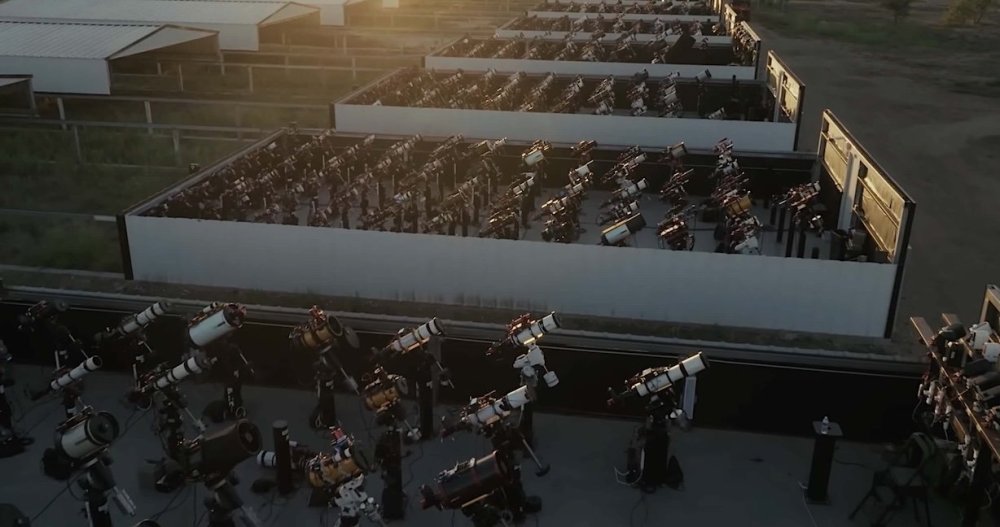
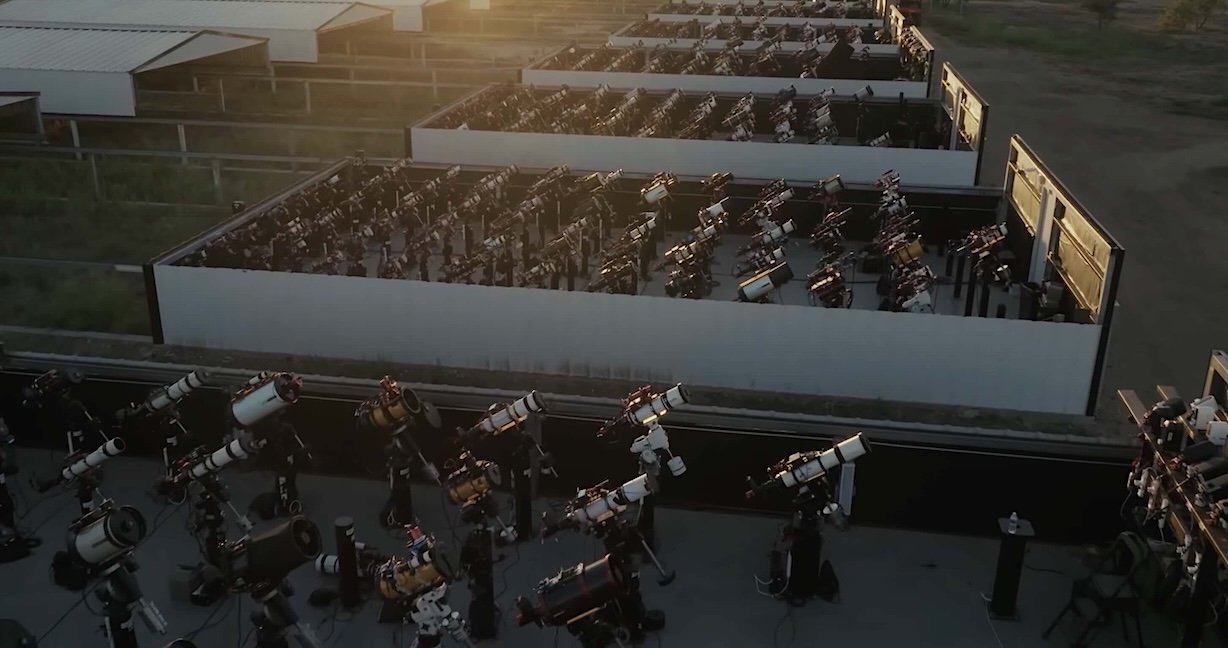
 Still experiencing very slow response times here in UK for both logging in and navigating around the site - Is this a DNS resolver problem ?Out in the rural wildneress of central Texas USA lies an astronomical telescope ranch where stargazers from around the world can pay to mount their instruments in a pancake flat landscape far from urban light pollution. Computer controlled equatorial mounts allow the owners to control, monitor, and process their astro-photography over the internet in real time. Star Front Observatories have been in business since 2024 and have almost 600 subscribers paying from $99 pcm upwards to have their scopes installed at the ranch. Some great examples of images taken there can be seen at the end of the video. https://www.youtube.com/watch?v=bN48vEqaQs8
 One of the more unusual consequences of the Strait of Hormuz crisis is an alarming shortage of naphtha which is currently causing much concern in Japan. https://www.theguardian.com/world/2026/may/19/japan-naphtha-shortage-explainer-iran-crisis Naphtha, an oil derivative, is used in the production of a wide range of materials including plastics, insulation foam, adhesives, medical supplies such as syringes, and also printing ink solvents. It was a sudden shortage of the latter that recently brought home the acute nature of an unexpected supply chain crisis when Japan’s biggest snack maker Calbee abruptly switched to printing their brightly coloured bags of potato chips in plain monochrome a week ago. ナフサ or nafusa as it is known in Japan has soared in price since April by around 79.4%. Japan which imports 90% of its oil from the Middle East was forced to respond to public disquiet and media questions by issuing government statements that adeqate supplies of naphtha for printing ink had now been secured, and that steps were being taken to find alternative sources of oil - plus a plea to the public to stop panic-buying plastic garbage sacks : another oil-based product now suddenly in short supply in Japan.I found my original source for this : "Humour of Bulls And Blunders" - Marshall Brown (1906) - The University Press Cambridge Mass. USA



Important Information
We have placed cookies on your device to help make this website better. You can adjust your cookie settings, otherwise we'll assume you're okay to continue.