toucana
Senior Members
-
Joined
-
Last visited
Everything posted by toucana
-
Stranger, pause and shed a tear, For Emily Church lies buried here, Mixed in some perplexing manner, With Mary, Matilda, and probably Hannah. Some centuries ago, it was said, a pious New England man outlived and buried four wives. When a cemetery was moved he undertook the exhumation and reburial himself, but accidentally mixed up the remains in the process. His conscience would not allow him to re-use the old headstones, so new ones were inscribed to reflect the confusion. The inscription first appeared in late-19th-century newspaper anecdotes, and was later catalogued in historical anthologies like Churchyard Literature. Other sources suggest it was an urban legend based on an epitaph found on the grave of one John Penny at the Minster Churchyard in Wimborne Dorset UK which read: "Reader, pause and shed a tear, For John Penny lies buried here; He is not alone, for it is the case, That Mary and Betty are in the same place."
-
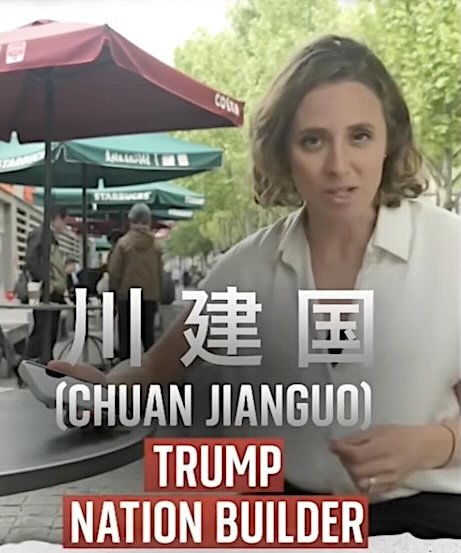
Quite a bit as it turns out, in the wake of President Trump’s arrival on his current chaotic visit to China - (China’s President Xi Jinping didn’t even bother to come out to the airport to greet him). https://www.youtube.com/watch?v=xfRYrXzMpHU President Trump has already garnered quite a number of unflattering nicknames on Chinese social media which include: 懂 王 dǒng wáng - “King Know-it-all” 万 税 爷 wàn shuì yé - “Lord of Ten Thousand Taxes” (a pun on 万 岁 wàn Suì - “Ten Thousand Years!”) 川 宝 chuan bao - “Baby Trump” But the latest nickname for Trump to go viral on Chinese social media is a back-handed compliment: 川 建 国 chuan jiàn guó - “Trump The Nation Builder” As Helen Ann-Smith the Asia correspondent for Sky News explains, the joke lies in the suggestion that it is China not America which has been made much stronger by Trump’s ill-advised tariff policies in particular. President Trump is now the supplicant at the gates of the Forbidden City in Beijing. America urgently needs access to China’s supply of REM (rare earth minerals) to maintain its own advanced technologies, and to restore the Pentagon’s much depleted stock of smart weapons that have been drained by the ill advised war on Iran. Xi Jinping by contrast will settle for any (or all ) of the “3 Big T’s —> “Tariffs/Technology/Taiwan.
-
-
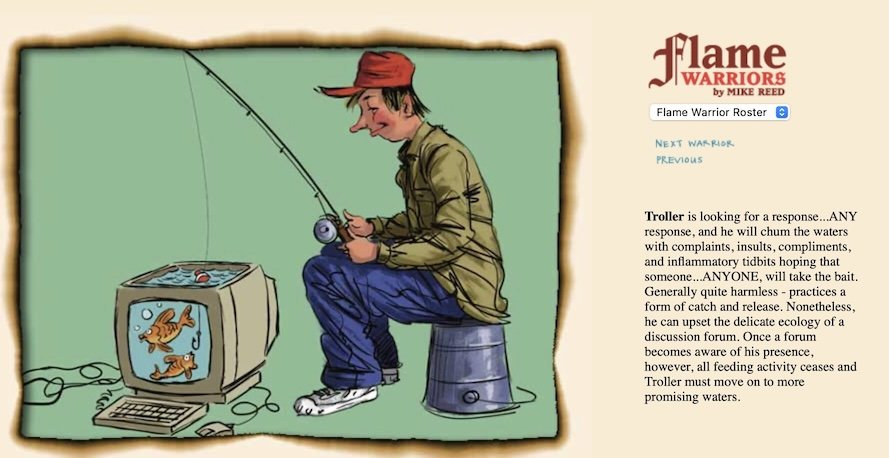
https://www.flamewarriorsguide.com/warriorshtm/troller.htm
-
No - "The Princess Bride" (1987) d. by Rob Reiner https://en.wikipedia.org/wiki/The_Princess_Bride_(film)
-
Nah - He’d be more interested in feeling up Princess Buttercup :-P
-
Speaking at a rally in Florida on Friday, President Trump told his audience: The remarks came as the Strait of Hormuz remained a central pressure point in the current tit-for-tat maritime standoff. Multiple outlets described how the U.S. seized Iranian vessels after they left Iranian ports, including “sanctioned cargo ships and Iranian tankers in Asian waters,” while Iran blocked nearly all ships passing through the strait apart from its own since the start of the war. The Indian NDTV news service reported that Iran reacted strongly on Tuesday, branding the move “armed robbery on the high seas” and accusing Washington of breaching international law, quoting Foreign Ministry spokesperson Esmaeil Baghaei as saying the operation effectively endorsed piracy, calling it “the outright legalisation of piracy and armed robbery on the high seas,” “Welcome to the return of the pirates — only now, they operate with government-issued warrants, sail under official flags, and call their plunder “law enforcement.”” footnote - think we used to call them ‘privateers’ a couple of centuries ago.
-
According to a leaked recording published by the Financial Times on Tuesday, the UK ambassador to the US said : “I think there is probably one country that has a special relationship with the United States, and that is probably Israel” https://www.bbc.co.uk/news/articles/c1l25qd43nro The remark was made by the current UK ambassador Sir Christian Turner in a meeting with UK sixth-form students visiting the US, shortly before King Charles III arrived at the White House during his state visit to the US. The UK Foreign Office (FCDO) said the "private, informal comments" were "not any reflection" of the government's position. Another former British ambassador Lord Darroch said it was "hard to see anyone disagreeing with any of it" as it has been "the conversation in corridors across Westminster".
-
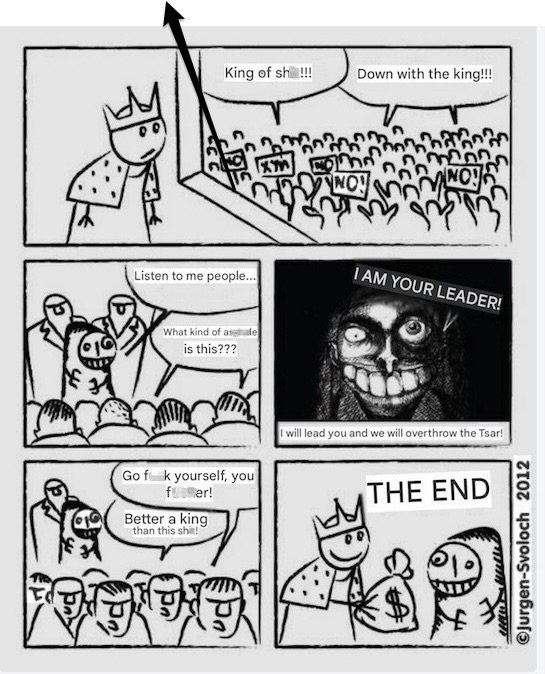
For anyone who wants to know what those Russian cartoon captions actually say, and quite why it was downvoted, an AI translation is attached below (obscenities redacted).
-
Should have gone to Specsavers ?
-
My paternal grandfather was the eighth son of a crofting family on Lewis - all mother-tongue Gaelic speakers and all ‘Wee Frees’. I heard quite a few stories about these hyper-devout Calvinists, but didn’t experience the culture first hand until I visited the Hebridean islands for the first time in the late 90s. I was at the Hebridean Folk Festival in Stornoway in 1999, and it was absolutely true, you couldn’t get off the island until the ferries started running again on the Monday. They also used to chain up the childrens' swings in the playground on a Sabbath, to make sure that absolutely no one had any fun on the Lords day.
-
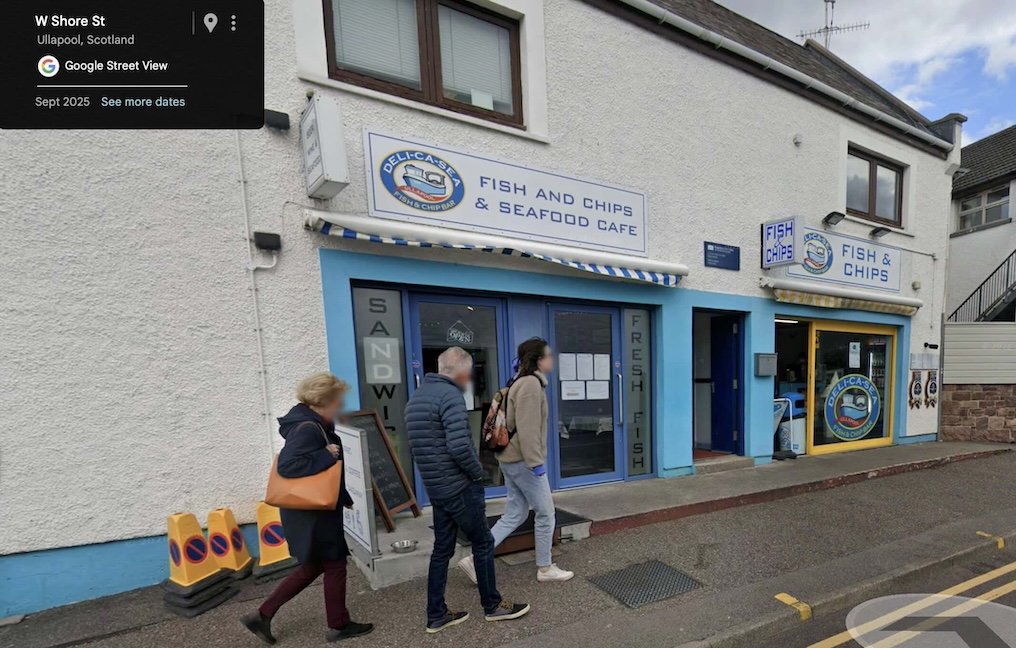
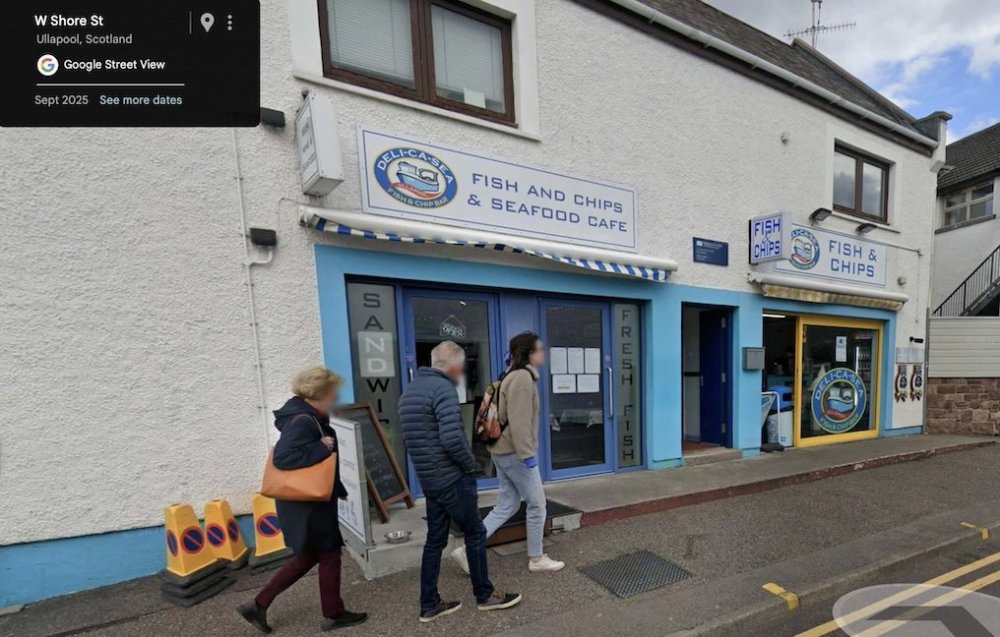
DELI-CA-SEA in the local dialect ;-)
-
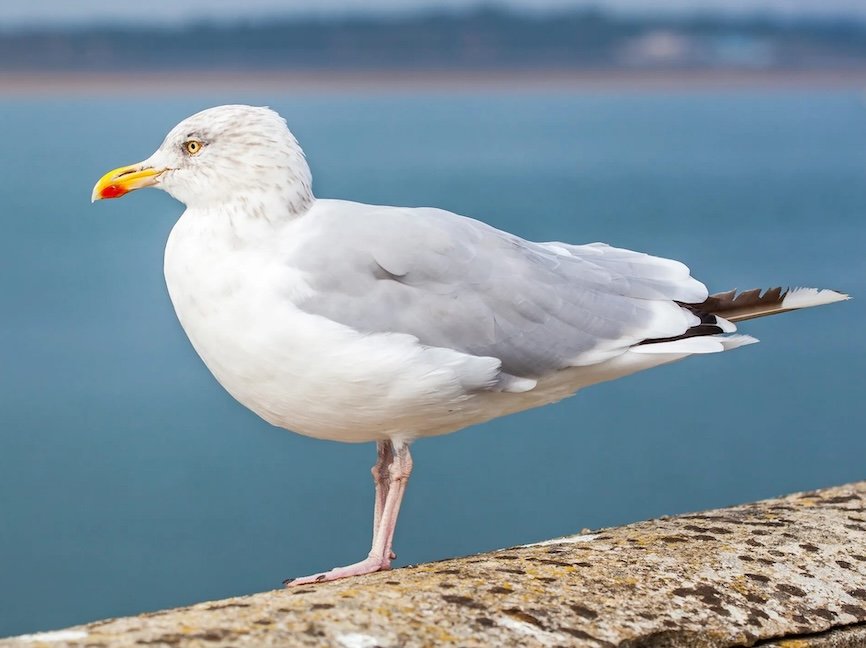
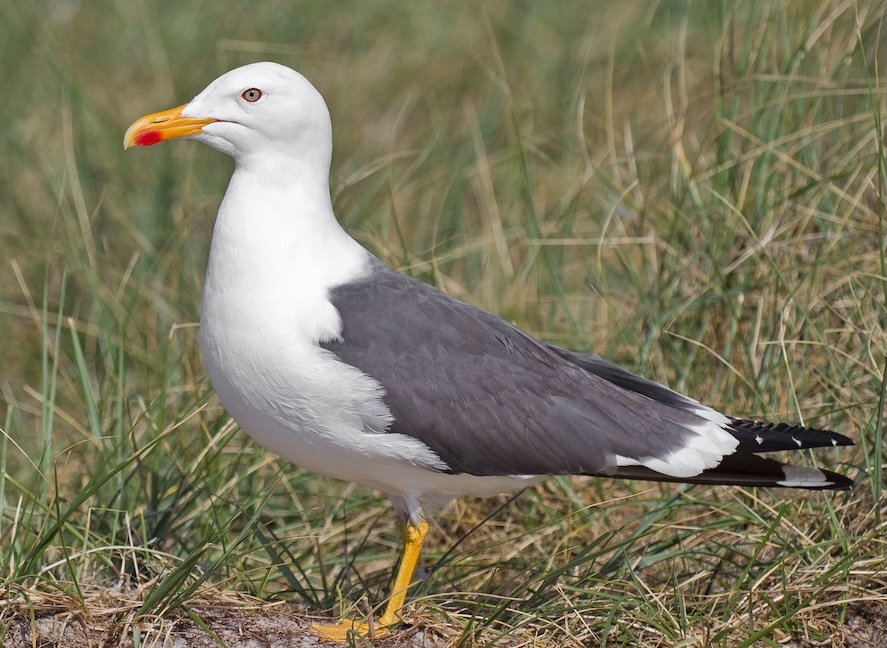
Not just the Herring Gulls (Larus Argentatus), - you also need to watch out for the Lesser Black Back (Larus Fuscus) and the Greater Black Back Gulls (Larus Marinus) - and never mind ‘Googly Eyes’, you’ll also need eyes in the back of your head to see them coming, as these birds have perfected a Stuka like dive-bomb attack from behind over your right shoulder. A few years ago my wife and I had just disembarked in Ullapool on the West Highland coast of Scotland after a multi-hour voyage from Stornoway on the Isle of Lewis. Feeling hungry we headed for the Fish & Chips delicatessen on the harbour front where they actually have prominent notices up warning customers about these predators. We walked out of the chippy and sat down on the steps near the ferry terminal to enjoy the scenic view up the sea loch. I raised my piece of battered cod ,and the next moment it was gone, as a Black Back whistled over my shoulder.
-
There is a story that back in the early days of WW2 when mathematicians, linguists, crossword solvers and academics of every type were being hurriedly recruited in great secrecy and sent off to Bletchley Park to become Enigma code-breakers under the leadership of Alan Turing - that one new recruit called Geoffrey Tandy turned out to be a marine biologist who specialised in the study of cyanobacteria, a family of which Prochlorococcus is a member. https://en.wikipedia.org/wiki/Geoffrey_Tandy Some Bletchley staff were were still uncertain why he had been recruited into the Enigma program until they rechecked his file card and found he was listed as an authority on ‘Cryptogams’ - (from Ancient Greek κρυπτός (kruptós) 'hidden' and γαμέω (gaméō) 'to marry') meaning "hidden reproduction”) - a more general scientific name for these photosynthetic organisms Fortunately he turned out to be quite good at solving cryptograms as well, and spent the rest of the war as a code-breaker. Other sources say that while Tandy did indeed work at Bletchley Park, he wasn’t actually recruited by mistake.
-
The US Navy Secretary John Phelan has been fired by Peter Hegseth. His departure will be “effective immediately” according to a social media post by Pentagon spokesman Sean Parnell on Wednesday. https://www.bbc.co.uk/news/articles/ce9ml02g5k7o Phelan is the latest high-ranking military leader to leave the administration in recent months. His departure comes amid the US-Israel war with Iran and the continued US blockade of the Strait of Hormuz; and his departure also comes just weeks after US Defence secretary Pete Hegseth asked Army Chief of Staff Randy George to step down from his post along with General David Hodne and Major General William Green. Since entering the Pentagon, Hegseth has fired more than a dozen senior military officers, including the chief of naval operations and the Air Force's vice chief of staff. No reason was given for Phelan’s abrupt dismissal, but he appears to have fallen foul of Pete Hegseth’s deputy defence secretary Stephen Feinberg over future shipbuilding plans, following President Trump’s announcement last December that the US would commission a new series of heavily armed Navy "battleships" named after himself .
-
Figures vary according to whether you specify scientists or engineers in the query, but online sources suggest that JPL in Pasadena California alone employs between 4,500 and 5,000 personnel. A somewhat smaller number work on fusion research projects, though quite a few of these are employed by private fusion companies rather than by the US government, with estimates of around 1,000 personnel in the USA in 2024, with a rough breakdown of 25% scientists and 48% engineers. In the public sector, key labs like Lawrence Livermore National Laboratory (NIF), Los Alamos National Laboratory (LANL), and others employ hundreds of physicists and engineers dedicated to inertial and magnetic confinement fusion. NASA employs some 18,000 people, with engineer as the largest job title. But they are also bolstered by tens of thousands of contractors from the private aerospace and defense sector with up to half a million working on defense, space projects and missile systems. So yes - An unexplained mortality of 10 scientists/engineers within the last three years is unlikely to be statistically significant.
-
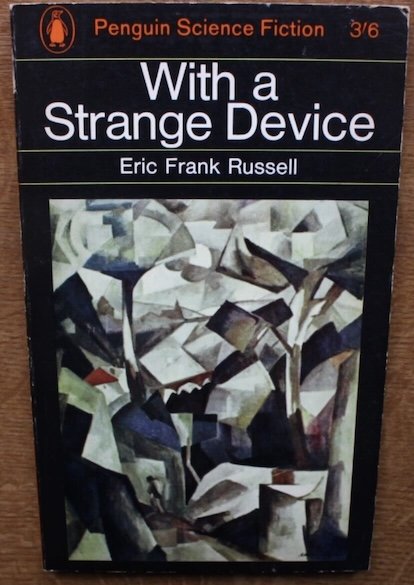
In 1964 a British SciFi author Eric Frank Russell (1905-1978) wrote a novel “With A Strange Device” (aka “The Mind Warpers”) which now seems to have a certain prescient relevance to concerns raised recently in the highest circles of US government about an alarming number of American scientists working on classified projects who have inexplicably gone missing, or who have died in unexplained circumstances. https://edition.cnn.com/2026/04/21/us/deaths-disappearances-scientists-investigation A separate investigation by the Republican House Oversight Committee into the same questions was announced on Monday. In Eric Frank Russell’s novel “With A Strange Device” inexplicable numbers of US scientists working in highly classified government weapons research are abandoning their jobs and careers for completely irrational reasons, then disappearing and refusing to explain why when traced by the authorities The story is told from the perspective of a young metallurgist called Richard Bransome working in missile research. https://variety-sf.blogspot.com/2007/09/eric-frank-russells-with-strange-device.html One day a conversation overheard by chance in a lunch-diner discloses that the body of a young woman he strangled years earlier has been found hidden under the roots of a fallen tree. Filled with horror, he prepares to abandon his career and family and go on the run. But there is one problem - as he belatedly discovers no such murder ever took place. It’s a completely false memory implanted and triggered by post hypnotic suggestion - the chance conversation overheard in the diner. As an FBI agent later explains to him - “There are two ways of weakening the enemy. You can acquire his brains for your own use or, if that proves impossible, you can deprive him of the use of them." Eric Frank Russell explored a similar theme - i.e. the inexplicable disappearances or deaths of leading scientific researchers in an earlier novel called “Sinister Barrier” (1939). He was said to have spent WW2 working for British military intelligence on wartime deception operations like ‘Operation Mincemeat’ (‘The Man Who Never Was’) https://en.wikipedia.org/wiki/The_Man_Who_Never_Was Russell later wrote another novel called “Wasp” (1957) about asymmetric terrorist warfare which was said to have become part of the CIA’s training manual on this subject.
-
There are number of leaked reports today that president Trump was effectively excluded from the situation room during a fraught military operation to rescue a downed airman inside Iran just over a week ago Top military advisers deliberately limited Trump's access to the live operation, choosing not to include him in minute‑by‑minute tactical monitoring. Instead, aides reportedly briefed the president only at what they considered 'meaningful moments', fearing that his 'erratic behaviour', which meant emotional reactions or impulsive directives, could disrupt a highly sensitive mission. https://www.ibtimes.co.uk/inside-situation-room-trump-exclusion-iran-rescue-1792499 That decision meant the Situation Room became a command post run primarily by national security and military leadership rather than the president himself. Officials reportedly coordinating or tracking the mission included US Vice President JD Vance, White House Chief of Staff Susie Wiles, Pentagon leaders, intelligence officials and National Security Council staff. While some monitored remotely, the Situation Room remained the operational hub where developments were assessed in real time. Both the WSJ and TDB suggest Trump was concerned that the two missing airmen could define his presidency. “If you look at what happened with Jimmy Carter…with the helicopters and the hostages, it cost them the election,” Trump said in March. “What a mess.”
-
It's a reference to a distinctive type of tail light found on a number of British automobiles of that period. It bears a resemblance to the three-pointed symbol of CND (Campaign for Nuclear Disarmament) aka the "Ban-the-Bomb" protest movement of the late 50s and early 60s in UK.

-
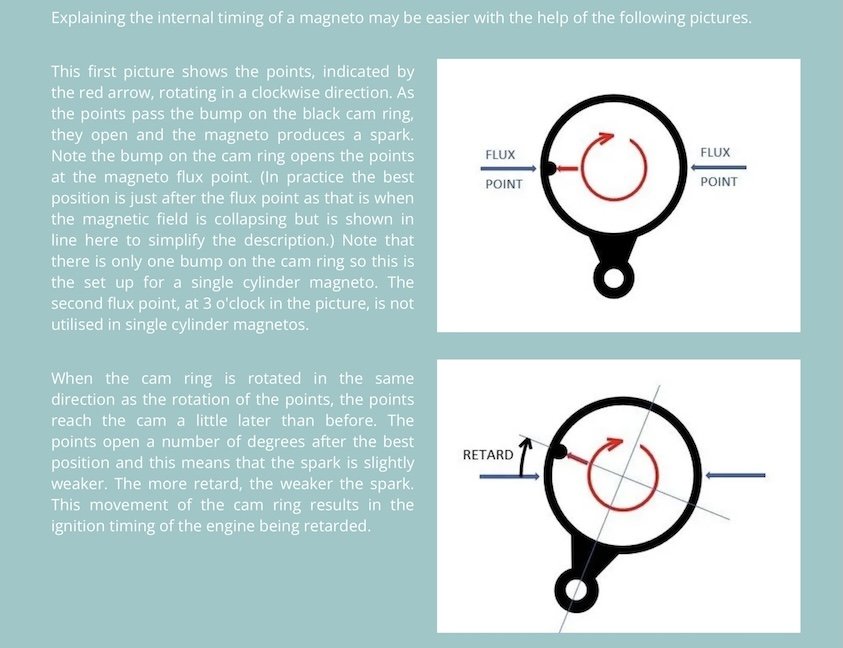
I think the explanation you are looking for can be found in this thread: https://www.honestjohn.co.uk/forum/post/index.htm?t=101567 The internal timing of a magneto ignition system on these early cars was controlled by a linkage that adjusted an internal cam ring with a bump which knocked the points open creating a spark. https://www.themagnetoguys.co.uk/magneto-internal-timing The strength of the spark depended on the spacing between the bump point and the flux points of the permanent magnets in the armature
-
Wrist and arm fractures caused by cranking over early automobile engines with the starting handle were once so common that doctors coined a new medical term for it - ‘Chauffeur’s Fracture’. https://forums.aaca.org/topic/120754-cranking-early-cars-broken-wrist-medical-term/ According to this account, inventor Charles F. Kettering (1876- 1958) formed Delco (Dayton Engineering Laboratory Company) and created the automatic starter motor after a close friend and fellow engineer called Byron Carter (founder of Cartercar) died in April 1908 from pneumonia after having his jaw broken by a starting handle while trying to hand crank a stalled car near Detroit.
-
Vacuum cleaners with cable drums that automatically rewind the mains lead back inside the housing are another good example.
-
TIL - It’s not a good idea to try repairing one of those spring-loaded retractable steel tape measures that carpenters use. I was helping a friend measure up some trees with a 5m tape that became over extended and detached from the retaining spring tab. No problem I thought - take it back home, open it up and fix. There are plenty of YouTube videos on this subject - some of the better ones are in Hindi and Arabic as it happens. But the one I decided to link here is a 28m long Australian video which captures the full magnitude of all the problems and stages of grief that can ensue with an 8m tape - (wear gauntlets and eye protection !) https://www.youtube.com/watch?v=fYfnuO8SIqA It’s actually a lot simpler and safer to just bin it.
-
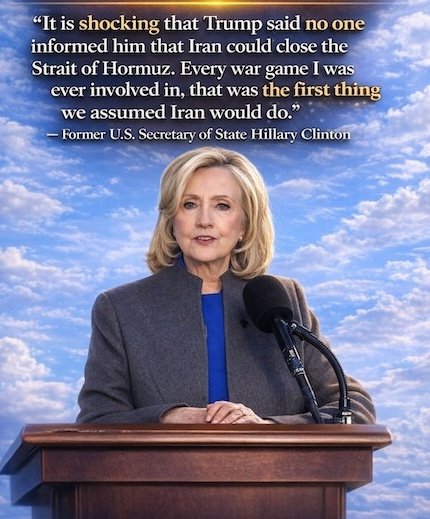
Presumably no one told him the Pope is a Catholic either ? https://ca.news.yahoo.com/morning-joe-hillary-clinton-calls-181002033.html
-
Modern Italian uses the word Magnete when referring to magnets in a scientific or engineering context.