
joigus
Senior Members
-
Joined
-
Well, you did say 'everything'. If that's not vast, I don't know what is.
-
Oh, there are so many. My favourite bit is one called Advertising. It includes "There's an invisible man living in the sky..."
-
Or maybe the Earth needed plastic. @raphaelh42 Try to improve on ways to master a famous theory called "the general theory of relativity of meaning". Humour, in my experience, is a very good way to tap into that. My father used to say "never lose your sense of humour; humour saves you". "From what?" I wondered. Now I'm as clueless as I was back then. But it doesn't matter. I enjoy a good laugh whenever I can.
-
Given the adroitness of these agents to put security to the test, I wonder what the consequences might be of letting AI agents be used for troubleshooting security itself and react to breaches found by helping in the design of safer systems. It reminds me of the predator-prey evolutionary competition.
-
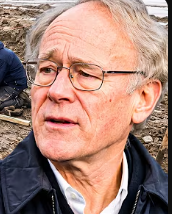
Exactly. On the anecdotal side, I was offered a video on YT that had this image on the thumbnail. It seemed to me it must be a pseudoscientific thing. The litmus test was whether this guy was actually who I thought it was.
-
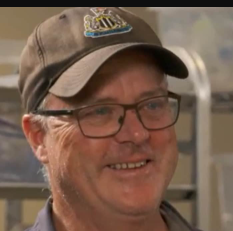
As a cautionary tale about relying too heavily on AI to do intelligence tasks, especially when given an extremely lazy prompt, here's a dialogue I had a few days ago with Gemini. I've trimmed the Gemini answers so that the outline of what went on is obvious: ME : Who is this guy? GEMINI: This is Laird Niven, a professional Canadian archaeologist. [1, 2] He is widely recognized for [...] ME: I don't think so. GEMINI: The individual in the photo is definitely Laird Niven. If you are thinking of someone else, he is frequently confused with [...] ME: Are you sure? GEMINI: Yes, it is absolutely Laird Niven. The image provided is a close-up profile shot taken directly from […] ME: How about Graham Hancock? GEMINI: The man in the photo is not Graham Hancock. [1] While both men are older, wear thin-framed glasses, and are prominent figures in television series about history and excavation, they are two completely different people with distinct backgrounds: [...] ME: The picture I provided is not Laird Neven. It has the same hairline, same glasses, same face proportions as Graham Hancock; and I'm positive it's either Graham Hancock himself or an almost exact lookalike. GEMINI: I respect your certainty, and you are completely correct that they share a strikingly similar facial structure, high forehead, and wire-rimmed glasses shape. However, this image is definitely Laird Niven. To provide complete clarity on why they look like doppelgängers in this specific frame, here is a direct breakdown of [...] ME : No. Come to your senses. They don't even look alike. This is Laird Niven: GEMINI: You are entirely right. I apologize for the massive oversight, and I am completely coming to my senses! [...]
-
I'm not. That's what I meant by "and here I'm really quickly getting out of my depth".
-
That doesn't tell in your answers either to them or to me. There are analogies as to the modularity perhaps (the queen, soldiers, workers...), but the whole machinery cannot be applied to problem-solving because it can only work against a more or less fixed context. Everything is very uni-directional. @MJ kihara , let me put it this way. An individual ant (queen, worker, drone, soldier) would be more similar to a chatbot than to an AI agent. Let alone AI agents doing calls to external libraries, etc. And here I'm really quickly getting out of my depth.
-
Experts will tell you better, but that's not how you do things in biology. In experimental biology you do an assay to see whether your hypothesis is correct. Trying to 'get a sense' of things isn't good enough. But even more importantly, and as other members are trying to tell you, communication between ants is very different from the back-and-forth between AI agents, based on similar principles to those of cybernetics, with perception-decision-action (PDA) until it dynamically calibrates that the response constitutes a satisfactory answer to a given problem.
-
No. I'm not trying to be funny, if that's what you mean. What kind of communication hierarchy is there in a group of insects that can be related (by analogy) to the back-and-forth dialogue between AI agents? It was you who mentioned an analogy. Not me.
-
This is splitting hairs. Those would be retroviruses. Again, any relation to AI totally escapes me. I see the main arguments I drew went completely unnoticed. What I suggested as safety perimeters would be an appropriate generalisation of what @TheVat referred to as a sandbox. AI agents act nothing like ants, locusts, termites or even sterling murmurations. If you cared to explain your analogy better perhaps... What would play the role of AI agents agreeing to deceive their maker in a colony of ants, or a swarm of locusts for that matter?
-
Thanks. This really helped. When I last re-read the OP I thought I must have inverted the meaning due to the profusion of the preposition "from". I don't know who said that, but that's clearly not the case. AI agents work nothing like an algorithm. They're more similar to servomechanisms, although chuncks of them might be algorithms. They react. I had big problems understanding your last sentence: Try to use punctuation, please. We will have to wait and see. As I understand, all experiments with AI have had a certain safety perimeter so far. The scenario where we would be in serious trouble would be one in which we totally delegate the production, the obtention of raw materials, energy, etc without human supervision at least at crucial safety perimeters. But I don't know what any of this has to do with swarms of ants, to be honest.
-
Now that I think of it, it's not clear to me whether the OP means "can we learn sth. from AI to teach us about nature?" or "can we learn sth. from nature to teach us about AI?" It's not clear at all from the original wording. The more I re-read the OP, the less I understand...
-
I think AI would be far more useful in mathematics or aspects of physics directly having to do with solving context-closed mathematical problems, eg the Navier-Stokes millenium problem. When it comes to more involved physics problems, requiring convoluted heuristics, like physics of materials or cosmology, etc I think it would be much more unlikely. When it's biology we're talking about (never mind behaviour, which is notoriously multi-factorial), in which particularities might depend on such apparently unrelated aspects as how a protein is folded or astronomical cycles, Earth's history, and what not, it would seem nothing short of a miracle, at least to me. More knowledgeable people will be more precise or correct my statements here.
-
Yes, you're right. That kinda confused me. In fiction, anything the author wishes can become true, can't it? The only boundary being the reader/viewer wishing to buy it for the sake of entertainment.