studiot
Senior Members
-
Joined
-
Last visited
Everything posted by studiot
-
I am going to say +1 as you have set out your opening post in intelligable fashion. I know its only one to counter the many negatives you have picked up but the post's quality suggests to me that you have learned a good deal since you previous ones. A straightforward answer to you question is that it rather depends upon what aspect of renewable energy you wish to concentrate on. As with so many matters it is a blend of several areas of the physical sciences and applied sciences. As a starting point I suggest you find out exactly what the word 'energy' means and describes. This starting point is in basic Physics, which describes this and explores the various forms of energy that we recognise and the processes of interconversion between them. Was this helpful?
-
You can get these coin cells in Alkaline, Lithium and Silver Oxide chemistry in increasing order of cost and life expectancy. The sliver oxide ones tend to be leak free and the alkaline ones the worst.
-
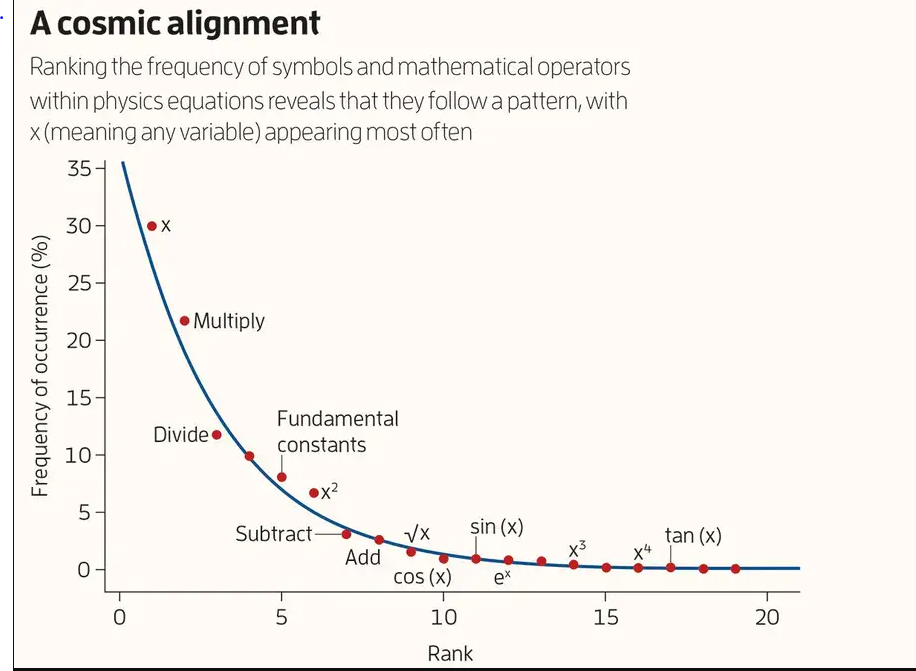
I think I do answer questions, but might not be giving the answer that is expected. Then why don't you answer the questions I wrote about the paper you introduced and i can't access (I tried again this morning) ? These surely are the important questions pertinant towhat we are meant to be discussing. What is even more disconcerting is the plot you posted. Have you given it any consideration at all ? Like for instance what was the source material it was drawn up from ? It gives the impression that no calculus - derivatives, integrals, gradients, differential or integral equtions and so on are used in Physics. The sort of impression one might get from polling junior high school precalculus texts. That is why I want the source article. For convenience I am posting the plot again here No calculus ? How's that pattern or is it bias looking now ?
-
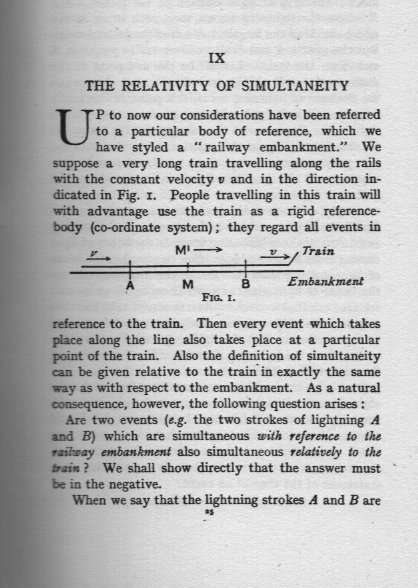
Two flashes, each leaving a mark both on the train and the platform, each pair of marks presumed to be spatially separated by negligible distance. Einstein is famous for his train analogies. But they didn't appear in his papers. Instead he wrote several books and you will find them in one or other of these. I do not know if I have seen all of them but here is an extract from one I see no reference to the flashes beeing separated by "negligable distance" So do you have a reference for this claim ?
-
OK so here goes. Consider the statement There are 500 cars travelling at 50 mph towards London. "50 mph towards London" is a vector It has two parts and the value of that vector must be able to indicate or report both of these parts in full. The first part is the magnitude of the vector - 50 mph. (magnitudes usually refer to numbers) The second part refers to a direction which in this case is towards London. The 500 cars might be called a traffic coefficient, which in this case is 500 but might be any (whole) number. If each car requires 3 gallons of gas to get to London we might use this information to calculate the total gallons of gas required. We can call 3 gallons the gas coefficient. Unlike the traffic coefficient it is not variable but constant (the same for every car or fixed) So total gallons = = number of cars times the number of gallons per car = traffic coefficient (variable) x gas coefficient (fixed) = 500 x 3 = 1500 gallons I hope this example helps with Value Magnitude Vector Coefficient Variable constant Every 'field' I will talk about is a Field as Physicists and Engineers use the word. A field in mathematics is an entirely different thing so I don't recommend using the term maths field.
-
You appear to be the only person who reads your writing as you do. At least one other agree with me that your posts are generally loaded or overlaid with something outside Science. Perhaps that is why you don't answer simple direct questions. Most of us see this as a sustained attack, not on any particular person, but on Science and Scientists in general. So do you think patterns can be any of Good , Bad or Indifferent or only some of these or what ? What is even more disconcerting is the plot you posted. Have you given it any consideration at all ? Like for instance what was the source material it was drawn up from ? It gives the impression that no calculus - derivatives, integrals, gradients, differential or integral equtions and so on are used in Physics. The sort of impression one might get from polling junior high school precalculus texts. That is why I want the source article. For convenience I am posting the plot again here No calculus ? How's that pattern or is it bias looking now ?
-
I do not like loaded questions. Do I believe there is bias in Science towards easier calculations. Yes Do I believe Science would benefit without that bias No I would expect more mistakes. The whole idea is as arcane as suggesting that Science still ought to be taught in Latin. Do I believe there is bias in Science against women ? Yes Do I think Science would be better off without that bias Yes. So learn how to ask proper questions without attacking other people.
-
Actually FYI it is perhaps better to say that there is no interaction at or subsequent to the measurement. The interaction already happened when whatever event occurred to entangle the particles.
-
Again +1 for an excellent point. Once again the question I asked last August
-
Of course it is a measurement in the ship frame which again it must be to be a proper length. Why is that controversial ? I didn't say anything of the sort. So I am glad you said this Because I am relying on a good quality pilot that can pass by really close (without giving a figure for now) Accepted. Think of Einstein's train examples. Two things. Stand on the platform and watch the approach. At distance the train will appear to be heading straight for you. You will only be able to see that it will pass you close by at it gets very near. The other point is that this example enabled Einstein to mark both the train and the platform (ie both the stationary and moving systems) with one lightening flash. Modern technology has progressed long way from the time when we used to huddle round a surveyor's telescope, trying to keep dry at night and hoping to catch the transit of a star. Today we can take a whole series of (perhaps digital) pictures before before and after the event at very high speed. Then we can have a computer find the best interpolation for the exact measurement we want. But you are right about the fiducial marks you require to take the measurement, This is one of the correct terms you need to research if you want to - stadia are a form of fiducial marks. They are used in microscopes, surveyors telescopes, photographic cameras, tacheometers, photogrammetric methods, medical science amongst others. So your special engineers can arrange something in space that the ship can pass between them and the Earth to both appear on the photographs. As to the photographs, I wouldn't worry about the time of flight it will be incredibly short, many orders of magnitude shorter than the time it takes for the photographic film or digital sensors to react.
-
So you used my agreement with you on the one hand to support your conclusion that this bias is somehow bad - a conclusion on the other hand I disagree with. That's what I call twisted logic. Both swansont and I have asked you a question Why does it matter ? Please answer it. I have also noted that your first link does not work I note that the second link does not take me to the referred material either. Please brush up your support links.
-
I agree with you. Scientists are biased towards the easy way. So what? Why shouldn't they be ? That is why I said it is not suprising. Here is a true concidence. I initially responded quickly because I had just quickly added something in another thread and was ready to finish when you posted, not because my response was hasty or dismissive. Is the time lapse to this post more to your liking ? I have not had the time to try your link and all I get is Bad Gateway Error. So I am stuck with the graph you extracted (probably the most important part of the article). I am a bit worried by the quality of the investigation for instance according to the graph X does not occur at all in 65% of physics formulae. Y does not occur in 100% of them. Cotangents do not occur. So take a typical maths formula that of resection. Two basic methods of solution are available, those involving sin and cos and those involving tangent and cotangent. Tables of the first 3 functions have long been readily available, but there are few cotangent tables on offer. Tienstra (the tan/cot method) is actually easier to work, but the sin/cos method has become ingrained because of the availability of tables in the past. With modern computers that should not matter but tradition dies hard. But what exactly is a 'randomly' generated scientific formula ? Surely there will be an automatic bias towards common and commonly available functions ? The plot surely bears this out with so few functions listed. Also how did the study treat composite function. For instance the trigonometric pythagoras theorem has sin2, cos2 and tan2
-
Did you catch the irony of my reply to your actual question ? In plain language it means that scientists, like acounts and others, prefer to calculate the easy way. So the curve is not suprising..
-
Is it a coincidence that on the same day someone else is posting here about the P v NP problem in computing ?
-
Interesting thank you +1.
-
Delta T = Final temperature - Initial temperature = 300 - 450 = -150 which is negative as I said. But you seem to have used it the other way round (450 - 300) when you substitute numbers into the formula.
-
Since this needs just a short reply and @Halc needs a much longer one I will deal with this first. However How would you manipulate that ruler since it is moving relative to you? Perhaps you could do it by drone if the relative movement was slow enough. But the spaceship in this example is moving at nearly 0.8c. Also you have to take into account the time for control signals to pass back and fore. What I mean here is that you or someone else has to straddle the spaceship (ie be comoving with it) and run the tape measure over it. That does not have to be done at the flyby. All you need is that someone does it and records the measurement as the proper length. As the ship flys by at some point you will actually be perpendicular to its direction of motion. That is the moment to make the measurement and with a photograph you can get both ends at once. That way you will be observing in the spaceship direction of motion and so be witnessing the shortening. Length or distance measurement is differenet from time measurement as a a clock will retain a permanent record of the time dilation after the eventful journey. This has been experimentally verified with aircraft and satellites on Earth. But the spaceship does not retain any evidence of its length contraction and measures 100m again when it returns to Earth and docks.
-
Good point +1 Somewhere in the beginning of this saga superconductivity was invoked. Yet Cooper Pairs were not mentioned. I wonder why not ?
-
Surely delta T is negative ?
-
Why in the world do I bother since you do not respond to what I write but to some made up fantasy you substitute for my words. I wrote How does that become a head on collision course ? I accept that this But I did say So yes you can measure the length of an object in a frame moving relative to yours, but the measurement will not be the proper length. As far as I can tell it is impossible to directly measure the proper length of something moving relative to yourself. If you think that is possible please describe how it might be done. So do you know what stadia are ? That sort of resolution is silly. I referred to passing at close distance. I have spent the last 53 years since leaving university measuring distance with stadia in telescopes. Distance or length measuring marks on the reticule of optical equipment started to come in around 200 years ago. I will elaborate for a more polite and understanding response.
-
Actually not a bad thought at all. I don't know enough cosmology to know where one might go looking for dark matter it may just be too far away. There was a Ray Bradbury Book entiltled The Golden Apples of the Sun Which had a similar idea but to gather solar material to start a fusion reactor. This was known to be really not practicable even then.
-
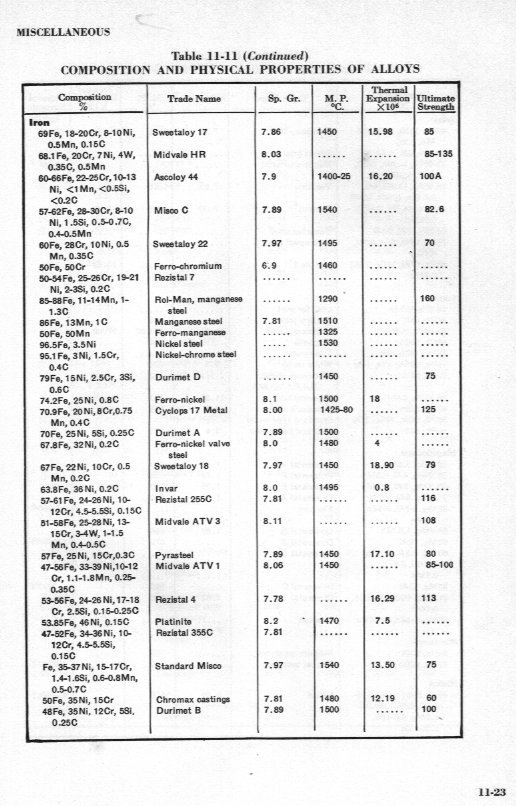
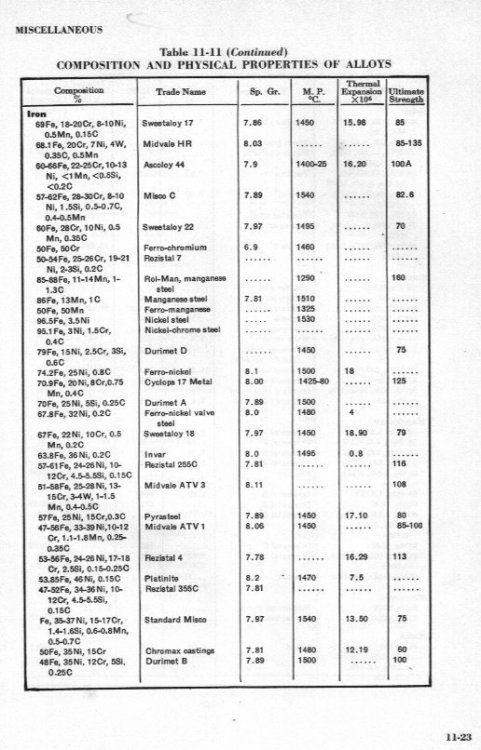
Thanks for that clearer picture. +1 A really disappointing non scientific response. Density and specific gravity are interconvertible and in the correct circumstances numerically equal. Of course temperature also plays a part but we are then talking of several decimal places and you have yet to mention the effect of sample temperature on your measurements. Since you could not find all my alloys, my mid 1970s copy of Lange gives the following information, including wt % I no longer have access to up to date handbooks to compare with. Finally this is the fourth and last time I ask my most important question, which has been steadfastly ignored.
-
The operative word being compute, not measure. You have just told me that the proper length of a ship is 100m. Since this is only defined in the that ships's own inertial frame, where we are agreed it appears at rest, and will be different in any other frame and measured as such by an observer in that frame. For instance Say I have a super duper camera that is equipped with length measuring stadia. From my observatory on a planet, where I am stationary, I monitor the ship's approach and at the instant its centre passes my telescope, I take a photographic mesasurement of the length of the ship. I observe 60 m So in my frame the length of the ship is 60 m. So yes if I am also measuring the ships velocity, in my frame, I will be able to compute that it has a length of 100m in its own frame. So yes I can compute the proper length, but I cannot measure it in my frame. I mentioned a while back that confusion over the difference between length and distance is the reason why the term 'proper' is depracated by some authorities and why Wikipedia says Incidentally in this world of hurry up and short cuts far too many make the mistake of saying The velocity c is invariant. It is most decidedly not.
-
Don't worry, this is really good as these little things (like the brackets) are reallyhelping to gauge how to present my material. Note I said that fig 2 is an example of a function that is given by a mathematical expression or formula, unlike fig 1 which is a function given by a table of corresponding values. This was the important part. I slipped in the brackets in the text to find out what would happen if you saw them, The same with the square root symbol you obviously recognised. The whole V shaped plot is the function, not just any particular value. Remember you can pick any value on the X axis or the independant variable and find out what the value of the function is by reading it off on the Y axis. As with fig 1 the axes form a necessary part of the function. If you are interested the posh mathematical names are:- the X axis is the domain and the Y axis is the co-domain In this case the square root of x squared is of course x for positive x and -x for negative values of x. These two graphs are also meant to lead back to 5the things you can do with numbers expanded which is for next time. Fig 2 especially was only a very small part of the overall post. How did you get on with fields etc?
-
Fig 2 is just a function between numbers. The X axis is the independant variable and the Y axis records the value of the function which is The square root of x squared. I was going to do more but it is a purely numeric example of a function. So no days no temperatures all non physical. Since I used value as a general term that includes many things that have a value, but not necessarily a numeric one, I use magnitude as a purely numeric value. That allows the value of a vector to include both the value and the direction and for us to do different appropriate actions with each.