
studiot
Senior Members
-
Joined
-
Last visited
Everything posted by studiot
-
The most important piece of knowledge for someone with a PhD is the limit of their own knowledge. That this is so in economics was brought to poignant focus when the concensus of PhD folks brought about the crash of 2008 due to failure to understand the Black-Scholes equation and its assumptions and limitations.
-
Good article. +1 Not sure how much current the battery in a 'smart meter' supplies but they are supposed to last many years and only use short bursts of current. For interest here is a good dexcription of conventional thermal nuclear batteries, which also exploit the long life of the battery for example in spacecraft. https://uknnl.com/customer-solutions/space-exploration/how-a-space-battery-works/
-
Was there a mistake here ? donald-jump-fertilisation-president ?
-
Well I just don't get this vendetta against the SI system. Of the seven base units only one is a pure number that is completely unambiguous. The rest require a real physical standard to measure against, somewhere along the line. Of course alternative sets of base units and quantities can be used, for example in fluid and Continuum Mechanics more generally Force is sometimes used instead of Mass. Isotropy of light ? Do you fully appreciate the difference between invariance and constancy ? A quantity may be one or both or neither.
-
And you are avoiding much of what is said to you. Yes, when I worked with RPS and RLS systems (Tellurometer, Distomat and the like) it was common to measure atmouspheric pressure because it affected the transmission path, not the operation of the electronically equipment locally.
-
I'm not suprised but my finger hurts from all that needless rolling of the mouse button. Only to find at the end of it alleged scientific reasoning from a device that is designed only to pick the most probable (= most frequent) answer from what it has already been fed as calculated by many humans.
-
I looked through that reference and find myself ashamed that such a supposedly august organisation should produce such a shoddy piece of work. I'm sorry but you definitely cannot correctly draw the conclusion you have from that so called survey.
-
Always in all cases ?
-
The derivation of the Lorenz transformations is interesting and I wonder if you have been reading the older material from Voigt, Larmor, Poincare and Lorenz himself ?
-
Does It? I don't think so, nor do I think astronomical observations bear that out. If it is invariant, why do we need to do corrections for the relativistic shift of the spectral lines ? Invariant surely means the same in all frames, our observational one and that of some receeding galaxy.
-
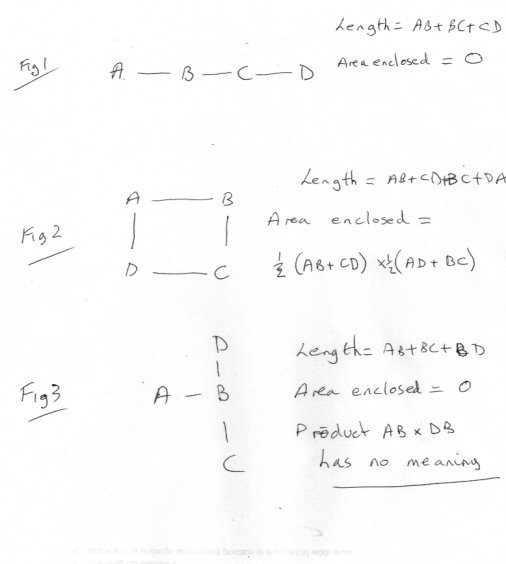
Hi Seth, It is difficult to estimate the as it depends heavily on your model. Most folks just quote a figure worked out by somebody else (perhaps with a reference). Anyway the most baseline figure is what you get with the simplest heat balance of what would happen if the Earht's atmousphere suddenly disappeared, but everything else remained the same and is done in the Cambridge book for the whole solar system. It is called the equilibrium temperature. Thermodynamics of the Earth and Planets A P Douce Cambridge 2011 Pages 630 ff However there are wrinkles in this. The Earth's axis is tilted at about 23.5 degrees and also the distance from the Sun varies, both during one year and from year to year. So the surface (even without the effect of the atmousphere) receives uneven insolation. And of course half of it is is shaded by night at any one time. You might think that the Moon was therefore a better candidate as it has no atmousphere to speak of. But, whilst it is true that the Moon rotates so that all its surface gets insolation, the shading effect of the Earth on the Moon is far greater than the shading effect of the Moon on the Earth owing to their size difference. So the Moon receives less insolation than your calculations would suggest. Coming back to the Earth's atmousphere, it affects the fugure's in several ways and more sophisticated models need to take these into acount. Both the atmousphere and ocean distribute energy from wrmer zones to colder ones, thus modifying the average temperature difference for Stefan energy flows. The atmousphere absorbs/ reflects some of insolation (Beer Lambert) so reducing the actual values. The atmousphere also reflects some surface emission back (greenhouse effect) again modifying the surface temperatures. A more sophisticated model , therefore, splits the surface into zones and applies appropriate insolation and emission values, spread over time then integrated over time and averaged, and then finally all collected together and again averaged.Not all, only those in the White House. 😉You need to look at the maths here https://en.wikipedia.org/wiki/D'Alembert_operator https://en.wikipedia.org/wiki/Four-gradientI realise I missed the reciprocal. Apologies. It should read c-2 = ε0μ0One of the most fundamental principles in Physics is that of the isotropy and homogeneity of space / spacetime. In order to theorise the observation that it does not matter where or when we look, the physics of light and physics in general appears much the same. The principle of relativity follows directly from this, as does the principle of equivalence. In other words there is no preferred origin for empty space or time. It is a requirement of every cubic metre of space and every second of time be indistinguishable from every other. This leads directly to the constancy of c since c2 = ε0μ0 If you want to consider non constant c then you must have non isotropic space /spacetime then epsilon and mu become tensors to reflect the non isotropy / homegeneity and c2 becomes a tensor product. In short you have either a non vacuum or an aether. Any maths you use must also reflect this.So you have done some Physics already. Great and good luck with the exam. 😀 A question for you to think about. What happens when you add water at 2oC to water at 3oC. Do you get water at 5oC ? If not why not ?Seconded +1This is very clearly the case. This is not at all what I would expect from someone who understands what they are claiming. I would expect replacement equations for those of Maxwell. Then I would expect to see some math deriving the conditions for wave motion from the equations and finally ending with a wave equation. What I would not expect to see is the assumption of that which was to be derived, namely assume c(x, t). I would also expect the claimant to understand that the definitions and derivations of Maxwell work on the basis of a vacuum with no gravity fields or anything else. c does not even appear until the last line of the standard derivation. The onus is entirely on the claimant to derive the claim. So show us your maths please. Edit Gosh I keep x posting with swansont. Multiplying by c does not rescale time at all. In conventional (SI) units it transforms the dimensions so that the product has the dimensions of length. This is in much the same way as mass (which can be variable) transforms the dimensions of acceleration to yield Force, in Newtonian theory. As I understand matters the choice of c and other natural constants is because they are constant in a universe where the dimensional quantities are variable according to circumstance and observer. This then avoids the issue of having to refer back to standards of mass, length and time etc.But in Natural units the speed of light is dimensionless and exactly 1. https://en.wikipedia.org/wiki/Natural_units So whatever units you measure distance and time or other constants in is irrelevant. c is still constant.If c varies first and foremost you need to specify what it varies with. Secondly you then need to rewrite our system of mathematics since constancy is a requirement of Maxwell's equations, and the wave equation in general. Can you offer this ?Good morning Angelo and welcome. Thank you for your comments +1 and go well in your studies. Feel free to ask questions here at SF, there is plenty of help availble for those who want to learn. But please start you own thread for them, one topic per thread. As regards the arithmetic of quantities with units. Quantities with units have two parts. The value or magnitude of that quantity and the unit of physical property it represents. Mathematically (arithmetically) you can manipulate magnitudes as much as you like. But physically the results of that manipulation must also make sense. In your studies you will find out that there are sometimesmore than one way to add or multiply them together. Further sometimes the addition makes sense, but not the multiplication and sometimes the other way round. And worse sometimes one can be positively misleading. Let me give you an example with the property of length. Let us consider four houses, A, B C, D connected together by electric cables. In fig1 the houses are connected in a straight line so the total length is simple addition. However multiplying two or more of the lengths doesn't lead to any useful calculation and indeed could be misleading since the area enclosed is not a loopor closed geometric figure. Fig 2 is a closed figure (rectangle) so adding the lengths again produces the total length. But this time the electrical loop encloses an area. This has physical implications for the magnetic field, Faraday's Laws etc. Fig3 is another configuration of the network where the total length is the sum of the individual spacings, but no area is enclosed. Furthermore no real meaning can be attached to the product of say the length AB x BC (which does not involve D at all). Life gets more complicated of you try to add 50 Hz to 10 Hz oscillations or even 50 Hz to 50 Hz. You do not get and oscilation at 60 Hz or 100 Hz in either case. But you can meaningfully multiply the two oscillations and calculate the product of the two sinusoids - (you get the sum and difference frequencies)
 Hello MigL. Well the original poster doesn't appear to want to discuss his own topic, perhaps because it was posted in a haphazard way last Christmas day. However the question (correctly) referred to "the concept of randomness " not to the word 'random' which is the etymological root in this case. Randomness is "the quality or state of being random" - Oxford E D. Now randomness is the noun derived from random, which in turn is both an adverb and an adjective. As such it is meaningless without a noun or verb to qualify. Random is derived from the Old French randir = to run via the Middle English adverb randon which referred particular to riding but also to other activities to rush about in a headlong, haphazard or aimless manner. In modern (including technical) English, when combined with suitable verbs or nouns, this sense is in someway preserved. But this does not mean that every aspect of the noun or verb suffers the state of randomness. A good example is 'random stone walling'. Here a masonry wall is built of unsorted shapes and sizes of stones (as they come) but the 'at random' , but the overall wall shape and size will be conventional and predictable. Random numbers are more difficult to get a handle on. I have pointed out the Kolmogorov definition in a previous thread, a few years ago. This states that a random number is simply the shortest possible way of writing that number so your 8 character statement is random by that definition as compared to your 34 character 'formula' for it. This would accord with the standard way of finding numbers from random number tables. Another closely allied term is 'arbitrary'. This term is often used in simple mathematical proofs to indicate that any of a possibly infinite range of values will satisfy the current deterministic calculation. Random, as already noted, can apply to small systems as well.Did you want an argument or a discussion ? 😀 Could not not stretch a filter fabric over the top of the sump, under the water ? As to the sump material. If it is bituminous I would avoid it, although in the past water tanks have been painted / lined internally with bituminous material, which is not in itself poisonous, in the past there is a risk of cancer from the bitumen.

Important Information
We have placed cookies on your device to help make this website better. You can adjust your cookie settings, otherwise we'll assume you're okay to continue.