studiot
Senior Members
-
Joined
-
Last visited
Everything posted by studiot
-
I think you have read some third hand twice removed journalist's ideas. If you observe something you can know its behaviour. If you don't observe it you can't. So how can you know if its behaviour is changed ? Yes you can observe similar objects but not the ones you did not observe. Neither can you know what it would have done if you did not observe it. Secondly what do you mean by 'quanta' and 'observe' and by 'observe quanta' ? Followers of Everett reckon that this phenomenon is explained by there being only one giant wavefunction that cover the whole universe and everything in it. It is also called 'the many worlds interpretation' by journalists. It has some merit.
-
This is just plain wrong It should be F(t) = mdv/dt + (ve-v)dm/dt In your notation. I will be away again for a few days but will be able to develop this fully and further after Wednesday of next week.
-
Chemically bonded. Exactly right again. +1 I was avoiding talking about these first off because the general concept of chemical bonding has to be understood before tackling the more complicated matters such as exchemist is talking about. (Giant structures). Chemical bonds are the answer to my question "what holds molecules together", but they also hold other groupings called chemical species together as well, including our own DNA. To start with we divide chemical bonding into Primary bonds which are generally strong or very strong and conform to a few simple rules. and Secondary bonds which are mostly less strong and have a much more flexible rulebook. I am going to be away again for a few days so ask you further questions now or we can continue to develop this after Wednesday of next week.
-
Yes we normally think of solutions as dissolving something like salt or sugar in water or another liquid like alcohol or benzene. Salt is actually a compound sodium chloride NaCl. If I just added pure sodium to water the reaction is so violent it could catch fire. this is a good video; sorry I don't know how to skip the ad at the beginning. Have you had any thoughts as to why the elements in a molecule stay together ? In other words what holds the molecule together ?
-
Absolutely spot on. +1 Without getting too technical, here is a little bit extra. Both Compounds and Molecules have a fixed formula which means that the elements always have the same numbers attached. So ethane - C2H6 - is a different compound from propane - C3H8 , although both have the same proportions between the carbon and the hydrogen - Cn H2n+2 The next step up is called a mixture or a solution, where two or more compounds can appear in basically any proportion.
-
It seems to me that the current discussion is going round and round in circles, probably due to not fully appreciating the underlying Physics and Maths. There are several rocket equations, depending upon the circumstances, both concerning the rocket, its surroundings and what you want to know about it. It is not a good idea to mix up these circumstances. There are also several possible routes to solving the problem. Mathematically any equation that can be presented (and solved) as a differential equation can also be presented and solved as an integral equation. Some treatments do it this way and use what is known as an impulse. It would be very helpful if you could describe your interest further so that we can determine the appropriate response. Are you primarily in the Physics or the Applied Maths ? If we go right back to basics, the rocket problem is a sub class of the dynamics of variable mass systems, both for loosing mass (as in the rocket) or gaining mass (as in the raindrop) or even a bit of both. A general equation can be derived for all these circumstances, and appropriate values put in for each sub class. The systems described are described under Galilean/Newtonian relativity, not Einstinian relativity. As such the common variable linking the parts of the problem together is time. Differentiation is performed with respect to time. (use t) The problem is set up considering the chages to the variables during a period from t to (t+δt) and the solution found by multiplying out the algebra, discarding the product of small quantities as negilgible and finally taking the limit as δt tends to zero.
-
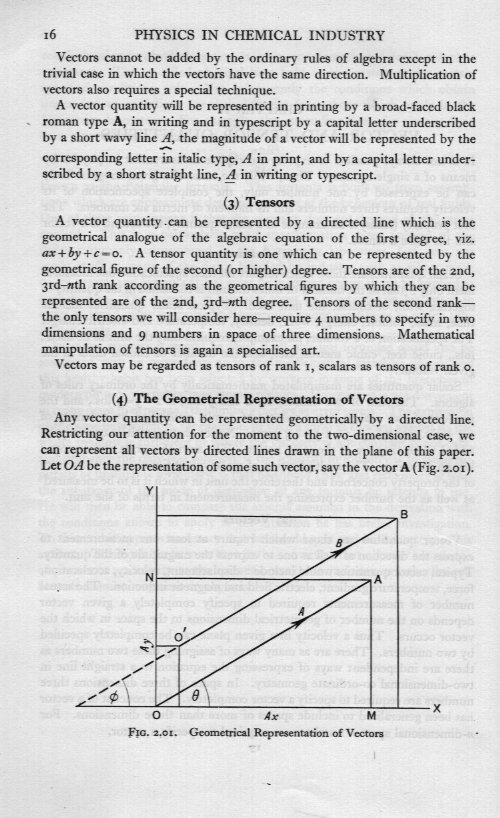
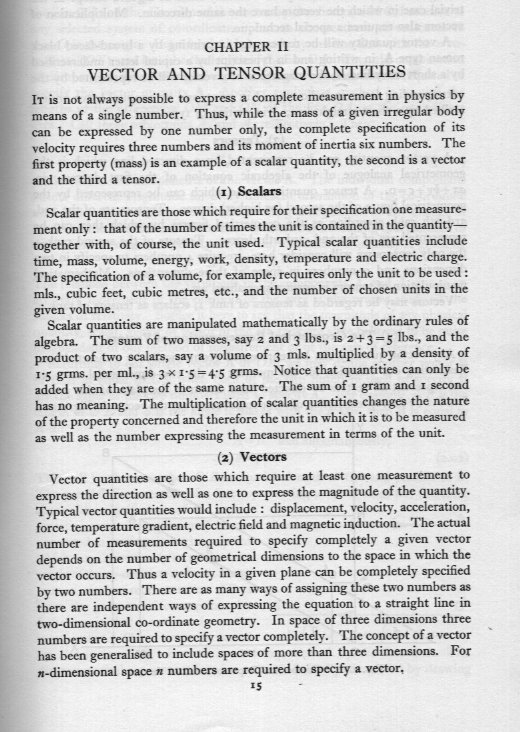
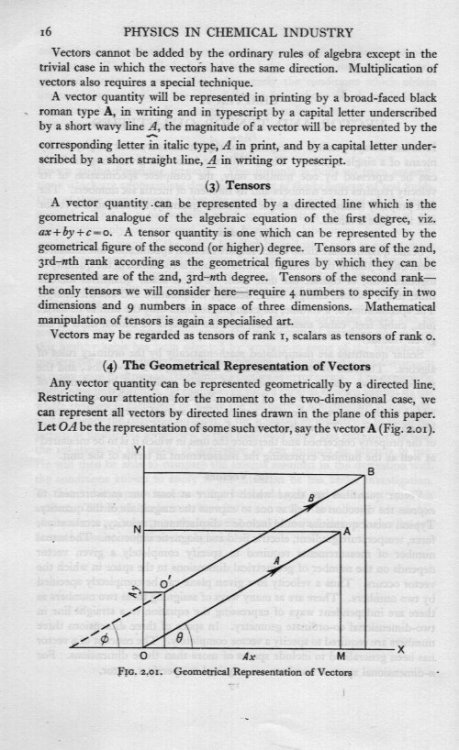
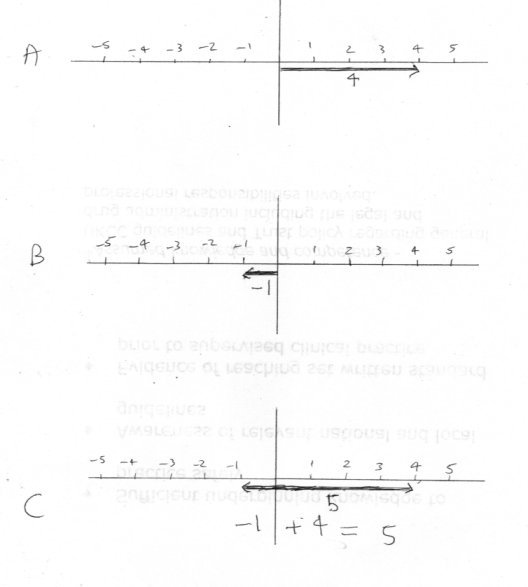
Since you and Mordred are ploughing on with the advanced stuff here are some simple notes about scalars vectors and tensors. Again I sugest yoy print the attachment out and keep it for future reference. Sorry it's all words this time but the best introduction I know without using the Einstein summation notation.All the essential features are there. First a couple of notes of my own. All vectors are linear. Mostly when a physicist says vector he means a 'directed line segment' or a 'signed line segment.' note in maths a line is a straight line that goes on to infinity or forever in both directions. That is it has no ends. A 'straight line with ends ' is called a line segment. A 'curved line' is called a curve and a piece of that curved is called a curved segment or a segment of the curve. In my previous sketch about -1 + 4 = 5 I have shown three line segments. One property of any segement, is that it has length. So if I add two segments that each have a length the result is a longer segment of length equal to the sum of both individual lengths. This form of addition is different from the rules for adding signed numbers. This is why you have to consider the meaning of the sign as well as the magnitude (length in this case). @Mordred Thie following is from Physics in the Chemical Industry by R C L Bosworth - Macmillan. A no nonsense guide as it says.
-
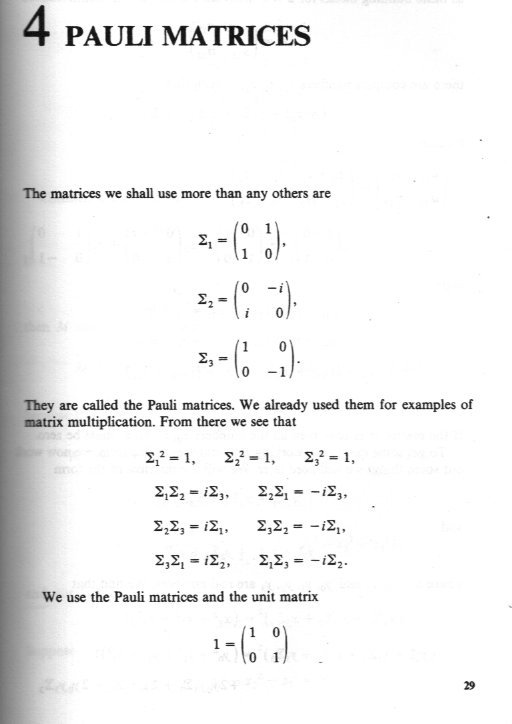
Since you are discussing vector based quantum mechanics with mordred you will find this page invaluable. You should print it out for reference. Note how simple they are.
-
Diagrams, Diagrams, Diagrams. Does this sketch help ?
-
Yes thank you for acknowledging that analysis is not just a simple theoretical exercise to be of any value in practice. Even Archimedes required one other piece of information (althpough that requirement was hidden). He was testing objects that were alledgedly 'pure' gold. So a visual inspection would immediately distinguish say a lump of lead. As regards to XRF, I was using it to study the reason for large scale cracking in motorway bridge sized lumps of concrete. Obviously I could not bring the apparatus to the bridges so sample cores were taken to the laboratory.
-
You raised an important question about the capabilities of the Density Decoding System (DDS) in comparison to Archimedes' method. Thank you for expanding further on using density. I am not a metallurgist, beyond university my work in chemical analysis have been mainly in materials more irregular than alloys tend to be. Have you done any work to determine the effect of sample size and shape? Clearly as the precision of the density measurement increases the effect on changes on lattice structure due to many effect from impurities, lattice defects, locked in stresses and so forth. At what precision of density and sample size would you be unable to distinguish something that might be found with X-ray flourescence spectroscopy ?
-
I feel the OP question was better laid out in the PMs I have been receiving. I am going to be away till later on Saturday so if I can't come up with anything tonight, any input from me will have to wait until later in the weekend.
-
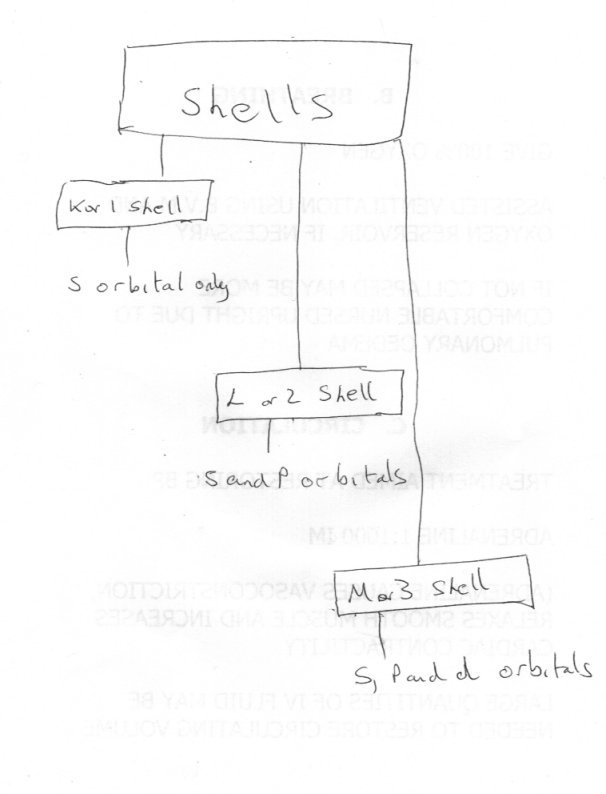
Might I make a small suggestion ? Both Mordred and I try to develop a train of thought (or chain of ideas) when we write something down. If you tried to draw this as a diagram perhaps it would help. For instance the names etc ofthe shells and subshells have been listed several times. If you went through the list and as you read each idea you wrote it down it might look something like this at the end. It doesn't matter if you just scribble it down, or if you post it or not, it is for you not us.
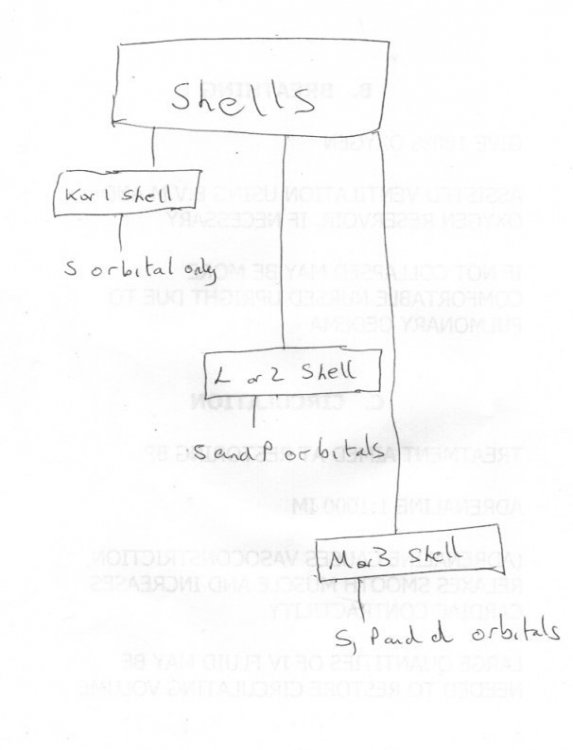
-
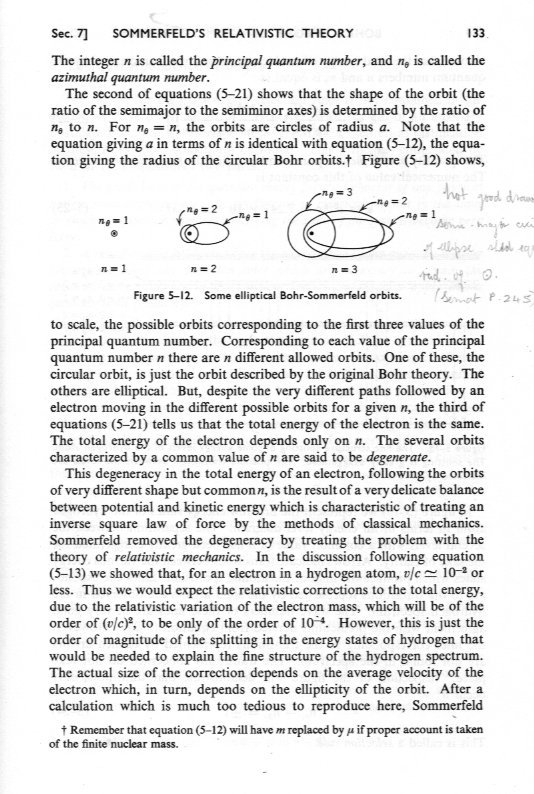
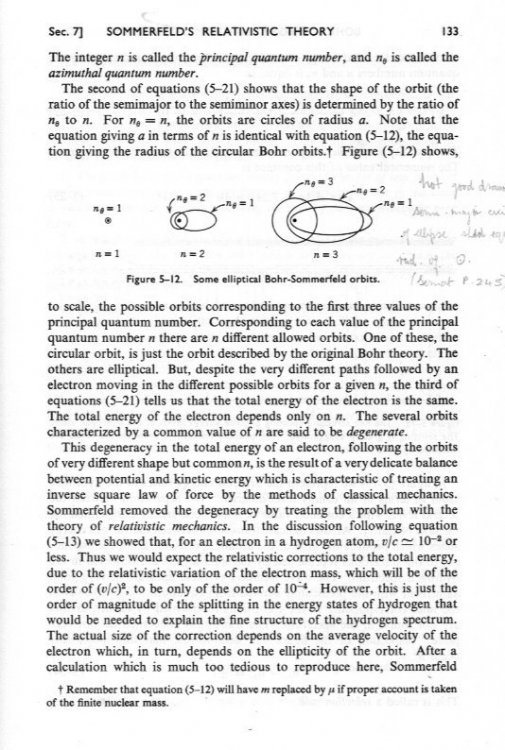
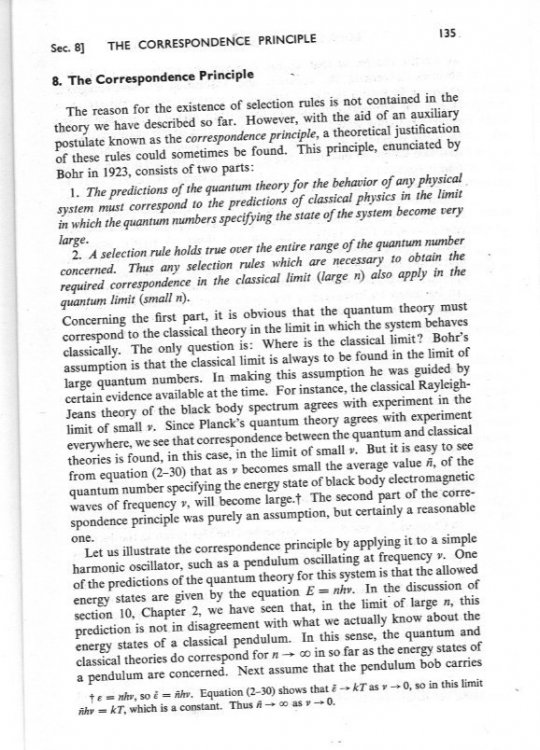
No there is no error in De Broglie's theory. But you are not wrong either. DB theory was just too simple. In fact Sommerfield used relativistic version to obtaina good match with the observed fine structure of hydrogen.
-
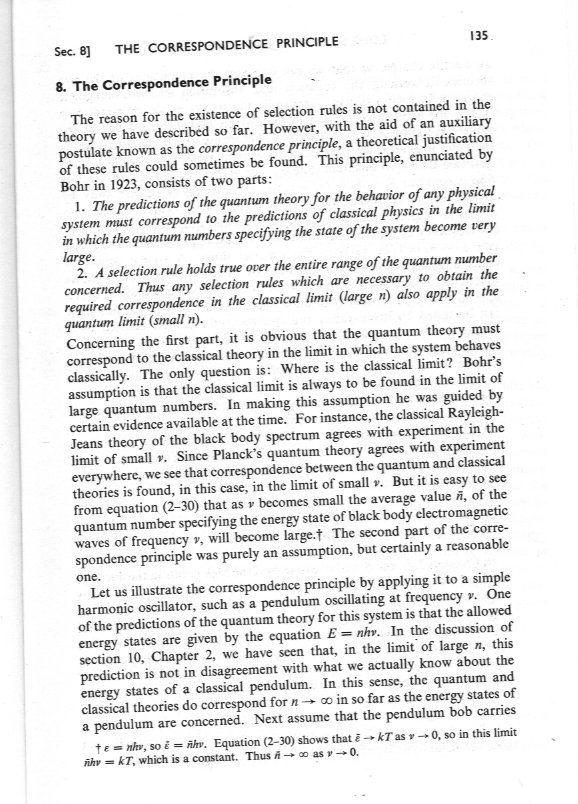
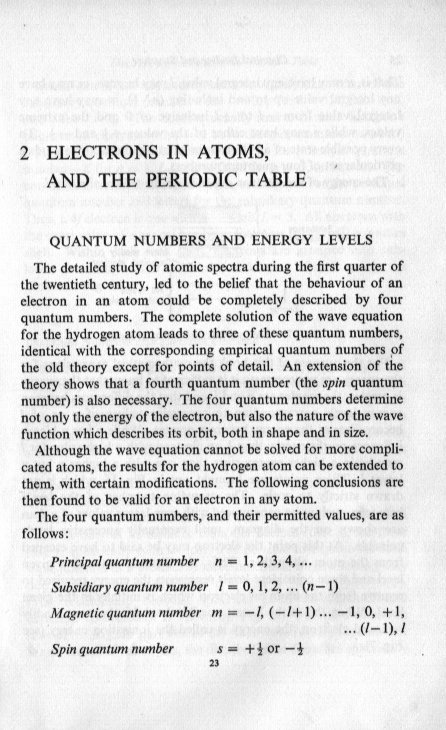
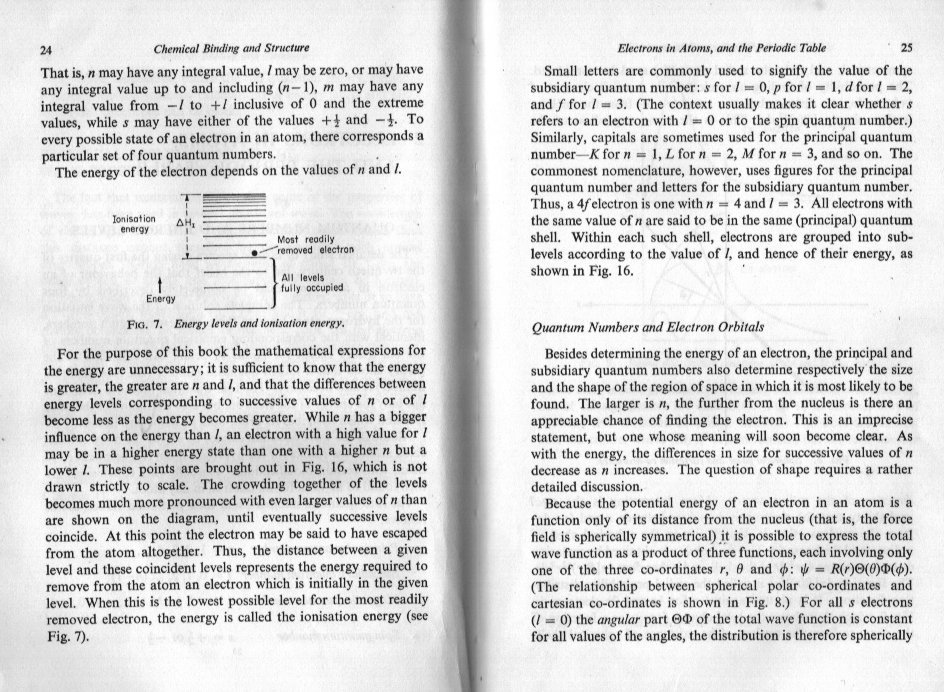
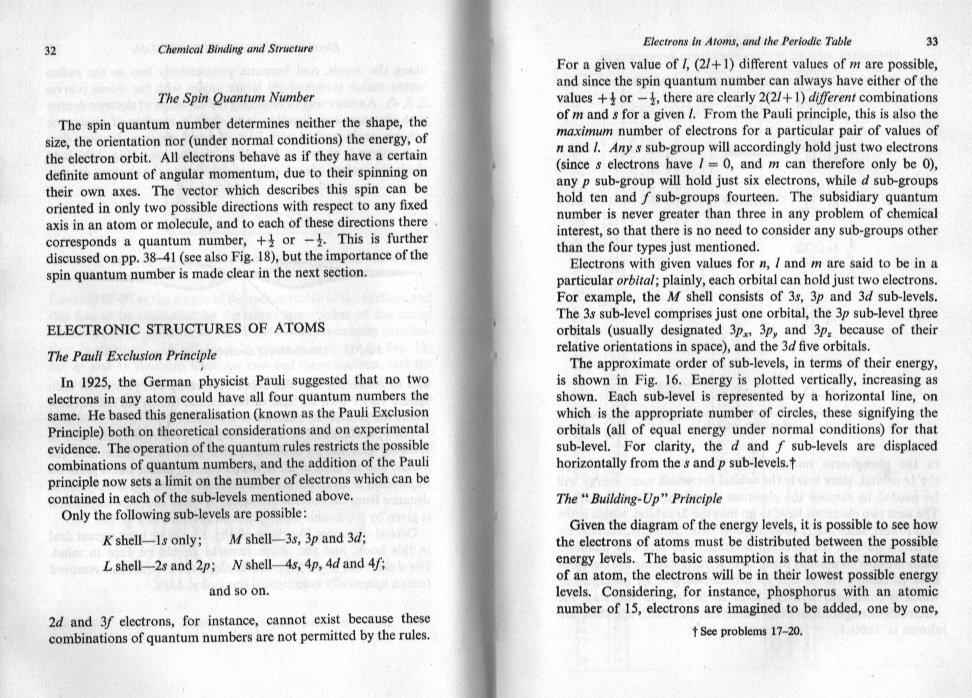
Like many things in science, shells and quantum theory was not discovered all at once. Mordred has already noted that the original information came in the late 19th / early 20th century when they discovered spectroscopic lines. This means that close examination of the light given off by heated elements appeared as several series of fine lines called spectral lines. The lines were closely related as to colour, which means wavelength or frequency of the light. In effect a frequency spectrum appeared rather like a modern barcode. An early worker of this was Barkla who named these as K L M N etc. Note Barkla worked with X rays not visible light and he originally named the spectral series A and B. Neils Bohr originally worked with only the A and B later renamed K and L in his theory. Further work produced the Schrodinger wave equation and its solutions employing 3 quantum numbers. A fourth quantum number (spin) was introduced in by Ulenbeck and Goudschmidt. The quantum numbers were labelled with small letters n , l , m and s (see attachment) Pauli introduced his exclusion principle that in one atom no two electrons can have the same set of quantum numbers Quantum numbers are simple integers or halves and there is a relationship between them which limits possible values. These possible values combined with the Pauli exclusion limit the total number of electrons in a shell. The K L M N naming fell out of fashion because the quantum numbers are actually used in calculations so the principal quantum number gives the shell number K shell corresponds to the principal quantum number, n being 1 L shell corresponds to the principal quantum number, n being 2 K shell corresponds to the principal quantum number, n being 3 etc Now having shell 1, shell 2, shell 3 etc The subshells were distinguished further by using lower case letters s subshell corresponds to the secondary quantum number, l being 0 p subshell corresponds to the secondary quantum number, l being 1 d subshell corresponds to the secondary quantum number being 2 Further refinements came with the change of name from orbits or shells to orbitals. Here are some more easily readable extracts from the book that first took me to university in 1968. Note carefully page 32 which lists possible sublevels as a result of the pauli principle.
-
There is a wealth of good useful information in your post, but I think you need to reconsider this bit. An ion is formed by the addition to or subtraction of one or more electrons from a neutral atom or another ion. This is more than just jumping from shell to shell this is a complete dissociation from or association into the atom or of the electrons. The moving elctron can be free or can be part of another atom or ion before the ionisation. Note since you can add to or subtract electrons from ions as well as atoms you can in fact start with a neutral atom and end with an ion or the other way round you can start with an ion and end with a neutral atom. Shell to shell transitions result on the absorption or emission of a photon of EM radiation.
-
This site draws better pictures than I do and answers a few more questions as well. https://byjus.com/chemistry/shapes-of-orbitals/
-
+1 for spotting that. You have just discovered 'modular numbers'. Also called 'clock numbers' https://en.wikipedia.org/wiki/Modular_arithmetic
-
It's good that you are puzzling it. That is a step towards working a bit out for yourself which you have now done a couple of times. I try to leave some easy bit like that but I never object to you asking like this if you need more. The first shell (no 1) has only s one 's' subshell; no p, d e or f The second shell (no 2) has one 's' subshell and actually 3 'p' subshells; no d e or f The third shell (no3) has one s subshell, 3 'p' subshells and 5 'd' subshells; no e or f If you look at the left hand page - fig 16 - this is not only an energy diagram of the relative energies of these subshells it also shows you how many there are in each main shell (count the circles). The text also describes the standard method on writing these., where it syas 1s22s2 2p6 etc; the superscript is the number of electrons in the subshell eg there are 6 electrons in the 3 number p subshells in each main shell. Sorry I don't have time for pictures now as to how these numbers arise, other than to say it is because of the shape of the subshells, perhaps next time.
-
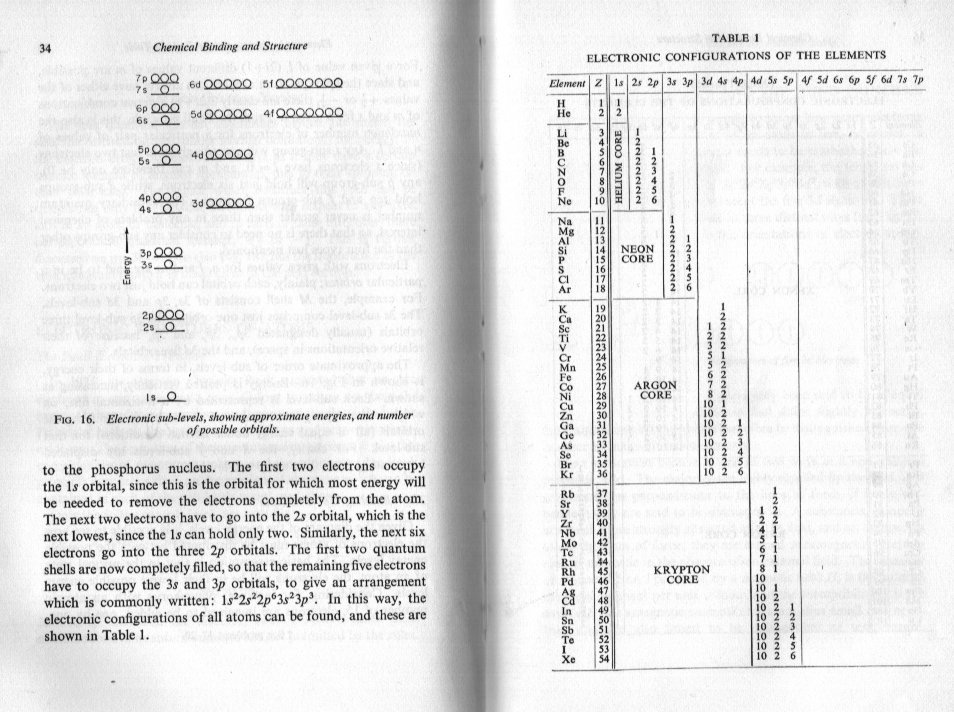
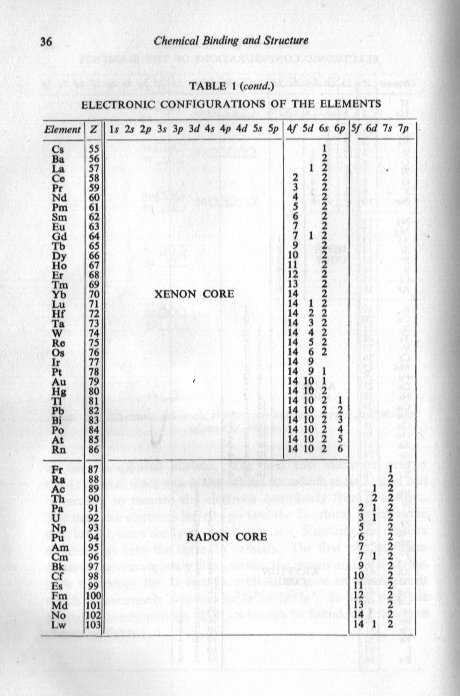
No, most definitely not. The nucleus is about protons (and neutrons) Ions, chemical reactions and bonding is about electrons. The nuclear structure does not change in the formation of ions or in other chemical reactions or or chemical bonding. The tables I posted are about the electron structure. The core is the electron structure of the inert gas. See the title of the table. Remember we mentioned these gases in a more simple way some posts back. So it works like this. Look at the top of the first table to the first 'block' There are just two elements in the 1s shell hydrogen and helium. This shell has only room for 2 electrons. We have already said that hydrogen has 1, and helium has 2 electrons. Helium is the first inert gas. The second block is Lithium (Li) to Neon (Ne) Neon is the second inert gas and note the core is labelled Helium core. That means that these 8 elements (yes including the inert neon) have a full 1 shell plus extra electrons in the 2 shell, but no electrons in 3 shell. Repeat Neon has a full 2 shell but not electrons in the 3 shell. The next block - sodium (Na) to Argon (Ar) works the same way populating the 3 shell (but not fully since there is now another subshell labelled 3d). This block is labelled to have a neon core Does this help ?
-
It is good to have another member of the staure of swansont making comments here. Just a few points to add. The electron has an electric charge of -1 and the proton has an electric charge of +1 Hydrogen has one electron and one proton; helium has two electrons and two protons. So the hydrogen ion (the atom with the electron removed) has a charge of +1 Helium has two electrons and two protons The the helium ion (alpha particle) with two electrons removed has an electric charge has a chrage of +2 As swansont noted the hydrogen ion (which is very common in chemistry and responsible for acid - alkali reactions) doesn't remain alone for very long before it is attached to something else. In water for instance it attaches to the nearest water molecule to form what is called the hydroxonium ion. This ion therefore has a +1 charge with a chemical symbol H3O+ As regards shells. There are two shell theories. There is an electron shell theory, which is what you have been discussing. And there is a nuclear (or proton) shell theory to explain how the nucleus fits together. As regards the electron shell theory, it is probably best to take a simpler approach as in the attachments. Chemical reactions occur between some of the electrons of the participating atoms and molecules. The atoms are regarded as trying to get to a configuration of a nearby noble or inert gas. This configuration is called the core configuration . The extra electrons are the one or ones that participate in chemical reactions and chemical bonding. But the wrinkle is that the 'shells' have a substructure, labelled s, p, d , e and f These are called orbitals. and the energy levels of these do not follow in a nice sequence because we now know that the shape of these subshells and indeed the shells themselves are not arranged in nice expanding spherical shells. Wiki has some nice pictures. There is some ovelap. Also I have been avoiding responding about Newton's cradle until you have finished wandering around the galaxy. It is rather complicated but an excellent introduction to several ideas we have yet to look at, including what is called the coefficient of restitution. Really the analysis depends upon this as to whether it is regarded a elastic or inelastic or something inbetween.
-
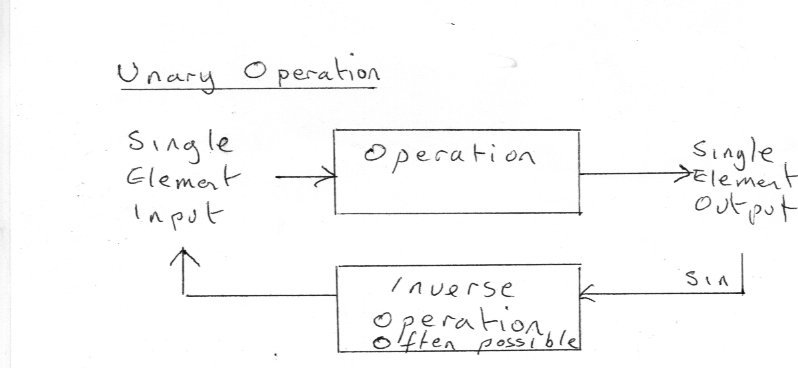
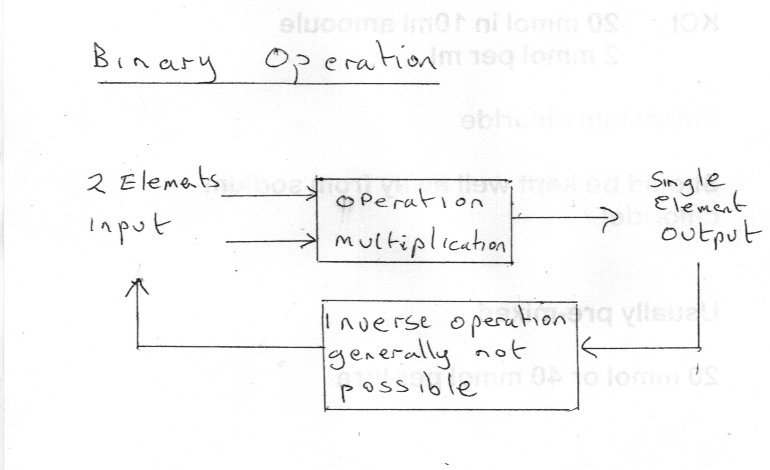
I think perhaps you are mixing up the three different meanings of the word inverse. The inverse is the result of the operation of inversion or the verb to invert. First definition:- to invert means to turn upside down. For example the inverse of [math]\frac{5}{{13}}[/math] is [math]\frac{{13}}{5}[/math] This definition has no meaning for simple numbers alone, you require a set of fractions or quotients to make it work. This definition has more importance when we use algebra rather than just number. For example the inverse of [math]\frac{{2a + b}}{{{b^2}}}[/math] is [math]\frac{{{b^2}}}{{2a + b}}[/math] Every fraction or quotient has an inverse in this sense. Second definition:- For any number or expression a the inverse is another number or expression a-1 from the same set such that a x a-1 = e Where e is the identity element of the set and a-1 is the multiplicative inverse of a. For example [math]\frac{13}{{5}}[/math] is the multiplicative inverse of [math]\frac{{13}}{5}[/math] and e = [math]\frac{{1}}{1}[/math] The inclusion of an identity element is important in defining a group, ring or other algebraic structure. But it does not guarantee the existence of a multiplicative inverse for all the elements. For example consider the set of 2 by 2 matrices. [math]\left[ {\begin{array}{*{20}{c}} 1 & 2 \\ 3 & 4 \\ \end{array}} \right][/math] Has a multiplicative inverse since [math]\left[ {\begin{array}{*{20}{c}} 1 & 2 \\ 3 & 4 \\ \end{array}} \right]\left[ {\begin{array}{*{20}{c}} { - 2} & 1 \\ {\frac{3}{2}} & { - \frac{1}{2}} \\ \end{array}} \right] = \left[ {\begin{array}{*{20}{c}} 1 & 0 \\ 0 & 1 \\ \end{array}} \right][/math] So the multiplicative inverse is the matrix [math]\left[ {\begin{array}{*{20}{c}} { - 2} & 1 \\ {\frac{3}{2}} & { - \frac{1}{2}} \\ \end{array}} \right][/math] and the identity element is the matrix [math]\left[ {\begin{array}{*{20}{c}} 1 & 0 \\ 0 & 1 \\ \end{array}} \right][/math] However not all sets have an identity element. And the identity element may not work with all members. The matrix [math]\left[ {\begin{array}{*{20}{c}} 1 & 2 \\ 3 & 6 \\ \end{array}} \right][/math] Has no multiplicative inverse. All the examples so far have been unary operations. That is operating on one single element of the set. We must now extend our definition to binary operations. Definition:- A binary operation takes two elements of a set and combines them to produce a single element of the set. Third definition :- The inverse of a binary operation means the reverse or undoing of the 'forward' operation. The example already given of 12 being the product of several different pairs of numbers that combine multiplicatively to yield the single element 12. for convenience 1 x 12 = 2 x 6 = 3 x 4 = 12 Now it can immediately be seen that this operation cannot be undone since there are three possible pairs that satisfy the forward operation so given the number 12 we cannot determine which pair was involved in the original operation. This lack of uniquness in the reverse direction means that 12 does not have a binary multiplicative inverse. This has importantance in prime number and factorisation theory. Genady's example only works backwards if we exclude 247 x 1 = 247. This is often done in elementary treatments.
-
Which comes back to my still ananswered point. What else is required to complete the analysis ? +1
-
If the government imposes an unfair Tea Tax ? 😀
-
'All' is too bold a statement, which if true would have precluded many discoveries in Physics. For instance the discovery of the nucleus by Rutherford. Or the discovery of the pattern of reversing magnetic stripes in the rocks at the bottom of the atlantic by Morley, Matthews and Vine. There have been many such breakthrough experiments and insights in scentific history.