
studiot
Senior Members
-
Joined
-
Last visited
Everything posted by studiot
-
Thank you for attempting to reply to my questions. I will even give you +1 for actually admitting something you don't know. That is the key to satisfactory discussion. To explain continuity, using my railway example, what I mean is that real world objects such as a train have a length (etc). I like the train because it can be regarded as one dimensional for our purposes. Continuity means that the train extends from the all the way front to the back without a break or gap. Similarly a person extends in time all the way from birth to death. Call that his timeline. If I removed a car from the train and placed it somewhere else there would be a gap in the train would there not ? Similarly if I moved a person as a child to some other time (which equals the common scifi definition of time travel) there would be a corresponding gap in the continuity of that persons timeline. Now having accepted that moving someone in time means moving their whole timeline, just as moving a train means in space means moving the whole length of the train along the track, not just part of it in each case, we can go on to look at question 2. As far as the train is concerned the track is one dimensional. So if the train moves 5 miles along the track we know this is OK so long as the track is clear. But what happens if the train moves the whole 500 miles from Edinburgh to London ? If it encounters another train on the same track there will be a smash. With tracks we avoid this by having other tracks for other trains. That is we can have more than a single one dimensional space. With time we do not have that luxury. There is only one time dimension (that we know of). So what would we expect to happen if we had a machine that could move the whole person 50 years along into the future or past ? A temporal smash ?
-
Have I done you a disservice in assuming that you can actually read ? How on earth is this an answer to my question about your scuba claim ? Please provide proper supporting evidence for this astounding claim. As to your text being an answer to my previous question How does that demonstrate how bronze aged man came to know about iron ?
-
How would bronze age man know about iron to make this famous statement "lets build iron tools" ? Please provide proper supporting evidence for this astounding claim.
-
Since you seem to introduce time machines into most, if not all, of your threads. Do you wish a rational discussion about time machines ? If so please answer the following questions What do you mean by a time machine? Something that moves a person from time A to time B ? But what do you mean by 'a person' and how does this play out with continuity ? There are three space dimensions so there is always room (empty space) somewhere to move around other objects in that space without trying to pass through them. But there is only one time dimension so there is no empty time to use to accomplish the same with time. Since everything is on the same track, it would be like trying to pass through the Edinburgh to London express coming the other way. How is this trick to be accomplished?
-
Gosh, how did you manage to understand any of that non scientific woo we seem to have wandered into ? +1 I am completely lost. Help!
-
No I don't think so, have you any evidence for this ? There is certainly much evidence to the contrary, since at all stages in history later stages could only accomplish or know certain things once a 'critical mass of knowledge and capability' was gained. So stone age Man could make metal tools, bronze age Man couldn't make iron tools, iron age Man couldn't make kevlar etc
-
That happens to everyone ffrom time to time. But now is the time to move on (or is it for all good men to come to the aid of the party?) You have said your introductory piece and outlined what is bothering you. The response from sensei shows that true scientists and mathemaicians don't automatically react adversely to a statement such as 1 + 1 = 2. Thay ask questions because the statement could mean many different things. Really it is up to the author (you in this case) to provide enough context to make sense of it. You have now done so by observing that two individual small drops my combine to form one larger drop. In the anihilitation of a positron by an electron 1 + 1 = 0. Mathematically I suggest you look at modular arithmetic Your issue doesn't show up well with 1 + 1 but say 3 + 5 (mod 7) = 1. https://en.wikipedia.org/wiki/Modular_arithmetic Note I don't know when or where you went to school, but they now teach that in UK schools. sensei was talking about computer uses of these concepts eg modulo arithmetic https://en.wikipedia.org/wiki/Modulo_operation There are also further developments in the way computer languages use these concepts. So now we have cleared that up have you any further science questions or points to discuss ?
-
Of course not. Jacob, I don't know if you are still at school, or what they teach in Science these days but try to objectively separate fact from fantasy. We are at the gateway to whole new realms and capabilities in science, similar to the early years of the 20th century, but in different areas from that time. Just think how quick and effective the biochemistry response has been to Covid in the last couple of year. Instead of watching that spongebob rubbish try view the first couple of series of " The Last Ship". An excellent SF adventure story based on biochem tech we are only now in the course of developing. I disagree and the OP asked about Science in general, not Physics in particular. As to your particular point, the first few decades of the 20th century were certainly busy with discoveries in the physical sciences, but this is normally the way. Historically there is a period where important new principles are discovered, followed by not stagnation but lots of very hard work testing, proving, refining and combining with the existing framework. This may appear stagnation to some but establishing the proper place in the order of things is just as important in Science as the glory projects and discoveries.
-
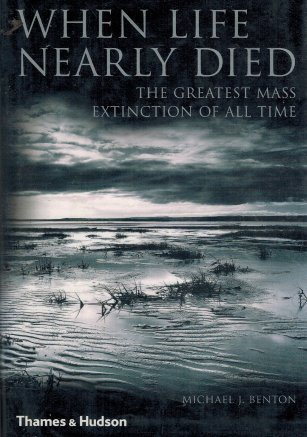
I would advise anyone wanting to look more deeply into the extinction/evolutionary aspects of this to read Benton's excellent book. Benton is professor of paleogeology at Bristol University, and heavily involved in the reasearch. So the book is written for the semi knowledgeable layman but is rock solid in content and references . It treats all 5 known major extinction events as well as some background material.
-
Yes indeed, strictly so. Also since the centrifugal force is imaginary, we really should instigate a more complicated analysis. However the effect still affects the direction of gravity since the rotation causing this apparent reduction in the magnitude of gravity is not in the plane of the gravitational attraction, so the effect depends upon latitude and the forces necessary to calculate the normal force must be added vectorially.
-
You have to be very careful with negating a compound proposition or statement. For example the negation of "love is blind" could be "something other than love is blind" eg "A worm is blind" . In this case not p is true.
-
I'm sorry but I honestly think that article really is word salad , perhaps linked to budget seeking.
-
I like this +1 Maybe so, but introducing emergent adds another ill defined concept. Which leads to others using a different definition of the word in response. We had a long but inconclusive discussion about the meaning of emergent before either of your times here.
-
Hello Jamss, and welcome. The equations need to be worked as ratios in the problem since you don't know the actual values of the masses. You obtain this from the ratio of two applications of the equation: heat input = mass times specific heat times temperature rise = constant power times time. This ratio can then be used in similar equations to find the latent heat ratio.
-
Genady is correct the density and distribution of the mass makes a difference. There is nothing wrong with your maths, but note you initial conditions. However there is more to this than meets the eye since gravity, whether considered as force or as an acceleration is a vector, not a scalar. The distribition and density of the mass affects the direction of gravity. So the geometric centre and the centr of gravity no longer conincide. It is interesting to note the the discovery of the massiveness of the Himalaya was discovered by Everest from deductions on observations variations of alignment of plumb bobs on the plains beneath. Yet another effect has not been mentioned and is oft forgot. The reason why gravity is greater at the poles than the equator , due to centrigugal effects of our spinning planet. Once again this also has an effect on direction.
-
Your patience is exemplary. +1
-
I agree with Genady and Ghideon. In fact if you read the text very carefully the text refers to skate A and Skater B. The walls are referred to in the plural and not distinguished. However you are correct in realising that the mass of the walls is irrelevant. So take heart this was a very poorly drafted question. I would be interested to learn where it came from please ?
-
Very interesting to get the up to date facts. +1 I haven't done any of this stuff since the late 1970s/early 1980s My textbook then was Laurila.
-
There are quite a few more popular threads with over 1000 responses. These tend to be less technical. To be precise the theory of algebraic varieties. Although strangely enough this has a great deal to do with geometry. The most interesting thing about the geometry of n dimensions is that it has few applications except in the realm of statistics where it is considered vital knowledge for higher level study. Indeed it is the aspects of Time that are non geometric that set it apart from the other variables in GR. What did you make of my recent comments about the connections between time and movement ?
-
Glad to be of assistance. Re-reading my last post I see my spellung wasn't perfect either ! If you need any references for example for the photogrammetry I can easily supply some.
-
Yes, but I didn't make the claim about 'flatness', you did. So it is up to you to support it properly. Note I have added some useful equations to my last post. It should also be noted that GR does not embody or use all aspects of the Nature of Time (the topic of this thread), although I think we are all agreed that a 'timelike' variable incorporating some of these are necessary for GR. So discussion should not be limited to GR
-
That is not mathematical. Curvature in 1 dimension had no parameters and does not exist. Curvature in 2 dimensions involves one parameter usually called kappa, and refers to lines. Curvature in 3 dimensions involves two parameters usually called kappa and tau and refers to surfaces. When we move to 4 dimensions this involves abother parameter, usually called sigma and involves blocks of 3D space. Mathematically I would expect to see a discussion of this., in terms of the Gaussian or Riemanian curvature matrices. The parameters correspond to directions and expanded they correspond to 4 scalar equations [math]\frac{{dT}}{{ds}} = \kappa N[/math] [math]\frac{{dT}}{{ds}} = - \kappa N + \tau B[/math] [math]\frac{{dB}}{{ds}} = - \tau N + \sigma D[/math] [math]\frac{{dD}}{{ds}} = - \sigma B[/math]
-
Again I must emphasise something Markus said. But it is even more complicated than this. To fully appreciate the depth of this statement - in relation to the nature of time - we need to bring together several disciplines. In doing so we need to avoid the trap of introducing extraneous concepts and matters from these several disciplines that are associated with material we need. I suggest the disciplines are at least and in no particular order:- language (semantics), general philosophy, physics, pure mathematics, applied mathematics. We need to consider carefully the meaning of at least the terms, again in no particular order:- movement, virtual, geometry, space and dimension, embedded. As a matter of interest an example of movement that occurs without time in physics is called a virtual displacement. Further examples occur in mathematics, particularly in geometry. You cannot fully consider congruence, similarity and transformations without some sort of movement-without-time. Finally a warning about mathematics. Nearly all courses and texts on 'the geometry of n dimensions' assume an underlying embedding in n+1 dimensions. Furthermore most such geometries are static. That is they are without movement. It is physics that introduces the movement in it's efforts to model the 'real' world around us. This is an absolutely huge subject. I would like to see the mathematics supporting this statement.
-
I have no idea what this is all about. And I still don't see a 'big problem'. Surely we need to answer more fundamental ones before we can arrive at a definition of consciousness ? For example is life necessary for consciousness ?, Which of course begs the question "What is life ?"
-
As far as I know 'follow' comes up automatically ie the box is ticked when I start a thread. Perhaps someone with more knowledge of the system might advise you on this.