studiot
Senior Members
-
Joined
-
Last visited
Everything posted by studiot
-
The last 100 years or so has seen a steady reduction in the mental agility required for ordinary everyday living. Folks no longer need to work out weights and measures, or calculate prices, totals or change to be given. Modern 'scales' do all this and more. You can just wave your phone or RFID card at the bus driver, sometimes you don't even get a ticket or receipt. Reading is no longer required. No it is conventional wisdom that as we progress through life and grow into old age, physical exercise is important towards retaining good physical health and agility. So the question arises does the same thing occur with mental agility ( I can include mental health if you like but please don't concentrate on that) In other words should we also use our brains or loose them ?
-
Yes you are right, the formula is R^2a/2 = a/2 in this case, so it does fit +1
-
How does that work out with Dima's equation2, given that the standard area for a sector is Ra ?
-
Firstly @DimaMazin Please number your equations for discussion in future. Calling them 1, 2 and 3 in the order in which they appear in the OP, This is not a valid question. Equation 1 may be simply derived from equation 3 and is an identity so valid for all values of a, where a is measured in radians. Since I can no longer use either of my maths computers here you will all have to put up with crappy english language. The standard expression for the area, A, of a segment of a circle of radius R is A = R^2/2 (a - sina) Since you say R = 1 We have (Pi - 2) / 8 = 1/2 (a - sina) Multiply through by 2 ( Pi - 2 ) / 4 = a - sina Which is your equation 1 Perhaps you are looking for an angle a where the area is the same for both sector and segment ?
-
I did consider the difference between draw and specify. Of course if we were Euclidian geometers, as implied in the op then we would have to construct a triangle. But this was not the question asked in the op. The op asked for the form of the general triangle, noting that it would not be achieved by drawing. This was the question I addressed. Not at all. Continuing the mathematical theme (this is after all a mathematical question) my use is a great example of what is mathematically termed a cyclic group of period 3.
-
But my counterpoint was that you are mistaken about this. I noted that there is no distance, no matter how small or how large that cannot (in principle) be traversed in either direction. There is no precedence theorem such as causality which only applies to time. That is therefore quite a different situation from time where, for any A < B there is only one way to get from time A to time B and there is no way to get from time B to time A. That is what causality says.
-
If someone set you this they are pulling your leg. The dx is shown under the square root sign so it is not a properly constituted integral. Please check
-
Which is why I am suggesting also addressing the (first) posts of those that slip through the net.
-
Why not ? I would actually expect enhanced functionality, not reduced as has happened. What I actually see now is a big Google "Privacy and Security" notice overlaying just where i am trying desperately to type.
-
So what ? speed is not time or distance, it is something else.
-
I don't understand this can you rephrase please ? I asked for reference to your source of this alleged data and also most importantly what it refers to. These days it costs millions to build a new school or even refurbish an old one. So are you just referring to the day to day running costs ? Does this include government initiatives to equip/re-equip a school with IT equipment, which happen periodically ? What about all the grant for sports facilities and so on ?
-
Actually this is not correct. It does correctly suggest that causality (which is a temporal relationship) does restrict time travel, but not space travel, regardless of other considerations. Space travel is not restricted by causality, there is always another factor in play which does this. In the case of your example, your restriction applies to the travel speed, not to the fact that the Earth-Moon distance is traversed. The traverse and murder could easily the accomplished by suitable travel speeds without violating causality.
-
Sadly I have to report that SF no longer works completely on my Dell desktop windows XP. I can login and read posts OK The system allows me to add rep points. But it does not allow me to enter text into the input editor either to add new posting to existing threads or pms or start new ones. I can enter titles into the title box though. Attempting to use the quote function simply returns me to the top of the page, without adding a quote into the editor. In order type type this in I have had to borrow a windows 10 laptop, not a long term proposition.
-
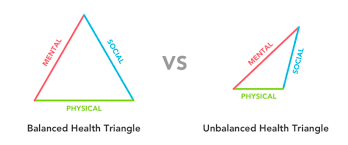
Welcome David Oliver and +1 for a good beginning answer to the op. You may have joined at an inopportune moment during updating and spam combat which has been going on over the last few days since you obviously haven't finished your post. I do most sincerely hope you haven't been frightened off by this disruption as SF is normally a much more convivial place for genuine folks. I also like your clear example of general v specific, +1 But I disagree with the proposition that it is impossible to specify a general triangle. One way to do this is to turn to algebraic geometry. A general triangle is a set of the form { (a,b), (c,d), (e,f) } where a,b,c,d,e and f are real numbers. Another way from another discipline would be to say A general triangle comprises three connected words as in the 'health triangle' { social, mental, physical }
-
-
First and simplest test. Is the gaussmeter reading the same if you remove the TV from the vicinity?
-
So ?
-
What qualifies you to speak 'for the UK' on the matter of education ? Apart from mixing up the words 'private' and 'public' in relation to education, where these wods have special meanings, there are 4 separate education systems extant in the UK, and you have singularly failed to take this into account. I studied trigonometry well before I was 16 and I can safely report that I have needed it pretty well every year of my working life. Please establish this as fact before you start preaching about economics. What exactly do you think this sum covers ?
-
I agree that causality vitally important. It is also a very slippery concept to define. Indeed +1 But more than this it emphasises that there is a fundamental difference between space and time. Nobody thinks that causality is violated because you can travel in space and kill your grandfather. Modern ideas about paradoxes have led to some interesting connections and the notion of the 'strange loop'. https://en.wikipedia.org/wiki/Strange_loop https://mathworld.wolfram.com/StrangeLoop.html
-
Hi Dave. New hardware ? I know it's like new tyres on your car. Only car mechanics notice the difference but absolutely essential nevertheless. But how about one of those James Bond Super Anti Spammer Lomg Range Lasers ? (JB-SAS-LRL)s. On another tack you initially mentioned a privacy/cookie change and I am now seeing a "Privacy and Cookie settings Mangaged by Google" Would you care to tell us anything useful about this ? As I see it there are two fronts of attack. 1.) Checkout the members as they first join. I wonder if several are made at a time from the same IP and if this could be used to suppress some ? 2.) My proposal to suppress actual posts via mod programmable keywords. Anyway thanks for keeping things going. +1
-
One of these ?
-
I'm not sure what you mean by 'storm drains', espcially in London or the Thames Valley more generally. A good deal of rainwater finds its way to the highway drainage network, which is the responsibility of the Highway Authority. I'm not sure what car washes you mean individual prive drives or commercial car washing stations which will have interceptors and commercial disposal arrangements. As regards cars the main problem with them is the danger of inflammable petroleum products finding its way into the existing system and causing fires and/or explosions.Petrol Interceptors started to be introduced in the mid 1980s when a BS on the subject was published. I remember designing new highway drainage on new schemes in the 1990s + to include these.
-
A point. Sewerage is the network or pipes etc, sewage is the effluent the flows through it. Further terms with particular meanings are drain and drainage. I think the British system is not as old as you think and definitely much more complicated than you portray. I also agree with Charon Y that even within countries, arrangements vary from place to place. What is your interest in the subject of wastewater engineering ?
-
For those that might be interested and have access, There is a new documentary program on BBC4 tonight at 22:00 hours local time, 21:00 GMT on "The sky at Night" series entitled "The Search for Alien Life"
-
It's been done and translated from German into English by non-AIs (humans).