
studiot
Senior Members
-
Joined
-
Last visited
Everything posted by studiot
-
So where exactly does she not have free will ? And what exactly is the deterministic process by which I can predict that she will fail ? But thanks for the answer.
-
I'm glad to hear you have your answer. Does that mean you do not wish to continue our unfinished conversation ?
-
It's a long time since I had any emails about posts (several upgrades and new softwares ago). I still get emails about personal messages though and that is welcome. But aren't notifications now just popups when you are actually logged on ?
-
Don't be sorry for your English. It is good enough, if we cooperate. 😀 Now please consider this I believe you are generally correct here. But We cannot prove it. Note how I put exactly the same idea more scientifically. Also you say this A helpful correction to your English. Many people incorrectly use the word paradox to mean something difficult or notunderstandable or even comically funny. In Science we always try to by as accurate as we can and that means using carefully defined words strictly. A paradox is a statement which appears to be self contradictory but actually is not. Is that what you meant ? This is not a paradox, although many people make it seem more mystical than it really is.
-
I still don't see anyone taking me up on this and explaining why this is not an example of free will.
-
https://plato.stanford.edu/entries/freewill/ You should take that up with Stanford University, not me. Please note the address, many, including Stanford University itself, use Plato as the shortform for the site. If you have not come across it I consider it a valuable resource and subscribe $10 for the priviledge of membership.
-
OK it was in the Gollanz Christmas SF annual circe mid 1960s, I can't remember the title or author though. The gist of the story was that a manned space probe was investgating solar systems and came across one where there was a planet that had been inhabited by a technologically advanced race. But the planet had been devasted in a great disaster, which appeared to be the result of a mighty war wiping out the race entirely. In digging over the ruins to find out more about the long dead race, the scientists came across a reel of clear material containing pictures in sequence. They worked out that the strip could be run through a viewer, combining the individual pictures revealing a moving image. When they did this they saw a creature rushing about chasing another smaller creature about the landscape and being constantly knocked over ( and then geting up again) by large hurtling objects. They wondered what sort of a world it was that life made life so frenetic and pondered if that was what caused the final conflagration. Then they came to the last picture, apparantly disconnected from the rest which had a strange design they could not decipher "Walt Disney Productions - The End" The author tried his best to make it seem as though the investigators were human until that last punchline.
-
Look, I am sorry you were recently unwell and very glad that you have recovered. But why the frequent sniping all of a sudden? Surely that is beneath you ? In answer to your question, you have completely misunderstood my post to another person. My use of 'Plato' did not refer to the ancient greek of that name, but to the Stanford Encyclopedia of Philosophy, which, in turn, was referred to by a link from another person.
-
I don't know until kba tells us what he means. Do you ?
-
Out of interest did you ever watch the film Sliding Doors ?
-
He said a lot about a lot of things so not until you tell us more specifically, no. Did you understand what I said about the difference between free and isolated and many forces ?
-
You obviously know more about flicker frequencies than I do. But yes, that is why I said a rosetta stone is needed. Something to tie distance along the sound track to time, such as a musical beat or in my case the engine rpm. The OP was wanting to analyse a sound track, but I can tell you more about the sf short story if you like. It has a very funny punchline, which you flicker frequency would be relevant to.
-
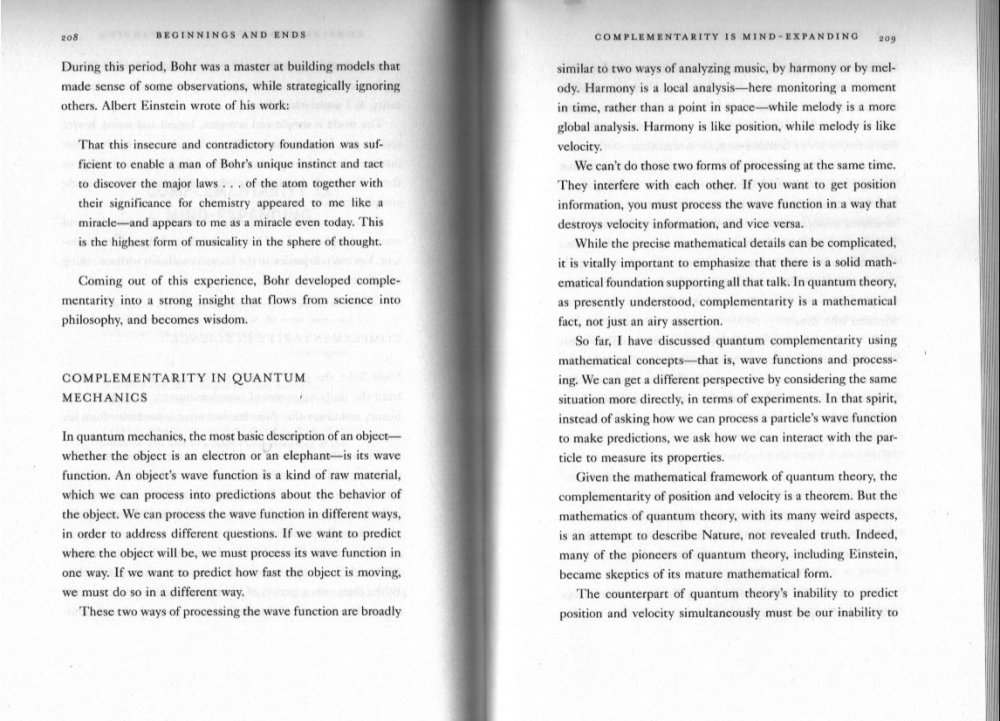
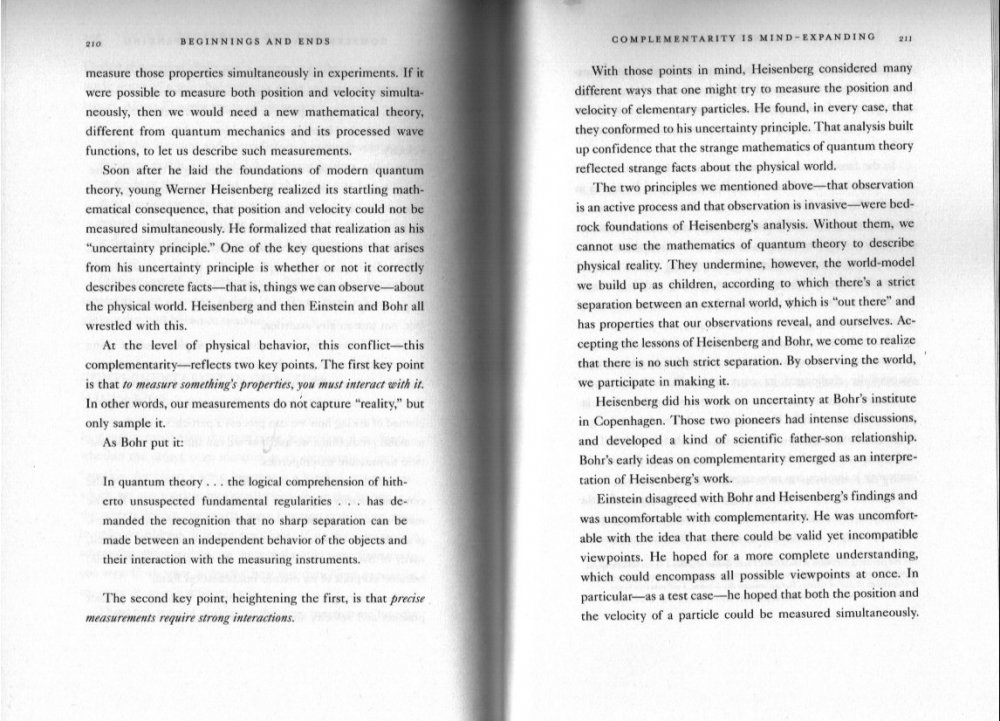
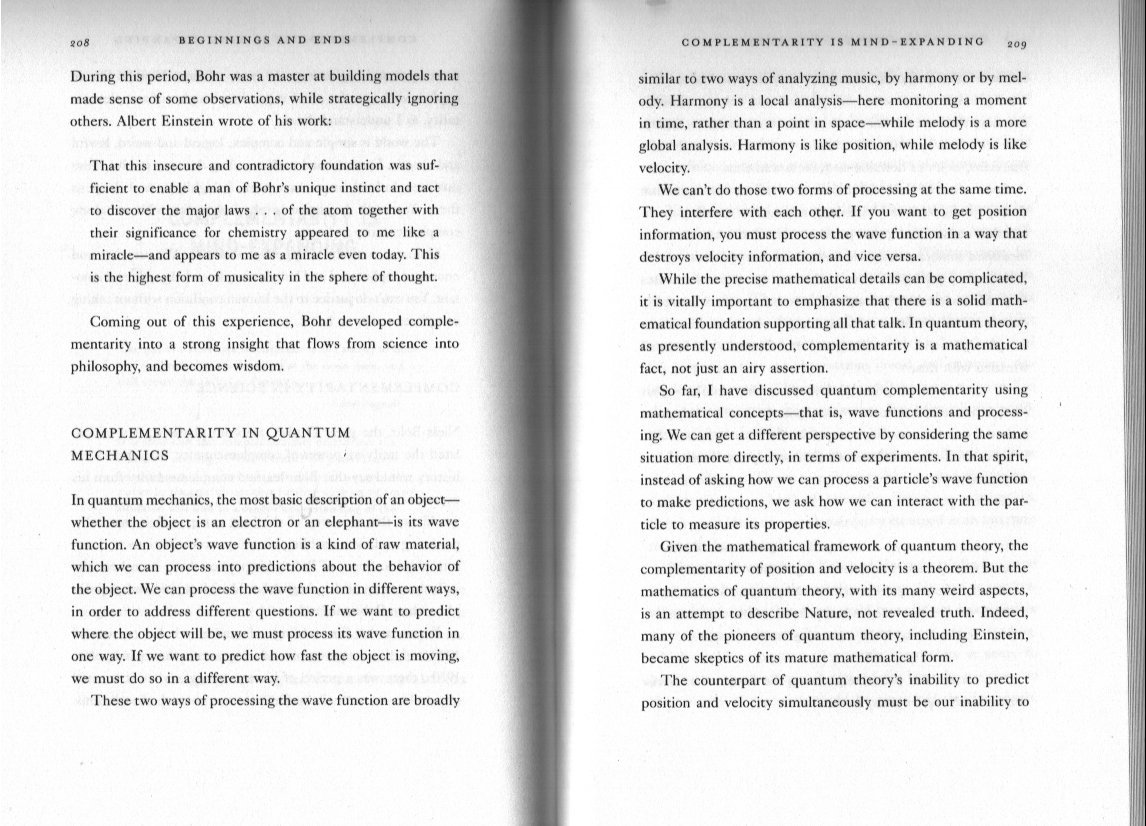
Noted, thanks. @Luc Turpin Since I will be in bed long before your 24 hours is up and you are lurking in the background here the thoughts of a Nobel Physics Laureate on the subject. He has a remarkable way of making things clear in plain English, picking out the important points. There are several new ideas that to think about. Please let us know if you understand what a differential equation is. You need to know what they are, not all the maths that goes with them.
-
Exactly, pushed down the line. But using the scientific definition of determined is complete in itself.
-
First a fact, then a staw poll of 1 my observations. It is known that the body does not respond directly to the environmental temperatureby feeling hot or cold. Don't forget that your temperature is regulated quite closely. The feeling of hot or cold is most closely related to the rate of heat loss (or gain) and therfore theefoort the body has to put in to counteract that to maintain its temperature. Having noted that fact, I have noticed a few things. In colder times, you do not need to lift the temperature much above ambient to fell warmer and much more comfortable. I to 2 dgrees is enough for this effect. I agree with your comment. My experience is that when the temperature dropped from 20 most people say it's getting sold and bump up the temperature more than the difference. After a period of acclimatisation they no longer do this until the pattern is repeated at 18, 16, 14, 12 etc, as the ambient steadily falls with the season. Yet I find lifting from 12 to 14, 14 to 16, 16 -18 easily enough. Secondly I find that people (myself included) suddenly say it is getting cold on a falling thermometer but are perfectly happy with their preferred temperature (be it 15, 16 , 18 or whatever) on a rising thermometer. This is consistent with the fact that heat loss determines our 'temperature' sense. I also think that raising the temperature 1 to 2 degress must lower the humidity a bit, even if it does not always show on my insensitive meter. Hopefully this is of some help
-
Yes I readily acknowledge your showing me the philosophical use of this term, in another thread. Thank you. However my point here was not the details of the scientific use but the fact that the philosophical use is open ended, whereas the scientific use has tightened things down to a complete and useful system. Is the Plato method any use in resolving the hidden variables issue in Bell's (or any other ) theorem ?
-
Are you still interested in your query ?
-
Thanks, I'll try to remember that. New fangled fonts are a nuisance like that. Your linked Plato article reminds me of the convex hull in a linear programming exercise.
-
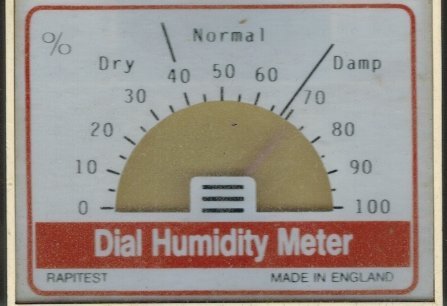
I last studied comfort zones in environmental engineering in 1973 and have long since thrown all those old notes on the bonfire (to keep warm ?😀) I'm sure the graphs of comfort zones, plotted on temperature - Humidity charts are on the net nowadays. In the UK the Office, Shops and Railway Premises Act 1963 presribes a minimum work temperature of 16oC But 10oC is rather cold., so I do't remember if this temperature is covered. The current temperature in this home office room of mine is 14oC and the humidity is 73%. Since the outside temp was 1oC last night and has been 3oC all day, lifting it only 1 or 2 degrees certainly makes it fell better but doesn't really affect the RH meter much. I'm sure I have seen a more recent stress tesing reasearch, and I think it was from the University of Bristol. However BigG can only find this from November last year on the BBC https://www.bbc.co.uk/news/health-63602501 I saw that programme as well. sorry about the rushed spelling.
 Interesting you should raise this point. Within the last two days I posted a comment about under, over and critical determination in Science, in another thread. At the end I tried to use the @ function to alert you as I thought you might be interested. unfortunely the utterly stupid input editor would not accept you and generate the link so I don't know if you saw it. However the point is Thank you for telling us what philosophers mean by undertermination. Science and the Scientific Method (ie the subject of thsi trhead) has a quite different definition and usage.That must depend upon why the humidity is as it is.Sorry I don't understand the question. Nor do I understand why the OP, who I see has been back several times since I posted, has not responded.I don't see how your post deserved a negative vote so I have reversed it. It was an unbiased factual report. Thank you for reporting the AI response, which seems to contain only generalities gleaned from advertising. I would trust it as far as a vehicle from a used car saleman.?

Important Information
We have placed cookies on your device to help make this website better. You can adjust your cookie settings, otherwise we'll assume you're okay to continue.