
toucana
Senior Members
-
Joined
-
Last visited
Everything posted by toucana
-
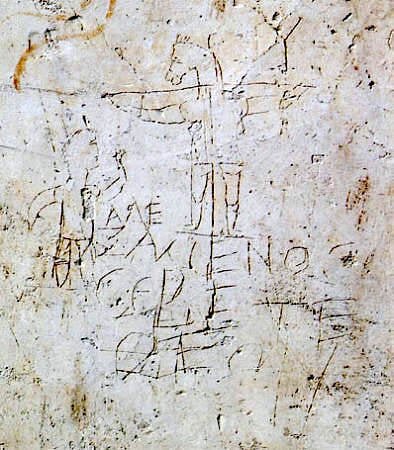
Judea was a Roman province governed by a praefectus called Pontius Pilate in the time of Christ. The crucifixion would have been carried out according to the Roman penal code which stipulated that the criminal’s arms be bound to a wooden transom called a patibulum that would then be attached to a vertical stake called a stipes, with the resulting cross being described as being in the shape of a Greek letter Tau by many sources. The various types of cross used in Roman executions were described by the younger Seneca (c.4 B.C - AD65) : Crucifixion was usually reserved for slaves or brigands. Six thousand followers of the slave revolt led by Spartacus were said to have been crucified all along the Appian way in 71 BC after their defeat. Early Christians avoided using iconography based on the crucifixion for this reason - because of its shameful and humiliating associations. One of the earliest known images of the crucifixion is the Alexamenos grafitto scratched into a plaster wall in Rome c. 200 AD which is a mocking depiction of Christians worshipping a donkey-headed man fastened to a cross. https://en.wikipedia.org/wiki/Alexamenos_graffito
-
Unfortunately some of that scholarly analysis is distinctly idiosynscratic, most notably in respect of the JWs attitude towards the crucifixion and the use of the cross in Christian worship. From their official website : The basis of this curious doctrinal position is the JWs interpretation of the Koine Greek word Σταύρος stauros - which they insist means a vertical stake or pole without a horizontal cross beam, and they maintain this view in spite of copious evidence from Latin sources such as Tertullian (c. 155-225 AD) who describe both crucifixion and its early Christian symbolism in some detail. The Catholic.com website makes the point that this JW belief wasn’t even originally part of the movement’s foundational 19th century teaching:
-
I’ve come across the topic of UV monitoring in the context of conserving fragile artefacts and artworks in museums and art galleries respectively (I was an AV technician in a contemporary art centre for some 30 years). It’s quite a complex subject, and doing it to the standards expected of professional conservators can render it very expensive in terms of equipment purchase. This Museum Galleries Scotland page offers a download link to a PDF guide to the science and technology involved: https://collectionstrust.org.uk/resource/monitoring-light-and-uv-levels-in-museums/ While this is a link to a commercially available multi-function UV/Lux Meter - (at an eye-watering price): https://conservation-resources.co.uk/products/uv-light-meter-uv-lux?srsltid=AfmBOopTNlFGgstwHp8RwK9Tudp1sDYNCHPdwuzqVndYXznEQzINpXFg
-
There is some debate among evangelical christians as to exactly how many of the faithful will be taken up into heaven when the Rapture occurs. Some groups, most notably the Jehovah’s Witnesses believe that only 144,000 will be saved. Given that they have some 8.8 million active members (or “publishers” as the JW call them) this seems rather harsh - just a 1.8% chance of salvation - even if you follow all prescribed beliefs and practices of the JW. https://en.wikipedia.org/wiki/Jehovah%27s_Witnesses Other Christian groups estimate that up to ~500 million will saved in the Rapture, Once again however, given there are approximately 2.3 billion Christians alive in the world, those odds at 2.17% are not much better - and bear in mind that the Rapture is meant to include not only those currently alive, but also all of those who have died since the inception of the Christian era, and are now due for resurrection. So even if you subscribe to these eschatalogiclal beliefs, it would be a given that only a tiny fraction of the population of true believers will transported up to heaven at the time of Rapture, many others would be left behind with the rest of us sinners. It makes some sense therefore for those who genuinely believe they are going up to heaven in a few days time to cash-convert their possessions and arrange their affairs in order to benefit and sustain family members and fellow believers unlucky enough to miss out on the Rapture. There is an entire book and film franchise called “Left Behind” devoted to the nitty-gritty details of post-apocalyptic life for those left behind on earth. https://en.wikipedia.org/wiki/Left_Behind_(film_series)
-
In case you missed it, the Rapture was supposed to happen last week, on or around September 23 or September 24 2025 according to many fundamentalist evangelical Christians https://www.msnbc.com/opinion/msnbc-opinion/rapture-bible-christianity-end-times-american-evangelicals-rcna233434 This latest apocalyptic ‘end of days’ prediction began a few years ago with a South African pastor called Joshua Mhlaka who apparently had a dream in 2018 which predicted that Jesus would return to this world on those dates, gather the faithful, and take them all back with him up into heaven. This prediction began to gain enormous traction on TikTok under the viral hashtag #RaptureTok - especially among American evangelical christians - to the point when many of them abandoned their jobs, sold off their cars and possessions, and began leaving triumphal farewell ‘Post 24’ video messages for friends and relatives to be viewed after September 24th by those of us unlucky enough to be left behind to live out our remaining days on earth as miserable sinners in the company of the damned. https://www.youtube.com/shorts/e9e4_6ike7w The concept of the ‘Rapture ( Greek: ἁρπάζω harpazo - “to snatch away") is based on a reading of 1 Thessalonians 4:16-17, a letter from the Apostle Paul, which speaks of Christ’s followers’ being caught up when he returns in the clouds at the end of time. Followers of these eschatalogical cults have often associated this idea with a belief in the Second Coming (Greek: παρουσία parousia - “arrival”) of Jesus Christ referred to in Acts 1:11, the Book of Revelations 1:7, 14:14, 19:11-16 , and elsewhere - or at least those who subscribe to a belief system called ‘Dispensational Premillenialism’ do. https://en.wikipedia.org/wiki/Rapture An alternate view known as ‘Pretribulationism’ regards the Rapture and the Second Coming as two different events. No doubt all will be explained in due course once they actually happen. Meanwhile a deafening silence has descended on #RaptureTok ever since September 24 passed off without hordes of true believers floating up into heaven to join their lord and creator.
-
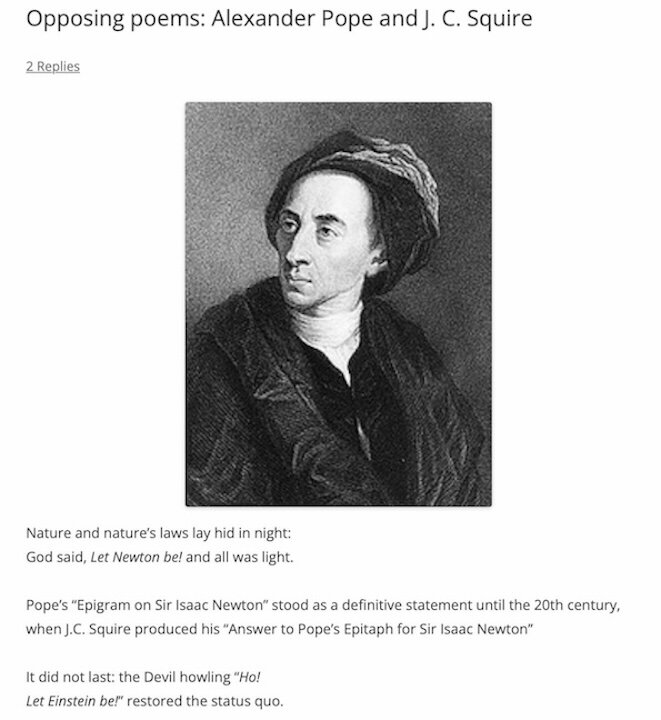
https://formalverse.com/2021/03/20/opposing-poems-alexander-pope-and-j-c-squire/ Any Quantum Gravity or String Theory continuations perhaps ?
-
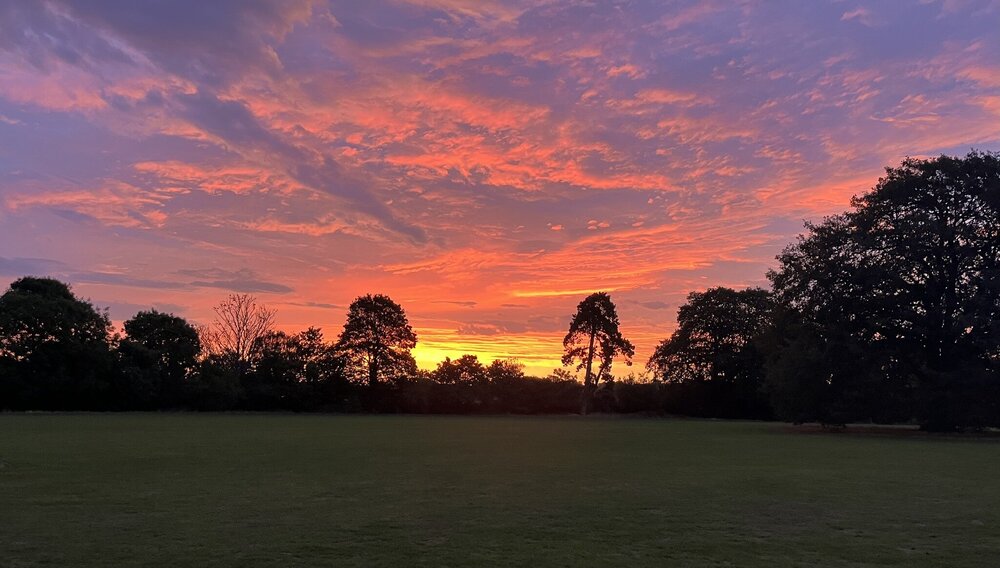
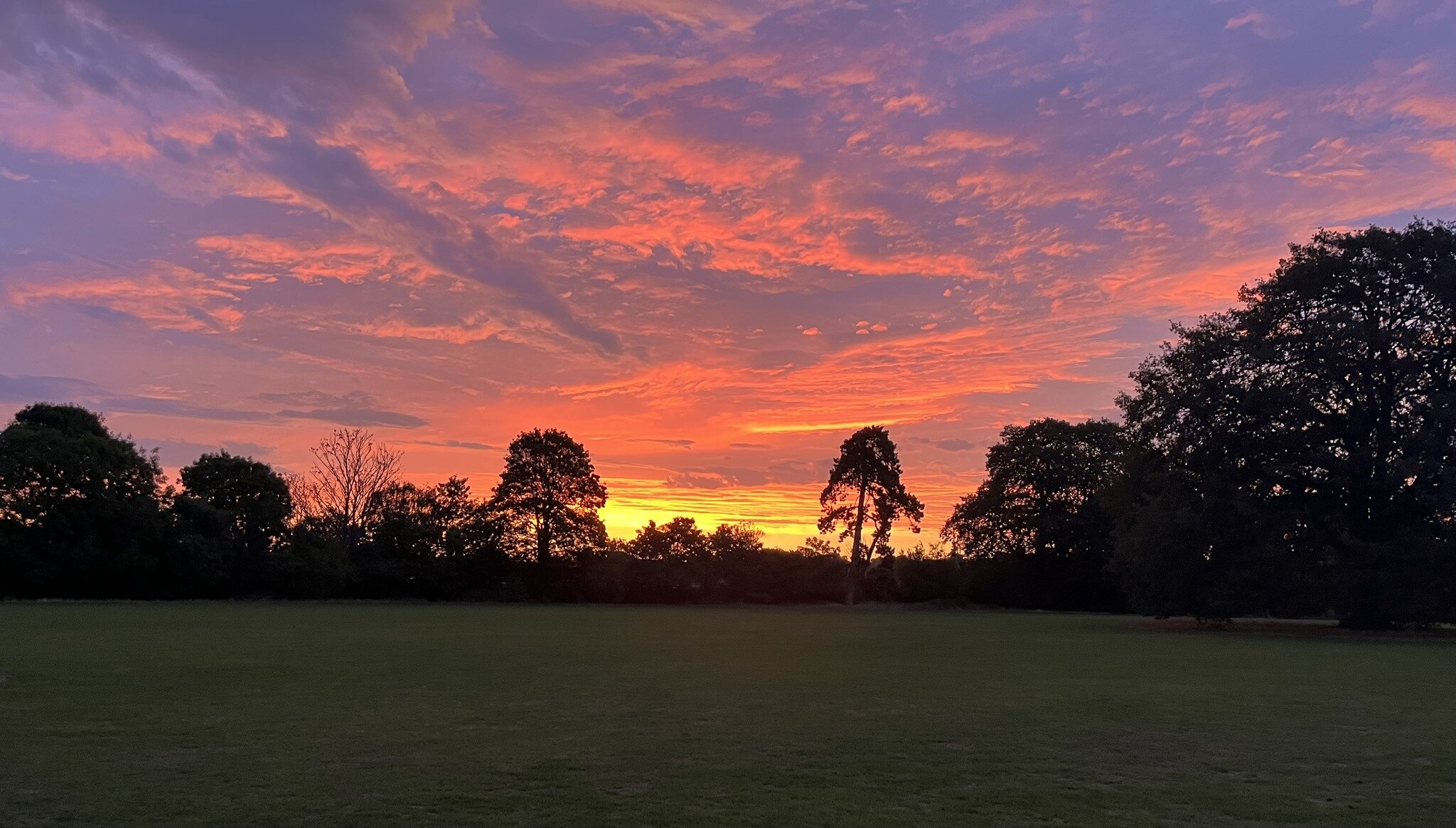
A dramatic ‘Shepherd’s Warning’ red sunrise at dawn in the arboretum couple of days ago. A violent storm followed.
 Dear Mr President at the start of your second term, you replaced the professional leadership of the FBI with two far right-wing MAGA podcasters and conspiracy theorists called Kash Patel and Dan Bongino. You put a 22 y/o intern called Thomas Fugate in charge of an $18 million Homeland Security program responsible for combating violent extremism in USA, even though his resume lists running a Model United Nations Club at college, gardening, and stacking shelves in a grocery store as the major highlights of his career to date. https://www.propublica.org/article/trump-dhs-thomas-fugate-cp3-terrorism-prevention Last month, your administration fired SAC Mehtab Syed the head of the Salt Lake City FBI field office because you felt that “she wasn’t a good fit for the office” - a view presumably unrelated to the fact that she is a Muslim Pakistani-American. (She also happens to be a decorated 23 year FBI officer, and expert on counterterrorism). https://www.msnbc.com/opinion/analysis/fbi-women-minorities-job-losses-kash-patel-rcna222988 I just wondered how you feel your makeover of the FBI and the Department of Homeland Security is going right now - in the light of recent events at UVU ?Growing up in Britain in the 1960s, I vividly recall the classic paperback Science Fiction novels published by Penguin Books which all had striking surrealist artwork on the front covers. They were the handiwork of Germano Facetti who was the head of graphic design at Penguin from 1962-71, and he put images by Yves Tanguy on the covers of "Mission of Gravity" - Hal Clement (1954), "The Drowned World"- J.G Ballard (1962): https://sciencefictionruminations.com/2019/01/06/adventures-in-science-fiction-cover-art-yves-tanguy-and-penguin-sf-cover-art/ images by Max Ernst on "The Crystal World" - J.G Ballard (1966), "The Man in The High Castle" - Philip K. Dick (1962), and Rene Magritte on "The Fifth Planet"- Fred & Geoffrey Hoyle (1963) - among many others. https://sciencefictionruminations.com/2016/04/02/adventures-in-science-fiction-cover-art-max-ernst-and-his-landscapes-of-decay-on-sff-covers/ J.G. Ballard in particular was fascinated by this cross-over between surrealism and Science Fiction in what he called “inner space”, and he wrote a seminal article about the subject called “The Coming Of The Unconscious” in 1966. https://www.jgballard.ca/non_fiction/jgb_reviews_surrealism.html “The Drowned World” was incidentally the second part of a trilogy of apocalyptic climate change novels by J. G. Ballard that began with his debut novel “The Wind From Nowhere” (1962) and finished with "The Drought/Burning World” in 1965. “Empire of The Sun” (1984) was the first part of a prize-winning autobiographical novel by J. G. Ballard, followed by a sequel “The Kindness of Women”(1991).Like a number of other contributors here, I would recommend borrowing compilations of short stories from the library and follow up on other works by writers in those compendiums that appeal to you. There used to be excellent yearly anthologies of the Hugo and Nebula award winning stories. Science Fiction writers have to be versatile to survive, and most of them are equally adept at writing short stories or novellas, as well as churning out vast shelf-bending series of novels set in some imaginary universe. It might also help to clarify what types of scientific disciplines or themes intrigue you, and then look into the biographies and backgrounds of SciFi writers to check for matches. For example Larry Niven mentioned by TheVat is an American author who took maths and psychology at University - allegedly because he thought it was the fastest way to graduate. Isaac Asimov was a professor of biochemistry at Boston University, Fred Hoyle was an astronomer at Cambridge University, Arthur C. Clarke was a radar specialist with the RAF during WW2 who subsequently took first class honours in mathematics from Kings College London. Some writers are indelibly marked by their life experiences. Frank Herbert the author of the Dune series for example was born in Tacoma Washington, but left a troubled parental home to live with an uncle and aunt near Salem in Oregon in his teens and became fascinated with unique sand dune landscapes there. He wrote one entirely factual account about the work of the US Department of Agriculture to stabilise the dunes “They Stopped The Moving Sand Dunes”, as well as a collection of fantasy short stories that later turned into Dune. British author J.G. Ballard was born in Shanghai, and was interned at the age of 8 by the Japanese (along with his parents) in the notorious Lung Hwa prison camp for the duration of WW2. He saw the flash of the second atom bomb explode over Nagasaki from 500 miles away, and witnessed numerous other atrocities at a formative age, which lends his dystopian futurist fiction an unnerving edge. Philip K. Dick was a deeply serious and highly gifted American author who found himself typecast and trapped by the fact that his earliest writing was published in pulp-fiction SciFi magazines. Nobody would take him seriously as a literary writer thereafter, and he was forced to overwrite at atrociously low rates of pay for most of his life just to put food on the table for his family, and he developed a dangerous amphetamine habit in the process. Anyway, I hope you have fun discovering themes and authors that appeal to you - It’s all highly subjective.I follow the feeds of an Arabic speaking Vlogger called Anamero who is based in Alexandria Egypt. She regularly posts videos about the weather, sea states, and beachfront life along the Corniche in Alexandria. She has posted two videos within the last 24 hours - one yesterday showing a kilometres long line of closed beaches, and another one this morning showing a 3 metre swell coming ashore at the famous Stanley Bay bathing beach. So it’s a little bit more than ‘anecdotal’. https://www.youtube.com/watch?v=wz9cl9j9dnU https://www.youtube.com/watch?v=2SwLQcIOSyU Alexandria is famous for its persistent strong sea breezes - as described by writers like E.M Forster and Lawrence Durrell who lived there during WW1 and WW2 respectively. But this type of life-threatening heavy swell is unprecedented in summer months. It normally only occurs much later in the winter - which lends credence to suspicion that a significant climate change effect might be at work here. The fact that Egypt’s National Institute of Astronomical and Geophysical Research (NIAGR) recently denied reports from professional mariners that significant changes are occuring in south Mediterranean weather systems only adds to that suspicion. As to quite what might be causing this, some reports suggest that sea temperatures are increasing up to 20% faster than the global average in this area, making it a recognised "climate hotspot’ with increasingly frequent marine heatwaves, rising sea levels and increases in salinity - all of which contribute to more unstable weather patterns. https://www.unep.org/unepmap/resources/factsheets/climate-changeThe Egyptian Authorities have ordered the emergency closure of all the tourist beaches in Alexandria, and issued a warning to shipping on their Mediterranean coast from Marsa Matruh in the west, to El-Alamein and Baltim in the east - a distance of some 419 Kilometres - following urgent warnings from the Egyptian Meteorological Authority. https://www.egyptindependent.com/alexandria-closes-all-beaches-on-tuesday-over-rough-waves The closure of all the beaches in Alexandria which is a popular seaside holiday destination for residents of Cairo comes at the peak-end of the summer holiday season, and represents a major disruption to the tourist industry. It is also quite unusual for this time of year. Such beach closures normally only occur later in the autumn and winter. The stated reason is said to be high onshore winds likely to create waves of up to 3.5 metres high. Only six weeks ago the head of Egypt’s National Institute of Astronomical and Geophysical Research (NIAGR), Taha Rabeh, dismissed warnings from a marine captain regarding unusual changes in the Mediterranean Sea. https://www.egyptindependent.com/egyptian-institute-dismisses-mediterranean-sea-anomaly-claims-as-unscientific Rabeh asserted that the captain’s claims are “Completely false, exaggerated, and lack any scientific basis” - emphasising that high winds are a natural phenomenon.This problem was made even worse when engineers found they needed to raise the existing floor level of the Ryde tunnel to prevent flooding Although very small (just 55 miles of track in total), the Isle of Wight railway system in its prime was built by five different companies, and is chock-full of absurdities and eccentricities that offer a perfect microcosm of the challenges faced by Victorian railway engineers. The Shanklin-Ventnor extension on the IoWR line for example was held up for two years until 1866 because the landowner who was the Earl of Yarborough refused to allow a line to be built over his property. The company was forced go via Wroxall instead, and drive a vastly expensive 1,312 yard tunnel under St Boniface Down. Ventnor station itself then had to be built in a disused chalk pit on a ledge quarried into the hillside just beyond the tunnel mouth, some 294 feet above sea-level. A turntable was installed to reverse the locomotives. The IoWR persevered with this expense because Ventnor with its unique mico-climate was a popular location for sanitoriums catering for patients with pulmonary tuberculosis. Once the Ryde Esplanade tunnel was finished in 1880, the IoWR used to run a regular summer ‘Invalid Express’ service which enabled convalescents to step off a ferry steamer at Ryde Pier, and straight onto a train that whisked them down to Ventnor in 30m. When the IoWR decided to build a branch line from Sandown to Newport, they had to construct a substantial railway viaduct over the river Medina. Members of my mother’s family owned a critical plot of land needed for this viaduct, and made a handsome sum by selling it to the railway company who went bankrupt as a result. When the Medina viaduct was finished, it had to include a sliding section that could be opened to allow tall masted sailing ships to navigate down the river - which caused endless problems. Whippingham station on this line was built for the private use of Queen Victoria when residing at Osborne House. But Queen Victoria hated travelling by rail, and she returned the station to public use. As the only other facility in the area was a crematorium, the station remained largely unused. The final part of the Island network, the Newport-Freshwater branch line constructed in 1897 includes Watchingwell station which was buillt as a private facility for the landowner John Barrington Simeon MP for Southampton who refused to allow the railway line onto his land unless the company provided him with his own private station - complete with a semaphore signal to request trains to stop. This halt was only added into the public timetables in 1923 after Southern Rail took control.When the IoWR opened their Ryde to Shanklin railway line in 1864, they were forced to build their main terminus at St Johns Road on the south side of the town, at an inconvenient distance from the Pier and Ryde Esplanade where all the summer visitors arrived on the pleasure steamers. IoWR had to rely on a horse-drawn tram link to get these passengers to the railway station. It took another 16 years of argument to obtain permission to build a rail tunnel to connect St Johns Road to Ryde Pier and Esplanade. As the wiki article explains:You may be curious to learn that ex-London Underground electric rolling-stock has been in use on the Isle of Wight Railway line from Ryde to Shanklin since 1967. https://en.wikipedia.org/wiki/Isle_of_Wight_Railway This line first opened in stages; between Ryde and Shanklin in 1864, followed by an extension to Ventnor in 1866, a total length of around 12 miles. From the outset the company used steam traction, employing a fleet of Beyer Peacock 0-4-4T type tank engines which were said to be the only steam locomotives capable of working the very low Ryde tunnel in particular. In 1966 the Ventor extension was closed, and the line was truncated and electrified, now ending in Shanklin. Because of the low tunnel height clearance in Ryde, engineers found that the only available locomotives capable of operating on the newly electrified line were vintage 1925 era London Underground units. Around 43 of these were acquired from the Piccadilly and Northern Lines, shipped to the Island and modified to run on a 630VDC third rail system, using a running rail as the current return circuit. These 1925 era tube trains remained in service on the IOWRL until 1989, when they were upgraded - (if that is the word) - to 1938 vintage London Underground class 483 EMUs (electric multiple units). In a final major upgrade that took place in 2021, the vintage 1938 London Underground stock was replaced with newer Class 484 ex-London Underground carriages - this time from the 1980s. https://www.theguardian.com/uk-news/2020/jan/02/isle-of-wights-rattling-rolling-charming-ex-tube-trains-face-end-of-the-lineA solo piano performance of a piece called ‘Castaglia’ by Japanese composer Ryuichi Sakamoto (1952-2023). He originally wrote it in 1979 for the album ‘Solid State Survivor’ by a Japanese synth-pop trio called Yellow Magic Orchestra which he co-founded. Ryuichi Sakamoto subsequently became a noted film score composer. His credits included “Merry Christmas Mr Lawrence” (1983) in which he also played an acting role as Captain Yonoi. “The Last Emperor” (1987), and “The Revenant” (2015) which was his final film score. https://www.youtube.com/watch?v=wFDJzj12T7M&list=RDwFDJzj12T7M&start_radio=1Quite a few of the trolls around at that time seemed to be refugees from Napster, a pirate MP3 music-sharing service that was bankrupted and shut down by the courts in 2002. https://en.wikipedia.org/wiki/Napster Many of those trolls were complete sociopaths - nazis, homophobes, and red-neck racists who thought they could simply migrate onto IRC and set up fservers there instead. They tried to take over channels, and basically bully and intimidate anyone who got in their way or stood up them - far worse than the usual blowins from EFnet. There were numerous confrontations with these people - some of them bot-herders running flood-nets, port scanners, netsplit cloners, and identity thieves. I never had any compunction about doxing or getting those trolls K-lined - one too many death threats.Yep. Jarkko Oikarinen was an Electrical Engineering student at Oulu University in Finland who got a summer job in 1988 working as a Unix server admin at tolsun.oulu.fi. http://www.computer-timeline.com/timeline/jarkko-oikarinen/ He spent part of his summer internship stripping down and rebuilding a public access BBS (bulletin board system), and that software project then turned into IRC (internet relay chat). Originally there were just three IRC servers in the network - all in Finnish universities - at Oulu, Tampere and Helsinki. He got an account on the MIT university server the following year, and posted details of IRC which led to the first IRC servers outside of Scandinavia being set up in the US. Jarkko Oikarinen subsequently did significant research into medical imaging, telemedicine, and computed axial tomography.I first recall hearing about wireless audio bridges in a rather unusual and sombre context - the funeral of Diana Princess of Wales which took place on Saturday September 6th 1997. There were 2000 mourners inside Westminster Abbey, another 32 million watching on British TV, but there were also countless thousands of people lining the streets waiting to throw flowers on the hearse as it left the Abbey. The authorities wanted these people to be able to hear the funeral service as they waited patiently - but how ? You could hardly run speaker cables across busy London street intersections. According to a story the following week in Lighting & Sound International (the main trade magazine at the time), the office of the Queens’s Royal Chamberlain summoned the bosses of all the main London AV hire firms to a meeting at Buckingham Palace and gave them carte blanche - “Just make it happen and we will pick up the bill”. The chosen solution was to use wireless audio bridges on every major intersection on the route out of London. It was said that they emptied out the entire equipment inventory of all the AV hire firms in London doing it, but they made it happen, and at very short notice too. And the story has stuck in my mind ever since.Such tools are not reliable. Your mileage may vary. On one occasion a few years ago on IRC we had an abusive troll causing trouble in a novice-friendly channel where I was an AOP. Rather than kick-banning the offender, we decided to have a little fun with him. We used the /whois <nick> command to check his host details , which not only gave us his IP address, but we also found that he had unwisely filled in the gecos field which provided us with his real name too. The reverse DNS look-up gave the location as a rural town in the mid-west. We then found a searchable online telephone directory for that township, and found an entry that matched the name in the gecos field. We then asked him in channel if his real name was XXXX XXXX, and cited his full postal address, zip-code and telephone number. Guy vanished like a ghost at dawn and never troubled us again ;-)If it's a Rotel RX 403 then you have a pair of Monitor line-outs available as RCA phono sockets - on the bottom left of the backplate (see photo attached below). You could simply connect from those to a wireless audio bridge. I used to have a static public broadband IP address for almost 20 years until my ISP went out of business and I was forced to switch to EE whose public router IP addresses change every time the router reboots or gets a firmware update - a real pain in the neck which means I regularly have to use a look-up tool to check what my public IP currently is (EE call it a ’semi-static” public address) and then change the hard-coded value in my IRC client to match (you can’t use the ‘lookup server” method, because you will simply get the 192.168.x.x LAN address assigned under DHCP by your router which is unrouteable on the WAN side. In IRC you can simply run the command /whois <nick> and you will instantly get their full host and IP address details (unless they happen to be using a stealth mode cloaking system). You can then tell at a glance whether they are using IPv4, IPv6, or mobile, and if you are really curious you can run a traceoute and a reverse DNS look-up to get their location as well. In some cases we were able to tell that particular users were actually connected to IRC via WebTV service which was quite a novelty back then. Didn't realise that the thread had been split just before I made my last post. The backplate photo above belongs to the new thread about wiring Wharfdale Denton 2 speakers now over in Engineering :-)
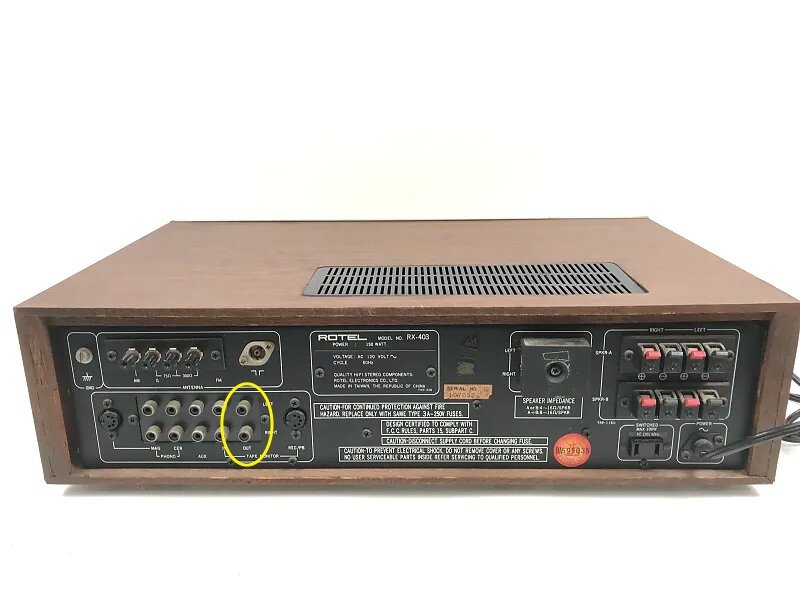 Wharfedale Denton 2 speakers don’t require that much power - rated for 18-20 Watts but will run on 5-10 Watts according to this thread. https://www.reddit.com/r/BudgetAudiophile/comments/smfh24/opinions_on_wharfedale_denton_2s/ The buzz-words you need to google are something like “Wireless audio bridge for remote passive speakers”. They do exist in the form of transmitter/receiver pairs, and are used in pro-audio work where you don’t want to run wires across busy street intersections, or in promenade event spaces. https://www.klarkteknik.com/product.html?modelCode=0813-AAC Some people also use these wireless audio bridges to feed home cinema system surround sound speakers, although with passive speaker units you will need a local standalone stereo audio amp as well.Guess I’ll just have to accept that I’m now an old-timer, bumbling around in the basement of the internet, fondly stroking archaic old relic equipment, and muttering to myself about how wonderful the sweet mating music of dial-up modems used to be :-) https://www.youtube.com/watch?v=jpMrTxMV6E4Last night I was logged into a popular live-streaming board game website, and the stream host commented on the fact that their opponent had just disconnected from the game server and reconnected on a mobile phone (shown by an icon in their user ID), and wondered why they were doing so. I suggested in live chat they maybe had a flakey computer internet connection and had switched to a mobile phone, but I was immediately rebuked by several other viewers who said, “No - It would show up as the same device” - which is clearly and obviously completely wrong. A computer connects via a broadband ISP network, while a mobile phone connects via a 5G mobile data link. These are serviced by completely different carriers, so the two devices would have different network IPv6 addresses. They would also have unique browser fingerprints based on their operating system and screen resolutions, as well as unique ‘user agent’ strings - probably the first thing a website looks at. Even if you make use of a browser data syncing system between devices on a commmon wi-fi network, a website can always tell the difference between your computer and your mobile phone. The thing that intrigued me was “Why do I know this, and why don’t they?” After all I’m just a hobbyist, not a trained IT professional. The answer that dawned on me was that the Gen Z /TikTok generation of gamers simply have no conception of how the internet works under the hood. They may be experts at content/brand creation, or racking up top scores on GTA or Call of Duty, but have no knowledge of packet-switching, TCP protocol stacks, or DHCP on local router networks - Am I right ? My own experience of using the internet dates back to the mid-1990s when everything was a good deal clunkier to use - an experience sharpened by exploring IRC (internet relay chat) extensively - which tends to involve a crash-course in networking theory. If you have ever spent time getting DCC CHAT and NAT (network address translation) to work on IRC via DHCP (dynamic host configuration protocol) behind a local broadband router, then you will probably understand what I’m talking about ! The ‘Zoomers’ don’t it seems. They are the PnP generation who expect everything to work all by itself at the first time of asking, and get very puzzled when it doesn’t, because they have no idea how it works in the first place ;-) “Those who do not understand computers will be controlled by those who do” - (anon)


Important Information
We have placed cookies on your device to help make this website better. You can adjust your cookie settings, otherwise we'll assume you're okay to continue.