

CharonY
Moderators
-
Joined
-
Last visited
Everything posted by CharonY
-
I disagree. Every scientist has pet theories in their field of study. Most of them will turn out to be wrong and some will happen to be right. The hard work is not coming up with them, but to provide evidence. Franklin looked at the data and proposed the various possibilities based on that. She specifically pointed out the high likelihood of a helical structure in the first paper. But as mentioned, the measurement accuracy did not allow for a fully resolved structure. Nowadays, you wouldn't be able to publish a paper on how you think the 3D structure is, without getting sufficient resolution. Rather, you would need to outline the possible variations, though you could discuss what you favor. Again, reading Franklin's paper's and the Watson & Crick one side by side, one is to m e a proper crystallography paper, the other one is merely putting forward a hypothesis. Just because they pushed it harder doesn't make it better in my mind. What you describe is essentially taking imaginary leaps based on incomplete data. It is fine for building hypotheses, but providing evidence is so much more important. There are folks, including scientists but also increasingly influencers who built careers from overselling their pet hypotheses based on incomplete data. The most obvious offenders are in the health sector which is full of grift and overselling health advice and products mostly based on overselling limited biological data. It is a non-zero chance that at least one of those folks happen to be correct, but we wouldn't (and shouldn't) just take their word for it. Rather we should continue to collect evidence until we can tell. Eh, in his autobiography he severely downplayed Franklin's role. While he might have reconsidered his stance later on, I am not confident that he would have recognized her contributions around the time the Nobel came around. Incidentally, the Nobel Price committee had another serious issue with sexism a while earlier with a true titan in natural sciences: Marie Curie. For her first Nobel, she wasn't even considered until her husband refused to accept one without her as an equal partner on it.
-
In my mind it is in some ways even worse. When I read his paper as an undergrad, I could not shake the feeling that I just didn't get it. The paper was fairly short, didn't really show any data and the "only" remarkable thing about it, is that he was actually right. However, in my mind this is not how science should work. We have to show data and demonstrate that the conclusion you arrived at is the only one possible. That is what well designed experiments are for. Or, at minimum present the possible answers based on the data you were able to generate and discuss those. Yet the original paper by Watson on Crick doesn't really do that. It mostly proposes a model, based on one possible interpretation, based on the data Franklin generated. I really never reconciled that feeling until at one point I was dabbling in crystallography and dug out Franklins' criminally paper (which was cited only a fraction of Watson and Crick's paper). There I found clear as day that the resolution they had was simply insufficient to clearly rule out confirmations other than the B-form. Franklin in her paper makes it really clear and proposes the right-handed double-helix as one of the possible configurations, which IMO was the right call. IOW Watson and Crick they had the right idea but didn't actually put the work in to provide evidence. They just postulated it and happened to be right. And this is one of the things that is a problem in science, that folks that are considered "towering" can make calls without having the evidence (or even putting their own time into it) and are declared heroes when they happen to be right (and often just conveniently forget the times they weren't). Other folks, especially women, or other in the old boy's club OTOH have to work harder for less recognition. It took me way too long to realize what I didn't like about the paper that has been lionized and that realization has sufficiently soured my view on Watson as a scientist. While I never met Watson, I have met folks who were a visiting scholar in his lab. Suffice to say that there was nothing that really there that could have improved my view on him as a person, either, even before the allegations were widespread. In a broader sense, it is emblematic for the desire of folks, including scientists, to have visible rockstar researchers. Lionizing those rarely benefits science and more often than not it takes away oxygen (and funding) away from those that are doing steady work without overselling it.
-
Also, it will be the drawer that jams shut because your tongs have cross-linked with your pliers and decide to hold down the fort until kingdom come. They also seem to multiply and I might have to give up on the kitchen entirely.
-
From a quick skim, most examples refer to specific mechanisms that have been selected as a part of co-evolutionary process. Allergies seem to be more linked on an individual (developmental) time scale.
-
Yes, to some degree, but I think "pollutants" leads things a bit astray again. What is being argued in the paper (and a series of other papers) is that the exposures are more dynamic interactions with the environment, including microbiota. Importantly, these are likely not point exposuires. And instead of pollutants, one might thing of them as biosignatures of the environment the children live in. I.e. by continually being exposed and interacting with biomolecules in their environment, the immune system is learning about what is a regular/normal situation for the child. It should be noted that this could include potentially harmful exposures and I think the jury is still somewhat out whether that helps in the long run or not. Cool, does he also have seafood allergy? I know a great sushi place!
-
Good paper. Most is conjecture (based on evidence) but is more certainly more coherent than the hygiene hypothesis. I also like the fact that they are not overfocusing on the gut biota. While relevant, IMO it dominates the view too much, because there are just so many folks working on it and not because other factors where shown to be less important. For example, I think that the environment/immune interaction at the lung level is still understudied, mostly because it is very inaccessible compared to just looking at stool.
-
Hmm that is odd. Most ferric compounds are somewhere in the spectrum between black and yellow. The only whitish ones I can think of are some form of ferric sulfates as powder (white-yellow) but in solution it turns reddish brown or at least yellow. Does something precipitate at all? I wonder if it could be another metal...
-
That certainly looks compelling.
-
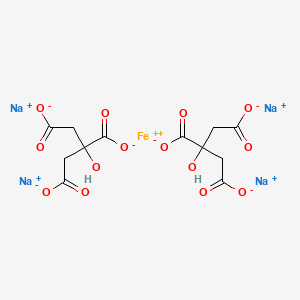
Could be this: In turn, I couldn't find a good picture, but in my memory it was less a bright green but more brown/grey-green-ish. But entirely possible that I am confusing compounds, it has been a minute. To make things really visible you can also shift the pH (e.g. using NaOH or if not available baking soda). In presence of oxygen and pH >7 iron precipitates rapidly in form of insoluble ferric oxyhydroxides that should settle quite nicely.
-
Upon reflection, I actually don't think that regular meal times are that unusual. I recall a practicum that I had where we looked into feeding patterns in birds, based on dominance patterns. IIRC, the birds we investigated typically had two major feeding cycles, a bit early in the day and late before sleep time. The assumption was that they kept lean most of the day to avoid being too sluggish, but less dominant birds in a group would feed more frequently as they were less certain to get something from the feeder. Considering that in most animal species feeding patterns are driven by the circadian clock (there exceptions, like predators who digest their prey over prolonged periods) it is likely that for the most part their feeding pattern has some regularity. In general, the pattern would match their activity periods (e.g. nocturnal vs diurnal), ability to store or acquire food and so on. Evolutionary speaking, it makes most sense the molecular mechanisms regulating hunger (and drive feeding patterns) are in line with the environmental pressures and opportunities that would allow food acquisition and there are strong interconnections in prey-hunter relationship of these patterns (which is what the practicum was based on). I think humans are not so special in that regard, except that in industrialized nations the food supply is not a limiting factor anymore. Instead food patterns are a compromise between natural predilections (i.e. feeding at least once a day, and usually during the day) and the requirements of job patterns.
-
I am a bit rusty but from memory, ferrous citrate was gray-green, but more on the dark grey side. Ferric citrate would be more on the brownish side. That level of green does remind me a bit on ferrous sulfate.
-
Hard to tell from the picture, unfortunately. I'd expect Cyanobacteria growth to be gradual and this looks like too much to happen overnight. Plus, generally they need a pH of > 6.5 to grow well. Is it settling on the bottom?
-
To be honest, I did not notice any typos. I frequently don't find my own to begin with. Regarding regularity, I don't think that this is universal in humans, either. In many cultures, it is heavily determined by seasonal activities. Those dependent on hunting, would often have meals after a catch, which can vary. And in a meeting with First Nations Elders, the typical meal times were described as one element of colonization, as traditional in some First Nation cultures, their mealtimes were more flexible and dependent on hunger. I strongly suspect that some of these patterns were dependent on how regular they have access to food. Seasonality was a bit thing too, as it determined what food was available and how long it would take to acquire it. Nomadic cultures can have communal meals in correspondence with their traveling patterns, whereas groups with a more agricultural component might have more regular patterns. Depending on time and place there are various constraints, e.g. availability of natural light, how easy it was to make fire or other meal preparation methods and so on, that I find it hard to believe that regularity was very common or even easily achievable until a number of developments happened, such as settlements of a certain size, predictable availability of food, improved food preparation methods and so on. So only off by 200 years or so ;).
-
I think it is way more likely that it is a behavioural pattern which developed when cooking and other forms of food processing became a key element of human dietary habits. Creating a cooking place make things less flexible and more efficient to do it more centralized with fewer times a day used for feeding. Many groups which rely on hunting tend to have 1-2 meals a day, but there is also eating throughout the day when they have plentiful access to preserved food. Also, it should be noted that while feeding might be regular, the timing might not be and depend highly on food source and related to e.g. hunting patterns, seasons and so on. I think that specifically three meals a day is a rather modern development and I wouldn't be surprised if it was linked to the rhythms created by the industrial revolution.
-
Most likely the formulation contained spores. The toxin itself can be deactivated by cooking, and Clostridium botulinum itself is not terribly hardy and it is an obligate anaerobe (i.e. does not survive oxygen). Spores, however are fairly hardy and can survive drying very well and are fairly heat resistant. They can be inactivated by prolonged autoclaving and potentially heating for an extended amount of time. However they usual inactivation times typical for bacteria which are required for food preparation, will be insufficient. Most likely, sufficient spores survived the process to cause infections in infant guts (but I would need to read up the reports to see what was actually found). Unlikely, the production requirements should be identical.
-
I think one of the original ideas is that if set up as non-profit, they would be sustainable, but not profitable. But from what I remember they made significant losses. What I don't remember if whether they managed to address the challenges of food deserts. I.e. whether e.g. local and especially low-income folks were using them (or could use them). Somewhat independent of that some food banks have started to set up grocery hubs, essentially free grocery stores like other food banks, but giving folks more of a grocery experience in order to promote agency and reduce stigma. But of course, it is an entirely different idea. That is one of the things I am looking most forward to. That is, an alternative to unlimited power due to unlimited money.
-
Yeah, I was curious about that and there are reports of a fairly wide range of issues. But essentially in all cases they need significant subsidies. But assuming that there are indeed addressing issues, these might be worth it.
-
The slide is not inevitable, but Norway is not a particular good example as the far right Progress party had the highest vote count ever. While Geert Wilder's party lost seats, they were still tied. Granted it suggests that in the respective parlamentarian system shifts are possible (though the PVV remains in second place). Another example could be Poland, where the the opposition managed to form a government coalition pushing the right-populist PiS out of power (which still holds the most seats, just not the majority). But in the presidential election, a PiS-backed candidate won. I think the one thing that typically happens is that once populist parties are in power, they generally mess things up as most are just not very competent and are driven by ideology, rather than good policy ideas. In parallel, they are also often ignored by moderate parties. I think only within the last 10-15 years did they get enough votes in at least some countries so that they were impossible to ignore. Moreover, they have started to dismantle accountability measures and have been better at using propaganda (especially via social media) to distort reality to such a degree that voters somehow become unable to see the failures as what they are. The US is a highly visible variation of it and I think to some degree, because it is a different country some folks have an easier time spotting that than within their own. And another point on the super-rich. In some cases their wealth is now larger than that of many nations, resulting in massive powers without control. Add to that those folks also control, directly or indirectly, modern information consumption and public discourse, it sure looks dystopian.
-
I am a bit less optimistic. If not that, folks would have weaponized other elements. While neoliberalism also got a hold of Europe, radicalization also happened. There is always disenfranchisement that can be leveraged and I just think folks got better at doing that. Or conversely, population resilience against such movements have diminished.
-
They worked a long time on in, but the progress was slow. It feels that in the last decade or so, things accelerated. Whether due to accumulated power or just something else happening is not quite certain to me, But, it is important to note that this is not just an US thing. Brexit was already mentioned and in addition, there are a lot of countries that have slid into autocracies in Europe and elsewhere. I am not saying that they can all be tracked to the same reason, but collectively they are part of a larger trend.
-
I think this thread hits certain notes that are both, silly and dead serious. The world is changing at the whims of folks who are not masterminds but for the most part horrible manchildren. As a result, the premise of OP should be ridiculous, but given that rationality is bleeding out of the world, the likelihood seems nonzero, as it otherwise should be. To quote the mightiest British King (but referring to the world as a whole): "It is a silly place". Resulting in Quebec detaching itself from the continent. And mandating that English languages is only allowed to be printed in Braille.
-
BC will take in refugees, but only hipsters. Alberta will try to join the red states, First Nations in Alberta will let them join but keep the land beneath them. Saskatchewan will try to announce that they will join, but get too drunk to remember which side, but to be fair, no one remembers Saskatchewan. Or Manitoba. Ontario will write a stern letter to both sides, asking them to cut it out, and Doug will post a mean meme. But they are too busy fighting their own war against bicycles, speed cameras, and Toronto. Quebec will use that as an excuse to cut themselves from English-speaking Canada. According to a study New Brunswick is too busy hating itself. PEI will get ready for war, all three of them. But they have to go fishing on the weekend. Newfoundland and Labrador: they made an oral commitment. But since no one can understand them it is unclear what it was. The territories send the most ferocious moose and bear-mounted force but they will not arrive before the end of the war. But realistically, Canada would likely close the borders and hunker down, like everyone else. Either that, or just burn down the White House again. Trump has already started.
-
Also, a lot of of weird things can be made into belief systems. While cults are probably the most obvious examples, there are a lot of movements (anti-vaccination, diets, various pyramid schemes and so on) which build a whole belief system based on little to no data, a lot of assumptions and, inevitably, some sort of grift. (The number of podcasters selling their protein powder is too darn high!).
-
Also, right hands. I am fairly sure that it breaks his mind a bit that people of colour can get a Nobel but he doesn't get one.
-
The way it is explained to me is that there is a list somewhere associated with security risks. I forgot the details but in the list for biosecurity there were things like knowledge about certain pathogens, use of fermenters, freeze dryers and a couple of random other things. The reasoning is that this knowledge is useful for building bioweapons (and kimchi).