studiot
Senior Members
-
Joined
-
Last visited
Everything posted by studiot
-
You need more than one reference point. You also need a direction, at minimum. A typical example would be how we measure compass bearings. Compass bearings are measured clockwise from a chosen line called North. A second system of measurement of the same thing is the cartographers and surveyors easting and northings you get on an OS map. Bearings here are measured anticlockwise from a chosen line called East. This second system is the normal mathematical method of measuring angles in polar coordinates.
-
OK so this is definitely not a Calculus problem that we can solve. It is called the many body problem in Calculus gravitation. The point of traditional calculation is the we assume a system passes from on point (or state in KJW's case) to another in a smoothe continuous fashion so that each following point is somehpow close to the previous one. Such an assumption allows us to plot a path from one state, condition, place or whatever to another with infinitesimal intervening steps and never jumping. This whole centuries old assumption was shattered in the mid 20th century with the discovery of chaotic systems that do not follow such a predictable path. We do not know if a multiplanet system is long term chaotic or not but many very much simpler systems are. That is a good question. There is a difference between measuring after the event and prediction before the event.
-
Can you provide a bit more detail perhaps a simple example of the change ? Traditionally we use the Calculus to measure change as in velocity is rate of change of position and acceleration is rate of change velocity etc. But I am not sure if that is what you mean.
-
Both. Just as new tools have advance Physics, Chemistry and Maths and other sciences. But since they were already more advanced than Biology perhaps the effect was less. Other Sciences with new paradigms include Astronomy, Geology and Cosmology. Equally the successful search for the background radiation is a good example of Theory predicting something and then experiment eventually confirming it. Although not quite as expected as that has led in turn to new questions.
-
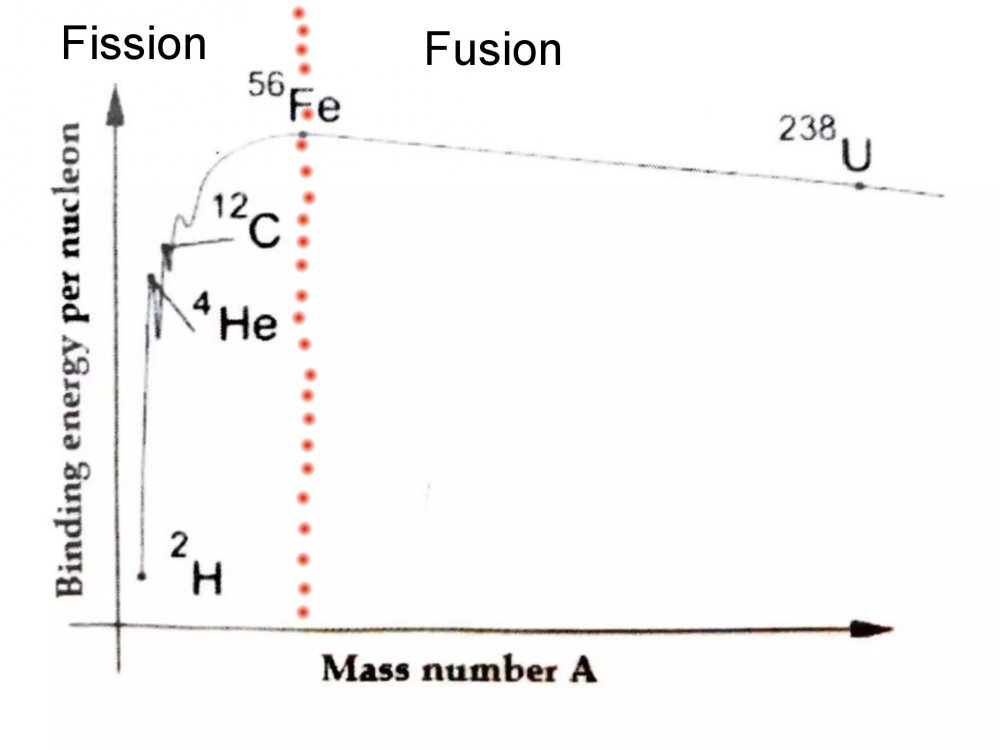
I owe you a big apology as I got it wrong on the plot, but correct in the text did you notice ? Fission and fusion are the wrong way round on the plot. See above for fission and fusion. Both can release energy for the right reaction, but elements from iron to beyond uranium need to break apart (fission) to release energy. Elements from Hydrogen to iron need to join together (fusion) to release energy. Conversely it take energy input to split a nucleus smaller than iron and energy to fuse together nuclei larger than iron. Don't forget that it is the nuclei which break up or fuse together. I will let Mordred tell you about the cosmology of fission and fusion. It used to be thought that only carbon could form these long chains, but recent advances in Chemistry have discovered that other elements such as sulphur and silicon can also perform in this way. No, no one could solve the problem before kekule.

-
Your weblink is quite good but a bit too elementary. You do not have two nearby charges in your model you have an array of infinitesimal dipoles. Furthermore if they are twisting they are not 'static'. And a moving electric field causes a magnetic field. That is how EM radiation works. ~Wiki has a good animation for movement, though it is trqanslational not rotational. https://en.wikipedia.org/wiki/Electric_dipole_moment But if you have an array of dipoles you get a surface charge. This one is not animated.
-
But is it proper Barista coffee ? 😀 But seriously one further point occurs to me. When I was at university they were predicting the next major 'explosion' in Science would be in the Biosciences, not the older physical ones. Well of course they were right and pqarticularly in the last 20 years or so the biosciences have changed out of all earlier recognition. Look at biophysics and biomaths to see this. Note this is not 'applications of ..' with biology as the subsidiary subject. It is now truly the other way round. https://en.wikipedia.org/wiki/Biophysics
-
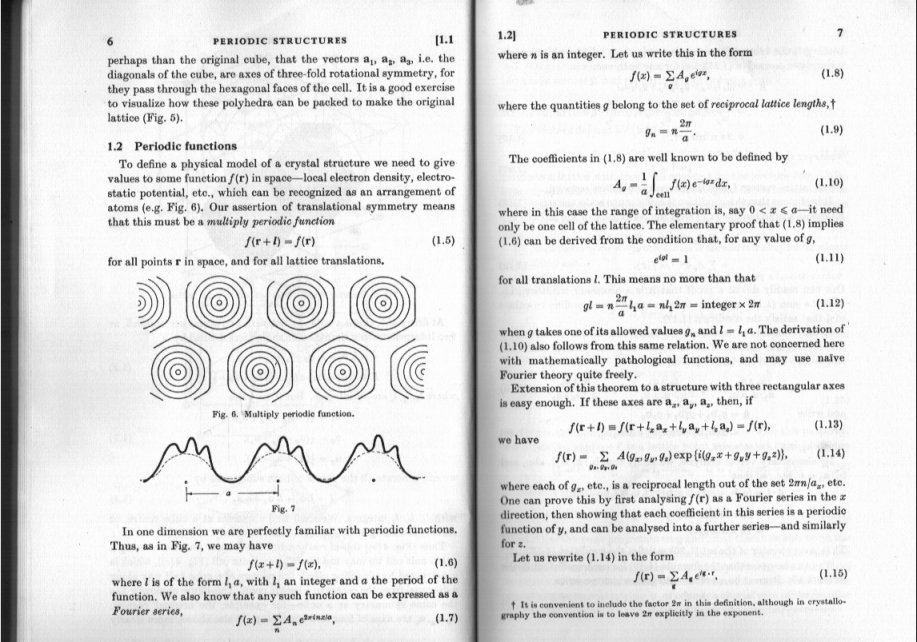
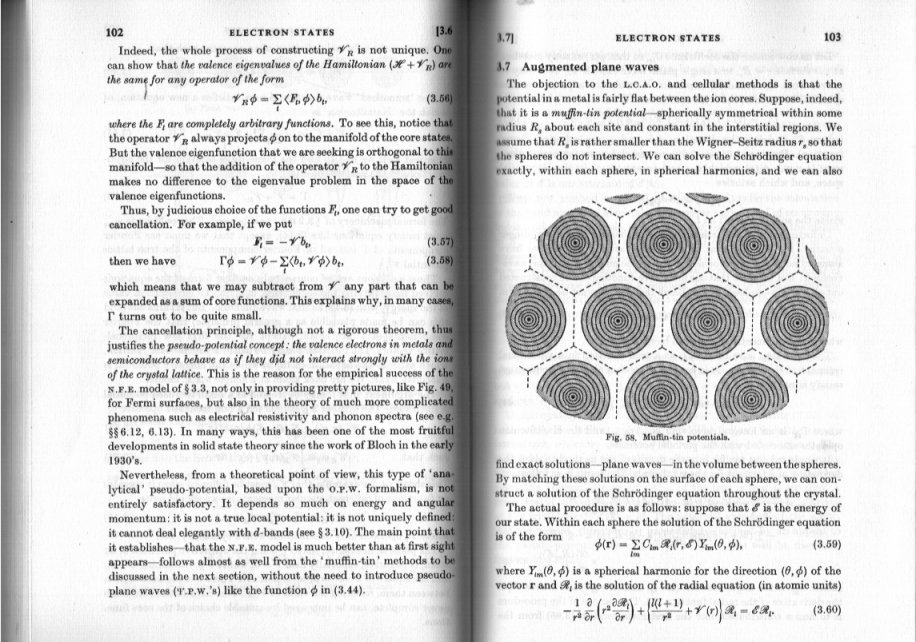
This shows a remarkable lack of understanding of basic Physics, which is no good for your attempt to provide hand waving explanations for your proposition. Electric lines of force are quite different from magnetic ones. Electric lines do not go from positive to negative or the other way round. In fact there is not even any need for both polarities to be present. There is similar lack of basic Physics uunderstanding here. Where is frequency involved in your model ? You can do only so much with a hand wavy model, otherwise I might just as well propose a chain of yellow and green fairies holding buckets and passing the photon from bucket to bucket. Swnasont has called for some mathematics and you model puts me in mind of the many lattice models that have been studied extensively since the 1920s Here is a good way to find out about the sort of mathematics that is needed. From Prof Ziman's book which is essentially a study of the existence and propagation of fields and particles in lattice arrays. Principles of the Theory of Solids Ziman Cambridge University Press The muffin tin potential is in some ways a latter day development os Maxwell's idea
-
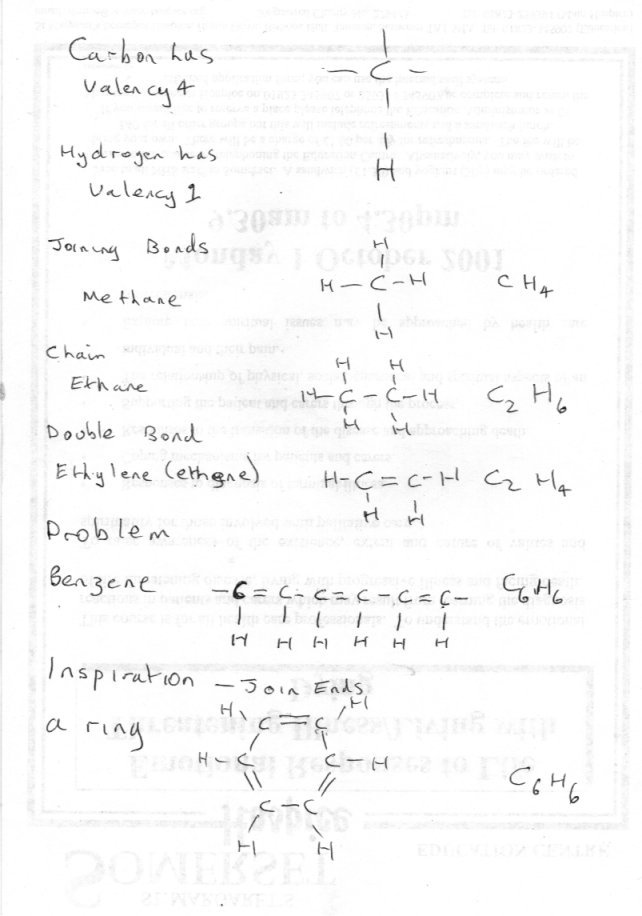
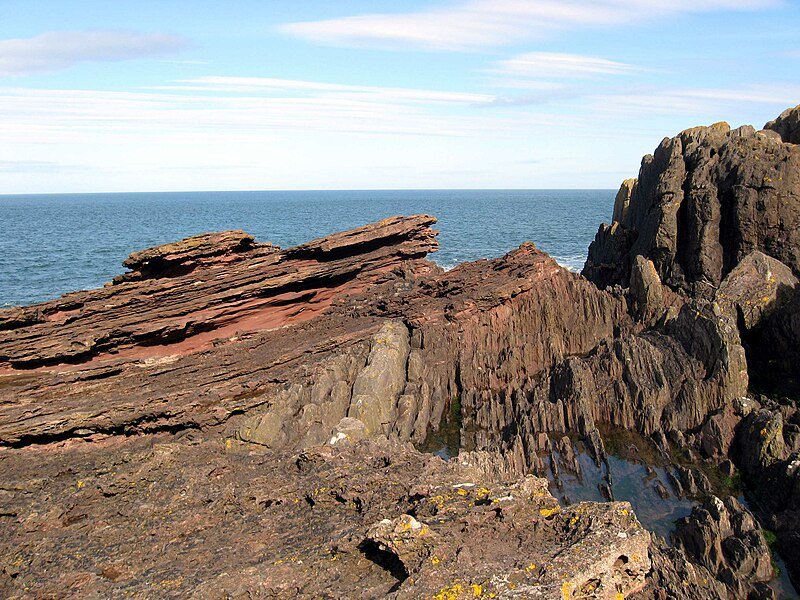
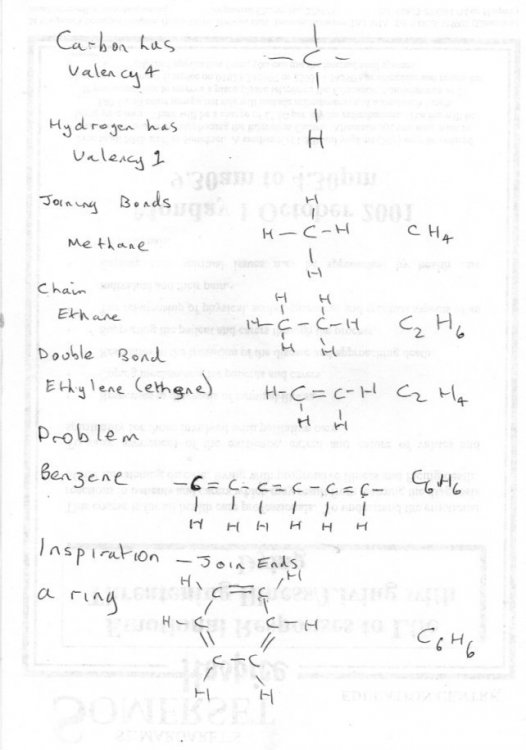
People have insights all the time. Most of these come to nothing when a colleague says "Dont' be silly have you considered it weight ?" or somesuch. Then the thinker has a facepalm moment. Just sometimes a real inspiration occur. Here are 3 examples. I will use these to further develop energy and valency in this thread. So firstly binding energy. A nucleon is a name for particles we find in the nucleus of an atom - protons and neutrons. When nucleons club together in certain ways they form nucleus. The energy that holds the club together is called the binding energy. Now each element has a differnt binding energy and if we divide each of these energies by the number of nucleons in that particular nucleus we find something interesting. The binding energy per nucleon is not constant over the range of elements. In fact there is a definite maximum bining energy per nucleon if we plot a graph over the range of elements. The element with the most binding energy per nucleon is Iron (Fe). I have drawn by hand a red dotted lin on the plot. It is meant to be straight and forms the divide between whether we can get energy from fusing nuclei together on the left or energy from breaking them apart on the right. Second inspiration was at Sicar Point and occurred to the Geologist Hutton many years ago. He saw layers of rock laid down directly horizontally on top of layers of rock that were vertical. He recognised the important geological significance of the and defined the Unconformity where things had changed dramatically. Finally we have a time when chemists had analysed many carbon compounds and understood that the valency of carbon is 4 and that of hydrogen 6. They further understood that carbon atoms would use one or more of these valency 'hooks' to join to other carbon atoms perhaps in 'chain's of carbon atoms instead of using all of them to join to hydrogen atoms. But there was aproblem with benzene. They couldn't make all the hoohs pair up. One day, in a dream, the german chemist Kekule saw writhing snakes and watched one of the snaked grab its own tail, forming a loop. When he woke up he realised he had solve the benzene mystery. The sequence below should further help you understanding how valency works and Kekule's dramatic inspiration.
-
Newton and Einstein had the advantage of practical work already done by someone else. The point of this practical work was that it did not conform to the then thinking. The influence of both their insights not only answered the original problem that arose from observation not matching theoretical expectation, but spread far and wide into many other disciplines. That is why they were so important. The practical came first the insight followed on. So there is little point complaining that theorists have not come up with anything new. Again from the UK point of view. A century and more ago the UK government began creating research establishments at University and above level. These embraced diverse subjects from agriculture and forestry to hydraulics research to military to building and many more. In the last 50 or so years, successive governments have been busy closing them down and/or selling them off but generally pulling out of this sort of thing. We are steadily loosing the capability to do the experiments that throw up the big questions of "why does this happen this way, and what else can I do with it. ?" Love it. +1
-
It's the sort of thing that is being studied in what's called (Higher) Arithmetic these days. The Higher Arithmetic Davenport Cambridge university press
-
It's not a trick question, its designed to test the limits of computers. Wolfram Alpha gave up when I asked it. There are 7 factors, all different. One of them is very large itself. Of course they are all prime. Isn't that a requirement for factors ? The second one is 353
-
I can't agree with Sabine or her harangue. Nor was I impressed by the camerawork continually switching viewpoints. I don't agree with her premise that there has been no progress in the last 50 years. Just that she is looking in the wrong place for it. Yes I am sure there are problems in academia, but I have emboldened your second question as it contains where I think some of those problems lie. "Specifically" is the key to me. Specialisation. Not just in Science, but since you ask, specifically in Physics. Here I have to confess to being partly a victim of my own comment since I can really only speak authoritatively for the UK and there is a much wider world out there. That is not to say I think everything in the garden is rosy, but there are also external factors in play, the largest being political interference.
-
Yes 17 is the only 2 digit factor (in decimal) The next one is 3 digits and the one after that 6 digits.
-
yes starting with the shortest one is good.
-
thanks for that expert opinion. +1
-
Some official current practice sites https://mathshub.thirdspacelearning.com/ https://assets.publishing.service.gov.uk/media/5a7da548ed915d2ac884cb07/PRIMARY_national_curriculum_-_Mathematics_220714.pdf factorise 2484 + 1
-
When I first started arithmetic (we put sums on the fron of our exercise books) we didn't write mathematical expressions like or do brackets or equivalence classes 567 + 123 = We laid out our 'sums' like this (sorry I can't get this site to represent a continuous line under the sum) [math]\begin{array}{*{20}{c}} 5 & 6 & 7 & {} \\ 1 & 2 & 3 & {} \\ - & - & - & + \\ 6 & 9 & 0 & {} \\ \end{array}[/math] and [math]\begin{array}{*{20}{c}} 5 & 6 & 7 & {} \\ 1 & 2 & 3 & {} \\ - & - & - & - \\ 4 & 4 & 4 & {} \\ \end{array}[/math] Muliplication and division was laid out similarly. After the idea of fractions was introduced as already noted in a previous post we found that fractions as the ratio of two numbers became messy and this led on to the idea of decimal fractions, laid out in the same way but now with a whole number part a decimal part and a decimal point. I don't know if they still do this in school but I do worry about loss of the development from arithmetic into algebra in these days where no one actually needs to do calculations this way.
-
https://simple.wikipedia.org/wiki/Island_of_stability https://www.thoughtco.com/island-stability-discovering-new-superheavy-elements-4018746
-
There are a little over 80 stable or long life radioactive naturally occurring elements. There are a little over 10 extra elements which are shorter life radioactive and can occcur naturally on Earth or elsewhere. The rest of the known elements up to the 118 currently known have very short lives indeed so we don't find them naturally, we only find them in reactions as intermediates towards some other element. So in the last 50 years we have discovered something like 50 previously unknown elements. Some of these were predicted before actual discovery. In the same way calculation suggests there is an 'island of comparative stability' between elements 125 and 135, if we can find them. 150 is a nice round number that may be realised within the next 50 years.
-
The second line is a bit Irish isn't it ? The pattern I am thinking is All material matter is made of ↓ Either pure substance or a mixture of pure substances. ↓ Pure substances are made of ↓ Molecules which are all the same ↓ Molecules are made of one or more atoms of the same or different kinds ↓ There are many (millions) of different kinds of molecule but ↓ There are only about 150 kinds of atom. ↓ Each different atom is unique to a particular element ↓ Each element is represented once only by its own symbol in the periodic table.
-
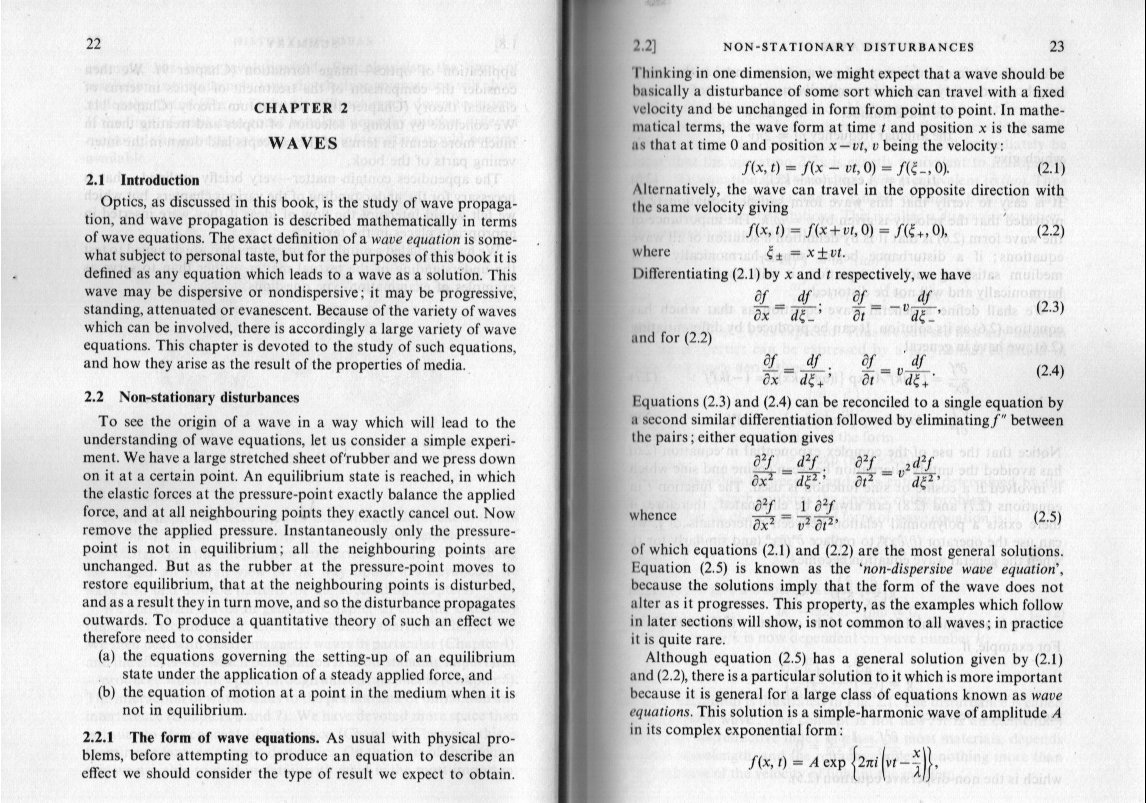
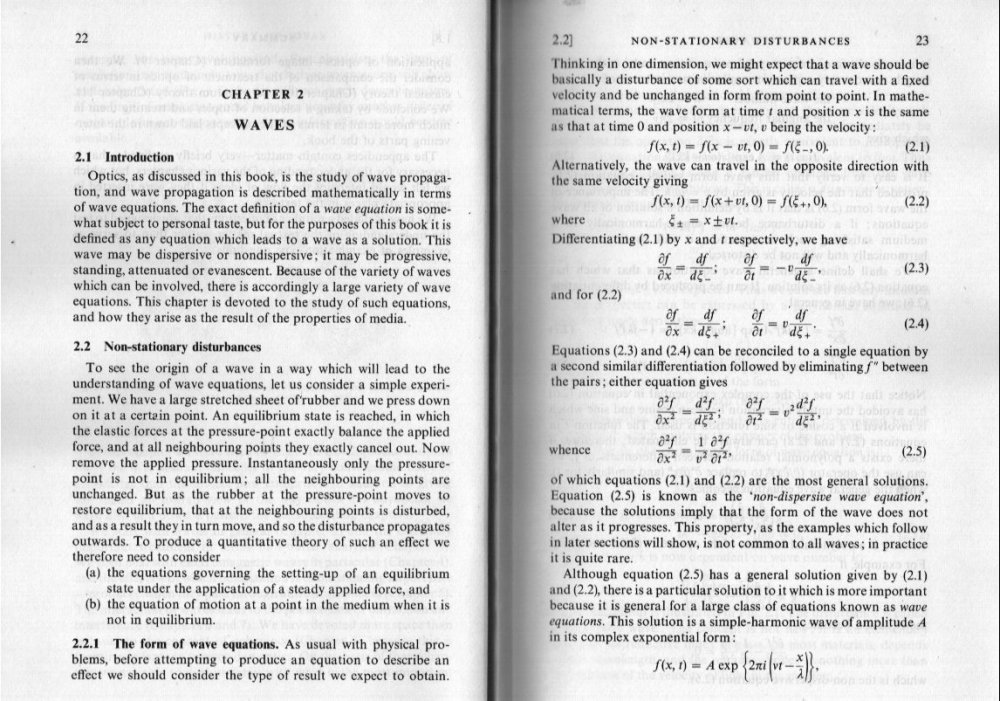
As a guide here are a couple of pages of very good advice of how to develop your theory of how your medium can support and transmist EM waves. From Optical Physics Lipson and Lipson Cambridge university press.
-
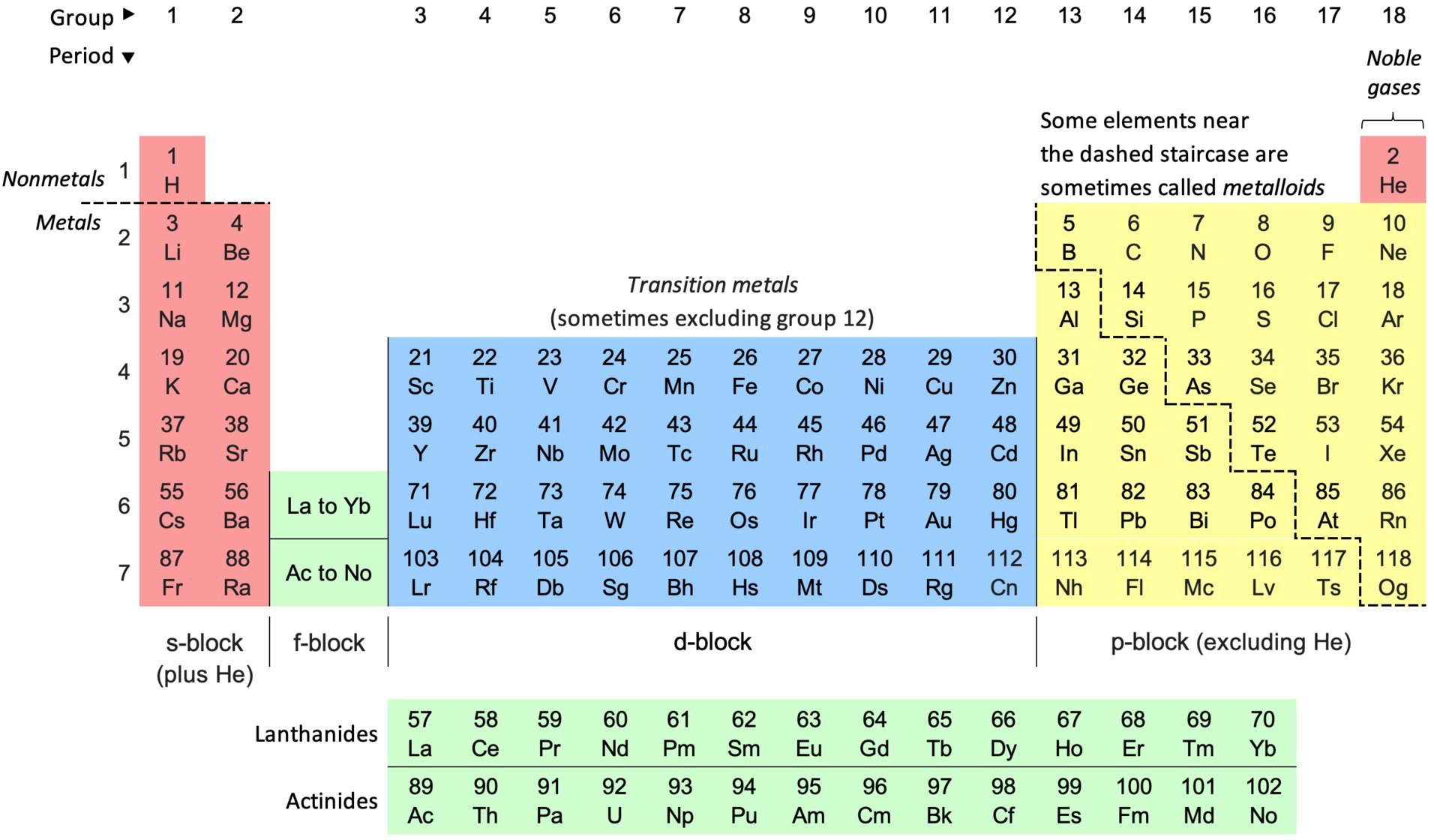
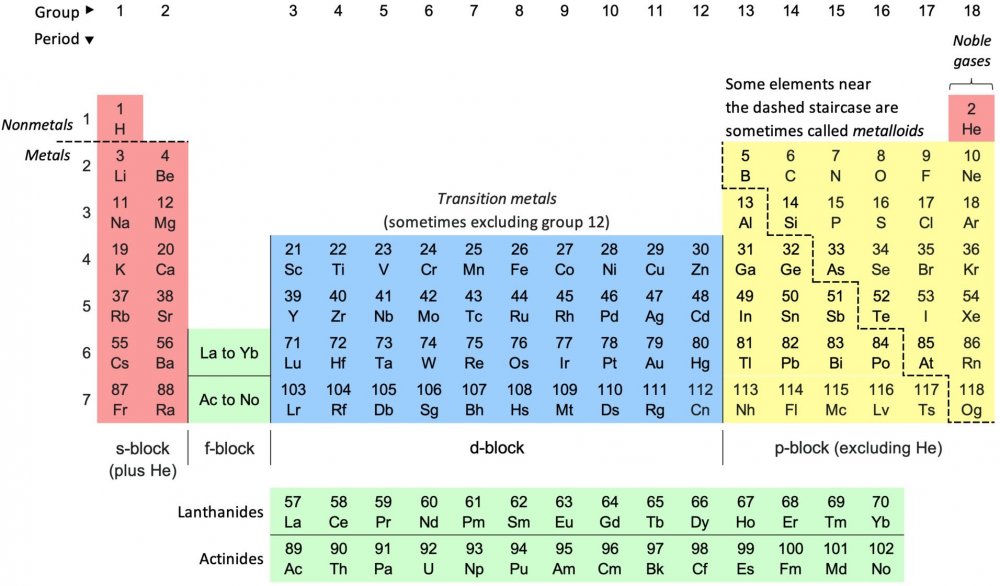
Here is wikipedia's period table and a link to the Royal Society of Chemistry interactive one which is a good one to play with https://www.rsc.org/periodic-table Wikipedia uses the term noble gases (an old fashioned term) for what I call the inert gases. Helium (He) is the one with the smallest molecule and appears at the top of the extreme right hand side of the table. The combined two pink columns on the left and 6 yellow block on the right comprise my 0ctet (8) original table. Don't worry about the blue and green for the momment. I just picked oxygen as an example I thought you might be familiar with. The point of valence is that you can't just make up combinations od different atoms (ie different elements) there are rule of combination some rules tell you if they combination is feasible. Valence tells you how much of each will combine if the combination is feasible. Keep asking questions that's the way to understanding.
-
Is this fake news for disruption purposes ? Remdesivir is still the treatment of choice in the UK https://www.nhs.uk/medicines/remdesivir-veklury/how-and-when-to-have-remdesivir/ Perhaps @CharonY can advise us reliably ?
-
A molecule has to be made of at least one element. Helium is an element that does not bond and is called an inert gas. A helium molecule contains exactly one atom of helium and nothing else. By contrast an oxygen molecule contains 2 atoms of the element oxygen only and an ozone molecule contains 3 atoms of oxygen only. A carbon dioxide molecule contains one atom of carbon and two atoms of oxygen. A water molecule contains one atom of oxygen and two atoms of hydrogen. Air is a mixture of nitrogen molecules, oxygen molecules and carbon dioxide molecules and a very small percentage of other molecules Can you see the pattern beginning to develop?