
studiot
Senior Members
-
Joined
-
Last visited
Everything posted by studiot
-
I also asked what is your connection to this issue ? and About the doctor who would have to implement your scheme. Both of these had question marks at the end and have not been answered. In respect of that second question about the doctor, I have in mind a couple of incidents I know of. In one a doctor had to climb onto the steelwork of the Severn Bridge and cut off a limb from a trapped worker in order to free him. How do you think that doctor felt about that ? Secondly someone I was close to underwent compulsory ECT. Again it 'worked', but destroyed their creativity and turned them into a shell. Nor were the effects permanent. So let us discuss the ethics of such actions and the effects. not only on the patient but also the doctor(s).
-
So what about Reynolds Number ? I chose this one because it is probably the one most likely for you to have heard of, but there are plenty more. You can't get more physical than the ratio of inertial forces to viscous forces which determines the flow regime.
-
Perhaps you should review your command of the English language. You can usually tell a question by the inquiring phraseology/tone of the words and the question mark at the end. Alternatively the questioner can phrase the question more politely. So please don't tell me that I haven't asked any questions in my own language.
-
So are we agreed that your train of thought was incorrect in stating that it requires Pi to have units ?
-
What about this phrase of mine leads to you think that I assumed anything at all ? And you still haven't answered my questions.
-
Please explain this apparantly unconnected response and answer my questions.
-
Let me ask you this simple question. What proof or evidence do you have to back this claim up ? I ask because your use of 'it must' and 'thus' means that you consider there is some Law that requires this. So please outline this Law. I observe that any worthy summary of Physics will contain a section on 'dimensionless constants' , such as Reynolds Number, which have no units but definitely affect that which they are applied to, in defiance of any requirement to the contrary.
-
How is that an answer to my comments ? What I do not understand is you connection to this issue or why you have abandoned answering in your previous thread ? I wonder if you have any idea at all of what a doctor goes through when treating a patient necessitates damaging them in some way ?
-
I asked you a very clear and simple question, in the hope that you would gain something from it. But you did not answer, instead choosing to hide any response in a flood of meaningless text. I will now ask another one. What is the difference between circular language and ontologically circular language ?
-
Oh. And there was I thinking that it would cause chicken little a great headache if it fell. 😄
-
Agreed +1 But my example would be "I am not well versed in this discipline, but I want to dictate the ethics of the way the real experts go about it" type of question.
-
That's playing with words. You can't have energy density without energy, which you claim emerges later. I could also say you can't have density without volume and therefore space either. In my opinion this conundrum is faced rather badly by all attempts to extrapolate backwards, including those claiming a big bang of some sort. I have never seen one that doesn't start hand waving when pressed. But then it is only one spectacular failure in a long line of such failures when over ambitious extrapolations are attempted, going back millenia yo mthe Bible trying to set the Earth age by adding up ages of a few named humans. By the way do you understand the difference between extrapolation and interpolation ?
-
And yet didn't you refer to energy density before everything else ? And isn't that a loop ?
-
Nah it's just in a time loop of its own. +1 😄
-
You may well be right about the funding. But promoting this issue by conventional methods doesn't seem to gain as much traction as social media pressure (groups) these days. Of course, letters, emails and so forth can easily be ignored (forgotten or lost) and only the sender is any the wiser. The pressure generated by the much more open and public social media seems more effective these days.
-
Really ? Then why is the title "An appeal to help........" and the first post states in bold, I am merely wondering about the effectiveness of writing to congresspeople. Which seems to me to be a clear statement of the objective of this thread. I have, at no point, attempted to discuss the effectiveness or otherwise of the technique as I don't know enough about it.
-
RFK has made this administration focus on the chronic disease crisis: Incoming trump admin with RFK signals new start for FDA It's what I was explicitly told by a staffer, and after my 9 months here in DC, it seems to be the way things work. The second comment seems irrelevant. Thank you for dismissing my questions so lightly. I am not american so I don't have first hand experience of writing to 'my' member of congress. But if my experience of writing to my elected reprentative in the UK is anything to go by, such a letter will just be ignored. So please answer the question I asked. How will this new regime force the medical suppliers to do anything ? It was rather rude to dismiss my example in such a way since those who directly suffered (and in some cases have died) when their voice (or letter) was silenced.
-
I note the self styled professor has been active since my post by hasn't deigned to answer my question directed at him about the 38% since he was the member who introduced that specific figure into a general statement about the effect of gravity on medicine. (Which I quoted). Thanks to those who pointed out that this is the gravity of Mars. My second point seems to have engendered knee jerk reactions to my second point, rather than discussing the only actual evidence we have about the effect of gravity on recovery outcomes.
-
It's a right question. I think because theoretical physicists uses only math, and do not consider the phylosophic problems of particles. They adopt, by default, particles in the absolutely empty space (Nothing), which is impossible condition. Thank you for your reply. But you didn't say what you think a particle is. So please tell us since that is crucial to your proposal. One further question, how does your model describe shadows ? What are they made of ?
-
In all honesty most of the would be Pi is something else brigade have actually latched on to some obscure (real or imagined) effect which has Pi in its definining expression. They then treat this as the definition of Pi, rather than the other way round, and claim all other uses are secondary or flawed. Again rather than introduce a new constant or parameter for their purpose. So I prefer to wait and see what mike has to say when he can add to (improve) his posting.
-
I see you are also a maths wannabe But of course there are units in maths - it is how we distinguish between length, area and volume and how they are handled, for instance. How about this famous identity ? [math]{e^{\pi i}} = - 1[/math]
-
Before I bother to look, someone please tell me that this is not another one of those golden ratio cranks. They can hangout 20 pages of drivel without blinking an eyelid.
-
No you got that one wrong. It would be reasonable to request a discussion to help you clarify. Since you like arguing with your teachers I hesitate to say this but they are one of the most useful factors in your education. This is because they provide something that cannot properly be provided any other way. Good teachers provide marked work. That is they go through the reasons why and why not. Further you say that this was an internal test. Again a good sign lost in the West with too much management of 'education'. The point is that you learn more from your mistakes than getting something right. So doing things, getting it wrong and finding out why is part of learning. But you need to get them wrong with no penalty, hence the internal test. But you have also told us that you are not interested in Science in the long run or in academic progress. Setting this aside, a quick run through of the issue. Reactions can be classified in many different ways, depending upon the point of interest. Sometimes several different categorisations apply as with combustion and oxidation. Howevver not all combustions involve combination with oxygen. Also not all oxidations involve oxygen at at. Combination with oxygen is the most elementary definition and a starting point. What definition do you have ? I fully expect the test was to see if you know and understand the 'core lisr' you posted. So I am glad to see that you were actually thinking about it. A good trick to master for exams and tests is to be able to pick out the answer the examiner is looking for if there is more than one possible.
-
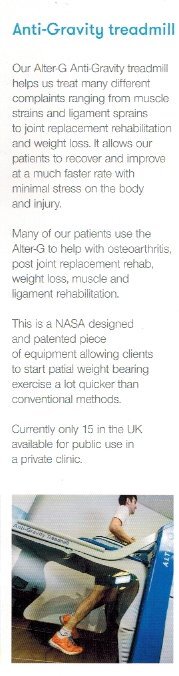
First Where did the figure of 38% come from ? You need to provide references for this. Second I agree with the point that if you were unwell enough to need the surgery, how would you fare in the ascent from Earth in the first place ? However Both NASA and my local sports medicine clinic disagree with Ken's bald statement about worse outcomes. Do you have evidence for this Ken ? I don't wish to advertise but my only reference for this comes from their information so I have clipped it. I have never needed this treatment, but their other NASA piece of kit (photobiomodulation) certainly helped with my osteo arthritis condition.
-
It is not clear to me. A plane is of genus 0. Which means we can shrink any circle on the surface to zero ie a point. Which is what the OP asked us to do. But that does not imply that any 'packing arrangment' of such points will fill the plane, you have to use the right one. But no you cannot Tesselate a plane with finite circles.