
studiot
Senior Members
-
Joined
-
Last visited
Everything posted by studiot
-
My lounge amp is a Kenwood KA550 from that era, probably very similar. So from the spec sheet you have two tape outputs, one to DIN and one to RCAphono at 350millivolts RMS. A S/H Rotel RX403 is currently fetching around £139 on the net. It's lunch time now so I will look for suitable transponders this afternoon. I note there are a couple of new posts on the old thread that appeared after the move. Thank you swansont. Connections Number of inputs: Phono MM: 2 mV, 50 kOhm. Aux: 150 mV, 50 kOhm, max. 15 V Tape Play: 150 mV, 50 kOhm, max. 15 V Antenna FM (75/300 Ohm), MW (300 Ohm). Number of outputs: Tape Rec: 350 mV, 3.3 kOhm. Tape Rec DIN: 120 mV, 90 kOhm Headphones: 2 pairs of speakers
-
Well I don't know, as usual our politicians have f___ed up in their legal drafting. I find some measure of information useful as I try to pitch my responses to the correct level for the poster concerned. You may have seen me ask general innocuous quests for this purpose. Personally I distinguish with legitimate organisations I choose to deal with and those two rags who seem to thing I have nothing better to do than answer the phone calls. But the thing that really get my goat are those who ring up and then demand that I prove my identity, but get really irate if I say "Well you rang me, what proof of who you are can you offer ?"
-
What's wrong with your other thread ? Reported
-
The standard tape output will be about 100mv rms, the old audio inter equipment standard. I presume you amp is too old to have a digital audio output, either coax (RCA or Phono) or Optical. I use the optical (Toslink) with my telly. What is the make and model of the amp please? Note I have asked the mods to hive this off as its own thread as it is of more general and long term interest.
-
Like the way you have summed it up. +1 However there is still more than one way to skin a cat. I don't know anything about echemist's kitchen or the availability of UK mains sockets or where he wishes to place the speakers. So here are a few thoughts. Modern mains sockets often incorporate a USB outlet with sufficient power to power an ordinary speaker. Plugin usb adaptors with a 13A passthrough are also available if there is a shortage of three pin outlets. It may be cheaper to get remote usb speakers than comvert the Dentons. There are some pretty good ones available nowadays. There are also modular boxes available that could power the Dentons if you are set on keeping these. But modern solutions will take up less space. It may not be necessary or convenient to convert the audio signal to wifi. It is desireable to digitise it (though I would use a signal level not power level output eg the tape at the amplifier - I do this for the TV at home). The digitised signal may also be transmittable through the house mains. I have done this on lots of occasions. If wifi is necessary, this can be done using a cheap converter box designed to send a signal to wifiheadphones. Last year I set up one of these to send a signal from my daughter's electric piano to her wifiheadphones. @exchemist If you are interested in any of these ideas, I will see what details I can dig out.
-
My apologies I omitted the name of the last author it is Prof Michael Benton. One other thought. It is useful and common these days in paleobiology to link the timeline to other physical geological events (the sort I am more interested in), especially in the light of plate techtonics and 'continental drift'. Going by actual years ago, rather than geological ages, is better because they occurred at somewhat differnt times in different parts of the globe, and also they have somewhat differnt names in different parts of the globe, names that are still being chnged. So here are few more sources. The Winters of the World Brian John (editor) David and Charles A timeline of ice ages Eruptions that shook the World Oppenheimer Cambridge University Press Obviously a history of vulcanism. The Emerald Planet Beerling Oxford University Press A history of the atmousphere Origins Ron Redfern Cassell and Co The Evolution of the Continents, Oceans and Life.
-
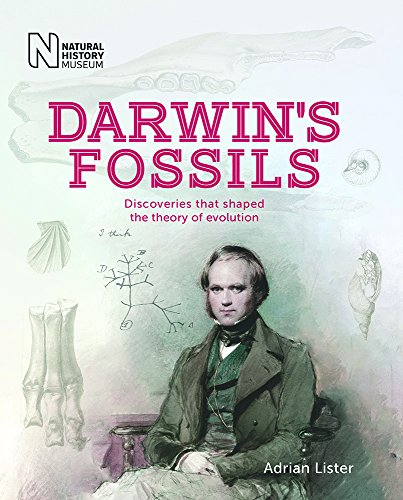
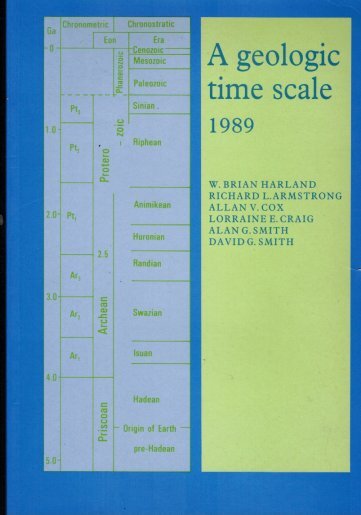
Hello and welcome, nice to see a real science project. My interest has always been more physical geology than palaentology so the few books I have on that side of things tend to have hand drawn sketches. Nevertheless here are some thoughts. First Adrian Lister has an excellent book published by the Natural History Museum who hold Darwin's fossil collection. It is a cheap full colour book well worth looking at to see how they did it. The Nat Hist Mus itself is also well worht the visit. A few years ago I obtained this book from Cambridge University Press which gives calibration data for timelines. It's quite a thick A4 book that goes into minute detail. The science book of the year 2024 is interesting and gives the most up to date taxonomy, though the few diagrams are poor. A better book in some ways by the professor of Palaentology at Bristol is When Life Nearly Died This has quite a few useful dated timelines of the sort you describe.

-
Once again I never said anything about those possible effects you mention. Anyway how about walking me through the mathematics of Cavendish experiment set against your continuous background of that enormous density ? You say forces are transmitted. So what does the force vector diagram look like ?
-
Solid has a specific meaning in physics, chemistry materials science. How are you using it here ? What is its temperature ?
-
What don't I get ? Why the addition of lots of weasel words and mangling of Phyiscs to state something - I don't know what something.
-
Are you a monk as well ? 😄
-
The red flags have nothing to do with me, so why are you raising the subject in our discussion ? Again none of this has anything to do with either me or the subject I offered to discuss, which was your original question. So you asked a good question and there were some antis. That happenns to most people on most threads. Yet when someone wants to discuss your proper question in mature fashion your response is thanks but no thanks. Even after you have had some reasonable comments from others. So why did you ask the question in the first place ?
-
So you confirm that you asked an AI to refute my earllier comment .
-
Oh come on. How did you open this one ?
-
Well spotted. +1 Is this 'paper' laid out like your opening post or is that your work ? Do you have the knowledge to discuss the foundatioins of mathematics sensibly ? For instance do you know the difference between the constructivist and intuitionist methodology. There are (infinitely) many 'infinities'. Which one are you talking about ?
-
I didn't say any of this. I said 'something'. And I know you called it luxia. However any 'something' that can offer such an enormous density offers a pretty good resistance to any motion of matter at all R I P Newton's laws. And no you cannot say that any physical quantity means one thing here and something entirely differenly somewhere else. And yes I know that some differeng physical quantities have the same units eg kg-m But they also have different physical names so they dont get mixed up. Humans are still smarter than AI nonsense.
-
Unfortunately for them, the Moderators have to listen to it in order to assess it. You don't have to like their response, but you have to abide by it on this site, just as you have to abide by a supreme court decision in the United States, whether you like that or not. Thank you for this AI generated nonsense.
-
I didn't say it was nuclear density. If you expect others to read your many words properly, you need to reciprocate by reading their few words just as properly. What you are saying is that the space between nucleii is filled with something of unimaginably greater density than the nucleii themselves.
-
I am quite dismayed by your response to my offer. If you have read it at all, you don't seem to have understood it, as your response bears almost no relation to my words. And yet I note in your posting a great and significant ability in the english language, when expressing yourself as set against what seems to be a very limited ability to understand the expression of others. My offer was designed to help overcome this dichotomy.
-
I won't spoil the punch line But try this online or in pdf https://pdfroom.com/books/the-nine-billion-names-of-god/avd96xR0gKD
-
I'm not disputing any of this, but your mention of Archimedes reminds me that there are two other outstandings causes of death missing. War Slavery
-
Would you like to explain this statement demonstrating the difference between a probability wave the a quantum mechanical wave function ?
-
Here is an open and honest offer to take this question as a serious attempt to improve your performance / knowledge, rather than criticising or arguing with it. If you are serious about this question, and I tell you that educated people take it seriously, I suggest it would be a good idea to place it in its own thread away from all this playground name calling. History is rich in great examples of different ways to discover something. How about it ? Over to you.
-
This brings to mind a tug boat captain I worked with in the Gulf. He explained to me how he was all steamed up about a new cooker he had back home in Texas that had gone wrong. His thesis was that the company should have beta tested it properly before general release to the shops and that he wasn't going to be an upaid tester for anybody.
-
Hi Markus, Have you ever read the scifi short story by A C Clarke ? The nine billion names of God ? It is about monks in a monastery and a (their) computer. I think you would find it interesting.