studiot
Senior Members
-
Joined
-
Last visited
Everything posted by studiot
-
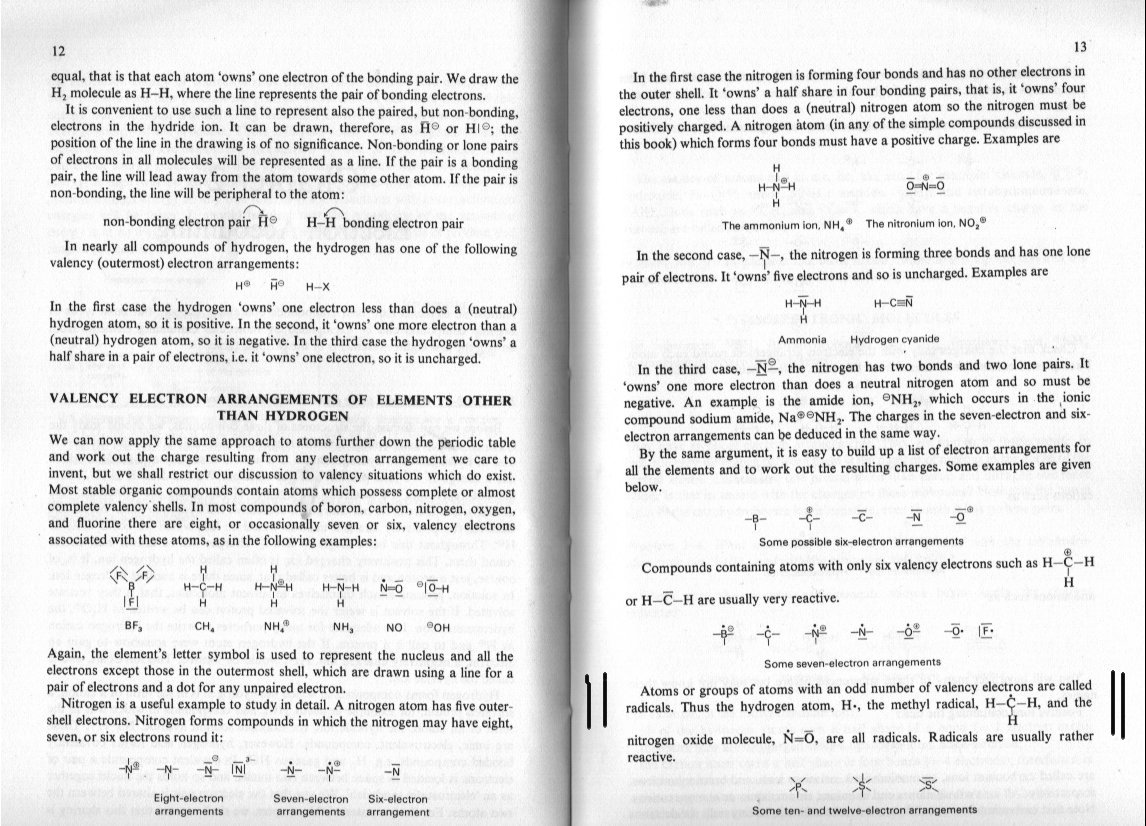
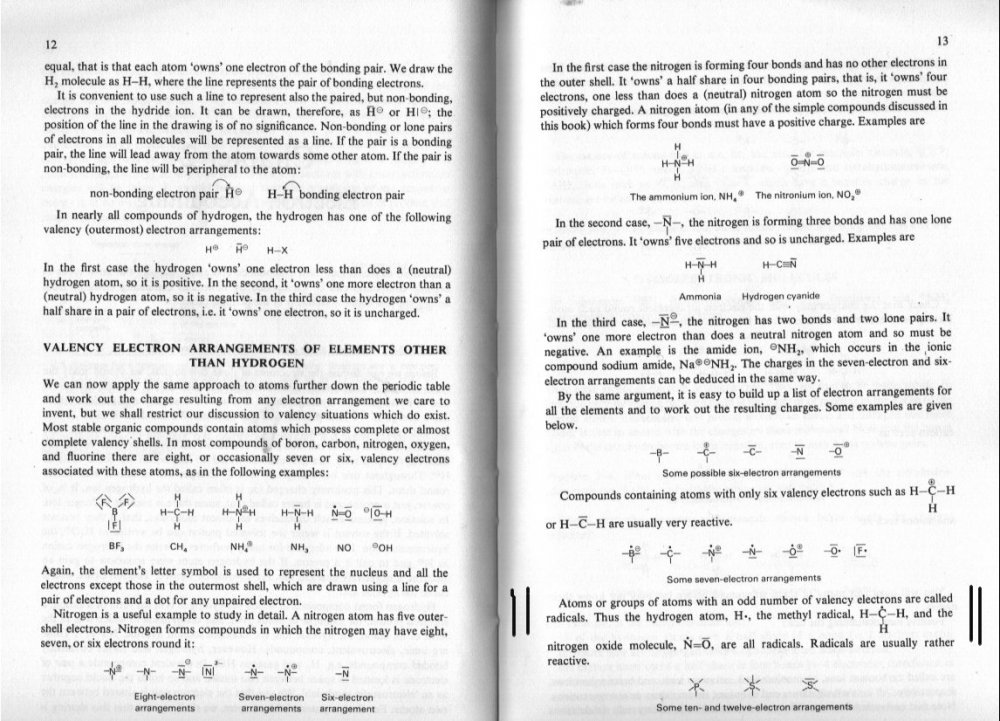
This might help How many valency electrons did chenbeier say Br- has ?
-
Just to expand on swansont's words. Can I gently suggest/offer a lesson in basic efficiency Physics? It take some energy once and once only to get a generator mass spinning. Once spinning all you loose (inefficiency) is the frictional loss in the bearings. The greater part of the input mechnaical energy is output as electrical energy. Of course there are also the inefficiencies of converting thermal energy to mechanical energy.
-
Two things are clear to me. 1) All other participents understood the gist of what you said the first time round so there was no need to repeat it. 2) You didn't listen to anything others said, since for instance you repeated your valence electron error (underlined), which is probably why you didn't respond to anyone.

-
Yes. That is what I want to discuss. Unfortunately my thread has been hijacked by Jogius with a torrent of meaningless nonsense, irrelevant jargon and personal abuse. Thank you for your answer. Have you read this paper ? It is only 3 pages long. However I cannot see a link between this first part of your opening post and thread title. and the second I was hopingyou might explain this in some detail ? In particular I am puzzled that you have introduced an expression involving 'Force' and 'Time' when the reference does not mention force or time anywhere. I am further puzzled by your notation. What exactly do you mean by [math]F\left( {\int {V.dT} } \right)[/math] ? Are you intending an inner or dot product ? How does this work with a vector and a scalar ? What physical quantity do you think it represents ? The only real agreement between Einstein and yourself seems to be that in both the 1905 papers Einstein was working with 3 dimensional vectors as you appear to be. Of course, in 1905, four-vectors had yet to be introduced in Physics.
-
The one thing that doing your homework for you is not is kind. I don't see any attempt described here.
-
Yes you may have done, but did you give a proper reference ? Are you referring to the 1905 paper Ist Die Tragheit eines Korpers von seinem Energehalt abhangig ? : Annalen der Physik 17, 1905 (Translated means - Does the inertia of a body depend on its energy content ?) Which is a short paper that ends with the conclusion Or are you referring to section 10 of the 1905 paper on Special Relativity - The electrodynamics paper ? Which section is entitled (translated) Dynamics of the slowly accelerated electron.
-
Actually it's alkali that attacks glass, not acid and lead salts of most acids are not very soluble at the best of times. And 15 minutes. But hopefully like burning one's fingers once, one hopes to learn not to take chances again. Also the stuff will accumulate more in the dregs, and I doubt the child sipped those, but the good professor from Carolina probably analysed the whole contents of the glass, dregs and all.
-
Thanks for the answer. The OP doesn't appear to have been back and clearly copy/pasted words from somewhere (the background gives it away). The question looks to me like one of those stupid projects set by arts graduate teachers to 12 year olds, who have not yet had the benefit of much Science teaching. If this is the case then it would be good if we could offer some proper analysis and guidance, for instance pointing out that the elctron is 1800 times lighter than the proton/neutron and there are an average of perhaps 50 of these in a typical metal so most of the input themal energy will go into increasing the vibration rate of the nuclei to raise their temperatures.
-
A good way to measure it. But remember that would be after the wine has stood in the glass for a couple of hours. As chenbier noted how many sips per teaspoon ? And how long was the wine in the glass ?
-
Impossible to provide a number. But you should take heart because it can take at least an hour, probably several before appreciable amounts of lead appear in the drink and this is per litre ot per glass. So divide you figure by the number of glasses per litre, divide it again by the number of sips per glass and divide it again by a factor of 2 or 3 depending how long grandma held the glass before little one tried her couple of sips. So I doubt any harm was done in this case but just make sure lead crystal glasses are not used again for anybody. North Carolina State University carried out a study of how much get into a glass and how long it takes. Angela M. Fraser, Ph.D., Associate Professor/Food Safety Specialist, and Carolyn J. Lackey, Ph.D., R.D., L.D.N., Professor/Food and Nutrition Specialist, North Carolina State University (2004)
-
Is this a school project ? Well spotted. +1 25% * 2 = 50% Why stop there ?
-
I will answer this for you as many others have this false impression that QM only applies to the very small. This arises because the energy (transitions) involved are very small and therefore individually only affect very small particles. So an individual quantum energy effect (transition) can only affect a minute part of a (large) macroscopic object. However when lots of these small transitions all work together they can affect large objects. The effects include our everyday Physics so this if I push a large block of metal, it is all the small quantum effects working together that hold the block together so that it can move as a solid body under Newton's Laws. No esoteric Laws and effects are required. The whole of our macroscopic world works as it does because QM is the way it is. Hope this helps others as well. Season's Greetings to all.
-
Thank you for a practical demonstration that many youtube videos are unreliable, so as to be unusable as a source of evidence. Which is why they are frowned on in ScienceForums. I will be able to point to this thread in future as good reason for upholding that policy.
-
How long is a piece of string ? You haven't said what you have been taught so far or what you are objecting to. There are no short cuts and there is great danger in trying to take them. Both the differential calculus (which joigus mentioned) and the integral calculus are of vital importance in Physics, Chemistry and Engineering and increasingly so in the softer sciences like Biology and Economics. The important thing for someone wanting to benefit from the calculus is to understand what is going on. Tables of results and algebraic manipulations are readily available but you can't manage without being able to follow so many derivations. For examplea The potential energy of an electric charge in an electric field is evaluated by performing an integration of the work done as we move the charge from infinity to its position in the electric field. Both the First and Second Laws of Thermodynamics require knowledge and understanding of differential and sometimes integral calculus to be able to use them. Even the simple equations of kinematics taught in secondary school require this if derivation or more advanced application is needed.
-
You also started another thread to ask this question about LaTex. I explained how to post tensors at SF in that thread for you, but I don't seem to have an answer.
-
Well I'm sorry I don't have a single favourite book. Also some engineering books go out of date rather quickly these days. So here is a dozen of my most thumbed. Joel : Basic Engineering Thermodynamics. Kreysig : Advanced Engineering mathematics Dake : Introduction to Engineering hydraulics Douglas : Solutions to Problems in Fluid Mechanics, vols I and II Shepherd : Advanced Engineering Surveying Rees : Mechanics of Solids and Structures Singer : Strength of Materials Lambe : Soil Mechanics Halsey : A Reference Book for Electrical and Telecommunications Engineers Clayton : Linear Integrated Circuits Hall : Microprocessors and Digital Systems Downey & Rogers : PET Interfacing
-
That's a very good question Do you have a very good answer ? Why, ? Photons have no reduced mass.
-
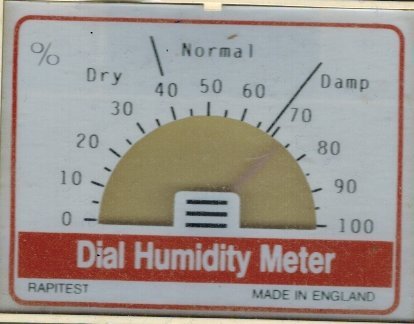
Interesting. Here is a picture of the hunmidity meter next to my computer today at 73% It rarely falls below 60% here and is often offered as the reason why the Englishman has a high rate of respiratory disease. I can sympathise with the cough etc, mine is due to PND.
-
We are (all?) washing our hands etc more and doing so with chemicals we hope will degrade coronavirus. So would this lead to the demise of less resistant variants and development of those strains that are more resistant ?
-
[math]\begin{equation}\bar{A}^{\mu\nu}=\frac {\partial \bar{x}^{\mu}}{\partial x^{\alpha}}\frac {\partial \bar{x}^{\nu}}{\partial x^{\beta}}A^{\alpha \beta}\end {equation} [/math] math]\begin{equation}\bar{A}^{\mu\nu}=\frac {\partial \bar{x}^{\mu}}{\partial x^{\alpha}}\frac {\partial \bar{x}^{\nu}}{\partial x^{\beta}}A^{\alpha \beta}\end {equation} [/math Your LaTex works just fine, but you need to put it between [math] [/math] brackets as shown. I have taken off the first and last square brackets to show how. Also ScienceForums has a program glitch where you have to refresh you page in the browser after writing to be able see the result of the code. You may also like to use the size dropdown menu to force an increase in the font size as the site defaults to a very tiny one. There are also some other options I could suggest if you are interested. In its defence, however, this site is the only one I now that still offers super and subscript as standard, which is very valuable as markup is not then required. Sadly more advance mathematical formating such as fractions, is not directly available.
-
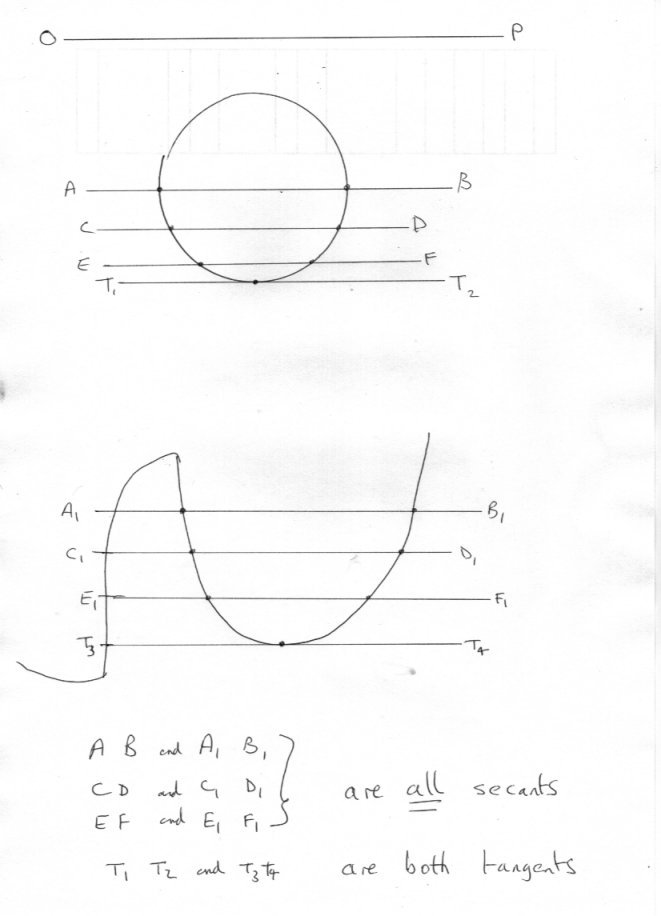
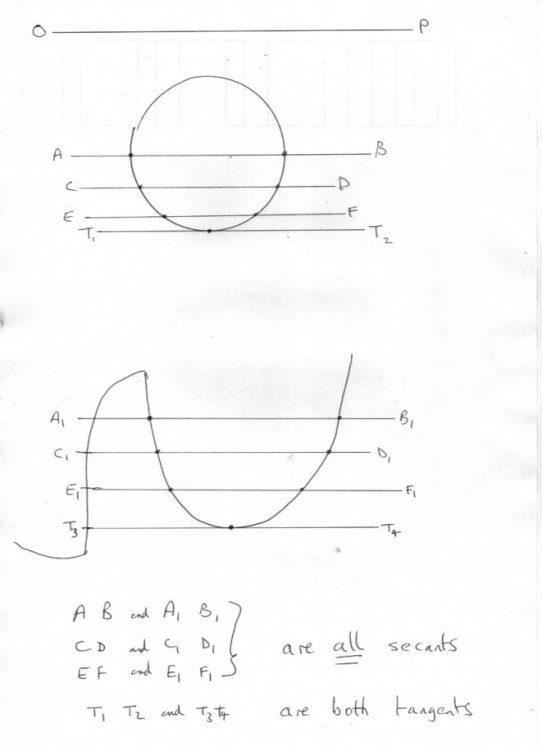
Righto, I stopped bothering with your posts since you asked about a lot of terminology in another recent thread of yours. When I offer stuff you di not answer. But I see some of those terms appearing here. Also, with respect, others have made this far too complicated. Probably because you have brought in a lot of unconnected material. Tangents were described and investigated about 2000 years before coordinate geometry and calculus were invented. They do not possess a slope as an inherent property. The meaning is very simple. In the plane geometry of Euclid. Take any line PQ - note in the geometry of Euclid a line means a straight line it does not mean a curve. Draw lines AB, CD, EF etc parallel to The original line OP and all in the same plane, so that they intersect various curves. I have shown this for two curves, a circle or closed curve, and an open curve. AB, CD, EF all intersect the circle at exactly 2 points. No more and no less. All these lines are called secants. You can see that as the sequence of parallel lines is drawn closer and closer to the bottom of the circle The distance between the two points of intersection become closer and closer together Until the line T1T2 intersects the circle in only one single point. The line T1T2 is called the Tangent to the curve at the point of intersection. You should draw some more lines like PQ but not parallel to it and convince yourself that each such sequence of lines has only one intersection point with the circle and that every point on the circle has such a tangent line associated with it. Now look at an open curve. You can see that a similar sequence of parallel lines only works like this if you are close enough to the point of single intersection. If you extend the curve and lines far enough you may find more than two points of intersection. But if you keep close enough there is a sequence of exactly two intersection points, narrowing down to a unique point of single intersection. Again the lines with two points of intersection are called secants and the line with one point only is called the tangent to the curve at that point. The idea of intersection - where and how lines curves and geometric ficures intersect plays a huge part in the geometry of Euclid and interestingly re-appears in more modern topology. It is a very simple but powerful technique. Note again that I have not needed to mention the word slope. Yes, in coordinate geometry tangents can have a slope but that is another story.
-
List your questions. For example: 1.... 2 ... 3 ... Since there is a clear question mark at the end of the quote, I take it as proof positive that you are refusing to discuss in good faith. All my questions so far have been thus properly identified with such a question mark and each time your responses have been either non existant to to a different question I did not ask. I find it particularly insulting when I explicitly said that I am not an expert on nuclear reactions and confined my questions to the geology, yet you called me a dunce and answered my geology questions in terms of nuclear reactions.
-
Then you need to get your geological statements correct. You still have not addressed a single one of my points or questions. This is now the third time of asking for those answers. Is it your normal practice on joining someone else's grouping to immediately defy their rules?
-
At last somethig you and I can agree on. But then you have not answered one of my questions or addressed one of my points. All your responses to me have been about other things.
-
+1