
studiot
Senior Members
-
Joined
-
Last visited
Everything posted by studiot
-
+1 for a detailed explanation. I would like to add the following. Momentum will be accompanied by moment of momentum and momentum changes by (unwanted) torques. That is why, in the many arrangements that have been used including the one you proposed, the pistons are aranged to reciprocate about the driveshaft axis. Auto engines configurations and mountings have included the upright inline and transverse, the angled (between horizontal and vertical) inline and transverse, and the horizontally mounted 'flat' engines. Transverse mounting adds the requirements of changing the drive direction. Older aero piston engines went the whole hog with radially mounted multicylinder engines.
-
Roger Penrose is the son in another of those dynasties of scientists (including mathematicians). He is also foremost an analyst. I see litle to disagree with in your extract, though elsewhere in that book he lapses into his own unproved speculations, particularly about QM. His writing is, however, very dense, so one should always take careful note of the caveats he adds. I do however offer a counterexample to this unlimited statement. I have emboldened some key phrases. The only proof of the four colour theorem we have is basically the method of exhaustion. This method follows a different pathway from the one defined in the extracted passage. If you do not understand this please ask. I do not understand how you both agree and disagree with what I said ? You are new here so I will forgive you for this comment. I am entitled to make what civil comment I choose about your posted material and I will continue to point out where you are in error or misunderstand something. I will also explain in as much detail as you like why I think this to be so. That is what a discussion forum is for.
-
You clearly understand different structures of Mathematics and of language from the ones I understand. Without suitable structures and language little Mathematics and even less applications can be done. For instance those using applications tend to use the fundamentals of set theory such as uniqueness and closure without realising they do so. Group theory is based on such requirements They are not concepts they are requirements. The structure is organised this way for good reasons. There is nothing miraculous, fortuitous or gifted about this. It is quite deliberate on the part of Mathematicians. And it is from pure maths, not applied maths.
-
Thank you , now we are getting somewhere. This thread is discusses the language of Mathematics. Yet we are onto two pages and you have yet to mention set theory, mathematical processes, mathematical proofs ....... In answer to your question, analysis and synthesis are processes. Much of Mathematics at a fundamantal level, (and therfore its language) is about processes. When you analyse something you are working on something that is already there. You can describe it, categorise it, in many mathematical ways. You can put numbers to it, you can measure it. When you synthesise something you are trying to make or establish something that does not yet exist. In my experience that is generally a more difficult task. Mathematical processes such as proofs often fall into one of these two categories.
-
None of the above are any more fundamental than number theory is. I note from your posts that English is not your first language, although your English is very good. Is there some trouble understanding my posts since you are not directing your answers at the questions or comments I make ? If so I am very happy to expand on or clarify my comments.
-
Before you try to explain 'the galactic redshift', it would be wise to demonstrate that you know what it is you are trying to explain. Can you do this ?
-
I really can't see where all this is going. Yes numbers and the theory of numbers form an important part of Mathematics. But they are not fundamental concepts, although a numbering system, very different from our own, was probably the earliest maths to 'studied'. Note that the Australian aborigines have only 3 numbers one, two, many. I agree that numbers are very important in applied maths since this often deals with quantities. But what about the rest of Mathematics ? And what about the (physical or engineering) subjects Mathematics cannot tackle ? What about the difference between synthesis and analysis ?
-
Go on, it's your thread.
-
What is 'the Language of Mathematics' ? As far as I know it does not extend to miracles.
-
Torsion is not a form of curvature. Further the direction vectors for both torsion and curvature do not live in the same 'space' as the line itself.
-
Well think again Sorry the graphs are to do with manifolds more generally.
-
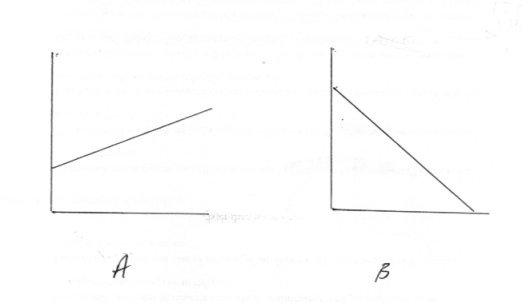
Indeed so, or at least nearly so as I have said to several members, several times in the past. This fact also has implications for the thread about 'time travel', which I have been trying to bring out, but others seem to have abandoned that thread. Note that whilst a line may have zero Gaussian/Riemannian curvature, it may still have torsion, which is a similar but different thing. A to the question of are all 1D manifolds flat, that was the point of my figures A and B. A is a plot of a second order differential equation - that of the rate of a chemical reaction - the reciprocal of concentration is plotted against time - one axis is non linear B is a plot of a first order differential equation - that of radioactive decay - log(activity) is plotted against time - again one axis is non linear
-
Tomatoes.
-
With regard to 'flat' this post was wasted in Marius' threads but is highly pertinent here, So I will reproduce it in full. It is important to distinguish the measure and the measurand in all circumstances. That is the ruler is not the same as that which is being measured. Failure to do this leads to much misunderstanding. Here are two 'straight line' graphs. Or are they ? Straight is the one dimensional version of not curved or zero curvature ie flat. I would be interested in your response to the question.
-
Yes, but this is what I mean by not mixing up the measurand and the measure. The appropriate variation should be applied to one or the other, but not both. As an aside it is worth considering the origin of the word 'Frame'. One to two centuries ago measurements were made with rigid rods and surveyors extended these by using metal chains. There was even a unit of measure called the chain. So it became common to imagine a coordinate system as a rigid metal framework extending in all directions from the body of interest and marked with grid marks of the measure. This metal 'Frame' always moves along with the body, where its origin is located. So measurements in this frame are taken against the grid marks inscribed on it. Originally frames were referred to as rigid frames. Since the numbers are preinscribed and number is a relativistic invariant in both SR and GR, all observers will observe the same number of grid marks. It was the genius of Einstein that led us to realise that we must therefore adjust the comparison between the grid marks on the rigid frames for different observers in some way to accomodate this, since in general each observer will see the measure between these marks as different from the ones in his own rigid frame. This matchng can be done in one of two ways. Either by transformation (SR) or by applying a 'metric' (GR)
-
I missed that late last night. Another well thought out post thank you. +1 Thank you both for a good discussion about current particle physics. +1 As an applied mathematician, my formal study of pp ended in 1970 and I have only followed it sporadically for interest since. My work went in other directions. One thing that leads to many misunderstandings is the difference in terminology between Mathematics and Physics, especially for such fundamental 'objects' as Field, Vector, Tensor, Particle and Space. It is therefore important not to mix up physical objects such as a physical fields and mathematical fields, as not all properties are interchangeable/applicable in both disciplines.
-
Thank you for this clarification. So we are talking about fibre bundles ? In fact not about physical 'space' at all, but some abstract (mathematical ), space, inhabited not by physical objects but by mathematical ones. Good point, +1
-
Since you seem to want to discuss gravity effects in particular, I'm not sure how you want to apply these in the 'internal space of particles' or even what you mean by this. Compared to other effects, gravitational effects are very small at short range, such as inside particles, but come into there own at galactic distances. Are you looking for effects such as the grazing incidence of starlight passing the Sun showing up in EM radiation passing the nucleus in the otherwise empty atomic particles or ?
-
We don't have subthreads here, but I have put a comment into that thread you refer to since it also discusses curvature. Meanwhile I look forward to your 'many answers' here. Even though you don't have a question we need something specific to discuss as the topic of the thread. This something does not have to be a question.
-
It is important to distinguish the measure and the measurand in all circumstances. That is the ruler is not the same as that which is being measured. Failure to do this leads to much misunderstanding. Here are two 'straight line' graphs. Or are they ? Straight is the one dimensional version of not curved or zero curvature.
-
That didn't answer what you want to discuss about them ? With regard to Feynman's calculations. I don't have access to the observational data necessary to check them. But given the pedigree of the author I would start from the premise that they are accurate. They are the sort of observations and calculations that allow determination of intrinsic curvature in an N-dimensional manifold from within the manifold. (3 in this case). Note however that in the space of the universe the curvature varies from point to point, (ie is local), according to the nearby distribution of mass.
-
your actual question here is Unfortunately the answer here is that nobody really knows. It is empircal. That is appears to be an observed fact in the face of the unavailability of alternative hypotheses that do not contradict other existing observations. Read my last sentence very carefully because alternative and accepted hypotheses have been overturned in the past on the basis that they predicted something that does not happen by observation. The most spectacular such overturning is probably the discovery of oxygen when it was held that if a substance burned it lost something (which seemed very reasonable at the time), but when all the products of combustion were first collected and weighed their weight was always found to exceed the original substance weight so in fact the only tenable hypothesis was that the substance gained (combined) with something unknown.
-
This could be an interesting thread. It has a title but no point of discussion. One question. Do you want to discuss just 3D space or 4D spacetime or both or none of these ?
-
How is this time travel ? How is travelling forwards in time in any way consistent with the OP which specified travelling backwards ? Are you going to address my comments in response to your previous post? Happy New Year.
-
This is the sort of 'time travel' that is not physically possible, in the spacetime manifold that we observe around us.