
studiot
Senior Members
-
Joined
-
Last visited
Everything posted by studiot
-
Maxwell only offered his view that then best estimate of the speed of light is the same as the EM waves his equations predicted. He therefore suggested that light was some sort of EM wave. Maxwell also offered a totally mechanical mechanism for the propagation of light which satisfied all the known properties. He said that this model was wrong and that he envisioned such a mechanism only to show that it could be done. The person whose experiment definitely showed that EM waves have a finite speed was Hertz in 1888. Fizeau tried this in 1851 Miller's experiments were repeated by several workers, none of whom were able to reproduce his results. Miller's explanations of this became ever more tenuous as others reported failure to reproduce. His results were finally discredited when analysed by a proper statistician in 1955. Barlow's Manchester Physics book A guide to the Use of Statistial Methods in the Physical Sciences was not written until 1980. Miller would have benefitted from reading this book. I recommend to you Professor Ferreira's Book 'The Perfect Theory' "A Century of Geniuses and the battle of General Relativity" Even Einstein artgued with himself, and changed his mind and theory a couple of times in the first half of the 20th century. The book goes 50 years beyond that. and was bang up to date with modern views in 2014. Note also that modern treatments of Special Relativity are quite unlike the early 20th cent treatments and that Minkowski was a mathematician who died tragically early, shortly after introducing his 4D world view.
-
It is one thing that scientists look for when they can get their hands on extra solar system material or date from a probe that has left the system (eg New Horizon). That is about as far as we can reach at the moment. There is, of course, a lot of guesswork about neutron stars, black holes and such. We have yet to find any evidence to support such a hypothesis though.
-
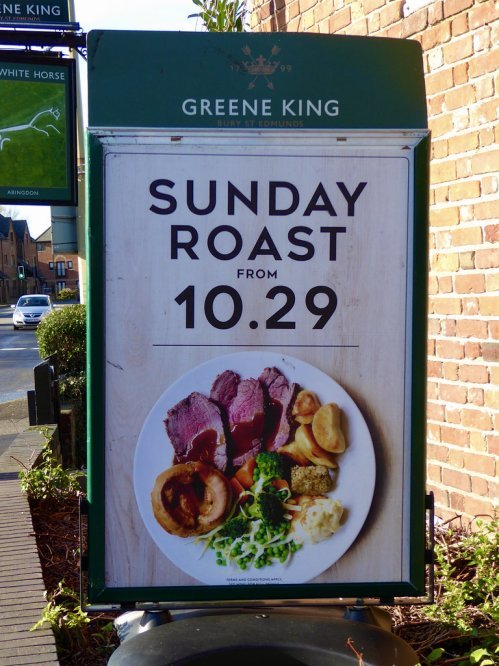
Why not half past ten ?
-
Yes indeed it harps back to 'tired light' , but the issue I was raising is not to do with comparison of local and global distances. Quite simply we rely on the notion that space is both isotropic and homogeneous.. If one section of space was different from another so that characteristics of the light changed as it passed through then we could not rely on spectroscopy and chemical process on Earth being the same as at astronomical distances away, nor on the Astrophysics to estimate distance, nor on relativity to describe transmission etc etc.
-
If this were ever found to be the case it would upset most of Physics and Chemistry and all the other sciences that rest on them.
-
Taking pause for thought and consideration is excellent practice. +1 Most presentations of relativity make a big fuss of transformations early on but never say why we should care. Pages of text, formulae and diagrams to wade through are often given to wade through, right at the outset, with no apparent reason for the effort. I think this is counter productive for many students, Einstein himself did not think this way. He always held that we should be led by the Physics and then pick the appropriate Maths to match. Perhaps you would also like to think about and even discuss this ?
-
Please don't take this as a personal cirticism but you are definitely overthinking this by a very long way. Small wonder you are having trouble. As I said, strictly proportionality is not about equations, although of course proportionality can lead to an equation. The way to calculat the answer to my question by proportion is as follows. 225 millilitres of drink contains 10 grammes of sugar So 1 millilitre of drink will contain 1/225 as much sugar. That is 10/225 grammes. So 175 millilitres of drink will contain 175 times as much sugar or (10/225) * 175 grammes or about 7.8 grammes. Check: 175 ml is about three quarters of 225ml so I would expect it to contain about three quarters as much sugar or about 7.5 grammes. Read this a few times I have laid it out in great detail.
-
The action of charging lead-acid batteries leads to an increase in the strength of the sulphuric acid. The reaction between hydrogen sulphide and sulphuric acid is well studied and leads to the release of sulphur dioxide (and elemental sulphur). So why would a large enough quantity of hydrogen sulphide be released in this way ? https://harvest.usask.ca/bitstream/handle/10388/etd-12202010-111342/PatriciaThesis.pdf?isAllowed=y&sequence=1 I agree with Cuthber and Exchemist and noting that the source is youTube which has become heavily contaminated with disinformation these days I am highly skeptical of the reports.
-
Proportion, proportions and proportionality do not necessarily refer to equations in Maths or Science. Consider the following question. If there are 10 grammes of sugar in a 225 millilitre cup of drink How many grammes of sugar are there in a 175 ml cup of the same drink ? Please indicate by what method you would solve this question to try to find your difficulty.
-
Thank you for the long response. Can we please separate the history of the study of the nature and propagation of light from this discussion as you have several important omissions that you are perhaps not aware of. By itself the history is an interesting subject and we could certainly discuss that in another thread where all might learn something new. As far as I know Galileo did not offer a principle of relativity. He did, how ever offer a principle of inertia, which is what perhaps you are referring to. But for the purposes of this thread if you know of some reference showing that Galileo made the statement you claim above please post it. Neither was this The Principle of Relativity of Einstein. His exact words from the 1905 SR paper were No mention of physicists locked in sealed rooms determining anything! However he adds a further comment which many readers miss, as all the words in the paper are packed with import: I will now develop the import of this latter statement in terms of the homogeneity and isotropy of space and link that to Einsteins two postulates. When we say there is an event such as a light pulse from your source we need to specify two things. Where is it ? and When is it? To do this we require up to five pieces of information. These are : up to 3 spatial coordinates, one time coordinate one reference base or origin for the time coordinate and one combined reference base or origin for the spatial coordinates. The issue of the 'absoluteness' of the references bases will come out in the subsequent treatment. It is no use just offering x, y, z, t values - they are meaningless without knowing where and when they are measured from. The good news is that these last two pieces of information 'drop out' of the calculations when wew measure the distance beteen two events and the time difference between them as l2 = (x2 - x1)2 +(y2 - y1)2 and (z2 - z1)2. and dt = (t2 - t1) dt and l are examples of invariants. dt is invariant with regard to translations of the origin of the time axis and l is invariant with regard to translations of the space origin. When following Einstein's original paper the significance of the second quoted remark becomes apparent. Although the paper is entitled the electrodynamics of moving bodies, most of the paper follows their kinematics only. Dynamics is only introduced in the last two sections at the end. Are you comfortable with the distinction between kinematics and dynamics ? 1) Homegeneity The arbitraryness of the origins of space and time are referred to as the homogeneity of space and time respectively. This is equivalent to postulate that every chunk of space looks and behaves like every other chunk of space and that every chunk of time looks and behaves like every other chunk of time oe in other words they are homogeneous. 2) Isotropy That the length l is the same (invariant) when measured in a coordinate system that is rotated, but not translated, with respect to the first is a simple piece of elementary geometry. This leads to the conclusion that there is no preferred direction in space. So space is regarded as isotropic. Since space has the property if transmitting light we have your isotropic light velocity. With regard to the example in your post, Please explain why there is a problem with the observer viewing light from S1 and S2 (with the maths). Note that we cope with this everday day almost everywhere, but it really only interests the astronomers where the distances involved makes a difference to light sources.
-
Thank you for this extremely deep and important comment +1 I had started with the premise that the only source of 'training' material available to an AI has been written by a human. This represents a new non human source. Considering how much AI output is already being put on the net, this effect could swiftly lead to some sort of regenerative feedback situation.
-
Thank you for the update.
-
That is a consequence of the P O R, not the principle itself. Where does 'relative' or relativity come into this ? Said locked up observer could spend his whole life in the room performing thousands of experiments and none of them would have any direct relationship to relativity, since they would all be independent of it.
-
Having been studying the mathematical basis behind so called AI I understand the term to mean that the output is basically determined by a suoer Markov process. That is the 'association' of words and phrases is determined by analysing the writings of humans for such associations and assigning probabilities on the basis of that analysis. That hopefully yields the most probable response a human would give to a specific input. Now my question is based on the fact that much of human writing is downright wrong. For instance Rayleigh's calculation of the age of the Earth, the theory of phlogiston and much much more, some more recent as we have abandoned notions in favour of new (and hopefully better) ones. So the ouput from the AI will be tempered by the 'censorship' its 'training material' is subject to. Perhaps it will come to output a belief in a God ? Perhaps it will output that it is a God ? Perhaps it will ouput Nazi doctrine ? Many horrific false scenarios come to mind. Please discuss this danger.
-
So what are they actually doing about it ?
-
You are correct. I mentally transcribed it when I read your actual words which were isotropy of the speed of light. Sorry about that. But the fact remains that isotropy of the speed of light is not a necessary assumption, not was it made. Your second paragraph however misses the entire point of an invariant. It is vital that both physicists measure the same physical quantity possessed by the same physical object. Otherwise there can be no comparison of anything to say that they are the same or different.
-
Thank you for answering. But your original words were The isotropy of space (not the speed of light) Why have you changed it in your answer ? And how does your definition relate to space ? IOW how does direction relate to space ? I don't think it mentions inertial frames or any other frames. You would need to define an inertial frame to be able to apply such a definition. You also face a further difficulty with such a definition. If those two physicists measured the frequuency of a sound (or light pulse) they will come up with different answers. You are talking about what is known as form invariance. (note Newton's Laws do not exhibit form invariance) A better example, consistent with classical physics is that if they both measure the temperature of a moving object, they would come up with the same answer. The whole issue hinges upon the observed fact that both physicists observe the same velocity for light (but not sound) despite the laws of classical physics which would suggest otherwise. Since this was first done about 130 years ago thousands of experiments of increasing care and accuracy have been made and no one has ever found the speeds to not match exactly.
-
I note in your classification tree article the Michael Benson is mentioned, His book is fascinating. From it I learned that not only was the mass extinction of the dinosaurs not the worst mass extinction in Earth's history, but that the previous inhabitants that were wiped out in the biggest mass extinction (at the end of the Permian) were every bit as big, dominant and successful as the dinosaurs. They are called dicynodonts. https://en.wikipedia.org/wiki/Dicynodont These were often confused/ mixed up with the dinosaurs in classification schemes although they lived (and died) 60 million years before the first dinosaurs. Not also that genealogy tracing is very difficult for all these as we only have a few samples of DNA so most trees are classification schemes, rather than acestry diagrams. As such they are constantly being revised as new data appears.
-
@lidal Did you miss my post ? I asked two clear and simple questions about your statements and you have not responded in any way at all.
-
I think we should look at our best information and let those skilled in genealagy trees guide us rather than just guessing and always be prepared to make radical changes. There have been many wrong connections drawn in the past.
-
When I did the environmental engineering modules in my course at university it was all about the built environment. Heating and ventilation, illumination, water and wastewater. Mind that was in the 1970s
-
A current report on who is responsible for coastal protection https://www.bbc.co.uk/news/articles/c0kxkqy8nlpo East Devon District council is preparoing Exmouth defneces for storm Ciaran today.
-
You have mentioned two things without explanation. 1) In the title you refer to The Principle of Relativity. 2) You refer to the isotropy of space. Can you enlighten us as to what you think these two phrases mean please ? Where , for instance, did they come from ?
-
There is no right answer to this and no wrong answer either. It depends both on where you are coming from and where you are going to. Environmental Science is a second tier science in that it rests on and draws from all of the basic sciences of Mathematics, Physics, Chemistry and Biology as well as in some courses Economics and Sociology. Being such a broad discipline it specialises into areas of interest. So Bath Spa University leans towards the economic and social aspects. Plymouth, The University of Wales (Aberistwyth) and Southampton are very hard science oriented and are all home to marine science laboratories. But here you would need to consider would you lean towards Physical, Chemiical or Biological aspects ? Exeter is home to the Met office and I believe there is a tie up concerning atmouspheric and climate science. So where you are going to depends upon both your immediate and long term goals. Robert Gorden University in Aberdden also has a good reputation for a hard science course and much energy industry backing. So in the short term how far are you prepared to travel ? In the long term you will need to narrow down your plans as already indicated and do some research on the net, there are over 250 'environmental' courses in the UK. The long term will also be coloured by what you are doing now. That is what courses you are currently taking and what grades you might expect. Queen Mary College, London for instance sets the bar high Others have lower entry requirements.
-
What is a free choice? Right. So in the 2023 Wimbledon Men's Singles final Alcaraz beat Djokovic in a long match that was hard fought right to the end. Either competitor could have won right up to the last ball. So I am to conclude from this that you think Djokovic did not want to win ?