
toucana
Senior Members
-
Joined
-
Last visited
Everything posted by toucana
-
It would appear that whoever tried to redact these files was a novice Adobe Acrobat user. In many cases all you have to do is put your cursor inside a document window, hit ‘Select All’, ‘Copy All’ and then ‘Paste’ into a blank document in another text editor with a different colour background. (On a Mac that’s —> ⌘A, ⌘C, ⌘V). In other cases you may need to import the target into an OCR (optical character recognition) tool - start with Google Images at https://images.google.com and click the ‘Search by Image’ camera icon, then drag the file to a drop box box that opens - and click ‘Select Text’ and ‘Copy’ options. The term used in political science for this type of Trumpian regime is a ‘Kakistocracy’ (Greek κάκιστος - kράτος) https://en.wikipedia.org/wiki/Kakistocracy “Government by the worst, least qualified, or most unscrupulous people”.
-
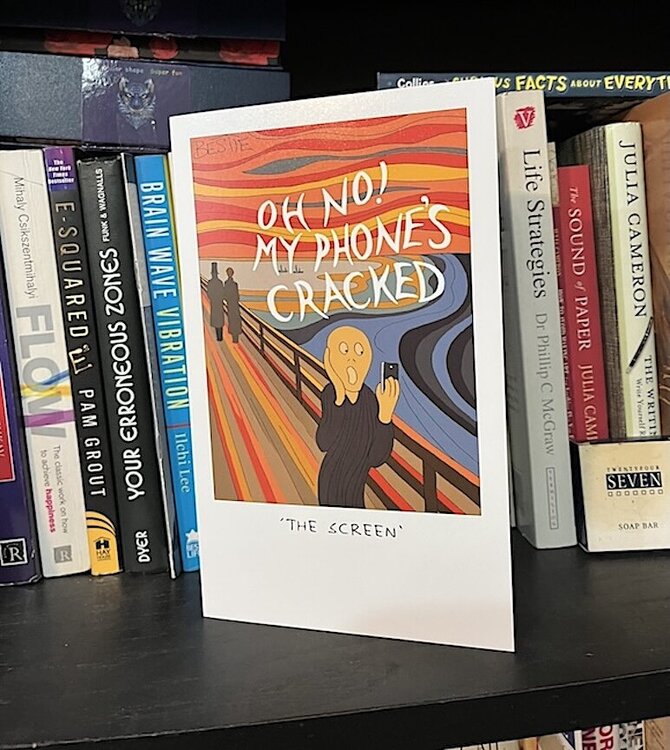
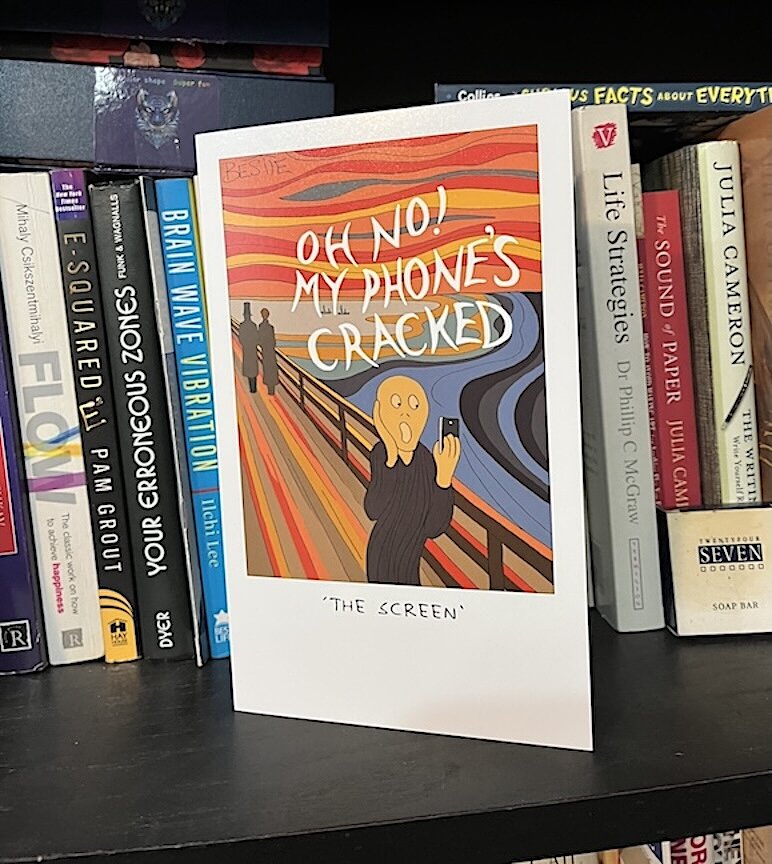
The Screen !
-
RIP Tom Stoppard
-
'Baba' I believe comes from Meher Baba (1894-1969), the name of an Indian Parsee guru whose teachings Peter Townshend was following at the time.You presumably don't realise that there is such a thing as Vegan Cheese either - said to be quite tasty too. https://en.wikipedia.org/wiki/Vegan_cheese Why don't you go and eat a horse ? - your blood sugar seems to be on the blink atm.Or are you perhaps using the expression ‘quantum clock’ as a metonym for all objective scientific methods of measuring and quantifying time - in which case why not say so ? I would refer you to the Sleep Foundation articled I quoted from earlier which says: "In most adults and adolescents, this master clock operates on a cycle that’s slightly longer than 24 hours. In order to maintain alignment with the 24-hour rotation of the planet, the master clock must adjust by about 12 to 18 minutes every day. For this reason, it times circadian rhythms according to environmental cues known as “zeitgebers,” German for “timekeepers.” Biological clocks and zeitgeber cues are both involved - there is no either/or here - both are relevant. The point of mentioning biphasic sleep patterns was to answer a humorous aside made by TheVat about typical patterns of sleep duration, by pointing out that monophasic sleep appears to be a relatively modern cultural adaptation.What exactly is a ‘quantum clock’ in this context, and which part of the humen anatomy do you think it resides in ? I’’m wondering if you even realise that quantum clocks have to be laser cooled to near absolute zero in order to function ? Which part of the brain or human nervous system do you think functions at just above 0° Kelvin ?Infants need 11 to 17 hours of sleep per 24 hours, toddlers require 10 to 13 hours of sleep per day, and teenagers usually need 8 to 10 hours of sleep per night according to sleep research studies. It’s only older adults who commonly require 7 hours or less of sleep each night. https://www.mayoclinic.org/healthy-lifestyle/adult-health/expert-answers/how-many-hours-of-sleep-are-enough/faq-20057898 What is really interesting however is that well up until the 18th century, many western people used to follow a biphasic pattern of sleep. Quite a number of written sources indicate that people often followed a pattern of “two sleeps” involving a night divided into two halves with a period of social activity in between. https://www.bbc.co.uk/future/article/20220107-the-lost-medieval-habit-of-biphasic-sleep People would take their ‘first sleep’ between 21:00 and 23:00, be active and be awake from 23:00 to 01:00 - a period of time also known as a ‘watch (echoing the naval term “middle watch’’), before taking a ‘second sleep’ that ended at dawn. There is much discussion as to how and why people shifted over to a monophasic pattern of sleep from the early 19th century onwards. Industrial shift working, artificial illumination at home which encouraged people to stay up later by shifting the circadian sleep cues, and the invention of the alarm clock in 1787 have all been cited.I think you should do a little more research into Circadian Rhythms before being quite so dismissive about the role of 'time-keeping' in human biology. Circadian Rhythms Circadian rhythms are controlled by biological clocks located in organs and glands throughout the body, but all of these peripheral clocks are commanded by a “master clock” in a region of the brain called the suprachiasmatic nucleus (SCN). In most adults and adolescents, this master clock operates on a cycle that’s slightly longer than 24 hours. In order to maintain alignment with the 24-hour rotation of the planet, the master clock must adjust by about 12 to 18 minutes every day. For this reason, it times circadian rhythms according to environmental cues known as “zeitgebers,” German for “timekeepers.” Light and darkness are the most important and powerful zeitgebers. Other zeitgebers involved in circadian timing include : Meals Exercise Social interactions Daily routines Stress These zeitgebers trigger the release of hormones in the brain and the delivery of chemical signals to body tissues. Thus, the master clock is able to effectively time vital body functions, such as the conversion of food into energy, fluctuations in body temperature, and when a person feels like sleeping or waking up. https://www.sleepfoundation.org/circadian-rhythmIt all comes back to time-keeping, and how we as human beings synchronise and regulate our internal metabolic body clocks with the mechanical clocks and social systems of time management that we all need to live within. There are certain strong physiological cues that predispose humans to take in nutrition at particular times of day. ‘Breakfast’ for example is so named because we quite literally need to break a fasting period of some 8 to 10 hours spent asleep (that’s etymology for you). The physiological cues that drive us towards the breakfast table are low blood sugar and raised levels of a hormone called ghrelin produced by the stomach. A pineal hormone called melatonin is produced by the body at night as part of the human ‘circadian clock” and it functions as a sleep cue by building up after supper around two to three hours before we normally go to sleep. Melatonin also functions as an appetite regulator. Rising levels of melatonin stimulate the production of a hormone called leptin by the fat cells in our bodies, and that functions as an appetite suppressant. https://revistapesquisa.fapesp.br/en/a-connection-between-sleep-and-hunger/ Melatonin levels fall steeply towards the end of the night, and as daylight returns, leptin production is replaced by that of ghrelin, as we awake, take breakfast, and prepare for our period of maximal activity in daylight hours once again. Carefully timed oral doses of melatonin can be successfully used to counter jet-lag for this reason: https://www.timeshifter.com/jet-lag/melatonin-for-jet-lag-type-dose-timingThe pendulum clock was invented in 1657 by the Dutch mathematician Christiaan Huygens who thought his revolutionary new mechanism could be used to be build an accurate marine chronometer. He quickly found out otherwise when it was tested by his younger brother Lodewijk during a sea voyage to Spain in 1660. https://en.wikipedia.org/wiki/Christiaan_Huygens The rolling motion of a ship in heavy seas disturbed the pendulum, and rendered the chronometer no more accurate than conventional clocks of the period that could lose up to 15 minutes per day.There is a fascinating book called Longitude by Dava Sobel (1995) which tells the story of John Harrison (1693-1776) an English clockmaker who invented the first reliable marine chronometer, and of his battles with the Commissioners of the Board of Longitude to collect a prize of £20,000 for solving what was widely regarded as one of the greatest scientific problems of the era - how to calculate a ship’s longitude when far out at sea. https://en.wikipedia.org/wiki/Longitude_(book) Harrison’s H4 marine chronometers ran accurately on GMT, and longitude was calculated by comparing this with a local clock time that was reset each day by a navigator taking noon-day shots with a sextant. A difference of four minutes corresponds to one degree of longitude. (The earth takes 24 hours to revolve 360 degrees, so one hour marks 1/24 of a revolution or 15 degrees, and 60/15 = 4). It's an interesting topic, but one that probably belongs in another threadThe mess tables were usually suspended by ropes from the ceiling in between the guns, and also had raised rims to help retain the trenchers and drinking vessels in heavy seas. https://snr.org.uk/maritime-art/the-sailors-mess-c-1800/ The watch-keeping system of bells was based on the use of a 30 minute sandglass kept by the helmsman’s position. As soon as the sand ran out, the ship’s bell was rung and the sandglass was inverted to run again. In the days before the Harrison H4 marine chronometer was perfected (c.1773), this form of time-keeping in tandem with the magnetic compass and ‘chip log’ was the only way of estimating a ship’s longitude by dead-reckoning. - (Latitude could be found by taking sun-shots at noon with a sextant).
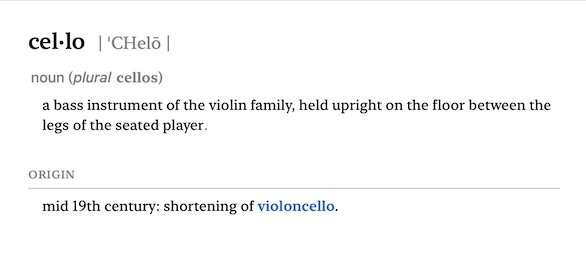
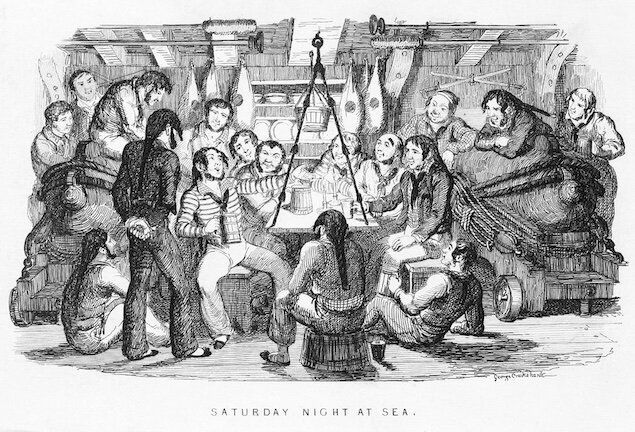 The concept of “Three square meals” had another provenance dating from slightly before the industrial revolution, and derives from the serving time of meals onboard British naval warships in the later 18th and early 19th century. This in turn relates to the system of watch-keeping used in the British navy to this very day. The crew of a ship are divided into two 'watches' called 'port' and 'starboard' who alternate on duty according to a pattern of seven watches. Five of the watches are of 4 hours duration, the other two from 4 p.m. to 6 p.m., and 6 p.m. to 8 p.m. are of 2 hours duration and are known as 'dog watches'. The purpose of 'dog-watches' is to force an uneven number of watches in a day to ensure the men are never on duty at the same time from day to day. https://en.wikipedia.org/wiki/Watchkeeping The time within a watch is marked by chiming the ship's bell every half-hour with a rising number of strokes up to '8 bells' to mark the end of of a four hour watch, or '4 bells to mark the end of a 'dog'. Middle Watch - 00.00 - 04.00 Morning Watch 04.00 - 08.00 Forenoon Watch 08.00 - 12.00 Afternoon Watch 12.00 - 16.00 First Dog 16.00 - 18.00 Second Dog 18.00 - 20.00 First Watch 20.00 - 24.00 In British warships around the time of Lord Nelson, breakfast was served at around 7.00 am (at “six bells” in the morning watch) and consisted of oatmeal porridge and ship’s biscuit. Dinner was served around 11.30 am to midday (“seven bells” in the forenoon watch) and was the main meal of the day consisting of boiled salt beef, peas and biscuit. Supper was served around 4 pm or 6pm catering for the men in the shorter ”dog watches”, and usually consisted of biscuits and cheese. Sailors ate from square wooden trenchers with raised edges known as a “fiddle”. These tray like trenchers gave rise to the term “a square meal”, and the raised edges of the tray acted as a form of portion control. Having food piled higher than this edge was known as “being on the fiddle” - a punishable breach of naval discipline and rationing control. https://collection.thedockyard.co.uk/objects/9066/square-plate The British navy in the time of Nelson was famous for its strict watch-keeping, and a rota of meal times which ensured that sailors were well-fed with “three square meals” per day.The string instruments in an orchestral score often have a familial grouping of stave abbreviations: V1/V2 —> Violin1/Violin2 Vla —> Viola Vc —> Cello C —> Contrabass https://orchestrasounds.com/2013/12/10/score-basics/ Because the ‘C’ is reserved for a contrabass.I’m told that orchestral scores still use the annotation ‘Vc’ to identify the stave line played by the cellos, but I suspect that this is to avoid any possible confusion with other orchestral instruments whose names also begin with the letter ‘C’ - e.g. clarinet, clavichord, celesta, contrabasson, cornet, chimes etc..The OP is a didactic sermon based on the beliefs of a Christian sect known as the Jehovah's Witnesses who maintain that the archangel Michael and Jesus Christ are one and the same person. https://www.jw.org/en/bible-teachings/questions/archangel-michael/ The basic idea is that Michael was the first being created by God, and that Michael was the name of Jesus Christ before and after his life on earth. It’s a teaching that has no following in any other branch of the Christian faith (with the exception of some dissident factions of the Seventh Day Adventist churches). Nor does it play any part in the Juadaic and Islamic traditions that also refer to the archangel Michael. The English word “bible” comes from the koine Greek expression τὰ βιβλία - Ta Biblia meaning “the books” (it’s a nominative neuter plural of the noun βιβλίον). The bible is not a book, it’s an a reading list of texts written by many different authors at different times and places, and in quite different languages too - principally ancient Hebrew and koine Greek. You cannot assign any single meaning to it.‘Cello’ is listed in the New Oxford American Dictionary as a mid 19th century shortening of ‘violoncello’, which means that practically no one has been using the longer name since about 1850 - not unless they happen to be musical historians, or scriveners obsessed with using ink-horn words. I was a professional theatre technician for over 30 years and worked on staging classical concerts and BBC radio recordings with large orchestras and string ensembles, and I never once heard any professional musician refer to this particular instrument as anything other than a ‘cello’ .
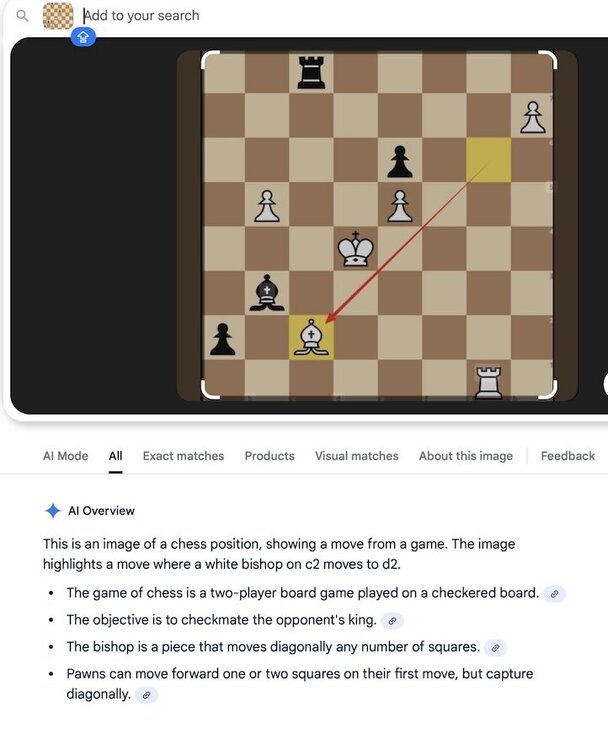
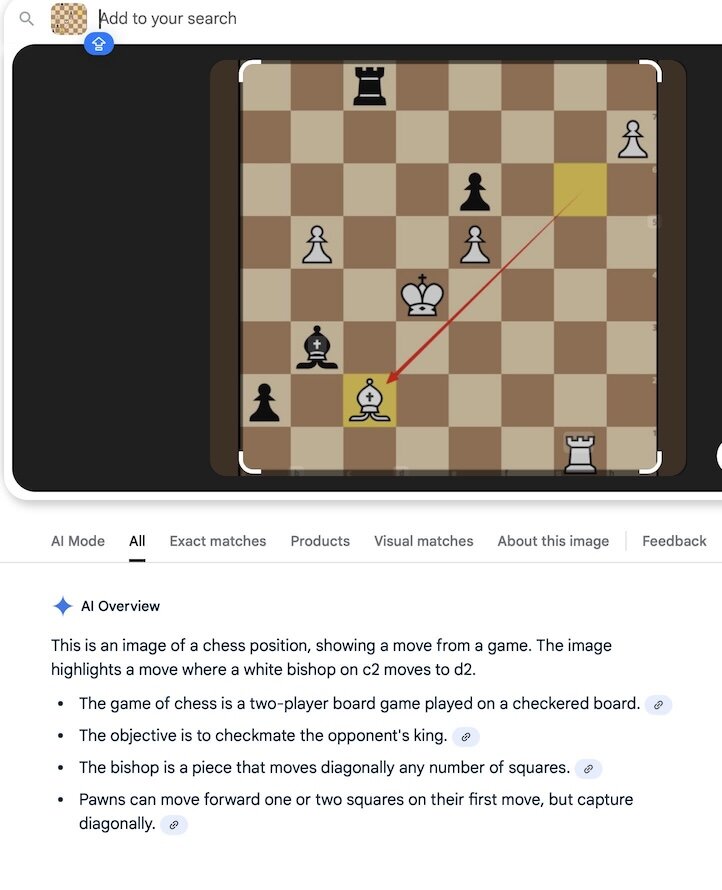
 The problem is that countless millions of people rely on whatever AI happens to be built into their default browser, which for many will be Google. They won’t have subscriber access to the SOA AI systems used by researchers. In Google these AI ‘overviews’ appear in a wholly unsolicited way the moment you put any sort of query into a search box. I didn’t ask for any of them. With the Japanese board game I simply wanted an OCR capture and translation, and with the chess problem I just wanted to obtain image search matches on other web pages.It occured to me that expecting an AI to parse a Japanese board game was perhaps slightly too severe a test of its abilities, so I tried something a little simpler, and closer to home — a chess puzzle that appeared in one my social media feeds today. The first problem was that the AI failed to spot that there is no black king on the board ! (the puzzle has a printing error). It’s rather hard to play chess without having your king on the board - in fact it’s impossible. The king is never removed from the board in a game of chess. The game ends in a checkmate at a point where a capture of the king is inevitable on the next move. The AI also misread the move shown by the red arrow by stating that the white bishop was moving from C2 to D2 which would be impossible as bishops can only move diagonally on squares of one colour (the move shown is actually from G6 to C2). When asked to do a deeper dive, the AI stated that the black king was located on G8, which is also impossible - (it would be in check from the white rook on G1).
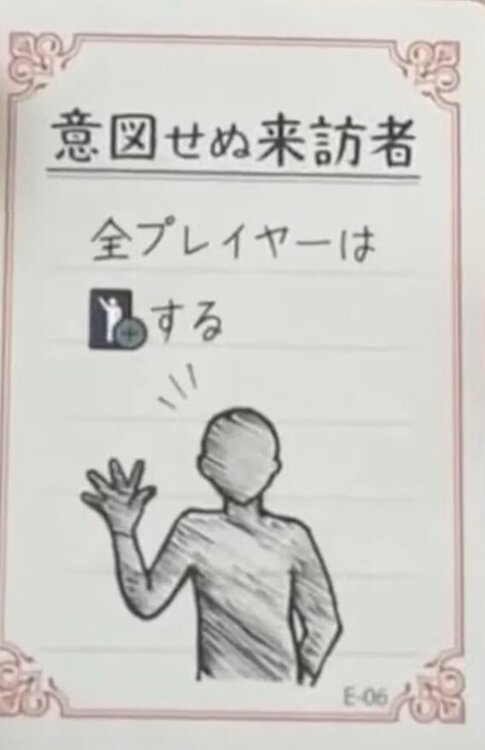
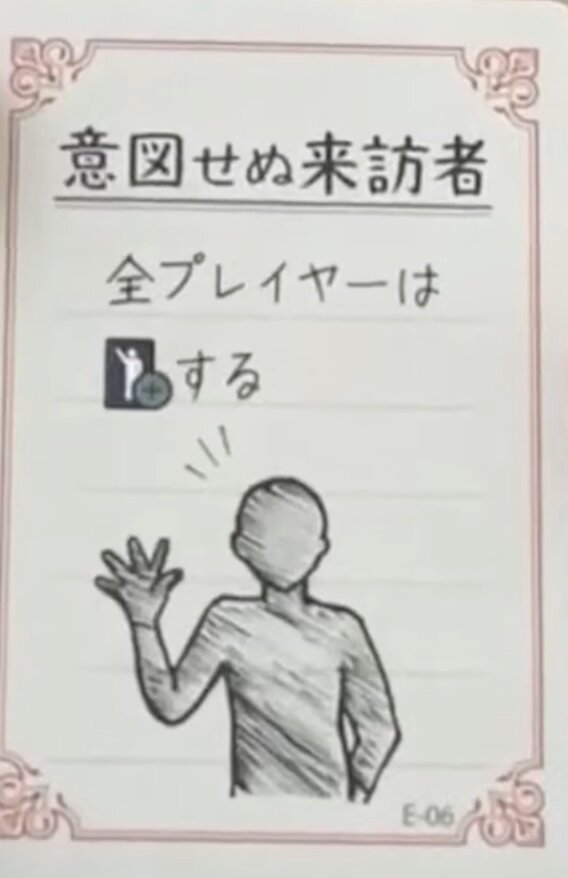
 Nice to have the forums back again. I did wonder if we had broken the internet by making fun of our great lord and overmaster AI ? (ChatGPT be thy name). The forums vanished almost immediately after the OP appeared, and an ICANN search briefly showed them registered to a new owner in Brazil before the matrix glitched again, and they reappeared once more from the ninth dimension :-) Or was it all just a “Dream within a Dream” ?I came across an amusing example of an AI system being driven into a state of complete hallucination by a relatively simple OCR + machine translation challenge in Japanese when I was writing up some notes about a modern Japanese board game called Nukumi Onsen Kaotakuki - ぬくみ温泉開拓記 , and wanted to check the translation of the text on a particular card used in the game. https://boardgamegeek.com/boardgame/374055/nukumiwen-quan-kai-tuo-ji-nukumi-onsen-kaitakuki I took the screenshot (below) from a Japanese YT video about the game, and fed it into a Google Images search box, then used the inbuilt OCR facility to capture the text and pipe it into Google Translate, and here is what the AI told me It also suggested that the game was available on Steam ! Most of which is complete and utter nonsense. The game is actually themed around building onsen (hot-spring spas) in a seaside town called Nukumi in southern Japan. The card text simply allows all players to draw an extra ‘helper’ card at the start of a round. To be fair, the AI did significantly better a second time round when asked to do a ‘deeper dive’ but the fundamental problem seems to be that AI systems have a self-denying ordinance which forbids them from replying “I don’t know” or “Insufficient data”.
 Yes, I misread the breaking news flash, my head was back in AD 98 with Tacitus and the Roman imperium :-)In AD 98 the Roman Historian Tacitus wrote Agricola, an account of the military conquest of Britain (some twenty years earlier) by his father-in-law General Agricola. In chapter 30 he puts this memorable saying into the mouth of Calgacus, a Caledonian tribal chief, on the eve of the battle of Mons Graupius against the Romans in 83 AD. This phrase has rung in my mind ever since yesterday’s announcement that Hamas and the Israelis have finally agreed a ceasefire. You only need to look at press photos of the urban landscape to which the people of Gaza are now returning to understand why. https://www.bbc.co.uk/news/live/cx2nzlj2j4kt The one piece of good news today is that the Nobel Committee have announced the award of the 2025 Nobel Peace Prize to María Cochina Machado, the political opposition leader of Mexico who was barred from running in last year's presidential elections won by President Nicolás Maduro. https://www.bbc.co.uk/news/live/c1l80g1qe4gt Better luck next time Donnie :-P

Important Information
We have placed cookies on your device to help make this website better. You can adjust your cookie settings, otherwise we'll assume you're okay to continue.