Genady
Senior Members
-
Joined
Everything posted by Genady
-
Equivalently, we know that not all humans speak Chinese and therefore speaking Chinese is an inborn ability. How are we humans imprinted at birth by neutrinos? Equivalently, I discovered the flatness of Earth before knowing anything about astronomy and therefore can't deny its accuracy. I disagree. Woo woo is not an accurate description of how this sounds.
-
Was it? Let's see... 0oC = 32oF, right? Then, 0oC+0oC = 64oF, right?
-
No, it was not a prediction. Homogeneity was an assumption long before the inflation idea. Inflation retrospectively explains it. It also retrospectively explains flatness, small non-uniformities, the absence of magnetic monopoles, and the power spectrum of CMB, IIRC. I am not aware of any experimentally confirmed predictions of it.
-
This is correct AFAIK. Alternatively, one could say that we have tons of different ideas, which is also a problem.
-
After the "singularity", a point on the time axis where the scale factor would be zero. There is only a low estimate for its duration. It could be as long as eternity as well. PS. If it was at all.
-
Preceded. The BB starts with an almost uniform, hot, dense, expanding state. Inflation is a brief "prequel" (how Alan Guth calls it) that dynamically creates the BB's initial conditions.
-
Not only helpful, but absolutely necessary. It is always done in science. This is impressed in scientists' mind endlessly in scientific education. It is rarely done in pop-sci media or youtube videos. E.g., I also stated here:
-
-
Yes, I just don't see increasing as similar to expanding. But it is perhaps no more than unimportant semantics. One can, no problem. Friedmann–Lemaître–Robertson–Walker metric - Wikipedia
-
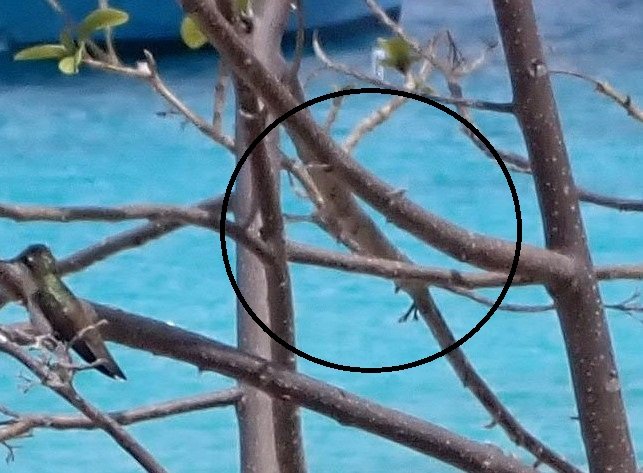
Took a picture of a resting hummingbird yesterday: Only after enlarging it at home and looking carefully, noticed a lizard resting nearby:

-
Why is it so?
-
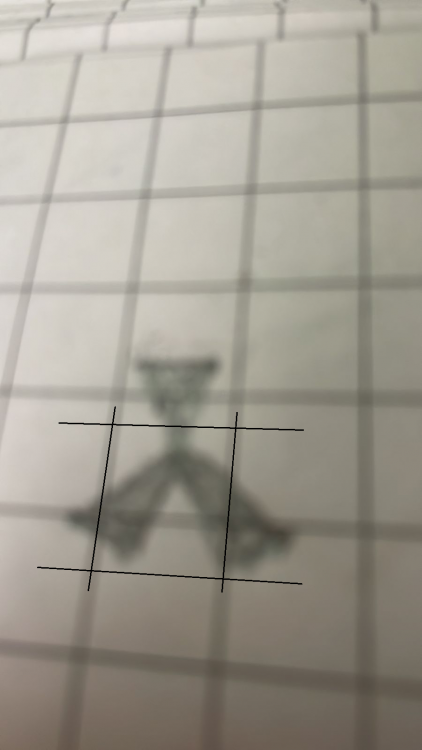
If you shift the shape up, or the grid down as below, the shape does not intersect with the grid dots:
-
The expansion / contraction of space is clearly expressed in the Robertson-Walker metric. I am not familiar with a concept of expansion of/in time.
-
In case someone wants an explanation:
-
Are we? For what purpose? In what sense? Boundary between what and what? Between past and future, perhaps. But this is a temporal, not a spatial boundary. Every spatial point in the universe was a 'center' of expansion then, as it is now. PS. Remember, that we are talking here about an ideal homogeneous and isotropic universe. "Brooklyn is not expanding."
-
This style of writing from an intelligent person is painfully familiar to me.
-
No, of course it is not wrong. Every place in the universe you pick, was inside that hot dense stuff that was the universe content at the time of Big Bang.
-
Curious. I didn't know it needs explanation and more so, there is a way to explain it.
-
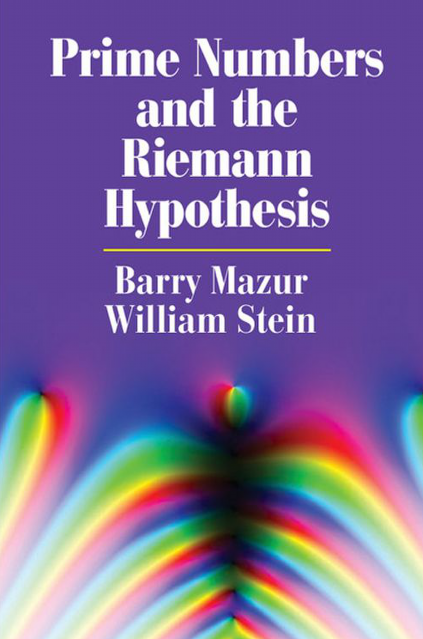
Is it this book? I have it for some time, but there always are other books in front of it somehow...
-
Thank you. I understand that xxx * 7xx = xxxxxx but I don't know what other information, if any, it gives me, because the Russian way of long division, which I did in school, was quite different: DIVIDE THE NUMBERS [RUSSIAN STYLE] - WITH REMAINDER explained by Photomath - YouTube (I assume that the x's are just placeholders.)Sorry, but I still don't get it. Even the case of empty set is not "a complete absence of things", because there has to be a set for it to be empty, and this set is present rather than absent.I've made a mistake by posting this puzzle in the other thread (https://www.scienceforums.net/topic/131412-puzzle-for-the-day/?do=findComment&comment=1239451). It does not belong there. Thus, I repost it here and copy relevant comments from that thread. Hope to continue discussing this puzzle here: @TheVat: Seemed easy. I'm on a tablet so the hidden button doesn't seem to appear. It can be figured without recourse to formulae. @Genady: It is an easy one to make a mistake, too. @TheVat: @Genady:
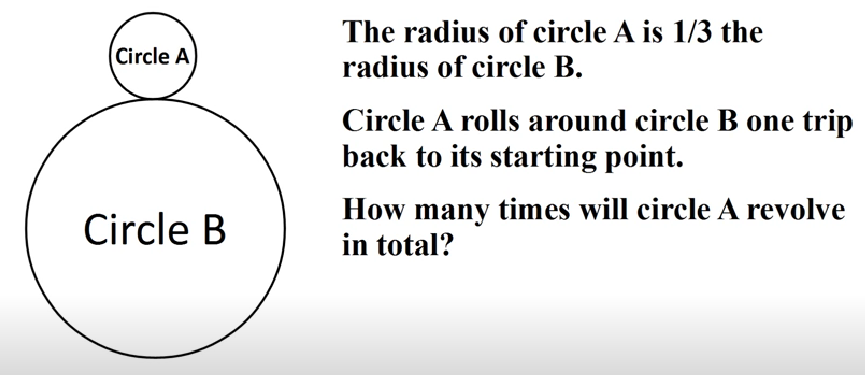 It is an easy one to make a mistake, too.


Important Information
We have placed cookies on your device to help make this website better. You can adjust your cookie settings, otherwise we'll assume you're okay to continue.