
Genady
Senior Members
-
Joined
Everything posted by Genady
-
Yes, but I'm not sure he is talking about light now. I suspect he means any speed. Also, I don't know why he specifies vacuum...
-
What do you mean by "the maximum speed in a vacuum?" Does such thing exist?
-
Ah, you're looking for somebody who just knows the answer...
-
Does it have anything to do with Astronomy and Cosmology? Looks like Classical Physics to me. Do you have any objection to my answer that the center of mass will not move?
-
I guess it will.
-
It might change position, orientation ... But the center of mass will not move because the total momentum has to be conserved.
-
The wing will experience force. The center of mass of the system will not move.
-
I recommend you read the article you have linked. It explains why your speculation is wrong, and supports what I've said. They are not. This is another factually wrong speculation.
-
This is untrue. It is well known. Your speculation in this case is simply wrong.
-
As @Eise said above, the maximum speed of causality. Transformation of spacetime coordinates between relatively moving reference frames. Speed of gravitational waves. Relation between energy and mass. Schwarzschild radius. ..... Thank you!
-
This short article sheds more light on the OP question: OpenAI's ChatGPT Powered by Human Contractors Paid $15 Per Hour (gizmodo.com)
-
-
Black holes are no more vacuums than the Sun, the Earth, any gravitating body. Their gravity is not different from other bodies. They are just more compact.
-
Yes. No, because this ratio affects phenomena other than EM radiation.
-
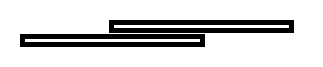
Let's start from the top of the tower. The longest the top plank can stick out without falling is 0.5m: In this case, x = 1.5m. Obviously, it can be made longer using more planks ...
-
Aren't they just unit conversion constants? c is not a function of those values, but it can be calculated knowing those values. And, at the end of the day, c is just a unit conversion constant as well, the conversion between units of distance and time. All of these constants can, and are, set to 1 in appropriate units.
-
The gravitational field, like other fields, assumes a configuration that makes a function called action, stationary: the principle of stationary, or least, action. Given the source of the field located somewhere and vacuum everywhere else, it assumes a specific curved shape whose action is stationary.
-
You're welcome. I agree, and I also agree with your comments above regarding it.
-
Spacetime is an arrangement of events. The structure and dynamics of the arrangement are determined by the events. The arrangement is quantitatively described as geometry, and the events are quantitatively described as distribution of energy, momenta, and their various derivatives.
-
But you cannot do this, because you would be counting the same regions multiple times. Newton Shell Theorem is correct and valid in all cases. It is just that when we apply it to an infinite distribution of masses it gives a conditionally converging integral, and this leads to an undefined answer. The outcome of the homogeneously collapsing universe is fully symmetrical: each point is a center of the collapse in the same way as in expanding universe each point is a center of the expansion.
-
I think this is it. The first 12 minutes is all we need to discuss. Lecture 6: The Dynamics of Homogeneous Expansion, Part II | The Early Universe | Physics | MIT OpenCourseWare
-
No, it's not it. It just plain old Newtonian gravity.
-
I also don't believe Allen Guth claimed Newtons Shell theorem as being incorrect. More likely he added some detail or scenario. If you can find the link we can examine it. It is a bit more subtle than this. First I saw this explanation in one of the Susskind lectures, but it will be easier for me to find the Guth's one. I will be happy to discuss it.
-
This is incorrect. I remember us discussing it about a year ago. I gave you then a link to Alan Guth's MIT lecture where he shows that this is incorrect.
-
In the observable universe. Diluted by the distances and by the redshift. So, the emission and absorption might be in balance.