paulsutton
Senior Members
-
Joined
-
Last visited
Everything posted by paulsutton
-
If you are talking to a passenger and driving, you can say 'be quiet for a moment' if the situation demands it, so you are able to focus on driving or other drivers.
-
Revealed: 10 new insights in climate science https://www.esa.int/Applications/Observing_the_Earth/FutureEO/Space_for_our_climate/Revealed_10_new_insights_in_climate_science Some of these are probably quite worrying, what is more worrying is the number of people who think all this climate change stuff is a hoax etc.
-
While by law anyone over the age of 18 is an adult (at least this is the case in the United Kingdom), I think it can in some cases be up to age 25 for people with some disabilities in terms of the law. However, there now seems to be evidence that the human brain does not fully develop until later (as in after the teenage years) Maturation of the adolescent brain https://pmc.ncbi.nlm.nih.gov/articles/PMC3621648/ I am not an expert at this, but some of the topic did get me thinking that I have read about this before. Just sharing. Paul
-
I can't find anything on this either, plenty of press reports but nothing in what would perhaps be a science journal etc.
-
I recently found the LaTeX elements package, which is apparently built on the bohr package which I used and posted a question about the othe day. I have taken some of the example code blocks n the elements documentation and got it to produce a table of elements 1-118 along with some information on the elements. I have made a blog post about this on my website, but I don't think I am permitted to share links to personal blogs I uploaded the project files to a codeberg repository so I can share here, as this may be useful. https://codeberg.org/zleap/elementtable Interestingly I tend to view properties as melting point etc rather than atomic number etc. Anyway hopefully it is OK to post this and if it is useful then feel free to use etc. The output is (as you would expect with LaTeX) quite nice. Paul
-
A link to this was posted to Mastodon (18-1=2026) Just sharing as it may be of interest. Writing a scientific article: A step-by-step guide for beginners https://www.sciencedirect.com/science/article/abs/pii/S1878764915001606?via%3Dihub And also within the same post Scientific Writing Made Easy: A Step-by-Step Guide to Undergraduate Writing in the Biological Sciences https://esajournals.onlinelibrary.wiley.com/doi/10.1002/bes2.1258 Hope this helps Paul
-
There are also science channels on Peertube,
-
The Open University - Open learn courses have some beginner maths courses, these start with the basics and work up to I think quite advanced topics. https://www.open.edu/openlearn/local/ocwglobalsearch/search.php?q=Maths&filter=all/freecourse/all/introductory/all/badged/all&sort=relevant https://www.open.edu/openlearn/science-maths-technology/succeed-maths-part-1/content-section-overview?active-tab=description-tabud Different books, learning methods are good too, as you figure out which method suits you better. Hope this helps too. Paul
-
Measles as with others, can impact people in different ways so for some it may be mild others severe. I guess there are multiple factors (including ethnic) factors in this.
-
I guess a good place to start would be Material Data Sheet (or Safety Sheet) MSDS that would include toxicology data. You perhaps then need to factor in what happens when these ingredients are mixed and perhaps mixed with other cosmetics (despite any advice not to, people may do this),
-
So what happens when we take spent batteries (inc lithium ion) to the recycling bins in supermarkets, which are specifically for batteries. Do they actually get recycled? I would assume from the above a special facility is needed so add the cost of safe transport to that facility.
-
Agreed, why kill them, after cleaning the floor inside, what would happen if you created a more attractive location out side that would make them go there for food rather than come inside. I am sure there are also sprays etc that act as a deterrent to them, as in the chemicals in the spray causes them to go elsewhere as they don't like the smell / taste.
-
So could computer models be used to predict how a virus could mutate?
-
There is an info graphic on PFAS on the compound interest (compoundchem) website https://www.compoundchem.com/2024/12/06/pfas/
-
Copper Sulfate seems to have a use on Farms, and can impact water /. environment if not disposed of correctly.
-
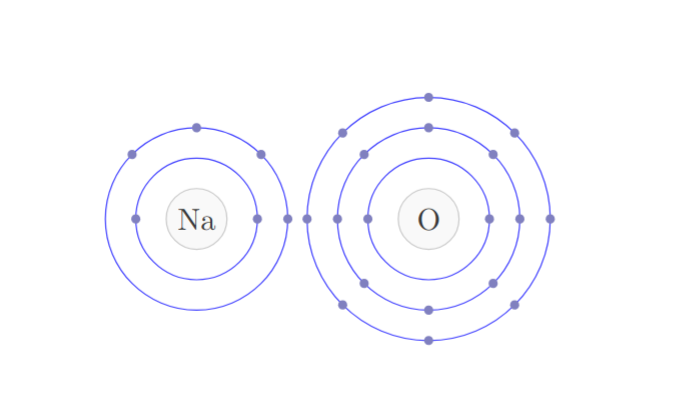
I know, I was trying out different atomic numbers without updating the actual chemical symbol, however I was just asking if all the electrons should in the outer shell should be more spaced out. Na should, of course be displaying C for Carbon, so the bohr configuration is 2:4 (6). as Na is 19 (iirc) 2:8.8:1 There is an elements package that will display the modern shell configuration notation As you said, it doesn't matter too much I just make sure my chemical symbols match the number of electrons. Thanks Paul
-
In this case, the social services ignored the girl's complaints / disclosures they were being raped, trafficked and abused by 'Asian' and other Men, partly as the social workers did not want to appear racist (or that is one explanation). The police and others also ignored them when they tried to get help. So your question is valid, best asked the social workers who allowed this to carry on for so long.
-
Hi I came across the CTAN Bohr package ( https://ctan.org/pkg/bohr ) in the latest issue of the Ubuntu full circle magazine, this allows for the drawing of atomic structure electron shells, So on a basic level it just needs \usepackage{bohr} \begin{document} \bohr{6}{Na} \bohr{18}{O} \end{document} However for Carbon, the displayed artom seems to show all the outer electrons on one side of the diagram, they are spaced out, but I would expect the 4 outer electrons to be equally spaced out. I just wondered if this was correct, I am sure I remember being taught that for carbon, the outer shell the electrons would appear top, bottom, left right. Rather than as here. It could be a bug in the package, Thanks Paul
-
I think we can spend a long time discussing what happened, Some of the women / girls were underage, we know that people with power were complicit and enabled all this to happen. However, this is not the first time, look at Al fayed (Harrods owner), Jimmy Saville and the UK Rochdale child grooming gangs,, with social services seeing the victims as promiscuous (even though they were under 18, and I think under 16 in some cases). What is needed is as a society we step up, learn from mistakes and stop it happening again, as a science community we can't solve all these problems, what we can do is make sure the environment we work in is respectful, inclusive and there are clear boundaries of behaviour. On a wider note, we can then demand to hold others to account. Abuse seems far as common place, and easy to excuse, UK safeguarding guidance no longer lets us use terms such as 'kids will be kids' or 'boys will be boys' to account for behaviour we HAVE to challenge it. Looking back and saying this should not have happened is easy,
-
Thanks for the replies, certainly seems an interesting discovery and important for finding life on other planets and maybe how life developed here on Earth. If we factor this sort of discovery in, we may have to redefine what we mean by habitable or habitable zone in terms of radiation exposure.
-
I guess you also need to take into account how those substances react with the body, if they get absorbed and react with something else in the body, either natural or even just simple painkillers.
-
Hi I was reading an article on Science Daily about the discovery of a Lichen in the Mojave Desert, USA. This lichen has developed the ability to resist UVC radiation via a pigment. This got me thinking that I think most things biological can be traced back to genetics, so perhaps there is a genetic change that has taken place so this pigment develops. (probably not quite the right terminology there). in which case could it be possible to map the GENOME and indentify any dna / genes that are responsible for the pigment, then use CRISPR to spice these in to perhaps a plant that we can make polymers from (and make the polymer UVC resistant, or perhaps even some foods, so that these plants can be grown either on space vehicles or perhaps on the Moon or later Mars. Just asking as I am not sure if this sort of thing is possible Thanks Paul Reference ScienceDailyMojave lichen defies death rays—could life thrive on dist...Lichen from the Mojave Desert has stunned scientists by surviving months of lethal UVC radiation, suggesting life could exist on distant planets orbiting volatile stars. The secret? A microscopic “...
-
I sort of understand what has happened with the Experiment with turning Lead in to gold. https://www.symmetrymagazine.org/article/lhc-near-miss-collisions-turn-lead-into-gold So given the energy required to remove electrons is called Ionization energy and this is detailed as 1st 2nd, 3rd Expressed in Joules (or KiloJoules / mol / Electron Volts Periodic Table GuideIonization Energy Chart of all Elements (Full Chart Inside)Ionization energy chart of all the elements is given below.First ionization energy, second ionization energy as well as third ionization energy of the So what energy is required to strip all the electronic from heavier elements such as Lead, which as this has a mass of 82 then there would be 82 electronics. I know the LHC works at Mega and Giga electron volts, so if they are removing all or most of the electrons, is this a value that equates to all the different ionization energies added together. I am kinda guessing we don't need values for 4th,5th and higher values, as at least within Chemistry we deal with reactions that i think rely on the outer shell (valance) electrons. Furthermore, I probably don't quite understand some of this, but they must know how much energy is required for each element to lose all its electrons (if that is what happens) Thanks Paul
-
It doesn't, but Trump has made other appointments that have also left others confused.
-
There is a discussion on Mastodon about this and related issues, there is currently a big attempt to try and archive as much information as possible for the future, so papers, website content etc. I know that NASA has had to remove references to black and female scientists as one example. This is part of the DEI crackdown. Really not a good situation at all.