
studiot
Senior Members
-
Joined
-
Last visited
Everything posted by studiot
-
The short answer is no, you cannot in general add the dimension of array to the dimension of the element. Each has its own separate and usualy different dimension. This is perhas easier to see with planar (2D) matrices such as the jacobian matrix or the del operator matrix. Here elements of 1, 2 or 3 ( or more) D are incorporated in these matrices. If you can understand this statement that this must be the case since the array maps Rn → R and both have the same cardinality.
-
Rock ? You started by asking about partly saturated soil. I very much doubt that the cost of 100m of 2 - 3 inch pipe in igneous rock would be economic. However limiting factors are twofold. Unless you live in Iceland or NZ your output water would be in the 16oC range so not a great deal of temperature different to drive the heat exchange. The actual rate of takeup would be limited by the pipe material - probably plastic. But stainless steel has a relatively low conductivity as well. In Mordredland you may also be fighting permafrost. You still haven't said much about where you are coming from.
-
I agree +1 to SJ for finding that manual. I note you can also save as a pdf. I sometimes use a free image extractor forpdf files to get a jpg. Also many scanners some with image file format convertors. Perhaps you could post a pdf ouput file to experiment with (if the forum doesn'y lik dotpdf, add dottxt to the end for stripping out) ? https://www.google.co.uk/search?q=pdf+image+extractor&sca_esv=566487c1e8374dca&sca_upv=1&source=hp&ei=VqDtZqylJ9yxhbIP7aiHgAw&iflsig=AL9hbdgAAAAAZu2uZoCAb3C3E79D7cebrT8kXpZbiBbE&ved=0ahUKEwisqMie9tGIAxXcWEEAHW3UAcAQ4dUDCA8&uact=5&oq=pdf+image+extractor&gs_lp=Egdnd3Mtd2l6IhNwZGYgaW1hZ2UgZXh0cmFjdG9yMgUQABiABDIFEAAYgAQyBRAAGIAEMgUQABiABDIFEAAYgAQyBRAAGIAEMgUQABiABDIFEAAYgAQyBhAAGBYYHjIGEAAYFhgeSOAnUABY8SNwAHgAkAEAmAFxoAGTDKoBBDE4LjG4AQPIAQD4AQGYAhOgAvkNwgIOEC4YgAQYsQMYgwEYigXCAhEQLhiABBixAxjRAxiDARjHAcICCxAuGIAEGLEDGIMBwgILEAAYgAQYsQMYgwHCAgsQLhiABBjRAxjHAcICCBAAGIAEGLEDwgINEAAYgAQYsQMYgwEYCsICBxAAGIAEGAqYAwCSBwQxNC41oAflcg&sclient=gws-wiz
-
By whom? Walt Disney of course. 😀
-
Excellent idea identifying your level of expertise. I wasn't aware that anyone offered a 'bac' in such anarrow field. Generally the bac requires a spread of subjects. Modred is 110% correct in saying the Physics is the dominant partner here, not Mathematics. Relativity is merely couched in mathematical terms for convenience of expression. I think that full explanation here is a job for @Janus who does the best ones. Meanwhile a few comments on the Physics. There are two types of mass, inertial as Mordred has mentioned, and gravitational. These two types have heen distinguished since the days of Newton. Happily they have the same values using appropriate equations. Thre are also several types of Relativity. There is what we call Galilean or Newtonian Relativity Einsteins Special theory of Relativity this may be understood at high school level Einsteins General Theory of Relativity which requires some more advance maths to properly understand it. This is the one you are speculating about. Physics in the guise of quantum theory) requires that space cannot be empty. It also requires that whatever is in it alters the mathematical structure from a simple orthgonal coordinate system imposed, not by Physics, but by us, to a more complicated one. I do agree with you that there is no 'stretching' involved - perhaps you have been looking at those awful trampoline pictures that should be banned. I said whatever is in it since quantum theory has no requirement that the something be mass, although it does describe how the mass works. The whatever includes energy which also also change the coordinate system. These last two comments have been the focus of intensive research over the last part of the 20th century and into this current one.
-
I think there is a switch somewhere in your settings to send you an email when you have a response, but few use it as it gets tedious after a while. On the other hand I usually get a notification as soon as I log on so if you are looking for responses you need to log on. I did have an afterthought that your question might be about ground source heat pump design. We at SF have discussed this topic a few time over the past few years and I seem to remember posting some design calculations. Again you are short on detail but I don't think compaction will have a significant effect on the heat transfer to your working fluid, which I take it is is water. Conditions will be very different if the source is under the foundations of a (large) building or via d deep borehole. I have a friend in Germany with a borehole version. When I worked it out for my house I would have required about 100 metres of buried pipe, space about 1m apart to gain enough heat to operate satisfactorily. This is why ground source has a high capital cost unless it can be incorporated within the foundations.
-
Ok so the next thing is elaborate on what you want to do with the thermal conductivity, where you are coming from and where you want to go to. So is this about agricultural, environmental or some other science and what is you background in Mathematics? The subject can be as complicated or simple as you wish or need to make it. Generally thermal conductivity arises not directly, but in connection with heat flux. The equation for this is called the heat equation or sometimes the diffusion equation. This is normally used as a particularly simple first order differential equation with the thermal conductivity being one of its constants. However constancy implies homogeneity a property which soil is anything but. Further complications arise because input solar heat flux cause loss of (latent) heat by evaporation of pore and adsorbed water. You mention roots and these are also known to modify the environment local to them, a phenomenon known as the rhizosphere. These, and perhaps other factors (such as compositional variation, compaction etc) mean that the thermal conductivity can no longer be considered as a constant by becomes a coordinate system dependant variable. Depending upon the application, discipline and complexity of the model adopted I can find various numerical solutions in the literature. Some starter books to ask your librarian for Soils and the Environment Alan Wild Cambridge University Press Heat Transfer J P Holman McGraw Hill Dynamics of Fluids in Porous Media Jacob Bear Elsevier / Dover The electromagnetic equations Mordred would need for electrical conductivity analysis are of higher order and not similar as are not the stress equations you would find in Soil Mechanics texts (though Lambe does discuss the effect of thermal conductivity on soil structure)
-
I haven't seen any work on this but I will look around tomorrow as I may have some specialised material on this. Meanwhile perhaps you could elaborate on If your first statement is correct would you not expect a step change in sensitivity at the phreatic surface ? Edit Oh and welcome to Science Forums !
-
Thanks for posting this. I see only people who are good with and have a computer were sampled. Doesn't that skew the population ?
-
I didn't say that it had anything to do with human bias. I did say that you should be careful of wading into a subject you know next to nothing about and start preaching to those who know (considerably) more. What did I actually say about transistor bias and how does anything you have said negate it ? you seem to have mixed up answers to point 2 with what follows. Belief is for religion, not Science. Please take it elsewhere, you still have failed to follow my reasoning, which is based on an analysis of your words, not mine. Again your words not mine, which is why I asked you to define them. Thank you Scientists are not entitled to 'take things for granted' Again that harps back to religion. So you are not really taking in what is said to you and Dimreaper is correct. Look up 'objective lens'.
-
https://www.electronics-tutorials.ws/amplifier/transistor-biasing.html First of all I already told you right at the beginning of this thread why that definition is unsatisfactory. It is because it automaticdally rules out the subject having any knowledge of the objectivity of what he is doing which is clearly not the case in many of the examples I have given you. When a scientist genuinely doesn't know how objective she is, she say exactly that. I have also told you several times objectively in science aligns with repeatability of result over most, if not all 'subjects'. Here I must confess my lack of objectivity since I really don't know what you mean by 'subject' as suspect you are again employing the wrong word. Note I have always used words like observer. Again I have offered this more than once and so once again the ethos of limit state theory is that since for many processes, designs, calculations, constructions and so on we cannot know the exact values which may also be probabilistic, so we adopt the policy " The probability of being wrong is a known acceptably low level" No if they are incorrect, irrelevant, inappropriate, incomplete. Further you didn't answer my request to tell me what you mean by data and facts. Somewhat so read up. Have you found out yet what Science might mean by an objective ?
-
I have already told you that there are many words with special meanings in Science and that some of these have more than one special meaning. Bias is one such. Transistors will not work without bias. 'Non return to zero' is undesireable in instrumentatation as it leads to measurement bias. yet many older mechanical measurementsw had this feature. I already told you that objective has another meaning in Science, but received no response. Did you look it up ? It's all part of being prepared to accept 'what is' and then to make the best of it. I think I also mentioned Limit State Theory in this context, but again received no response. What difference does adding data and facts, both of which enjoy multiple disputable definitions, make ?? We are agreed So you ask for elaboration where ?
-
Thank you Dimreaper, I am inclined to agree with you. +1 Glad to hear it. So your next task is to learn about 'bias' which you have demonstrated a lack of understanding about. I keep telling ypou that subjective is acknowledged and accepted by Science as a fact of life, just as rainstorms are. So Science takes the very sensible attitude of wearing a 'raincoat'. My phrase was 'subjectivity contained and controlled', a point to which you have not replied. So here are four true stories, the day after the inquiry opens into the sub Titan disaster. The Titan disaster. Result of being controlled by the subjective approach by Rush 5 dead including Rush himself. During the 1960s - 1980s the americans sold lots of 'Starfighters' to multiple friendly air forces around the world, including their own. They were generally regarded as an excellent aircraft. One air force and one alone had major reliability problems - the West German - they had up to a couple of dozen quite literally 'fall out of the sky' for no apparant reason. The problem was eventually traced to the 'proud' german subjectivity of their fitters. The maintenance manual specified that certain critical components should be replaced after a specified time as a matter of routine. The German fitters did something no one else did. They took the parts out, examined them and subjectively pronounced them still fit for purpose. So they put them back, instead of replacing them. Despite there being a whole science of replacement of critical parts available. The americans themselves were not immune to this sort of stupidity. Underrated seals killed several Apollo astronauts. Now some good news. I don't know whether Fleming was being objective or subjective but he nearly threw out the original penecillin cultures as failures. Either way his flexibility allowed him to spot the magic effect and antibiotics were born.
-
Of course it doesn't, who said it did ? However, maximum caution, beware Will Robinson. We often warn with two very deep and very perceptive cautionary phrases. "The map is not the territory" Alfred Korzybski " Correlation does not imply causation" Karl Pearson In which case, my apologies. I await the complete version. Perhaps it was lost because you seem to have stuck your reply inside the quote from me. But it also has led to some enormous blunders for instance when kelvin miscalculated the age of the Earth by a factor of a hundred million in the arrogance of thinking that Physicists of the time knew everything.
-
Why have you revferted to ignoring my important points ? Do you prefer following to a bunch on non scientific ninnies ? I was trying to show you how to think for yourself.
-
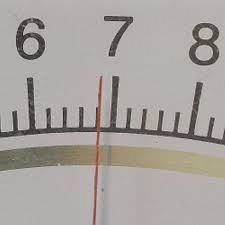
+1 for correctly picking up on both my important points. However I must agree with exchemist about the article you refer to. If the authors know anything about Science at all they have chosed to exclude it from their article which is filled with waffly generalities and other piffle. They seem to have an anti Science agenda. I would also like to pick you up on one point, you like to use the word precise. Do you know what science means by precision and accuracy and their difference. Here is a good article to demonstrate this https://www.antarcticglaciers.org/glacial-geology/dating-glacial-sediments-2/precision-and-accuracy-glacial-geology/ Science is active, not passive. It doesn't just wring its collective hands about subjectivity, nor does it try to eliminate it. It accepts subjectivity as part of the facts of life and looks for ways to control and contain the effects to an acceptable level. Some subjects are best approached by way of many examples and I think this is one of them. So going back to our ruler, it is an observed fact of sunbjectivity that different observers will consider the rule marks line up with the measureand at slightly different places. So each measurer will obtain slightly different evaluations. One further feature of this is that any given observer will probably consistently estimate tha match position slightly to the left or right. This introduces 'bias' into the subjectivity. Along come Science, galloping to the rescue. This is no godd I want everyone to read 4 when the marks are aligned with 4. So Science says this phenomenon is called 'parallax'. Parallax occurs because everyone tips their head slightly to one side or the other slightly differently. But I can cure this by s sneaky introduction of a mirror, where it is a problem. It is not a problem with a ruler because ruler measurements are made 'by difference'. That means that the observer lines up not one, but two marks to make a measurement. One at the beginning and one at the end. However when it comes to old fashioned meters with needle pointers the observer only makes one reading so we will place a mirror behind the pointer and instruct the observer to line up the needle with its image in the mirror so counteracting the parallax.
-
It's a good job you called this thread Science and Objectivity because: Perhaps some consideration of history will help. The notion of subjectivity is rooted long ago in very primitive times. For instance in some primitive tribe the headman said to Joe, "go and evaluate the threat by the enemy tribe or perhaps the benefit we could get from the nearby herd of boar." Someone else said, "no, send JIM - his evaluation will be more reliable" This could have been the beginnings of recognition of subjectivity. After that we entered the 'golden age of reason' (ancient Greece) and the opposite of subjectivity was identified ie objectivity. As we moved towards modern times thinking changed and developed. Science adopted many words with more general meanings and gave them special more tightly defined meanings to use them for its own purposes. Earlier civilisations were a bit fuzzy about parts of speech, but today we recognise nouns and adjectives; note that objective is an adjective, meaningless without a noun. English further recognises concrete and abstract nouns nad that adjectives may be modified by qualifiers, unless they are special in nature. Scientific English recognises that nouns may refer to objects with properties (which are also nouns). It is also worth noting that Science also uses the word 'objective' as a noun as another (but related) sense in scientific optics. As far as Science is concerned we do not evaluate objects, we evaluate some selected property or properties of objects. (Note I say evaluate not measure). It is inappropriate to refer to an noun (other than an evaluation or similar process) as objective or subjective. So we cannot objectively or otherwise directly evaluate Jacob's coat, but we can evaluate its properties say its colour. I mentioned qualifiers for adjectives A good way to regard perfect in perfect objectivity is to follow the ancient greeks (at last I am praising them) and their concept of the infinite. The greeks were great geometers and to them a (straight) line was infinite which meant that you could never reach either end, no matter how far you went along the line. It was there, but unattainable. It is also worth noting that Science uses the word objective as a noun in another (but related) sense in scientific optics.
-
I suggest you start with Something Deeply Hidden (2019) By (Prof) Sean Carroll Page 271 to 272 Where Sean gives a simple explanation of the problems toroidal spacetimes pose for quantum gravity.
-
Have a refreshing break and come back renewed next week.
-
No you were doing more than 'just saying'. You were stating as a fact that this disbars Mohs from objectivity. So I will offer a simpler example that has similar characteristics and then return to Mohs. Both examples demonstrate the difference between a scientist or engineer and a philosopher quite nicely. Consider measuring the length of something with a ruler. The major markings on my ruler are 1 inch, 2 inches , 3 inches and so on. So by placing the ruler alongside the object I can see that is is greater than 2 inches long but less than 3 inches long. So it is between 2 and 3 inches in length. So far this is objective. I can estimate the length as one quarter of the way along, but this is obviously now subjective so the finer measurement 2 and a quarter inches is subjective though the coarser measurement is objective. I could also dispense with the ruler and employ a box of lathe operator's block gauges of length 1 inch 2 inches, 3 inches to achieve the same objective measurement. Mohs scale is like using the lathe operator's blocks. Brinell, Vickers, Rockwell and other more modern scales are continuous like the ruler, which is why I said they are subjective. The point of the blocks is that it doesn't matter if the actual length is 2 and 3/8 " or 2 and 2/8 inches or other figure, the block method is still consistent within itself. In the same way small compositional variations in mineral can be accomodated without invalidating the steps between which the measured specimen lies. Of course I could blunder and mistakenly use the 4" block or the flourite block instead of the calcite one in Mohs. In Science and engineering has developed a whole theory of errors which we could be discussing as examples of the difference between science and philosophy. But that would entail you asking questions as opposed to making statements in contradiction to what people put to you.
-
Since you are the (self styled) technical expert around here, pray tell me why this is important to the issue of whether Mohs scale is objective or not ? I note that the other hardness tests you refer to are continuous, but the Mohs scale is not. Therin lies the reason why it is absolutely objective, even when, as exchemist observed, it is applied to materials outside its original purpose. Do you actually know how to conduct a Mohs test / Have you ever performed one or seen one performed ? For your information another geoscience test developed almost exactly a century later is truly subjective. This one is called the Atterberg limit test.
-
Since it was a genuine question, what have you learned from the answers given ? Since joining SF I learned the meaning of the description 'word salad'. What you wrote 'just above' is, in my opinion, a fine example of word salad. I couldn't understand any of it. I further note that, as you have done so many times, you have made no reference to the examples I offered.
-
Taking this as a genuine question and request for information, Yes indeed the most widely known and discussed physical property with this feature is probably entropy. Just to be more precise, 'something' is not sufficient. You cannot measure 'something' itself. You measure properties of 'something' eg the length, area, volume, mass, count are all properties that can be directly measured. Such properties are all obviously physical and called observables. Other properties can also be physical but must be deduced from those which are observable. Entropy is such a property. This is the first and only time you have introduced 'relative' objectivity, whatever that may be. I call that moving the goal posts. I will treat the rest of your response, after you have commented on this post.
-
1- The definition is not mine, but one often provided by those in the business of defining the term. 2- A lot of ourthoughts, specially those based on evidence, are very-very objective though; they are just not perfectly objective 3- In what sense am-I contradicting myself? 4- Out of all of the scientific philosophers that I consulted, none claimed that perfect objectivity existed. However, some scientists do believe in perfect objectivity. 5- I agree that there is possibly some kind of a scale of objectivity; and for scientists, mostly dependent upon evidence. 6- And I agree that it is not as simple as that; but perfect objectivity is challenged by philosophers, apparently objects cannot be detached from subjects, and as you state, subjective and objective experiences cannot be unentangled from one another. 1) It is yours insofar as you introduced it with the words This is the only definition you have offered (that I can find) and your words certainly suggest me me that you endorse the definition, regardless of where it came from. 2) You have once again failed to read my short and simple text properly, apparantly preferring the complex and convoluted. How can any of my thoughts be independent of me ? Yet your definition demands that they are just that for obectivity. 3) In your 'borrowed' definition independance is required. yet in your later own definition you say that there is no independence A direct contradiction. 4) This is neither discussion nor answer to the very simple example I offered. Do you or don't you consider Mohs scale perfectly ofjective ? If not why not ? 5) Hedging your bets all ways huh? 6) Again you fail to find my simple point that the subject of objective v subjective is much more complicated than at first meets the eye. If you prefer other language any scale of objectivity/subjectivity must be multi factorial. I amk trying very hard to hold a discussion with you about a subject I had not given enough proper thought to before, but is very interesting. Your responses seem to me to be terse, defensive and entrenched for no reason I can understand.
-
Well I can't agree with this. What you are claiming is that I can't have objective thoughts by definition. Since my thoughts can't exist without me, they can't be objective. But also aren't you contradicting yourself ? I can't agree with this either. As far as i can tell a measurement on the Mohs scale is totally objective. It has been suggested that there is some scale of objectivity. But I am suggesting that it is not as simple as that and this is the reason everyone is getting tangled up. My boiling point example suggests that subjective and objective classifications are not mutually exclusive as required by the ancient greeks( remember them?) Some situations have characteristics of one or the other, some situations have characteristics of both and some situations have characteristics of neither.