studiot
Senior Members
-
Joined
-
Last visited
Everything posted by studiot
-
@Bazil_SW I looked at you two videos but could not determine very much. In particular I could not determine the trajectory of your object. Did you actually see it fall ? (Some of the objects in the article I linked to were actually witnessed 'dropping out of the sky) Can you say if it fell more or less straight down or if it came in at some flat trajectory angle or what ?
-
This is a misunderstanding of the nature of infinity. Take an ordinary piece of graph paper. Now mark scales along each axis, say 0 to 1 each way. Draw a line from zero to 1, 1, straight or curved, it doesn't matter. That line you have just drawn contains infinite number of points. This is because of the particular nature of infinity that any sub interval of an 'infinite' line 'contains' an infinity.
-
Yes we heard about your storm on our news. My sympathies. Well I'm sorry you did not pick up my light hearted way to offer a counter example to your absolute claim. "It ain't necessarily so" is a famous song and part of the lyrics originally from Gershwin, but covered by several popular artists since. https://www.lyrics.com/lyric/6009935/George+Gershwin/It+Ain't+Necessarily+So+[From+Porgy+and+Bess] Perhaps if also read (and answered) the actual counterexample you would understand. Well if you can't or won't understand your own language, I can't help it. I have already explained the meaning of the word 'great', which goes back to Saxon times and is still used in that context to this day. For example there are two villages in the Chilterns distinguished by the words great and little. Great Missenden and Little Missenden. These are actually older than England itself! When I lived in Greater London, I lived in the London Borough of Brent. There were then more people in Brent than in the whole of the County Somerset, where I live now. Indeed there were more people in Brent than in most of the cities in the UK. Yet is is a medium sized entity making up a small part of what was known as Greater London. Grater London comprised two cities and up to 35 boroughs. The City of London, the City of Westminster and the rest of the London Boroughs. As a matter of interest why do you think your own Great Lakes are so called ? Could it be because they are very large lakes (though not the largest in the world) ? And do you consider Lake Superior to be somehow better than the others ? Or is it again a geographic term ? Can you explain the difference between truths and facts ? Nowhere did I say or indicate 'dominant in any part of medical science' I was complimenting you on offering a mechanical explanation, when chemical explanations failed. And merely observing that this was not the only example of such happening in medical science. Digestion actually offers several examples to do with diet: Roughage, for instance is often neglected in diet. Cotton wool sandwiches are sometime prescribed. I have never heard of someone 'working Science' so my best guess was doing Science. Sorry if I misunderstood you. I still maintain that science now deals with more facts or truths (if they are different) than Philosophy. Since you like to introduce value judgements into Philosophy, would Philosophy be interested in the distance between the 53rd and 54th branches on my next-door-but-one neighbour's apple tree ? I don't think this distance (which must have a value and so must be a fact) is of any philosophical interest. But it could be of scientific interest as data for some project. Just as my counterexample of the production of high quality concrete offered in my last post.
-
No parenthesis was used so it should be taken to mean p = 2.4. Strictly to make the difference and indicated multiplication your could (perhaps should put the 2 and the 4 each in their own brackets, but I have never seen this done in that way. I am a little surprised at your continuing difficulty since you yourself identified that the bold dot is used by Silvanus to signify both the decimal point and the operation of multiplication. The original book by Silvanus was published in 1910 and at that time there was a fashion for printers to use the bold dot in the middle of the line to avoid confusion a small dot being lost at the bottom of the line. This bold dot symbol is still available today and I have shown it in my revision examples of the use of symbols for powers and roots below. Note I have used the modern star in the middle to represent multiplication. The star was introduced to avoid the ambiguity of using one symbol (the dot) for two different things. [math]{t^{2 \bullet 4}} = {t^{2.4}} = \sqrt[{10}]{{{t^{24}}}}[/math] [math]{t^2}*{t^4} = {t^{\left( {2 + 4} \right)}} = {t^6}[/math] [math]{t^{\left( {2*4} \right)}} = {t^{2 \bullet 4}} = {\left( {{t^2}} \right)^4} = {t^8}[/math] I hope these help
-
OK, the future in English. The perfect tense refers to a completed action (verb) A completed action is over and done with and often cannot be repeated. For example I have eaten the apple happened in the past so is past perfect. But say in the present I hold an apple. Obviously I have yet to complete eating it, or even perhaps to start eating it. So in the present I eat the apple or since this takes time, I am eating the apple which is the imperfect tense. But say I do not, which in 2 hours into the eat the apple until my lunchbreak, which is 2 hours into the future. So I say that, "At lunch, I will eat my apple." Which is the unspecific or simple future. or I can say, "At lunch, I will be eating my apple." Which is the future imperfect. or I can say, "After lunch, I will have eaten my apple" Which is the future perfect. That is further into the future following the completion of eating of my apple. I cannot refer to something that will happen in the future whilst I will be eating my apple - I must use the future imperfect for that. So Once I have eaten my apple my lunch will be completed. Perfect While I am eating my apple my lunch will be interrupted. Imperfect
-
Silvanus' answer is correct and follows the standard rule for differentiation of a power. if [math]u = {t^p}[/math] then [math]\frac{{du}}{{dt}} = p{t^{\left( {p - 1} \right)}}[/math]
-
We try to be helpful and encourage genuine members. You say Birmingham ? I don't know if there was any connection to this event Winchcombe is not far from Bham.
-
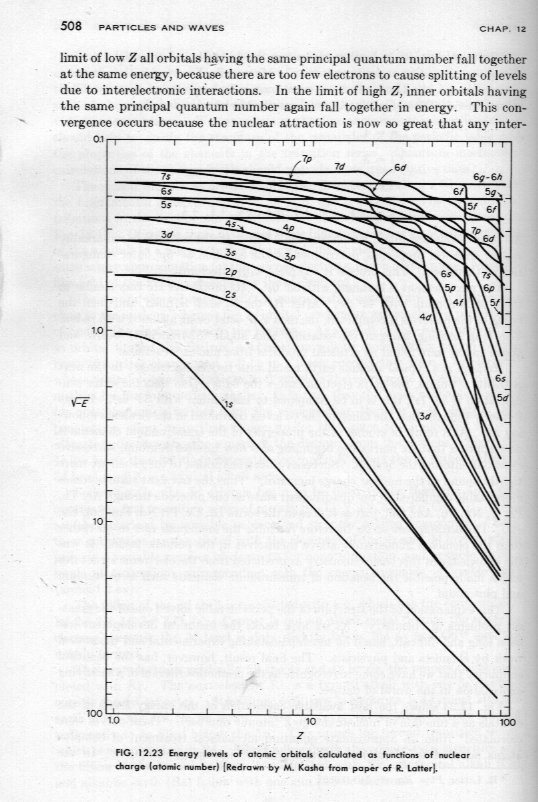
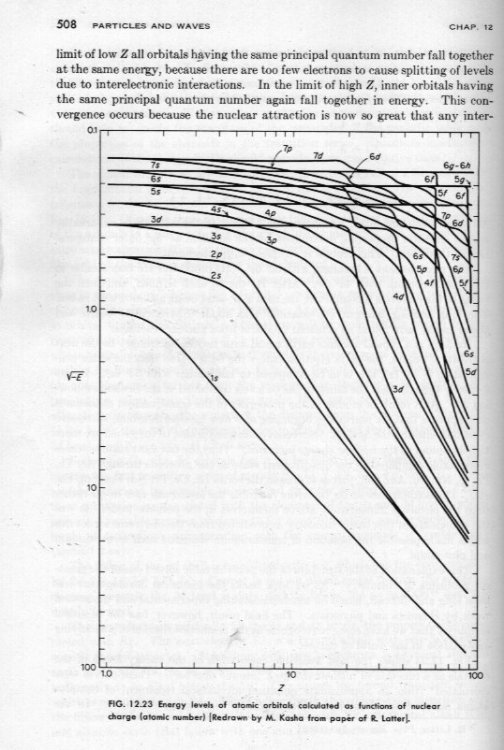
The energy level of each s, p d f etc orbital varies with atomic number and there are some crossovers. Here is a plot, showing how complicated it gets as Z increases
-
If there is only one sort of singularity or even just one 'singularity' why does it need to be qualified by 'absolute' ? So you are changing your definition ?
-
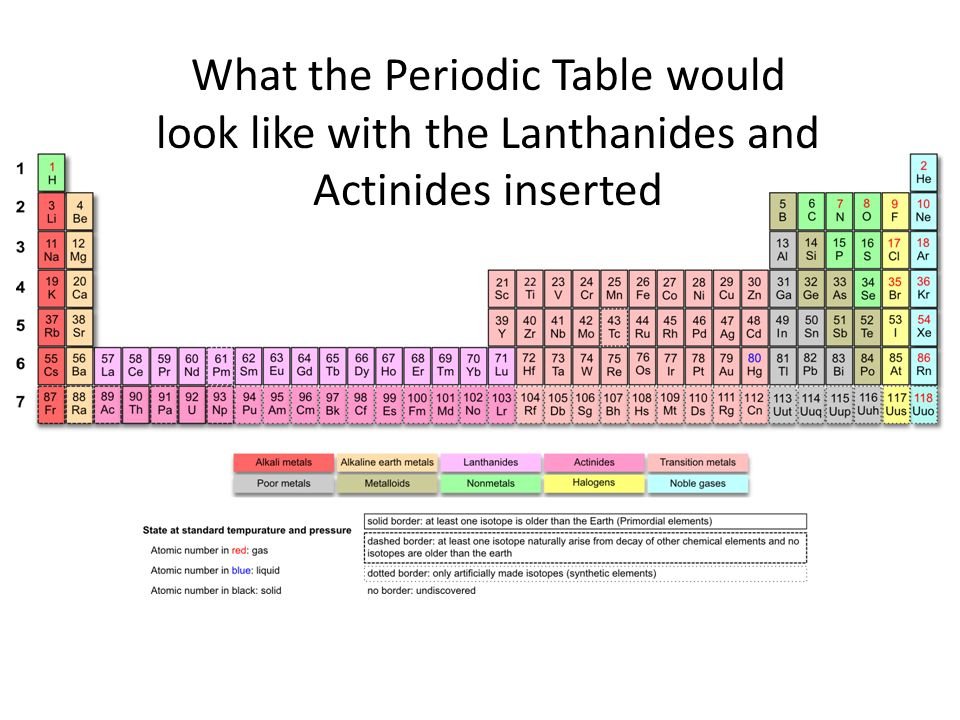
They are not kept out, the full table is unweildy, the standard version includes the rare earths in a more compact way and appear in your table. There is a comprehensive discussion and link about this on Quora. https://www.quora.com/Why-are-lanthanides-and-actinides-are-kept-out-of-the-periodic-table which also offers the full table
-
Here is an interesting discussion about the effect of entry angle. It is intended for rocket capsules, but also discusses meteor(ites). https://www.faa.gov/about/office_org/headquarters_offices/avs/offices/aam/cami/library/online_libraries/aerospace_medicine/tutorial/media/iii.4.1.7_returning_from_space.pdf @Bazil_SW I see you are a new member of 7 hours standing. Welcome. Just to warn you that new members are allowed only 5 posts in the first 24 hours. This is nothing personal, just a very effective measure against spammers who try to flood sites like this with junk. After 24 hours the restriction ends. If you really need to say something before that the private message system can be used.
-
You were also asked for your definition of absolute. This is so we can distinguish an 'absolute singularity' from any other sort of singularity. Or are you just adding fancy but meaningless words for effect, rather like advertisers do ? My great grandchildren are non existent. I asked this because I was concerned that you had presented a circular argument or contradicted yourself. I see you have not done this because as I understand your meaning of 'exist' it can only be applied to material objects. However this argument is just as fallacious as I have already pointed out that the English language makes provision for material things as well as for immaterial things. And your argument seems to rest on the premise that no immaterial thing exists. So would you deny the existance of colour ? Is a shadow a material or immaterial thing ?
-
Not really. Firstly PHI asked you to define what you mean by 'absolute' and 'singularity'. You have not done so. Secondly I asked what you mean by unsubstantiated. All you have done is repeat it. And you made no reference to my comments about the use of language. One's use of language and in particular the use of negatives is crucial to discussions such as these. As a friendly note new members to this forum are limited to a total of five posts in their first 24 hours. This is nothing personal it is a very effective anti spam measure. You may have noticed some websites that do not do this are flooded with advertising and worse spam. After 24 hours you can post all you want - but remember the mods like one topic per thread and a rule of themb is that you need to post sufficient material on the forum for those who cannot look elsewhere to participate. If you make assertions you may post a link to a known authority (eg Stanford Encycloperia of Philosophy) to substantiate your assertion. Note I have used the verb to substantiate. This is why I asked about your use of 'unsubstantiated'. Do you mean asserted without support or do you mean non-corporeal or something else again ?
-
The language of this forum is English. I learned recently in another thread here that negatives are treated differently by (some) other languages. I have no idea what you mean by an unsubstantiated idea ? English allows two sorts of nouns (and their 'existence') - concrete nouns and abstact nouns Are you referring to something like this. You do seem to have introduced new undefined terms, additional to those already introduced in your opening post (op). I will leave it to the kind moderator to explain what link you may or may not post. Or you could just read the rules.
-
My great grandchildren are non existent. ?
-
Hello Jd1 and welcome. Yes that was the topic. The former member did not have enough Maths knowledge to appreciate the simple explanation, and you have not indicated your level of Maths. I can't see that the decimal - fraction converter in your link is any use either. Here is a simple correct Mathematics answer to the question, you may appreciate. Consider the whole number system : 0, 1, 2 ... That is all the numbers in the system are whole numbers. The system is sometimes called the counting numbers. In this number system there are no numbers between 0 and 1 or indeed between any adjacent two whole numbers. Now consider what we call the rational number system, which includes all possible fractions. That is all the numbers in the rational number system are fractions, so in this system the whole numbers appear as fractions where the denominator (bottom number) is 1. So in this system [math]0 = \frac{0}{1}[/math] and [math]1 = \frac{1}{1}[/math] One property of the rational number system is that between any two rational numbers there are more rational numbers. So the is nowhere where there are two numbers that do not have more fractions between them, no matter how finely you divide the gap up. We denote this property by saying that the rational numbers are dense. Further the rational number system is the simplest number system with this property. The counting numbers are not dense
-
Not exactly, no. The free atom does indeed possess the s an p orbitals. I already said that. When this free atom enter a bond it does not reorganise its orbitals into hybrid ones as a preparatory process. This a a theoretical and mathematical device for us to transform the s and p orbitals into the hybrid ones, just as you say is outlined in the text. But the text also has different hybridisation equations depending upon the environment as it shows with methane and ethylene. Nor does the carbon in methane deconstruct its hybrids to reform the s and p orbitals then form different hybrids when the methan molecule enter a chemical reaction where say one hydrogen is replaced by a chlorine. So you cannot get away from the environment ie the other atoms in the molecule. This is just as you cannot solve Schrodinger without the boundary conditions.
-
Thanks, I'll look it up. +1 Update. If I follow your link it goes to a page similar to the old popup. That page is headed as > Browse > online users If I click on that heading I get a differnt page showing different users. Sloppy programming IMHO.
-
Sorry If I gave the wrong impression. I did indeed refer to the first LED lights I had. This was some 10 years ago and they were complete celing fittings with the LEDs integrated within. These have been performing well for 10 years. These were installed on the new ceiling as part of an extension project to the house. They were however expensive, at £120 each. The project was discussed extensively, with photographs, in the old thread I referred to. The replacement bulbs were 'ony' £8 each (tungsten is aout £0.25) a couple of years ago. They have only been available fior 3 to 4 years.
-
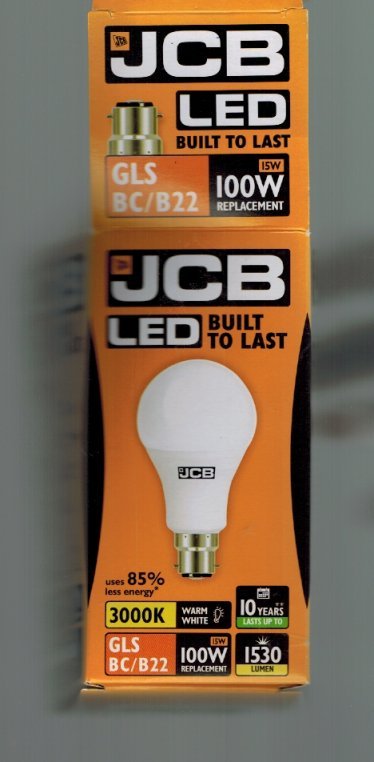
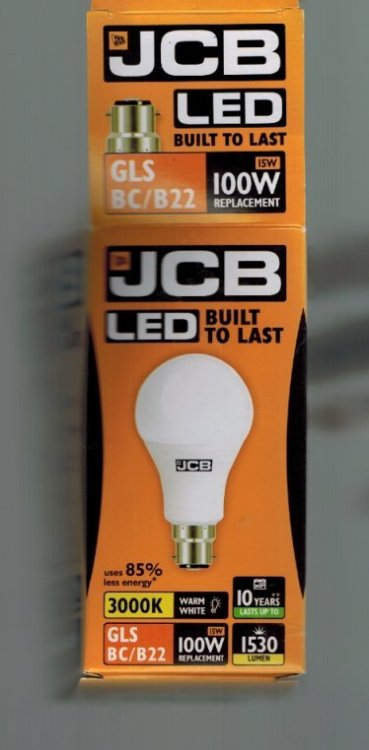
I'm not sure I follow. I've barely had these bulbs a couple of years, yet they are starting to fail. Here is the package from one.
-
Thank you both for these answers. My original LED lights were fitted before almost 10 years ago and are still going strong. These were complete light fittings, not just plug in replacement bulbs, which are much more recent. My experience with the replacement type is that they do not live up to their promise and Zap's description is all too familiar. A further thought occure to me. Light bulbs of any description are not particularly high current devices. However LED types really need a much lower voltage than UK mains so perhaps the lower American mains voltage lead to a longer lifer in the voltage reduction circuitry ?
-
I note you have posted this in 'Relativity' What connection to relativity are you looking for ? And what do you mean by 'constrained' ? Yes there is are a collection of hypotheses (strictly - not theory) called the 'block universe'. I say collection because there are variants of the hypothesis. https://www.google.co.uk/search?q=block+universe&source=hp&ei=p7IfYY3OHNGE8gLou4_4AQ&iflsig=AINFCbYAAAAAYR_At-KaN5C9DL025ykI-HzjO5l0zHKu&oq=block+universe&gs_lcp=Cgdnd3Mtd2l6EAMyBQgAEIAEMgUIABCABDIFCAAQgAQyBQgAEIAEMgUIABCABDIFCAAQgAQyBQgAEIAEMgUIABCABDIFCAAQgAQyBQguEIAEOgsIABCABBCxAxCDAToRCC4QgAQQsQMQgwEQxwEQ0QM6DgguEIAEELEDEMcBEKMCOggIABCABBCxAzoOCC4QgAQQsQMQxwEQ0QM6CwguEIAEELEDEJMCOg4ILhCABBCxAxDHARCvAToICC4QgAQQsQM6CwguEIAEEMcBENEDOhEILhCABBCxAxCDARDHARCvAToLCC4QgAQQsQMQgwFQhhFYtihgslNoAHAAeACAAc4DiAGsGJIBCTUuMi4yLjIuM5gBAKABAQ&sclient=gws-wiz&ved=0ahUKEwjNva_e3r_yAhVRglwKHejdAx8Q4dUDCAg&uact=5
-
Good question at this time I don't know as previously I simply swopped them into place as old tungsten or CF bulbs failed. So I really only checked at the end of their life.
-
Can anyone tell me why the new update has change the way the list of members online is presented ? I didn't realise just how useful the popup of what they are looking at really is until now.
-
Does anyone have any experience in the failure modes and comparisons with the offered lifetime and real world time to failure of the replacement bulbs ? Since the introduction of LED replacement bayonet and screw fitting bulbs I have seen several fail prematurely. I have also noticed they run hotter than I expected, though not as hot as incandescent. I think I might start to dissamble any more that fail to find out what why they failed. Coupled with the hotter running I have noticed three that have started to flicker before failing, suggesting that it is not the LED that fials, but the driving electronics. Comments and experiences of others are welcome.