
zapatos
Senior Members
-
Joined
-
Last visited
Everything posted by zapatos
-
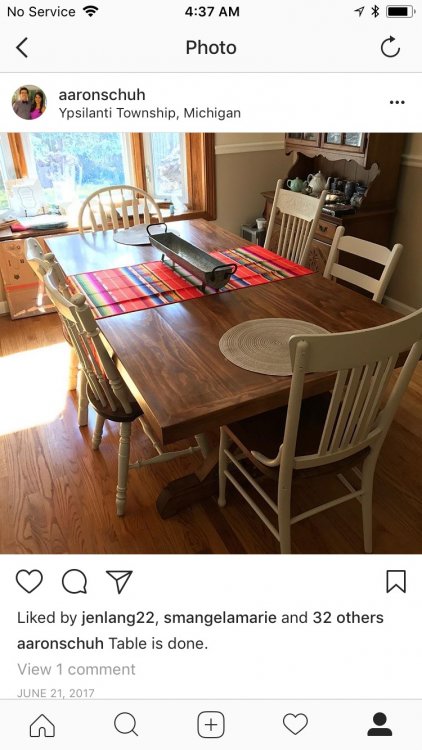
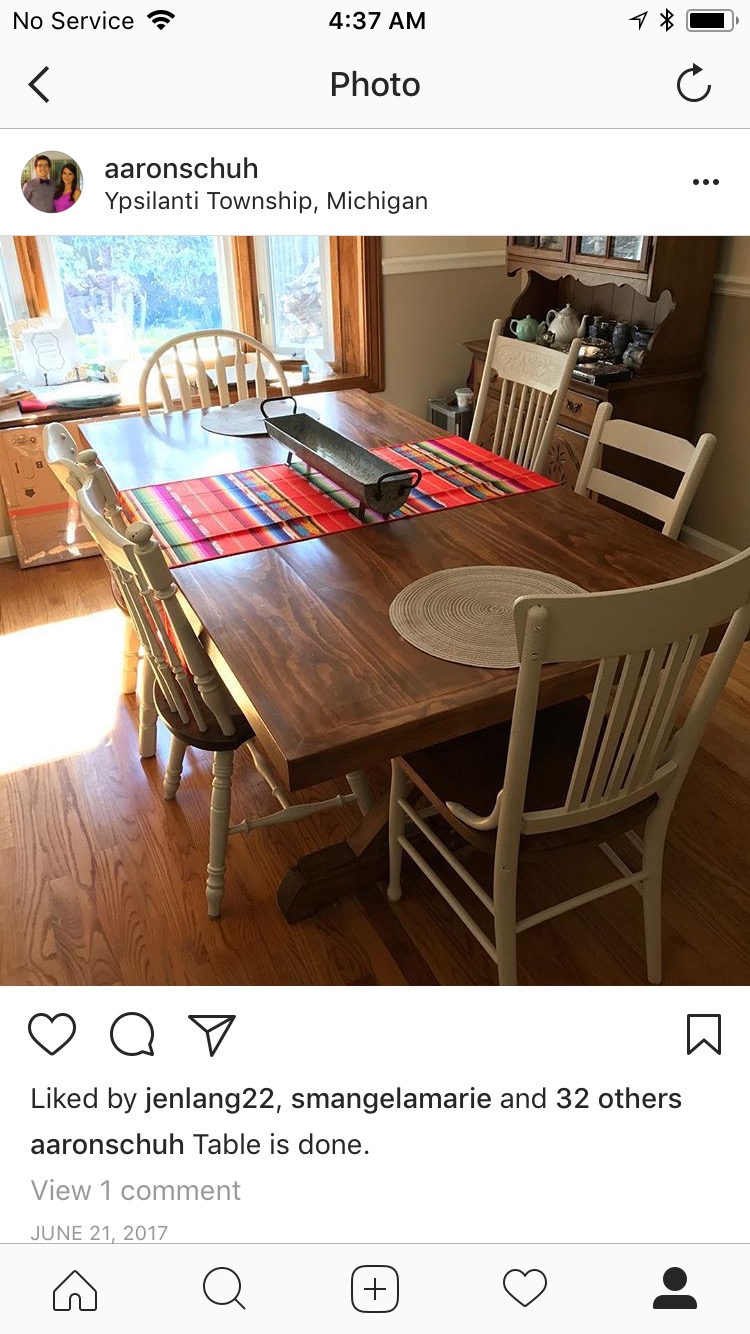
This past summer my son decided he wanted a farmhouse table for his dining room. We made this with hardware that allows him to easily take it apart for transport.
-
IMO, in order to build a table that you will be happy with you first must have patience, attention to detail, and recognition of when those attributes are slipping (due to fatigue, being in a hurry, etc.), so that you can step away before you screw something up. If you do each individual step to the best of your ability, your overall project will be the best you are capable of with your current experience, and will generally be something you are happy with. Assuming the above is true the next thing you need is a plan. Not just the look and dimensions of the table, but an idea of how you are going to accomplish cuts, glue up, joinery, finishing, etc. That will come from either a plan you are following, someone to guide you, or your own knowledge. If you've got the two items above covered, go for it! It really doesn't matter if you've done the techniques before because if you have the right approach (paragraph 1) and know what you have to accomplish (paragraph 2) then you will be successful. May not be perfect, but it will at least be good enough, and no one will likely notice any imperfections except for you. The average person will not look that closely. When I build things I often do a lot of the tasks twice. Once for practice or to see how it will go, and once for real. I'll cut a rabbet on a piece of scrap before I do it for real. I'll dry assemble before actual glue-up to make sure I have enough clamps and time to get it glued before things start drying. I'll sand/stain/apply polyurethane on a sample to see how it looks. That way when I do it on the piece I'm making it comes out the way I want it to. When you get down to it, all you are really doing is cutting wood into smaller pieces, then putting the pieces together in the shape you are after. Since you are still fairly new to this game, you may want to consider making it out of, say, pine rather than something like oak. Much cheaper and easier to work. I vote you make it.
-
A lot of mills will sell wood designated S2S, or S3S. That is, Surfaced 2 Sides, or Surfaced 3 Sides. That way you have lumber that has been run through a surface planer. That will let you get closer to the source but still address the difficulty you are currently experiencing with that aspect of wood prep. You may have tried this already, but some woods such pine (which it looks to me what we may be seeing in this picture) have a pore structure that almost guarantees a blotchy finish. If you apply a pre-stain wood conditioner it will go a long way toward giving you a nice even finish.
-
Over the years my shop has become very well equipped. Table saw, band saw, radial arm saw, miter saw, jointer, planer, router table, drill press, assembly table, couple of work benches, and other assorted goodies. My band saw is relatively new and I'm still learning it. If you are interested in a magazine that gives solid tips and step by step project plans you might like Woodsmith. http://www.woodsmith.com/magazine/
-
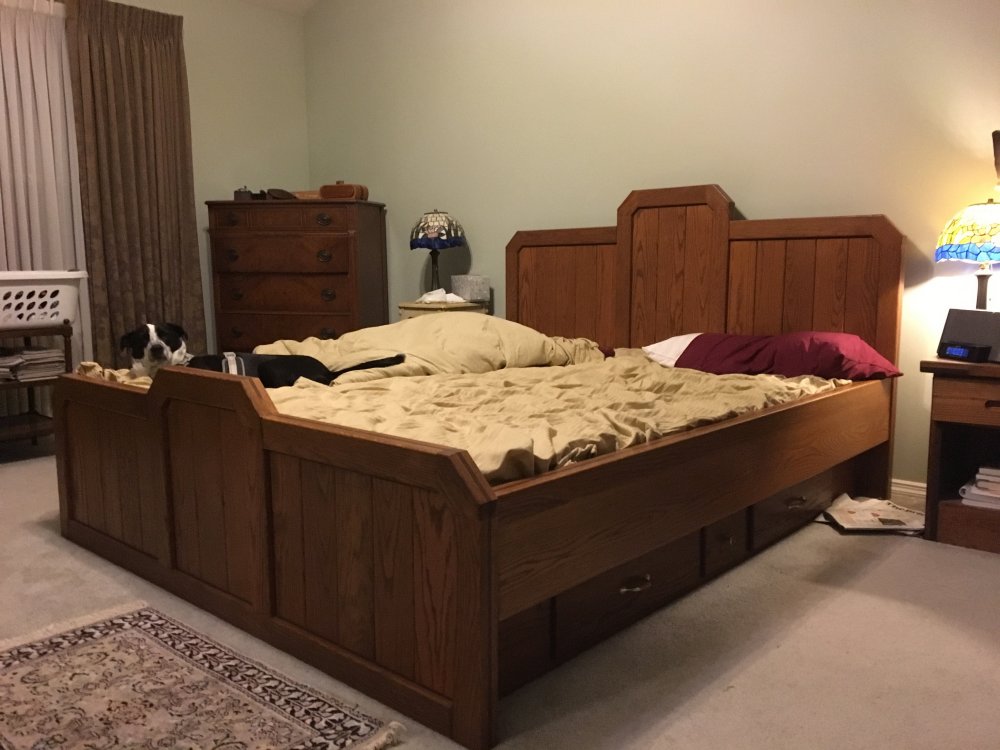
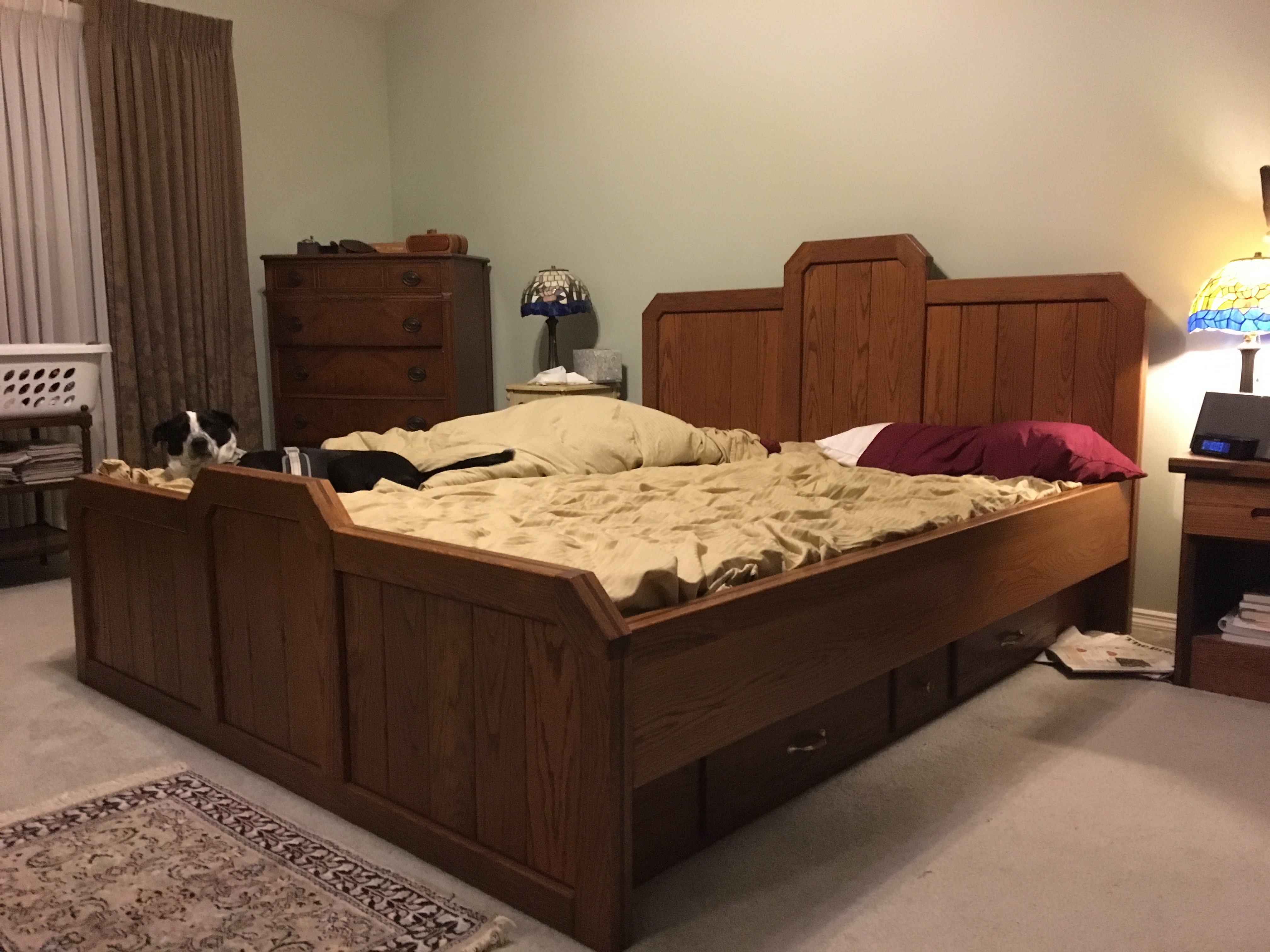
I've been doing woodworking since college. My dad was an extremely talented cabinet maker and my first major project was to design a waterbed which he and I built together. One of my fondest memories with him. We drove to southern Missouri to buy white oak and black walnut directly from the sawmill. The past couple of years I've spent a lot more time building things for outdoor use. We have a cabin on the Black River and I've been building foot bridges, benches, tables, an outdoor shower, and other items. I find wood working extremely rewarding. I've also taught my kids and wife and they can all build things. Here is a picture of waterbed we've been sleeping in for over 30 years.
-
I feel like I just had a flashback to the 60s.
-
What did the British particle physicist say when he got accepted to work at LHC? SMASHING!
-
I suspect you either misunderstood or are exaggerating.
-
Glad you joined us jab116! We have some real experts in those areas and there are always interesting discussions going on.
-
Welcome Blackflags! Glad to have you with us.
-
Today I learned that forensic investigations have been in use since the 13th Century. http://discovermagazine.com/2017/jul-aug/catching-a-criminalIt is. I'm in awe of their abilities. Excellent! May I ask the name of the CD?That would be fun! We have ducks and chickens but all females. We are trying to get the broody hen off the nest; she lays there whether there are eggs under her or not. I'd love to get a fertilized duck egg under her.Today I learned about Broody Hens and how they don't like to be disturbed while they are setting. “Puck-AAARRRGGGH!”Citation? Sounds like a personal anecdote.Coincidentally I read an article about Marie Cure this weekend. In addition to what you've already pointed out, I learned that her original notebooks are kept in a lead lined box due to radioactivity. Anyone examining them must wear appropriate safety gear.Some of my all time favorite music...I found out you can be superstitious, but not a little bit stitious.That was freaking awesome!
Important Information
We have placed cookies on your device to help make this website better. You can adjust your cookie settings, otherwise we'll assume you're okay to continue.
Account
Navigation
Search
Configure browser push notifications
Chrome (Android)
- Tap the lock icon next to the address bar.
- Tap Permissions → Notifications.
- Adjust your preference.
Chrome (Desktop)
- Click the padlock icon in the address bar.
- Select Site settings.
- Find Notifications and adjust your preference.
Safari (iOS 16.4+)
- Ensure the site is installed via Add to Home Screen.
- Open Settings App → Notifications.
- Find your app name and adjust your preference.
Safari (macOS)
- Go to Safari → Preferences.
- Click the Websites tab.
- Select Notifications in the sidebar.
- Find this website and adjust your preference.
Edge (Android)
- Tap the lock icon next to the address bar.
- Tap Permissions.
- Find Notifications and adjust your preference.
Edge (Desktop)
- Click the padlock icon in the address bar.
- Click Permissions for this site.
- Find Notifications and adjust your preference.
Firefox (Android)
- Go to Settings → Site permissions.
- Tap Notifications.
- Find this site in the list and adjust your preference.
Firefox (Desktop)
- Open Firefox Settings.
- Search for Notifications.
- Find this site in the list and adjust your preference.