
joigus
Senior Members
-
Joined
Everything posted by joigus
-
 (My emphasis.) There it is. There's your standard of force if you want to make the definition operational. The fixed spring is your standard of force. It's actually inescapable that one needs the other, as F=ma involves both and neither F, nor m, is a primitive concept with a direct observational interpretation, like time or space have. I see no a priori reason to rule out a more complicated mathematical dependence like, say, F=(m+C2m2+C3m3+...)a with m being the additive parameter representing the "amount of stuff", F being our standard spring, C2, C3, etc, very small coefficients under a wide range of dynamical conditions, and the other force laws that we know and love later accomodating this complicated dependence. I'd challenge anybody to provide a robust argument why it cannot be that way. Newton's choice is very sound and very natural, and harmonises wonderfully with symmetries, known behaviours, etc, but I see no a priori reason why it should be that way, and not some other. I don't essentially disagree with anything Janus has said, by the way.
 -
Oh I get it. Is it 'beautiful', 'praised', 'commendable'? I've read different translations.
-
Well, good point. It's a bit subtler than what I said. I do remember a similar operational definition to what you say in Mechanics by Keith R. Symon. But even for your operational definition of force, you need to set a unit of mass. So it's kind of circular. Mass helps you define force, while you need a standard of force to define mass. They're tied to each other, really. Let me put it in my words: If you think it makes sense to fix a standard of force independent on anything it acts on, to that extent, you can define mass. If you think it makes sense to fix a standard of mass independent of the force that acts on it, then you can define force. It could be more complicated. It could be that there is no way to abstract the 'push or pull' that you exert on a body from the parameters that define the body. Maybe it's something closer to what I called a formula (mathematicians use that distinction, I know). What it is not is an equation, unless you use the formula to plug in numbers and solve for the unknown, of course.
-
Those were words by Kepler. It's Latin for 'wherever there is matter, there is geometry'. It goes to prove that the idea that geometry held the key to understanding physics has been around for a long time. The factoring out of one of the masses from the equation of motion (or the fact that you could talk about gravitation without without one of the masses not really being there, and the other being replaced by energy, as Genady suggested) is a subtle clue that geometry is at the core of gravity. As to push or pull, I think you mean something about attractive vs repulsive forces perhaps? But then it's not about F=ma vs F=GmM/r². F=ma is the definition of force. It's a definition, rather than an equation really. F=GmM/r² is a law of force, and it has a very different content. It's when we equate both, as @Janus illustrated, ma=GmM/r² that we do have an equation, ie, an equality to be solved. The mere F=ma cannot be solved. Definitions cannot be 'solved'. Not all equalities are equations. This is a common misconception. There are definitions, identities, formulas and equations. Definition: velocity=space/time Identity: x²-y²=(x+y)(x-y) Equation: x²-2x+1=0 Formula: (c1)²+(c2)²=h², where c1 and c2 are the catheti of a right rectangle and h is the hypotenuse of the same triangle A definition is just a labeling, an identity is an algebraic equivalence that's always true, an equation is the expression of a hypothesis to be solved from its statement in the algebraic language, and a formula is an algebraic statement involving ideas that can be abstract, geometrical, etc. There is a long tradition of calling physical laws, definitions (and perhaps formulas) all 'equations', which might be at the root of your confusion.
-
Ubi materia ibi geometria Einstein took it to the next level. 👍 push/pull is not a physical distinction. It's anthropomorphic. 'Work' is another anthropomorfic term, although extremely useful. But push vs pull is not useful at all in terms of physics.
-
We should all be amazed that this little m disappears from the equation. It goes very deep in the nature of gravitation.
-
Not true. That depends on how you prepare the initial situation and what you want to measure. Some outcomes you cannot predict. All the outcomes compatible with the eigenstate you have prepared (AKA 'knowing the initial situation') can be predicted with 100% accuracy. But I have the feeling that something, very much related to information, is becoming quickly unavailable on this thread.
-
This is wrong. As @exchemist said, entropy does not represent the total information, but only the part that your description "cannot see". Say you have 2 grams of hydrogen. This is about 6x10²³ molecules. The number of coordinates in phase space (positions and momenta) of this system is about 3.6x10²⁴. All of this is information, and this information is never lost. In theoretical physics that's called microscopic entropy, or also volume of phase space. The fact that it is a constant is called Liouville's theorem or "conservation of phase-space volume", or "conservation of information", or "conservation of the number of distinctions". Now, usually you want to describe that sample of matter, not in terms of all the molecular coordinates, but in terms of a reduced number of parameters: pressure, volume, temperature, internal energy, and so on. It is because you can do that for all relevant purposes that this entropy that we use in thermodynamics becomes relevant. It is this entropy the one that always increases. In the case of a BH, something similar happens. The BH is described by just (M, Q, J) --mass, electric charge, and angular momentum. Yet, it must have some microscopic degrees of freedom that account for this thermality. It's not so clear to me what you mean when you say,
-
Oh well. That probably changes everything then.
-
This did come across as threatening. I take it that's not what you meant, but it did sound like that. Ok. Yes. That's my personal idea. You say you have no academic background and a prestigious journal asks you to referee for them? Seriously? It's like when a very hot young lady asks me to contact her on FB. Do you seriously think life is just that kind? I'm just trying to be helpful here. And Bufofrog probably was too, although by using humour.
-
If you don't have a previous trajectory as a referee for anything in the way of 'well known brand of journal group's member journal', I would suggest you might just have been targeted for a phishing attempt, and you should be careful. There are other less dangerous attempts to scam you that would look very much like that. The very fact that you feel compelled to 'investigate the reason for the case' suggest to me there might be something 'phishy' behind this. It's just a gut feeling. I hope none of this negatively affects anyone.
-
Also: http://www.scholarpedia.org/article/Gauge_invariance
-
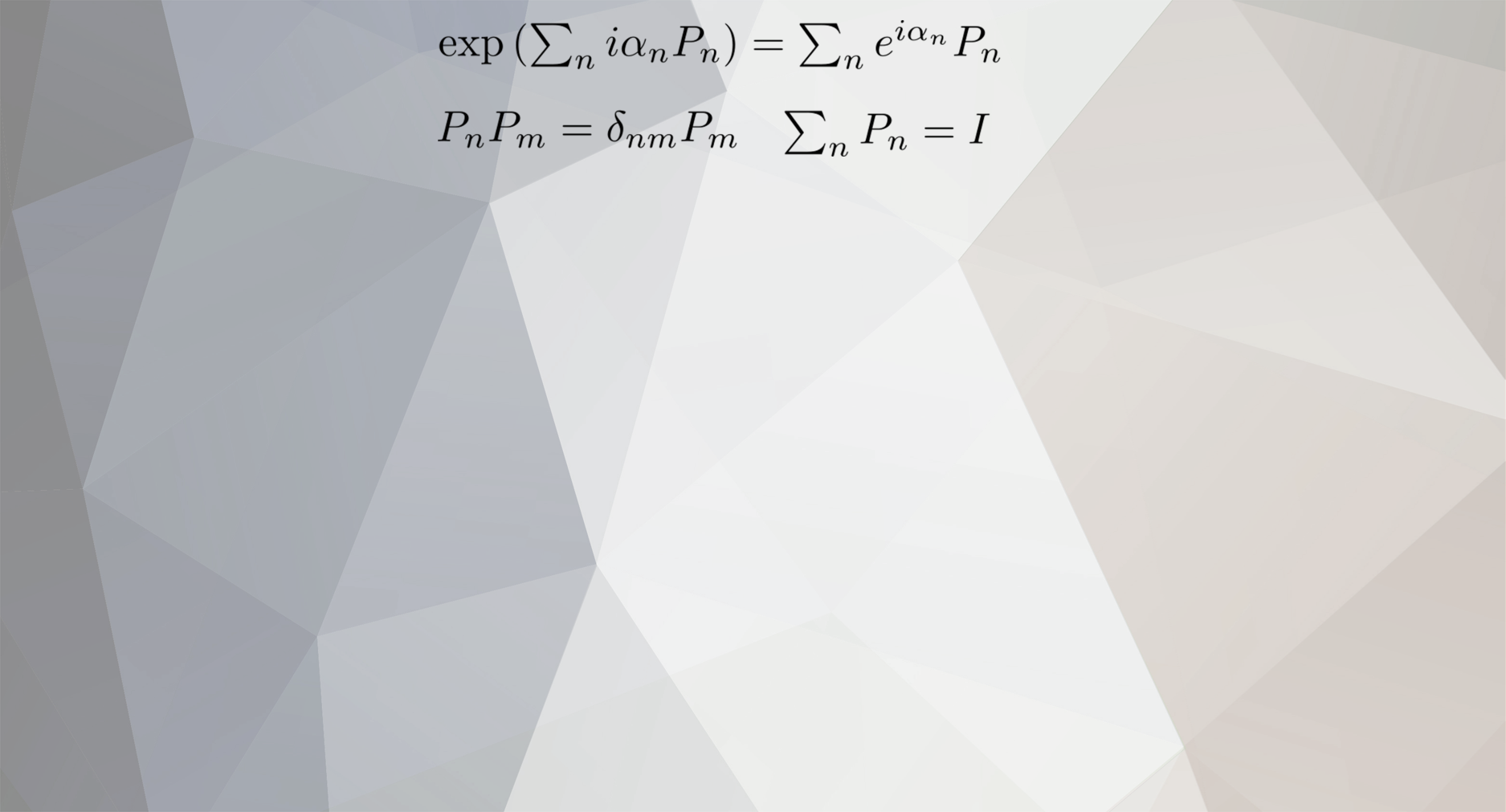
Global phase invariance. IOW, \[ \psi\rightarrow e^{i\alpha}\psi \] where \( \alpha \) is a constant phase shift in the wave function. You can easily prove charge is conserved via Noether's theorem if you have a Lagrangian that produces the equations of motion. It's the global version of gauge invariance. When you have local gauge invariance, not only gauge charge is conserved, but a field has to step in to guarantee it is preserved. And god says, Let there be light, Let there be gluons, Let there be Z and W bosons, and (hopefully), Let there be gravitons, even if nobody can calculate anything with them.
-
I can do better than that: https://people.math.harvard.edu/~knill/teaching/mathe320_2017/blog17/Hermann_Weyl_Symmetry.pdf According to Hermann Weyl, something is symmetric when it looks the same after you change a condition. The 'thing' is thus symmetrical under the change of such 'condition'. A sphere is symmetrical under rotations around its centre. A fly is symmetrical under reflection through a mirror. The laws of physics are symmetrical under changing particles for antiparticles. ... And so on The usefulness of Weyl's definition stems from the fact that certain transformations can be expressed in very simple terms as functions of few parameters.
-
I'm glad you noticed. Two thousand years after and more than 2000 miles away from the alleged origin of the story (northern Iran & Uzbekistan for Al-Tabari and Al-Bukhari respectively). That's pretty far away from Mecca and Medina both in time and space. Add to that the fact that 'muhammad' (MHMD in most Semitic scripts) just means 'the praised one' and we are pretty much where we are with many other founders of religions. Nothing much except the hope of human group from centuries upon centuries ago to become relevant on the grounds of a religious preacher who might or might not have existed even. No religion should be taken seriously. But the more modern ones are the more ridiculously off-base. Take Scientology, for example. Patricia Crone died some 9 years ago. Her book Meccan Trade and the Rise of Islam is just a pacient and meticulous gathering and exposition of facts as recorded from contemporary records from the 5th-6th centuries (and somewhat before) AFAIK. She very patiently shows how and why the "centre-of-trade" theory of Mecca is a physical/historical impossibility. Maybe aliens from Proxima-Centauri could have made Mecca a commercial hub of the Nabateans. Camels just couldn't have done it. All the Nabatean know-how couldn't make up for the fact that Mecca is about 1000 meters below the main route to Ta'if, and extremely inconvenient --to say the least-- to be any kind of rendezvous in the trade route. Impossible. What other things happened in Mecca in the 6th century? We don't know. Trade certainly was not one of them. That's probably why Mecca appears in NO book from before the 9th century. Crone got many death threats from that and decided to keep a low profile from then on. That's what I know.
-
Beautiful! Thank you. Here's the hook-up to why this happens: https://en.wikipedia.org/wiki/Frost_flower_(sea_ice)
-
Ah, so there's a history of the theorist...
-
Ah, so OP maybe is trying to say, 'could the electron be there just because charges need to balance out?' If that's the case, I know of a class of theorems called 'soft boson theorems' in QFT that say that something very weird would happen if charges didn't balance out at distances long enough, and that would make QFT inconsistent. That alone wouldn't explain why the universe is not just a soup of photons from all the particle-antiparticle pairs having annihilated each other long in the past... https://en.wikipedia.org/wiki/Baryon_asymmetry
-
Conservation of charge bears out an elementary symmetry. The electron is a carrier of that symmetry. How could bilateral symmetry (a quality of a thing) be the thing itself? Flies have bilateral symmetry. Is bilateral symmetry of a fly the fly itself? Please, come to your senses.
-
Where is the physics?
-
Ok. But slavery is allowed (halal), adoption forbidden (haram), sex with minors allowed (halal), etc, if political conditions allow. A lot of what you can or cannot apply from sharia depends on political climate, as stated clearly in the Qu'ran concerning taqiyya. From: https://reliefweb.int/ with my emphasis I for one prefer Zoroastrianism, as long as you're careful with fire. All religions are OK, I suppose, as long as you don't take them seriously --actually apply certain/a few/most of their principles. All religions are OK if you reduce them to wearing of certain gear and handling of certain ritual objects and ceremonies. In that sense, they're not very different from a funny sport.
-
Some of these coincidences happen to be very useful as mnemonics.
-
OP still looks like homework.
-
Well the liquid nitrogen example that @MigL provided goes in that direction. This reminds me of some quick notes on geometric optics concerning one such Lensmaker's equation, which led me to think something along the lines of 'Isn't it cute, that this equation was derived by someone called Lensmaker?' I soon realised of course, it was a typo or the author made a mistake, and it should have said 'lens maker'.
-
The objection is expressed at 33:50 of the lecture I linked (without mentioning Dyson). If gravity were classical and gauge fields were quantum, you could beat the position-momentum HUP. Dyson's position basically is that Einstein's tensor is a classical field. But on the RHS of the equations you have the expected value of the energy-momentum tensor of quantum fields. You could, of course argue that there are <T²>-<T>² quantum fluctuations of these quantities, and thereby similar quantum fluctuations in the Einstein tensor. Yes, ER = EPR is due to Leonard Susskind and Juan Maldacena. I don't know about the state of the art of it, but it's a way to deal with quantum gravity that's being explored recently.