studiot
Senior Members
-
Joined
-
Last visited
Everything posted by studiot
-
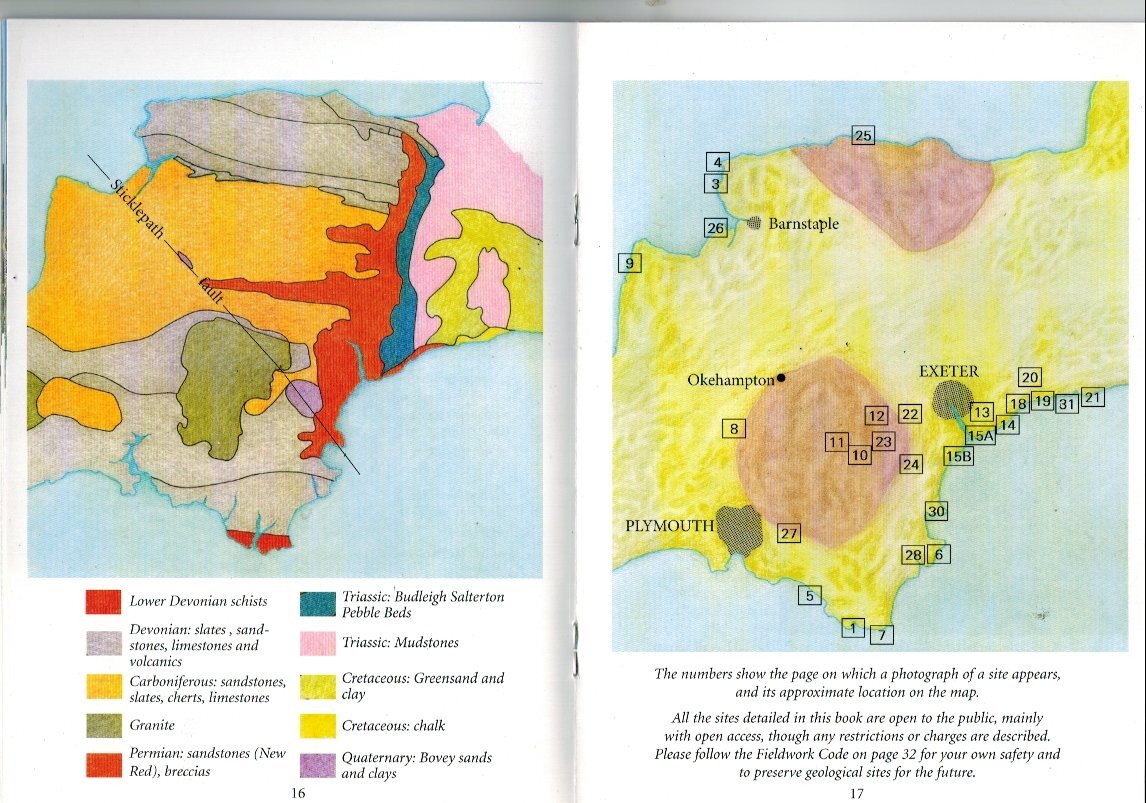
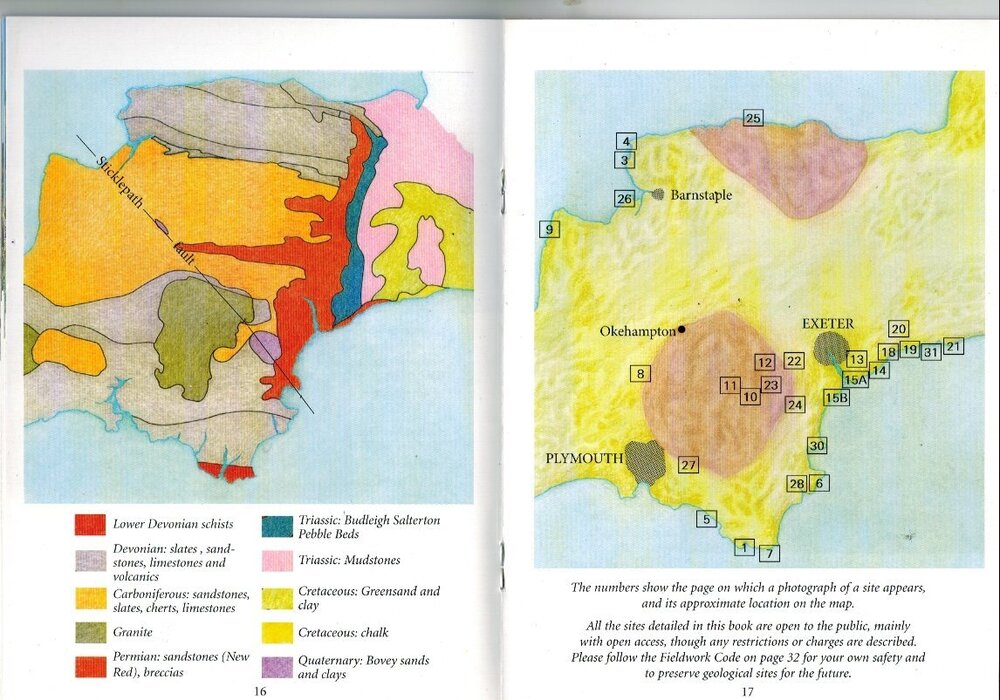
Sorry I missed a reference to Exmoor granite could you point it out please. I say this because I would not expect to find any Exmoor granite since the entire Exmoor area is sedimentary, not plutonic. Are you sure you don't mean Dartmoor ? or even the volcanic activities outliers around Exeter, associated with the SW peninsula granite intrusion and batholith ? Littleham is at point 15 A on the attached map.
-
This study seems to support your notion, although the jury is still out. esp see pages 12 - 14 https://nora.nerc.ac.uk/id/eprint/509450/1/WP92001.pdf Dr Ian West of Southampton University ( specialist in Wessex geology and petroleum geology) currently runs courses along there https://wessexcoastgeology.soton.ac.uk/Budleigh-Salterton.htm
-
Thanks, your link works, but not the pdf. The Littleham rocks are clastic sediments (soft silstones and mudstones of permo-trassic age (200 - 250 mya) and form part of the 'red coast'.
-
Radioactive nodules 50 - 200 mm in size can be found in Littleham Bay rocks and even on the beach. Does anyone know of other places they can be found ? https://southwestcoastphotos.com/photo_16759619.html
-
Oh come on, that was most unscientific and against all the evidence. Benzene was a very well know substance years before there was even a question about its structure. The dream only occurred after it was realised that benzene did not appear (to people at thte time) to follow the rules of valency.
-
I know that the Greeks invented Theatre, but there is only a minute amount of use for it in serious Science. I also understand your three-way idea though I am no biologist and you haven't answered exchemist's question about of what relevance is this to biology and DNA as we know it. Nor do I think Biology is anywhere near advanced enough to implement it. Your proposals with the melamine and cyanuric acid complex is at the very forefront of current capability and research, but it is much simpler (for most) to use simplified diagrams to explain what is going on. Workers are only just doing much simpler tasks with this (p 334 - 337 of The New Chemistry)
-
Indeed it's hard to keep up or cross correlate since not only did certain epochs occur at different times around the globe in different places, (due to tectonic shifting) but also the names vary from continent to continent. Most of the UK names came from Scottish geology -those in Europe from alpine nations. There is much work being done in cross correlation these days.
-
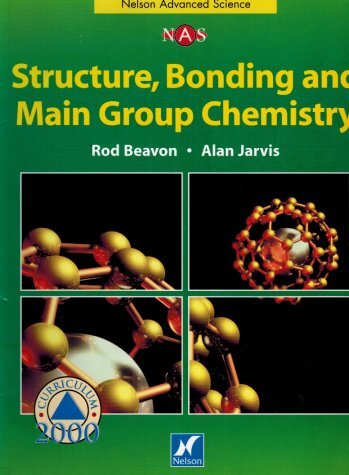
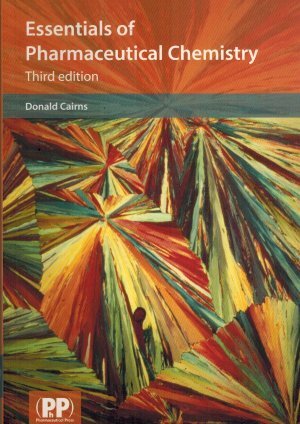
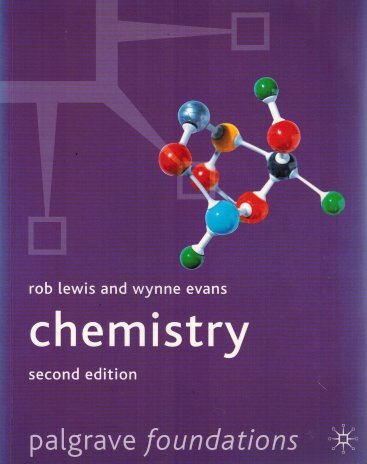
Whilst I think that Mathematics is in the same boat is Chemistry as regards goal setting both are very broad based disciplines that feed into other areas. A small note about Supramolecules. The largest molecules by far are those formed as lumps of metal and due to metallic bonding. DNA and the like, although much larger than oxygen or nitrogen, are still in the province of the electron or X-ray microscope, whereas you can (and do) hold a lump of metal inyour hand and look at it. Metallic bonding has been traditionally largely treated as a separate area in Chemistry, that of Metallurgy. This view is now changing ( The chapter - What is a Metal - in the book referenced above is interesting is this respect. However that side of Chemistry, along with sevaral other areas is of little interest to you. Accordingly I have assembled some books at various levels from very basic to advanced that provide a wide chemical background to your interest in Biology. Some may be available in Translation. They are all modern or have modern editions. Some are much largers than others.
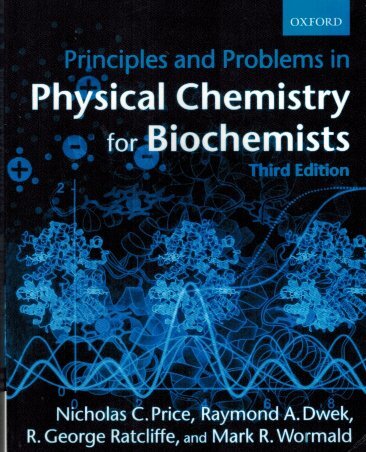
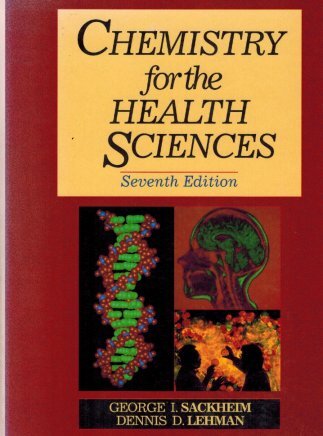
-
If you are any good with spoken English ~This 8 minute video lecture about 'supramolecule chemistry' may be of interest, especially their first example. Otherwise https://en.wikipedia.org/wiki/Supramolecular_chemistry Supramolecular chemical biology:...Supramolecular chemical biology: designed receptors and d...Supramolecular chemistry focuses on the study of species joined by non-covalent interactions, and therefore on dynamic and relatively ill-defined structures. Despite being a well-developed field, i...
-
Not quite. The comparison was the phase of the light (considered as a wave) between two light paths of different lengths. The fact that the paths went in different directions was coincidental was in order to generate the different path lengths.
-
Yes I fully understand that, but you can't just slap on an extra strand (if 3 then why not 4, 5......?) without consequences. I'm sorry to report that chemical bonding theory is not yet sufficiently advanced to predict those consequences. Even with your solid model colour diagrams that theory is far behind molecular orbital theory, which itself is still in its infancy. In atomic terms we can only solve the Wave equation for Hydrogen. So what we do for more complicated atoms is to use the Hydrogen solution orbital structure and try to modify it for more complicated atoms. This works reasonable well for the lightest elements ( s and p orbitals) but starts to go awry when d, f etc orbital are brought into play and becomes quite unmanageable for the most complicated atoms. For bonding the first attempts were to combine the modified hydrogen orbitals for the bonding atoms. This is called the Linear Combination of Atomic Orbitals method (LCAO). Subsequently the idea was to define orbitals for the whole molecule rather than for the participating atoms. These are called molecular orbitals and again they work well for simple molecules and have been called sigma and pi bonds. However I am not aware of any extension to superlarge molecules such as RNA etc. This follows the same pattern as for atomic orbitals but lagging by half a century. Perhaps one day Chemists will be able to calculate these things.
-
Vibroacoustics sites are reporting a University of Turin study that plant increase pollen production in response to the buszzing of bees. https://www.researchgate.net/profile/Francesca-Barbero-2 https://www.hfsp.org/node/74710
-
What do you think the H bonds do in the DNA molecule? So what would be the function of the H bonds in your arrangement ?
-
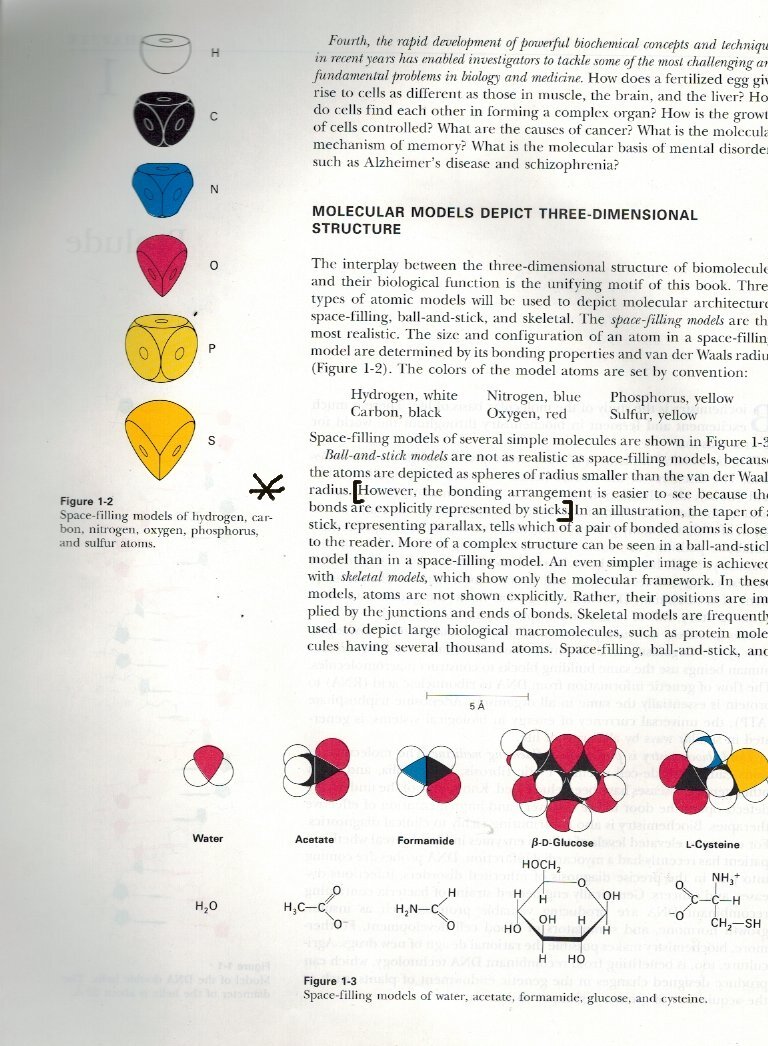
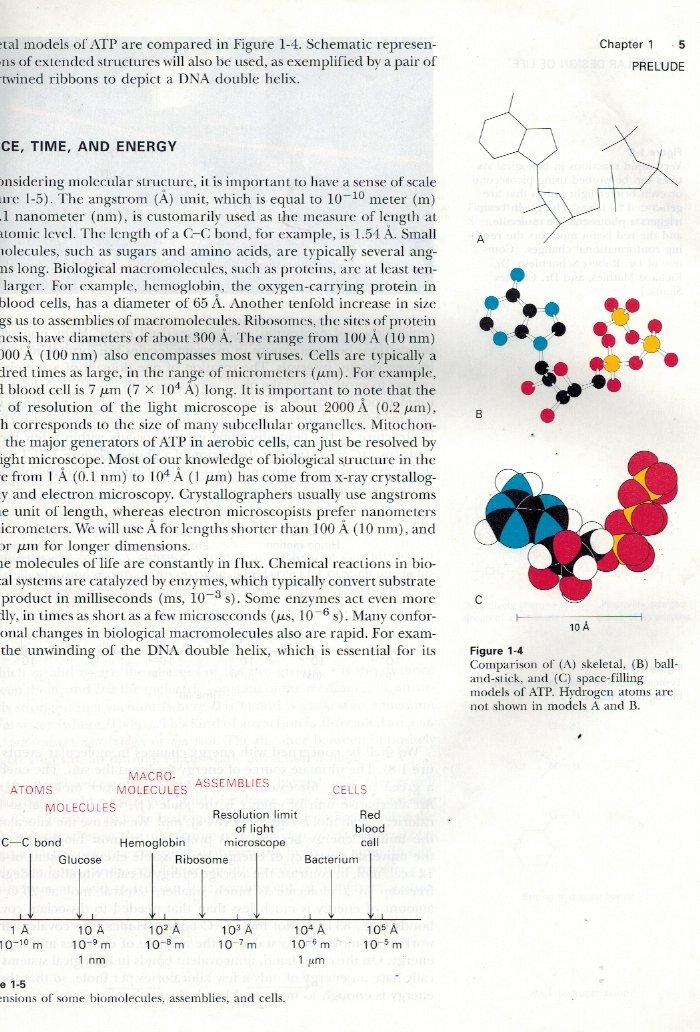
Glad you found this useful and could cope with the English. Looking now at your coloured blobs, there are conventions on this and a very good writeup in the classic book 'Biochemistry' originally by Stryer, as in my 1995 edition. The book has now reached its 9th edition and aquired some coauthors, but still published by Freeman. It is a massive book and therfore very costly, although older editions can be had cheaply. Here are a couple of pages explaining £D space models and going on to explain bonding as relevant to Biochemistry and life. I have starred a short sentence which explains why simpler models are most often used - namely that space filling blobs though more realistic can obscure the view of the back of the molecule. Sorry for the scannimg, but even my 4th ed is over 1000 pages long it is a big book.
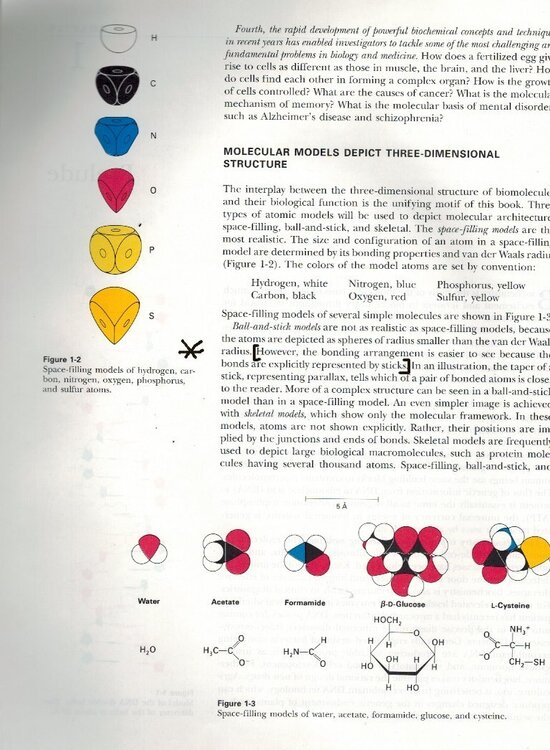
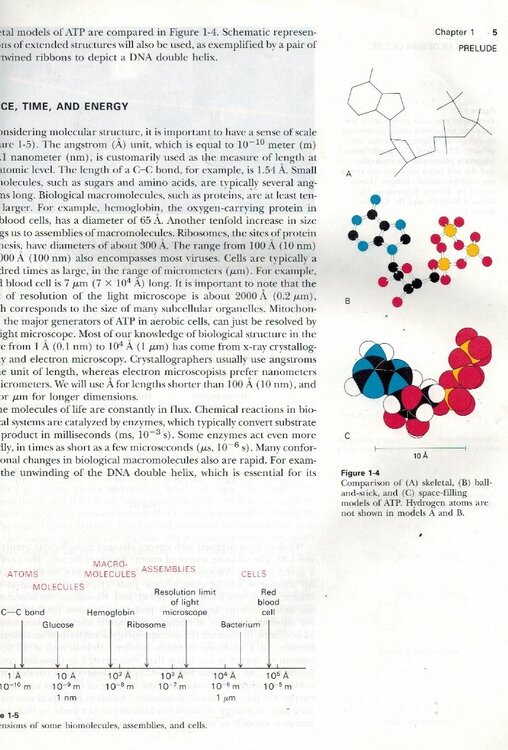
-
This is so much better. OK so some further explanation. Valency refers to the number of chemical bonds that can be formed a single atom or single ion or group of atoms/ions acting as a single unit. An example group os the ammonium ion [NH4]+, which is a monovalent cation. Note the nitrogen is now quadrivalent within the ion. Chemical bonds cannot be pulled apart mechanically Furthermore they bestow or lead to the combined molecule or ion have new chemical properties not enjoyed by the parent atoms/ions. Chemical bonds have nearly fixed lengths, energies and configuration in space. Hydrogen bonds vary in whether or not they form and where they form. It was originally thought that they were weaker than chemical bonds because they can be pulled apart mechanically, but there are examples of very strong hydrogen bonds.. However they do not confer additional chemical properties on H bonded species. They also vary in length. However they do modify the physicsl properties of the material they form in. For example in liquid water H bonds are constantly forming and breaking as the water molecules move around, leading to the famous 'anomalous' physical behaviour of water. As a result H bonds do not count in the valency considerations. They are very important in some (large) bio molecules, especially those such as you are considering with close wound structures. They are special because they occur on account of casual proximity. Here is a way to think about it. A true chemical bond is like what we call a popper or press stud in clothing. They cllck and stay together and hold the parts of the fabric to form one garment. (Obviously you can pull poppers apart) A hydrogen bond , on the other hand is like velcro. Not positive location and click like a popper, but interlocking hooks that can be more easily pulled apart and offerd up in different ways to form various arrangement. Note this is not a perfect analogy but it may well help understand the difference. For your purposes these Pharmacy books may help
-
No. Thank you for wasting my time. Good Night.
-
The valency of an atom is not set by what is connected to it but is intrinsic to each element. Some elements exhibit more than one valency in certain circumstances. For example nitrogen is trivalent, or has a valency of 3. Following your prescription would suggest that the nitrogen molecule, which has two atoms of nitrogen connected together, is monovalent or has a valency of one. In fact there are three bonds between the nitrogens in the molecule so satisfying the valency requirement of 3 for each by means of a triple bond. I suggest that you try this out on simple molecules before going to very complex ones.
-
That is at best a very very poor description of valency, but more realistically incorrect.
-
So you don't understand valency. So why don't you just ask ?
-
I recommend you take a look at this thread when thinking about machines or algorithms that are designed to always yield a result. https://scienceforums.net/topic/135965-not-entirely-satisfactory-answers-from-ai/?_fromLogin=1 When I mentioned unusual number systems, I was thinking about floor numbering in lifts (or elevators) and street house numbers that omit the number 13 or have an extra house added later. The Bard was right with the line There are more things in heaven and earth, Horatio, than are dreamed of in your philosophy.
-
Years ago there was much counselling about instruments with electronic numeric readouts, from blood pressure machines to navigation equipment to calculators etc. Basically any device or algorithm designed to return an answer will always do that, however ridiculous. It of course physically unable to do anything else. So humans were advised to use experience an be on their guard against false output - either too precise or just ridiculous.
-
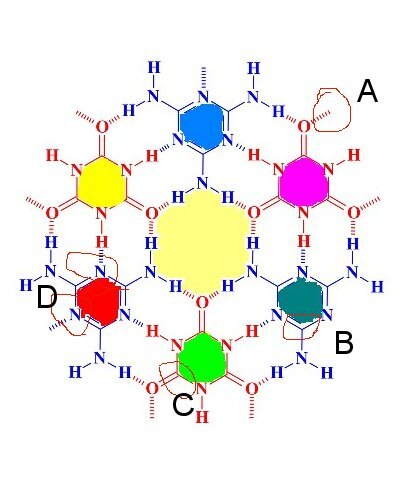
So did I but I wanted to check for the reasons below, which I'm sure you appreciate. If you don't understand them or want to say anything about them why did you post them? A Do you know what a hydrogen bon is and why it is not part of valency calculations ? B & C Yes if you are using the conventions that carbons are not explicitly labelled. However that does not explain why site B is trivalent and site C is quadrivalent. D on nitrogen is allegedly divalent and the other allegedly trivalent and connected to another allegedly trivalent carbon. As noted by exchemist, a load of gobbledegook.
-
Really ? You don't seem to have addressed my last comment Perhaps you will address this one. You have completely failed to distinguish between Work and Power, thus making your statements dimensionally inconsistent.
-
I expect to be away most of this weekend so don't rush. Iused the term 'connected path', which is common in maths and I think desxribes your meaning. Using this also gives the opportunity to distinguish singly connected; doubly connected: triply connected etc.
-
I asked you to explain the valency, not tell me that it is 'OK'. Specifically at these points indicated in the diagram you posted. A What is type of bond does the broken line represent ? B What is located at the triple junction ? C Again what is located at the triple junction ? D How are these nitrogens trivalent ? Please use the quote function in future when responding to queries.