Genady
Senior Members
-
Joined
Everything posted by Genady
-
Wrong thread?
-
Well, then this boson has to be massless in order to propagate with the speed of light as required by GR. And it was Richard Feynman I think that showed that such boson has to be spin-2 particle, based on GR again.
-
Which "hypothetical graviton" did you refer to?
-
The hypothetical graviton cannot be the Higgs boson because (a) the former should be massless while the latter is massive, (b) the former should be spin-2 particle while the latter is spin-0.
-
A slow dance with a quick ending. So much to the "Nothing eats lionfish" slogan. This video:
-
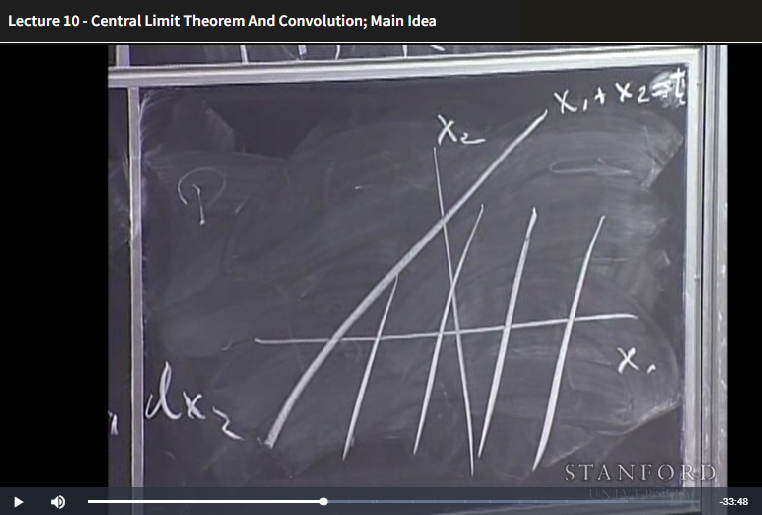
From a Stanford lecture on Fourier transform:
-
Do the numbers work out? Population and population growth of the COTS on one hand, number of trained divers and their rate of injecting the COTS on the other? Will it make even a dent in the COTS population? Divers kill lionfish in this part of the world, but it doesn't make any difference in the lionfish numbers. It tastes good, though.
-
If they are right and the eutrophication is the main cause of the COTS' population explosion, then I don't know what you guys can do about it. Corals vs agriculture, hmm... At least we don't have that problem here. All the rest, yes - warming, acidification, overfishing, mechanical damage to the reef by boats and divers, - but not eutrophication.
-
It is not invasive, is it?
-
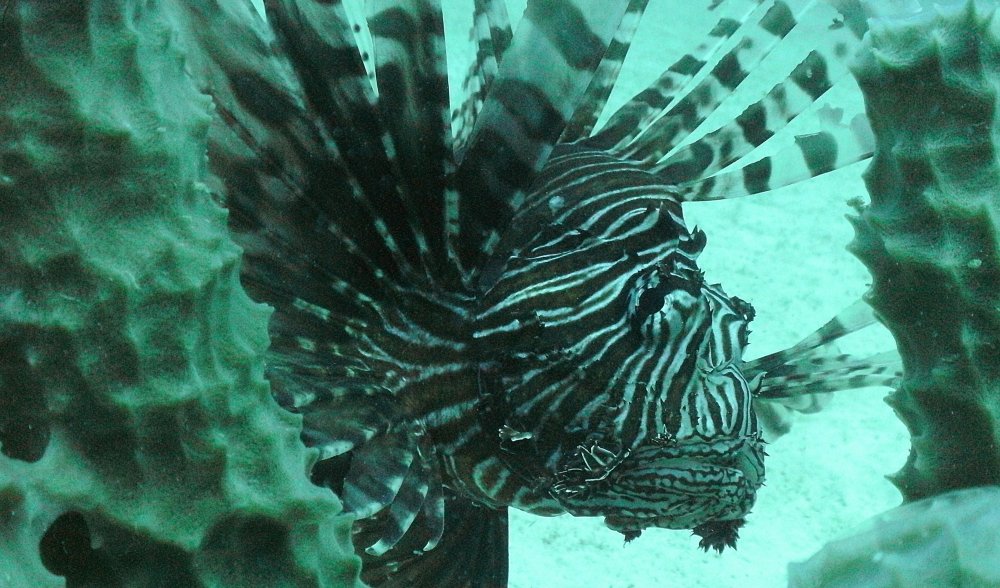
Since appearing in our area about 15 - 20 years ago, the invasive lionfish became a common resident on our reefs. Contrary to the wide-spread anti-lionfish propaganda about its many dangers to the local marine environment, such as "Nothing eats lionfish", "Local fish don't know that it's a predator", "It eats everything", "It multiplies uncontrollably", etc., it did not cause any damage to the coral reef or to its inhabitants. It rather found its eco-niche and lives peacefully with - i.e. eating and being eaten by - other fishes. It added an exotic element to our underwater experience, though. Please meet - the lionfish:
-
The use of single-use plastic straws is increasingly banned. One of the common alternatives is paper straws. Would the chemistry work with the alternatives? Maybe it would work better?
-
Sorry, I don't understand this question. Why do they need to collide? What kind of collision? What does it have to do with the OP?
-
Perhaps, not. There are plenty of life forms in the deep ocean, where there is constant temperature, constant darkness, and not much mixing with the surface water. Why would they care about the surface being covered or not with ice? They might depend on a dead organic matter that falls down from above. Ice on the surface would stop that. The organisms that don't depend on this DOM would continue like nothing happened. The other would be of two kinds. Many would die. The others could switch from the DOM falling from above to the DOM created by the ones that died. Like these sponges.
-
In the case described in the OP, it's neither discovering life, not discovering a new life form. It's a new ecosystem.
-
Then it should be something inconspicuous, like little letters that say 'fun' if the drink is ok and changes to 'run' otherwise. ?
-
Should the detection be visible to all or just for eyes of the person with a drink?
-
Define what is a chair... The pictures in this article are very nice, allow to identify the corals. They are mostly - or all - from the family Agariciidae. Most of the corals in this family are specifically adapted for low-light conditions, hence their flat, open, "rose-shaped" structures. Their normal depth is something like 100-300 feet, 30 - 90 m. It is incorrect to compare them to "corals" in general which mostly live at much shallower depths, like they do in the article.
-
Another recent discovery: BTW, I've been in that "zone", 70+ m. Yes, there is still plenty of light there, at least in our waters here. And, it is pitch black down from there. Rare coral reef discovered near Tahiti in ocean's 'twilight zone' - CNN
-
Why? Isn't it clear that these sponges are alive? We don't live by definitions in the real life
-
The point is not self-awareness. The point is life.
-
... and then you can publish your findings in the Nature Communications.
-
Astronomers try to do something about this sky pollution. Will they succeed? Are they justified in their demands? Astronomers Rally to Stop Satellite Megaconstellations From Ruining the Sky (gizmodo.com) Astronomers Join Forces to Push Back Against Satellite 'Pollution' Ruining The Skies (sciencealert.com)
-
Another large community has been discovered in an unsuspected location: Sprawling sponge gardens found deep beneath the Arctic sea ice - CNN
-
I wonder where that thing about a "word" came from. Because their is no mention of it in the Hebrew text: So, it is not clear where the water came from. The light came next. Then, a separation between water below the sky and water above the sky. The separation between land and seas came later.
-
Genady was wrong in the OP. In two points. First, in the assumption that we can find a promising but sterile world. Second, in the assumption that this form of life is so special in comparison with the "endless forms most beautiful and most wonderful [which] have been, and are being, evolved" in countless places in the universe, that it needs to be saved.